DIY Jewelry for Beginners: Wire Wrapping Raw Crystals
Learn how to make DIY jewelry with our beginner wire wrapping guide. Master cage wraps for raw crystals using specific gauges and tools.

The Allure of Wire Wrapping for Raw Stones
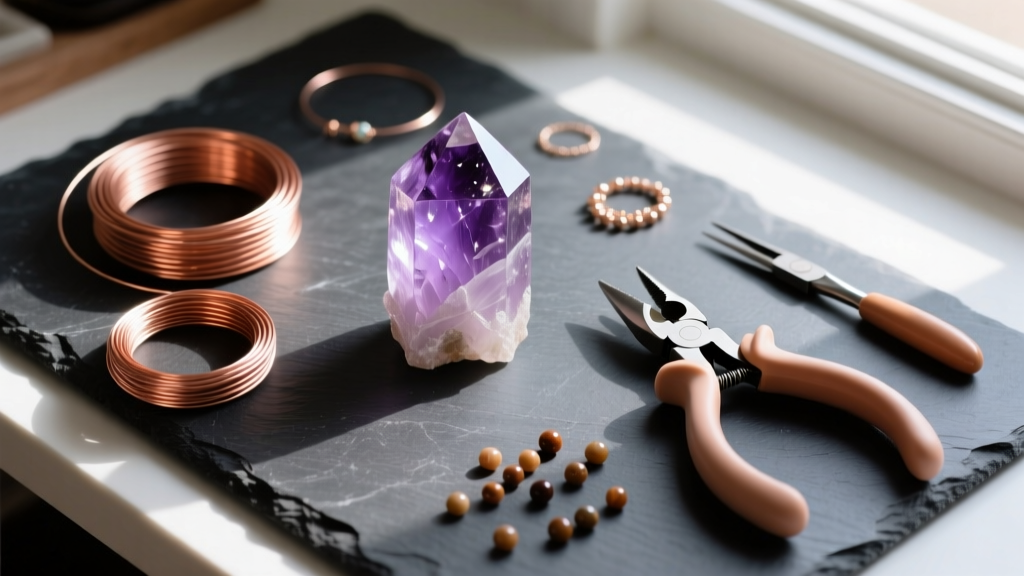
Entering the world of diy jewelry can feel overwhelming when faced with the prospect of soldering, torch work, and expensive casting equipment. Wire wrapping bypasses these barriers entirely, offering a tactile, heat-free method to create professional-looking pendants and rings. For beginners, the classic 'cage wrap' around a raw, undrilled crystal is the perfect rite of passage. It teaches fundamental tension management, structural framing, and wire weaving without requiring a single drilled hole in your gemstone.
However, creating durable diy jewelry requires more than just twisting metal. It demands an understanding of wire temper, gauge selection, and the physical properties of the stones you are wrapping. This guide moves beyond generic tutorials to provide the exact metallurgical specs, tool requirements, and structural frameworks needed to craft secure, high-end wire-wrapped pendants.
Stone Selection: The Mohs Scale Dictates Your Tension
Before cutting your first piece of wire, you must evaluate your raw crystal. Not all stones can withstand the compressive force of a wire cage. According to gemological standards outlined by the Gemological Institute of America (GIA), the Mohs hardness scale is your primary decision matrix.
- Ideal for Tight Tension (Mohs 7+): Raw quartz, amethyst, citrine, and agate. These stones can handle aggressive wire tightening and sharp structural bends pressing against their girdles.
- Moderate Tension (Mohs 5-6): Labradorite, moonstone, and opal. Use a padded frame or looser weaving to prevent cleavage along internal fracture lines.
- Avoid for Cage Wraps (Mohs 4 and below): Fluorite, selenite, and malachite. The tension from 20-gauge structural wire will easily snap or scratch these softer minerals. Opt for adhesive-backed bails or bezel cups instead.
The Essential Toolkit: Precision Over Price
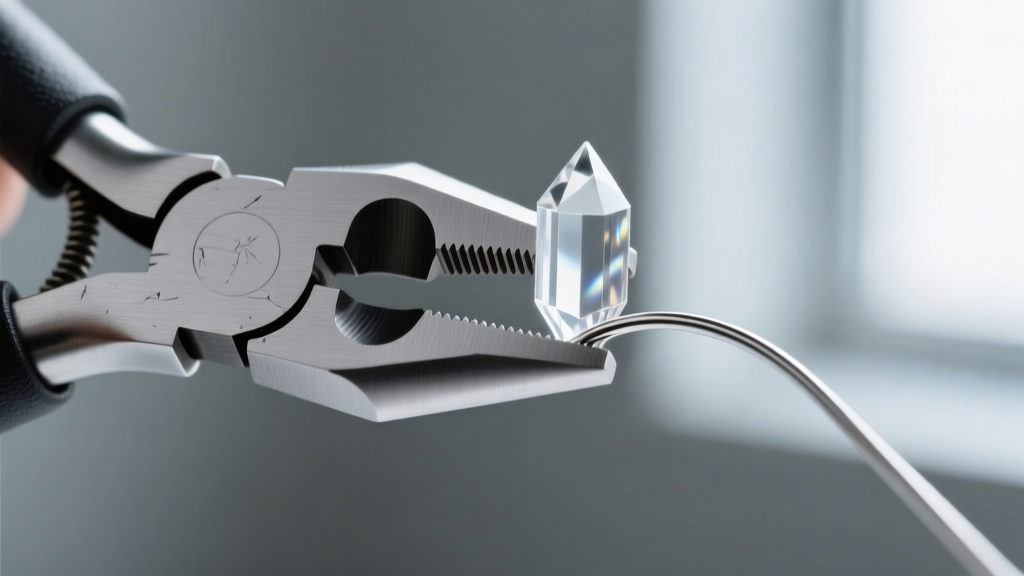
Skip the hardware store pliers. Serrated teeth found on standard utility pliers will permanently mar dead soft wire, creating weak points where the metal will eventually snap. Investing in specialized jewelry tools is non-negotiable for clean diy jewelry.
Mandatory Hand Tools
- Flush Cutters: The Xuron 410A Micro-Shear is the industry standard for beginners. It cuts wire perfectly flush, leaving no sharp 'pigtails' that can scratch the wearer.
- Chain Nose Pliers (Smooth Jaw): Used for gripping, tucking wire ends, and making sharp 90-degree bends. Brands like Tronex or Wubbers offer flawless smooth-jaw options.
- Nylon Jaw Pliers: Absolutely critical for straightening wire and tightening weaves without marring the metal's finish. The nylon pads grip the wire securely while protecting the silver or copper surface.
- Cup Burr or Agate Burnisher: Used to round off and smooth the microscopic sharp edges left after cutting your weaving wire.
Wire Gauges and Metallurgy: A Beginner's Matrix
Wire temper (hardness) and gauge (thickness) dictate the success of your structural frame. For a standard raw stone pendant, you need a dual-wire system: a thick structural core and a thin weaving wire. Dead soft temper is mandatory for beginners, as it bends easily and allows for weaving without requiring frequent annealing with a torch.
| Gauge (AWG) | Temper | Primary Use Case | Estimated Cost (Sterling Silver) |
|---|---|---|---|
| 20 Gauge | Dead Soft | Structural frame, bail creation, main cage wires | $1.40 - $1.80 per foot |
| 28 Gauge | Dead Soft | Decorative weaving, binding core wires together | $0.60 - $0.90 per foot |
| 24 Gauge | Half Hard | Ear wires, jump rings, and clasp fabrication | $1.00 - $1.30 per foot |
Note: If you are practicing, substitute sterling silver with 20g and 28g dead soft bare copper. Copper work-hardens slightly faster than fine silver, giving you excellent tactile feedback on tension limits at a fraction of the cost.
Step-by-Step: The Classic 4-Wire Cage Wrap
This framework secures a standard 20mm to 30mm raw crystal point or cabochon. Ensure your stone is clean and free of polishing oils before starting.
- Cut the Core: Cut four pieces of 20-gauge dead soft wire, each exactly 10 inches long. Align them perfectly flat, side-by-side, using your nylon jaw pliers to remove any kinks.
- The Base Bind: Cut a 3-foot length of 28-gauge weaving wire. Leave a 6-inch tail. Wrap the 28g wire tightly around the center of the four core wires four times, ensuring the wraps sit perfectly parallel without overlapping.
- Split and Frame: Separate the four core wires into two pairs. Place your raw crystal between the pairs. Gently bend the 20g wires around the left and right sides of the stone to form a cradle.
- Secure the Girdle: Bring the two pairs of wires together at the top of the stone (above the girdle). Use a new piece of 28g wire to bind all four core wires together tightly just above the top of the crystal. This locks the stone inside the cage.
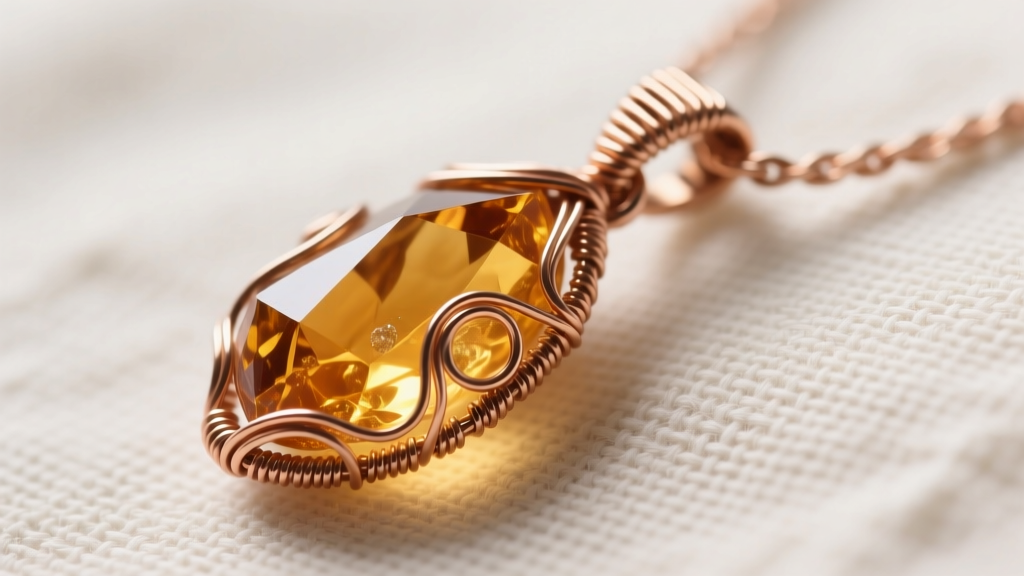
- Create the Bail: Take the two outer 20g wires and bend them backward to form a loop for your chain. Wrap them down the sides of the pendant, securing them with small 28g weaves. Tuck the ends inward using your smooth chain nose pliers.
Troubleshooting Common Beginner Mistakes
The Work-Hardening Trap: As you bend and weave wire, the metal's crystalline structure compresses, causing it to become stiff and brittle—a process called work hardening. If your 28g weaving wire suddenly snaps while pulling a tight wrap, you have overworked it. Always cut a fresh piece of weaving wire rather than trying to force a hardened strand, which will result in jagged breaks that ruin the pendant's aesthetic.
Another frequent failure mode is 'wire slip,' where the structural cage loosens over time. This happens when beginners fail to pull the 28g weaving wire taut enough during the base bind. Use your nylon jaw pliers to pull the weaving wire completely flush against the core wires after every third wrap.
Sourcing Quality Materials for Your DIY Jewelry
The longevity of your diy jewelry depends heavily on material purity. Avoid mystery metals from unverified online marketplaces, as they often contain nickel or lead, which cause severe skin reactions and tarnish unpredictably. For sterling silver, fine silver, and high-quality gold-filled wire, Rio Grande remains the premier supplier for serious jewelers, offering precise temper guarantees and certified metal purity. For base metals like bare copper, brass, and practice wire, Fire Mountain Gems provides excellent bulk pricing and reliable gauges.
Mastering the cage wrap is just the beginning. Once you internalize the tension dynamics of 20-gauge framing and 28-gauge weaving, you can scale these techniques to create complex, multi-stone pendants and intricate wire-wrapped rings, establishing a robust foundation for your jewelry-making journey.


