Best Essential Tools to Make Jewelry: 2026 Buyer's Guide
Discover the best essential tools to make jewelry in 2026. Compare pliers, cutters, and mandrels with expert specs, pricing, and pro buying tips.

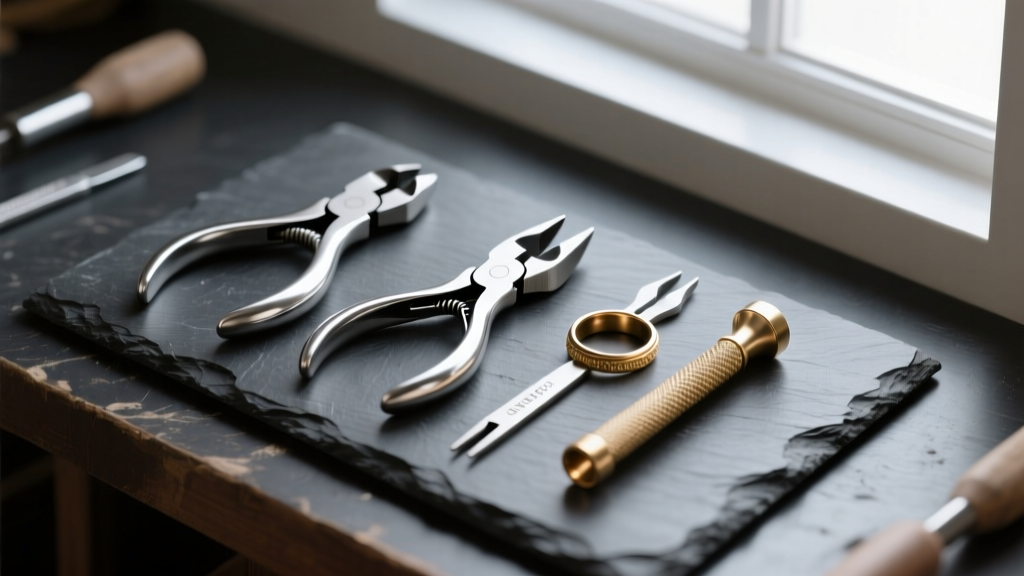
Introduction: Why Quality Tools Dictate Your Success
When you first decide to make jewelry, the sheer volume of available supplies can be paralyzing. While beads and wire capture the imagination, the unsung heroes of your workbench are the hand tools. In 2026, the DIY jewelry market is saturated with ultra-cheap, mass-produced tool kits that promise everything but deliver frustration. Using stamped-metal pliers with misaligned jaws will not only mar your expensive sterling silver and gold-filled wire but also lead to severe hand fatigue and repetitive strain injuries. This comprehensive buyer’s guide cuts through the marketing noise, focusing strictly on the metallurgical and ergonomic specifications you need to look for when investing in tools that will last a lifetime.
The Core Pliers Trio: Understanding Joint Mechanics
The foundation of any wire wrapping or chainmaille project relies on three pairs of pliers: chain-nose, flat-nose, and round-nose. However, not all pliers are created equal. The most critical factor to evaluate is the joint mechanism. Budget tools typically feature a "lap joint," where two pieces of metal overlap and are pinned together. Lap joints inherently possess lateral play, meaning the tips will never align perfectly, leading to slipped grips and scratched wire.
For professional results, you must seek out "box joint" pliers. In a box joint, one piece of steel is forged with a slot, and the other passes through it, creating a zero-tolerance pivot. Brands like Lindstrom Tools and Tronex specialize in box-joint architecture, ensuring that when you grip a 24-gauge copper wire, the pressure is distributed evenly across the entire jaw surface. Furthermore, pay attention to the jaw finish. For soft metals like fine silver or 24k gold, you need polished, smooth jaws. For work-hardening base metals or gripping jump rings, serrated tips provide necessary traction, though they will leave tool marks that must be filed away later.
Flush Cutters: Blade Geometry and the "Pinch" Factor
A flush cutter is arguably the most abused tool on a jeweler's bench. When you make jewelry involving wire weaving or rosary chains, you are making hundreds of cuts per session. The goal is a perfectly flat, "flush" cut that requires minimal filing. Cheap cutters use a simple bevel that crushes the wire before severing it, leaving a sharp, angled "pinch" or burr on one side.
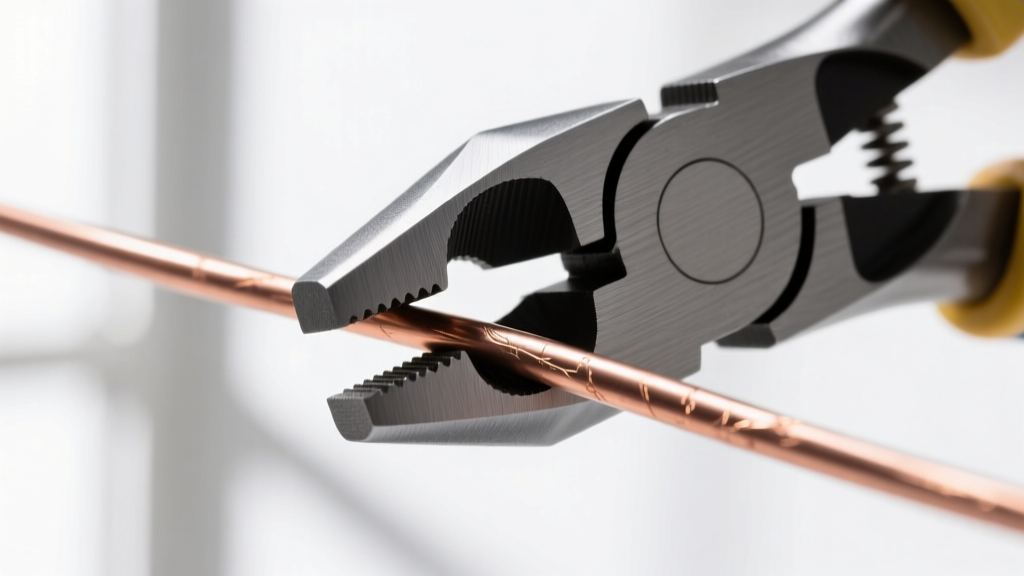
High-end flush cutters feature a relief cut on the non-flush side of the blade, allowing the metal to shear cleanly. Look for cutters with a 50-degree or 60-degree bevel angle. The Tronex Standard Flush Cutter, for instance, utilizes a specialized heat-treatment process that hardens the cutting edge to over 60 HRC (Rockwell Hardness Scale) while keeping the handles tough enough to absorb shock. Never use your precision flush cutters on memory wire or steel beading cable; the extreme hardness of these materials will instantly chip the delicate relief edge. Dedicate a separate pair of heavy-duty, angled end-nippers for those destructive tasks.
Wire Wrapping Specifics: The Nylon Jaw Advantage
When working with raw copper, brass, or dead-soft sterling silver, standard steel jaws will inevitably leave micro-scratches, even if they are highly polished. To mitigate this, professional wire wrappers utilize nylon jaw pliers. These tools feature replaceable thermoplastic polyurethane (TPU) inserts that grip the wire firmly without marring the surface. When shopping for nylon jaw pliers, ensure the inserts are user-replaceable. The friction of pulling tight wire loops will eventually wear down the nylon, and being able to swap out a $4 insert is far more economical than replacing the entire tool. Furthermore, nylon jaws are indispensable for straightening kinked wire; simply draw the wire through the closed nylon jaws a few times to work-harden and straighten it without altering its temper.
Mandrels, Gauges, and the Myth of Universal Sizing
If you plan to make jewelry with consistent jump rings or perfectly sized bangles, stepped steel mandrels are non-negotiable. Plastic or wooden mandrels warp under pressure and lack the precise millimeter increments required for complex chainmaille weaves. When shopping for a jump ring mandrel, look for hardened steel rods with laser-etched metric and imperial markings.
Pro-Tip: A common failure mode for beginners is assuming wire gauge is universal. In reality, a "20-gauge" wire from one supplier might measure 0.81mm, while another measures 0.86mm due to differences in drawing dies. Always pair your mandrel purchases with a digital caliper to verify exact diameters.
Measuring your wire's exact diameter and calculating the Aspect Ratio (AR)—the inner diameter of the ring divided by the wire thickness—is the only way to guarantee that a Byzantine or Persian weave will lock together correctly without collapsing or becoming too stiff to flex.
Tool Material & Coating Comparison Chart
| Material / Coating | Hardness (HRC) | Rust Resistance | Price Range | Best Application |
|---|---|---|---|---|
| High-Carbon Steel | 60-65 | Low (Needs Oil) | $25 - $60 | Heavy wire, memory wire |
| Stainless Steel | 54-58 | High | $15 - $40 | General beading, copper |
| Titanium-Coated | 65+ (Surface) | Very High | $60 - $120 | Precision wire wrapping |
| TPU Nylon Jaw | N/A (Soft) | Immune | $20 - $45 | Dead-soft precious metals |
Ergonomics and Failure Modes to Avoid
Hand fatigue is the primary reason hobbyists abandon jewelry making. When evaluating tools, examine the handle geometry and the return spring. Traditional leaf springs—thin strips of metal spanning the handles—often snap after a few months of heavy use and provide uneven resistance. Instead, look for dual-component ergonomic handles with a coiled internal spring mechanism.
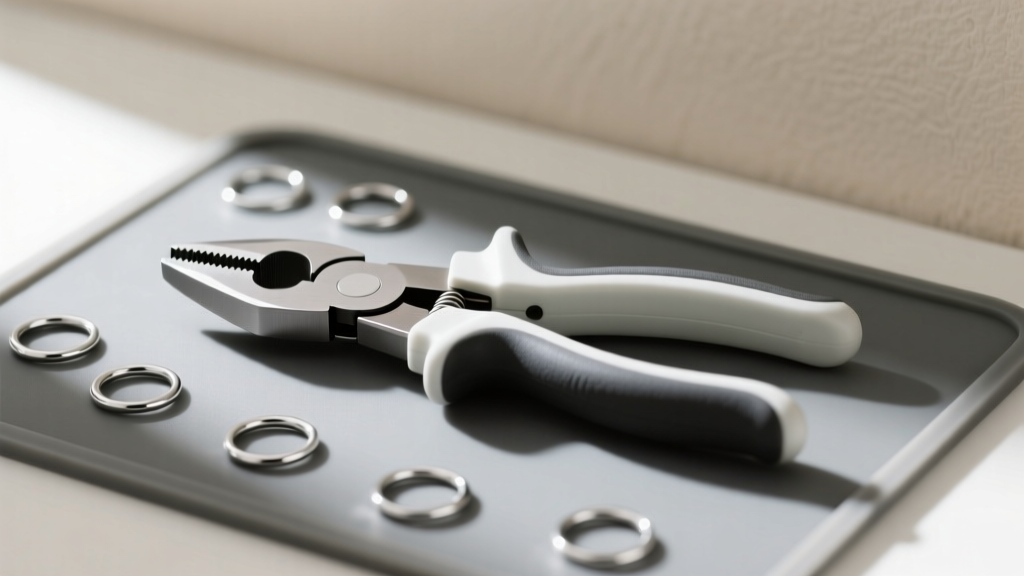
Brands like Wubbers and Xuron offer ergonomic lines featuring soft, thermoplastic elastomer (TPE) grips that conform to the natural curve of your palm. This reduces the grip force required by up to 30%, significantly lowering the risk of carpal tunnel syndrome. Additionally, check the "throat" depth of the pliers. A deeper throat allows you to reach further into complex wire-woven pendants without the handles bottoming out against your palm, maintaining leverage on tight loops.
Where to Source Authentic Tools in 2026
The secondary market and massive e-commerce platforms are currently flooded with counterfeit tools bearing the logos of premium manufacturers. These knock-offs use soft, untempered steel that dulls within days. To ensure you are receiving genuine, warrantied products, purchase directly from established jewelry supply houses like Rio Grande or authorized industrial distributors. While a premium pair of Swedish-forged chain-nose pliers may cost between $65 and $110, they will easily outlast ten pairs of $12 budget alternatives, ultimately saving you money and preserving the quality of your artisan work.
Final Verdict: Building Your Starter Kit
If you are ready to make jewelry at a professional level, allocate your budget toward a highly curated, premium starter kit rather than a massive box of mediocrity. Skip the 50-piece kits filled with useless crimping tools and cheap glue. Instead, focus your initial investment on:
- One box-joint chain-nose plier with polished jaws
- One 50-degree bevel flush cutter with ergonomic TPE grips
- One hardened steel stepped mandrel set for jump rings
- One pair of replaceable nylon jaw pliers for finishing
Precision, metallurgy, and ergonomics are the true metrics of quality in jewelry tools. Invest in the hardware, and your designs will naturally reflect that uncompromising standard.


