Top Tools to Make Jewelry: 2026 Style & Trend Analysis
Discover the top tools to make jewelry in 2026. We analyze how trends like permanent jewelry and sculptural wire work dictate modern workbench setups.

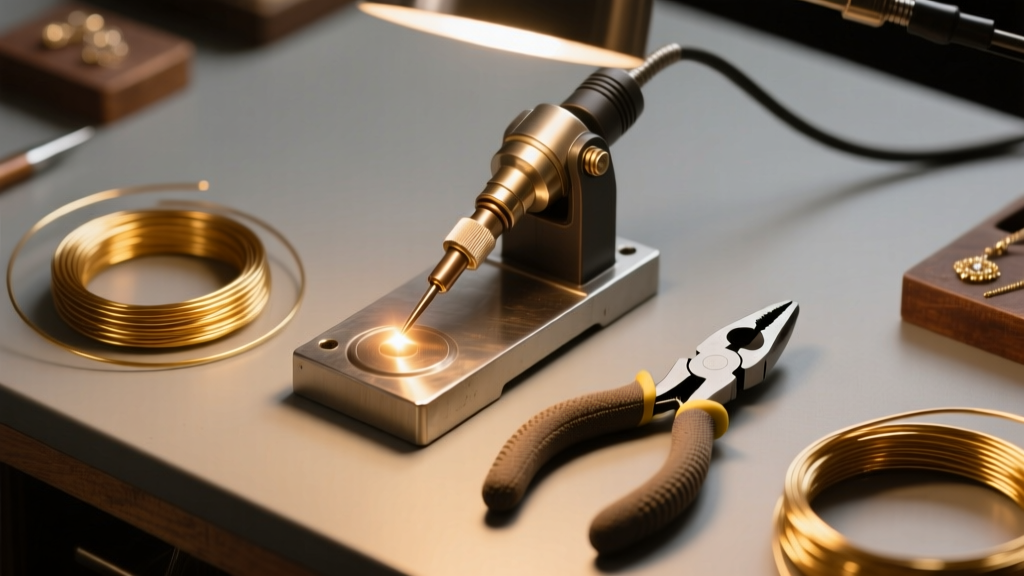
The landscape of independent jewelry design has shifted dramatically as we navigate 2026. The days of the generic, one-size-fits-all beading kit are behind us. Today, the tools to make jewelry are highly specialized, driven by distinct aesthetic movements and consumer demands. Whether you are capitalizing on the booming permanent jewelry market, exploring architectural wire wrapping, or participating in the sustainable upcycling movement, your workbench must reflect the current style zeitgeist.
As a trend radar for the industry, we have analyzed the intersection of 2026 jewelry aesthetics and the mechanical requirements needed to execute them. This guide breaks down the exact equipment, material grades, and ergonomic upgrades required to stay competitive and avoid the costly failure modes that plague amateur makers.
The Permanent Jewelry Boom: Precision Welding & Flush Cutting
Permanent jewelry—welded bracelets, anklets, and necklaces with no clasps—remains a dominant trend in 2026, but the market has matured. Consumers now expect flawless, invisible welds on delicate 14k gold-filled and sterling silver chains. To achieve this, the tools to make jewelry in this niche have evolved from modified industrial spot welders to highly calibrated pulse arc systems.
Micro-Welding Technology
The industry standard has moved toward advanced pulse arc welders, such as the Orion mPulse series. For 2026's popular delicate cable chains (typically 1.2mm to 1.5mm in diameter), precision energy control is paramount. A common failure mode for beginners is applying too much energy, which vaporizes the link and leaves a brittle, oxidized ball. For 14k gold-filled chain, an energy setting between 15 and 25 watts is typically optimal, depending on the wire gauge of the link. According to technical guides on Ganoksin, maintaining a clean argon gas flow (if your unit requires it) is critical to prevent oxidation, though many modern 2026 capacitive discharge units operate beautifully in ambient air.
The Flush Cut Imperative
Before welding, the chain must be cut. Standard hardware store wire cutters leave a sharp, pinched burr that prevents a flush weld and scratches the client's skin. You must invest in high-carbon steel or titanium-coated flush cutters. The Lindstrom RX 8151 or the Xuron 410 are essential. These tools feature a micro-flush cutting edge that leaves a perfectly flat surface on links as small as 0.8mm, ensuring maximum surface area contact for the weld electrode.
Sculptural Wire Wrapping: Ergonomics & Heavy-Gauge Manipulation
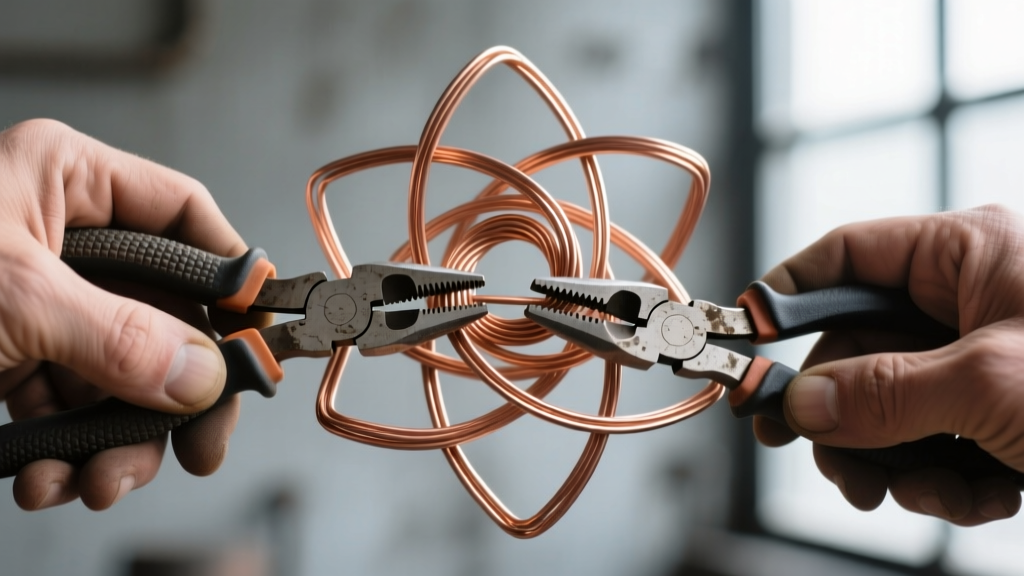
The delicate, cobweb-like wire weaving of the early 2020s has given way to bold, sculptural, and architectural wire work in 2026. Designers are manipulating 10-gauge to 14-gauge (2.58mm to 1.62mm) dead-soft and half-hard wires to create structural cuffs, asymmetric ear cuffs, and geometric pendants. This trend demands a complete overhaul of your plier collection.
Torque, Ergonomics, and Jaw Coatings
Bending 12-gauge sterling silver or copper requires immense hand torque. Using standard, narrow-handled pliers is a direct path to carpal tunnel syndrome and tendonitis. The 2026 workbench requires dual-leaf spring pliers with wide, cushioned ergonomic grips. Brands like Lindstrom and Wubbers dominate this space. Furthermore, jaw coating is critical. When manipulating heavy-gauge half-hard wire, standard serrated steel jaws will mar the metal, requiring hours of filing and sanding to remove tool marks.
Pro Tip: For heavy-gauge architectural bends, always use a rawhide or nylon-jaw mallet in conjunction with a steel bench block. Never use steel-on-steel hammering directly on your finished wire, as it will work-harden the metal unevenly and cause micro-fractures.
Below is a breakdown of the essential plier jaw types and their specific applications for this year's heavy-gauge trends:
| Jaw Type | Best Application (2026 Trends) | Material Compatibility | Failure Mode to Avoid |
|---|---|---|---|
| Nylon Jaw | Straightening heavy wire, closing jump rings without marring | Dead-soft copper, 14k Gold-Filled | Nylon degradation; replace jaws when pitted |
| Smooth Steel | Precision loop making, tight geometric bends | Half-hard Sterling Silver, Brass | Slippage on round wire; requires firm grip pressure |
| Serrated / Grooved | Gripping thick jump rings, pulling heavy wire through dies | Raw steel, thick gauge copper | Deep marring; never use on finished or plated surfaces |
| Rubber-Coated | Final adjustments, shaping ear wires | All finished metals, anodized titanium | Rubber tearing when exposed to sharp wire ends |
To source these specialized ergonomic tools, established suppliers like Rio Grande offer professional-grade selections that far outlast the budget kits found on general e-commerce platforms.
The Upcycling Movement: Dismantling & Eco-Resin Tooling
Sustainability is no longer a niche; it is a core pillar of 2026 jewelry design. The trend of deconstructing vintage, broken, or thrifted jewelry to harvest gemstones and precious metals requires a delicate touch and specialized cutting tools. Furthermore, the integration of bio-based eco-resins to encapsulate these harvested elements requires specific molding equipment.
Precision Dismantling with Jeweler's Saws
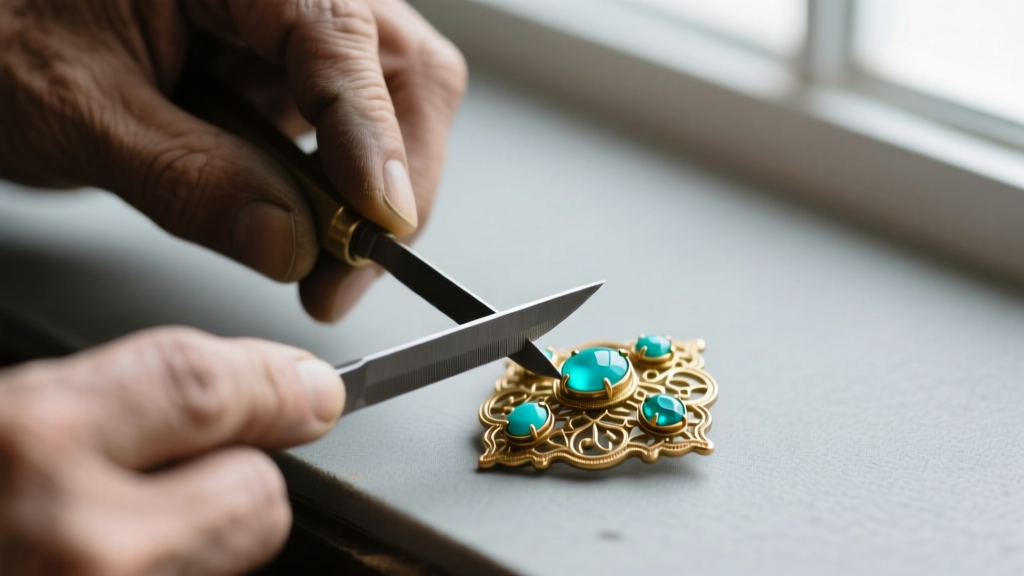
When harvesting a turquoise cabochon from a vintage brass setting, using wire cutters will almost certainly crush the stone due to the uneven distribution of pressure. The correct tool is a high-tension jeweler's saw, such as the Knew Concepts titanium saw frame, paired with ultra-fine blades. For cutting through brass or silver bezel walls without nicking the stone, a 2/0 or 4/0 blade is required. The Knew Concepts frame maintains extreme blade tension, preventing the blade from snapping when navigating the tight curves of vintage settings. Expert metallurgists and instructors featured on OttoFrei consistently emphasize that blade lubrication with beeswax or specialized cutting oil is non-negotiable when dismantling hardened vintage alloys.
Eco-Resin Molding & Curing
Once harvested, upcycled elements are frequently set in eco-resins. The tools to make jewelry with resin have shifted away from rigid plastic molds to high-durometer platinum silicone molds. To achieve the glass-like finish demanded by 2026 consumers, makers are utilizing pressure pots (operating at 40-60 PSI) to eliminate micro-bubbles during the curing process. A standard air compressor paired with a sealed pressure tank is now considered a baseline investment for any resin-focused jeweler.
Data Deep Dive: 2026 Tool Investment ROI for Indie Makers
Upgrading your workbench requires capital. However, analyzing the Return on Investment (ROI) reveals that premium tools drastically reduce material waste and production time. Consider the cost of ruined materials: snapping a 12-gauge sterling silver wire due to poor plier leverage, or oxidizing a 14k gold-filled chain link with an uncalibrated welder, can cost more in a single afternoon than the price differential between budget and professional tools.
- Ergonomic Pliers (Investment: $60-$120 per pair): Reduces hand fatigue, increasing daily production capacity by an estimated 30%. Prevents medical leave for repetitive strain injuries.
- Pulse Arc Welder (Investment: $800-$1,500): Enables the permanent jewelry service, which commands a 400% markup on raw chain materials. ROI is typically achieved within 15-20 client sessions.
- Titanium Jeweler's Saw Frame (Investment: $80-$150): Reduces blade breakage by up to 70% compared to standard steel frames, saving hundreds of dollars annually in replacement blades and lost time.
Conclusion: Future-Proofing Your Workbench
The tools to make jewelry in 2026 are a direct reflection of the industry's demand for higher quality, sustainable practices, and specialized services. By aligning your equipment investments with current style trends—whether that means adopting micro-welding technology for permanent jewelry, upgrading to ergonomic heavy-duty pliers for sculptural wire work, or mastering the jeweler's saw for sustainable upcycling—you position your brand at the forefront of the market. Audit your workbench today, identify the mechanical bottlenecks holding back your designs, and invest in the precision equipment required to execute your 2026 vision.


