Fixing Structural Flaws When Making Wire Wrap Jewelry
Fix loose stones, slipped wires, and tool marks. Our expert troubleshooting guide for making wire wrap jewelry covers gauge fixes and structural repair.

The Anatomy of a Failed Wire Wrap
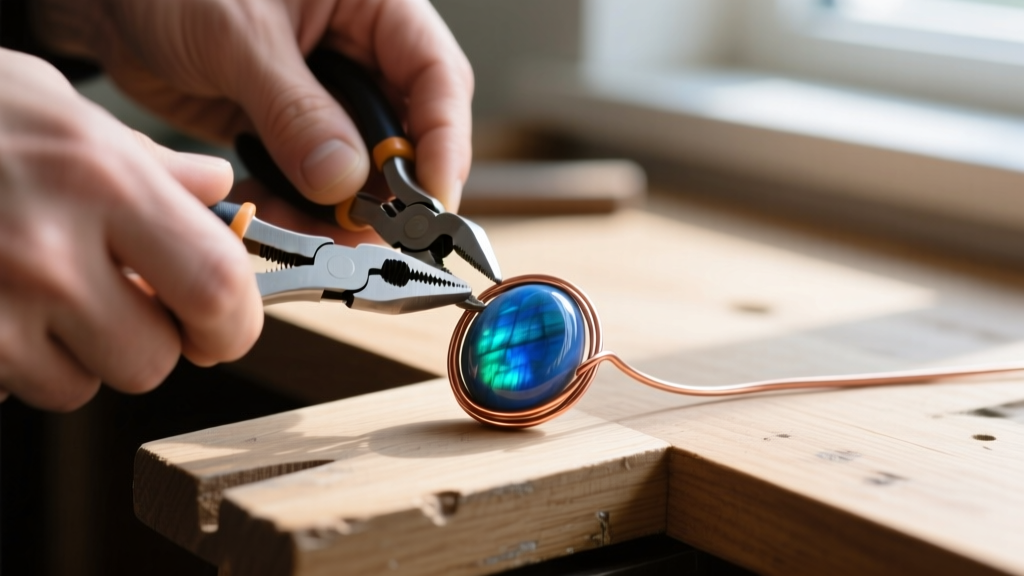
There are few things more frustrating in the jewelry studio than spending three hours weaving an intricate pendant, only for the cabochon to pop out the moment you apply the final polish. When making wire wrap jewelry, structural integrity is just as important as aesthetic beauty. Unlike soldered jewelry, wire-wrapped pieces rely entirely on mechanical tension, friction, and the metallurgical properties of the wire to hold together. Understanding why a piece fails is the first step toward mastering the craft. This troubleshooting guide dives deep into the most common structural flaws encountered by both novice and intermediate wire artists, offering precise, actionable solutions rooted in metalworking physics.
The 'Popped Stone' Phenomenon: Why Cabochons Slip
If your stones are falling out of their bezels, the issue almost always traces back to a mismatch between wire temper, gauge, and the stone's girdle depth. A cabochon is held in place by the frame wire being pushed tightly against the slope of the stone's edge. If the wire is too soft, it will stretch and lose its grip. If the frame is too thick, it won't conform to the stone's micro-curves.
Diagnosing Frame Tension vs. Wire Gauge
Many beginners default to 20-gauge dead soft wire for their base frames because it is easy to manipulate. However, dead soft wire lacks the 'memory' and tensile strength required to maintain continuous inward pressure on a heavy stone. According to metallurgical guidelines from Rio Grande, half-hard wire has been drawn through a die and work-hardened to a specific tensile strength, giving it the spring-back necessary to grip a cabochon securely.
| Stone Weight / Size | Recommended Frame Gauge | Required Temper | Weaver Gauge |
|---|---|---|---|
| Small (Under 20mm) | 22-Gauge | Half-Hard | 28-Gauge Dead Soft |
| Medium (20mm - 35mm) | 20-Gauge | Half-Hard | 26 or 28-Gauge Dead Soft |
| Large (Over 35mm) | 18-Gauge or 16-Gauge | Half-Hard | 24 or 26-Gauge Dead Soft |
The Fix: If your stone is slipping, you likely need to step up your frame wire to a half-hard temper. Additionally, ensure your weaver wire is pulled taut across the girdle. A loose weaver acts like a lubricant, allowing the stone to slide out. Use a pair of flat-nose pliers to firmly press the frame wire into the stone's edge before locking it down with the weaver.
Tool Marring and Scratches: Prevention and Recovery
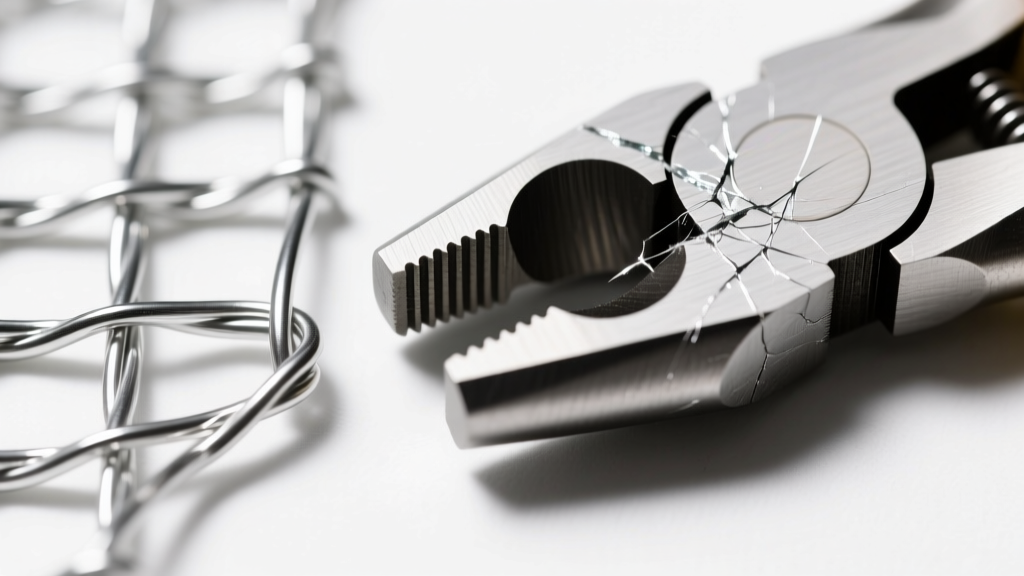
Nothing degrades the perceived value of a wire-wrapped pendant faster than deep gouges and scratches on the metal. These marks occur when hardened steel pliers bite into softer metals like sterling silver, copper, or gold-filled wire. Once a deep scratch is introduced into 24-gauge weaver wire, it creates a stress point that can lead to snapping.
Upgrading Your Jaw Protection
The most effective preventative measure is utilizing nylon-jaw pliers for all bending and gripping tasks. Brands like Beadalon and Tronex offer high-quality nylon-jaw chain-nose and flat-nose pliers that grip firmly without biting. However, nylon jaws can sometimes lack the precision needed for extremely tight, microscopic weaves. In these scenarios, you must tape the jaws of your steel pliers.
- Painter's Tape Method: Apply 3-4 layers of blue painter's tape to the jaws of your pliers. Replace the tape as soon as it wears thin.
- Tool Magic / Dip Coating: Submerge your plier jaws in a rubberized tool dip (often found in hardware stores) to create a permanent, shock-absorbing grip.
- Brass Jaw Covers: For heavy-duty bending where nylon might flex too much, use slip-on brass jaw covers, which are softer than silver and copper and will not mar the wire.
Recovery Protocol: If you have already marred the wire, do not attempt to sand it out with high-grit sandpaper, as this will flatten your round wire and ruin the weave's geometry. Instead, use a Fire Mountain Gems recommended Pro-Polish pad or tumble the finished piece in a rotary tumbler with stainless steel shot and a drop of Dawn dish soap for 45 minutes. The shot will burnish the surface, compressing the scratches and restoring a high shine without removing metal.
The Over-Work-Hardening Trap: Snapping Wires Mid-Wrap
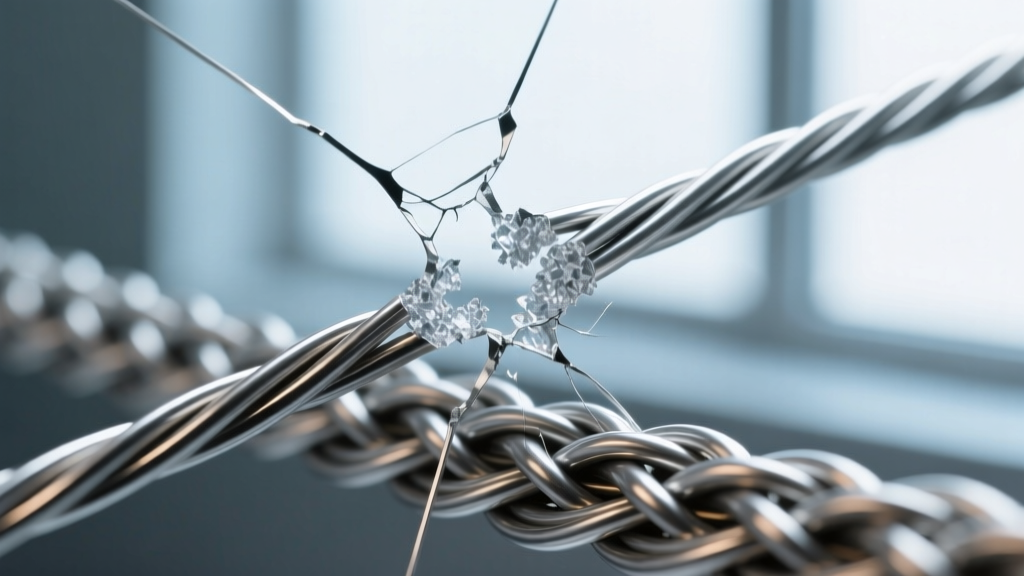
Wire wrapping involves repeatedly bending, twisting, and pulling metal. Every time you bend a wire, you alter its crystalline structure, making it harder and more brittle—a process known as work-hardening. While work-hardening is desirable for the final structural rigidity of a pendant, over-working the wire during the weaving process will cause it to snap abruptly, often ruining hours of work.
Recognizing Metal Fatigue
You can feel work-hardening happening in your hands. The wire will transition from feeling smooth and pliable to feeling 'springy' and resistant. If you are making wire wrap jewelry with intricate woven bails or tight rosettes, the wire at the apex of the bends will fatigue rapidly.
The Fix: You must anneal the wire. If you are working with copper or fine silver, you can use a micro-torch to heat the specific stressed area until it glows a dull cherry red, then quench it in water. This resets the crystalline structure, returning the wire to a dead-soft state. Note: Do not quench sterling silver in water immediately after annealing, as the thermal shock can cause the copper alloy inside to become brittle. Air cool sterling silver on a soldering block instead.
Asymmetrical Bails and Bail Slippage
A common structural annoyance is a bail that refuses to sit straight on a chain, causing the pendant to hang crookedly. This usually happens when the bail wires are not perfectly symmetrical, or when the binding wraps at the base of the bail are uneven.
To troubleshoot a crooked bail, examine the 'shoulders' where the bail wires transition from the main frame of the pendant. If one shoulder is pulled tighter than the other, the bail will naturally twist toward the side of higher tension. Use a mandrel or a thick steel jump ring to reshape the bail loop, and apply a small drop of cyanoacrylate (jewelry glue) under the final binding wrap to lock the wires in place, preventing them from sliding down the neck of the pendant over time.
Pro-Tip for Hiding Minor Flaws: If your piece has minor, unavoidable scratches or uneven weaves, use Liver of Sulfur to oxidize the metal, then polish only the high spots with a polishing cloth. The resulting antique, high-contrast finish draws the eye to the texture of the weave and completely masks minor tool marring and asymmetrical imperfections.
Final Thoughts on Structural Integrity
Troubleshooting wire wrap jewelry is an exercise in material science as much as it is an art form. By respecting the temper of your metals, protecting your wire from steel jaws, and understanding the limits of work-hardening, you will drastically reduce your failure rate. Keep a dedicated 'scrap and salvage' bin on your bench; every snapped wire and popped stone is a masterclass in tension and geometry. With these diagnostic tools in hand, your next piece will not only look stunning but will withstand the test of daily wear.


