Budgeting Christmas Beads for Jewelry Making: 2026 Value Guide
Discover the best value christmas beads for jewelry making in 2026. Compare bulk acrylics, glass, and crystals to maximize your holiday craft budget.

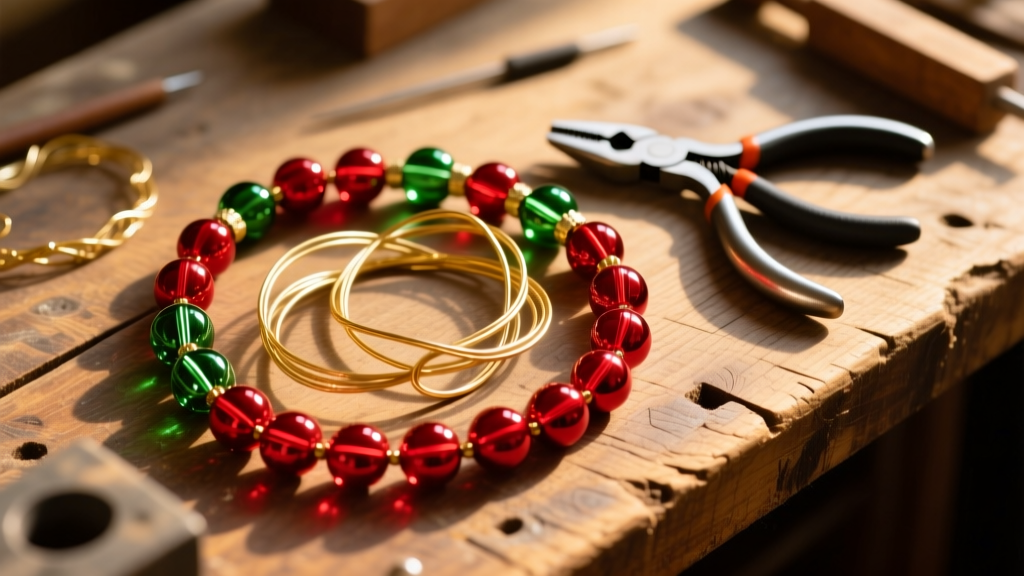
The True Cost of Holiday Beading: Bulk vs. Boutique
As the 2026 holiday season approaches, jewelry makers and small business owners face a familiar challenge: sourcing high-quality materials without eroding profit margins. When shopping for christmas beads for jewelry making, the sticker price per strand is only a fraction of the true cost. To accurately assess value, you must calculate the cost-per-bead, factor in breakage rates during transit and assembly, and consider the perceived value of the finished piece. A $2.00 strand of 100 acrylic beads might seem like a steal compared to a $12.00 strand of Czech glass, but if the acrylic beads feature visible seam lines and degrade under UV light, your brand's reputation takes a hit. Conversely, boutique lampwork beads offer unparalleled artistry but often carry Minimum Order Quantities (MOQs) that tie up crucial cash flow. This guide breaks down the economics of holiday beading, helping you allocate your 2026 craft budget where it yields the highest return on investment.
Material Breakdown: Acrylic, Glass, and Crystal
Not all holiday beads are created equal. The material you choose dictates not only your upfront costs but also the durability and retail pricing tier of your finished jewelry. Below is a comparative analysis of the three most common materials used in festive jewelry lines.
| Material Type | Avg Cost (100pcs 8mm) | Mohs Hardness | Breakage Rate | Best Application |
|---|---|---|---|---|
| Injection-Molded Acrylic | $1.50 - $3.00 | 2.0 - 3.0 | < 1% | Children's jewelry, high-volume craft fairs |
| Czech Fire-Polished Glass | $6.00 - $14.00 | 5.5 - 6.0 | 3% - 5% | Boutique retail, premium gift sets |
| Lead-Free Crystal | $18.00 - $35.00 | 6.0 - 7.0 | 4% - 8% | Luxury collections, bridal holiday events |
Acrylic: The Volume Play and Its Pitfalls
Acrylic beads are lightweight, virtually shatterproof, and incredibly cheap. For makers producing high volumes of low-cost items—like holiday-themed keychains or children's bracelets—they are a logical choice. However, from a value assessment perspective, acrylic has significant drawbacks. Cheaper injection-molded acrylics often feature prominent seam lines that require tedious hand-sanding to remove. Furthermore, lower-grade acrylics are prone to UV yellowing and chemical degradation when exposed to perfumes or lotions. If you must use acrylic, seek out 'cast acrylic' rather than 'injection-molded,' as it offers better optical clarity and a glass-like finish, albeit at a 20% to 30% price premium.
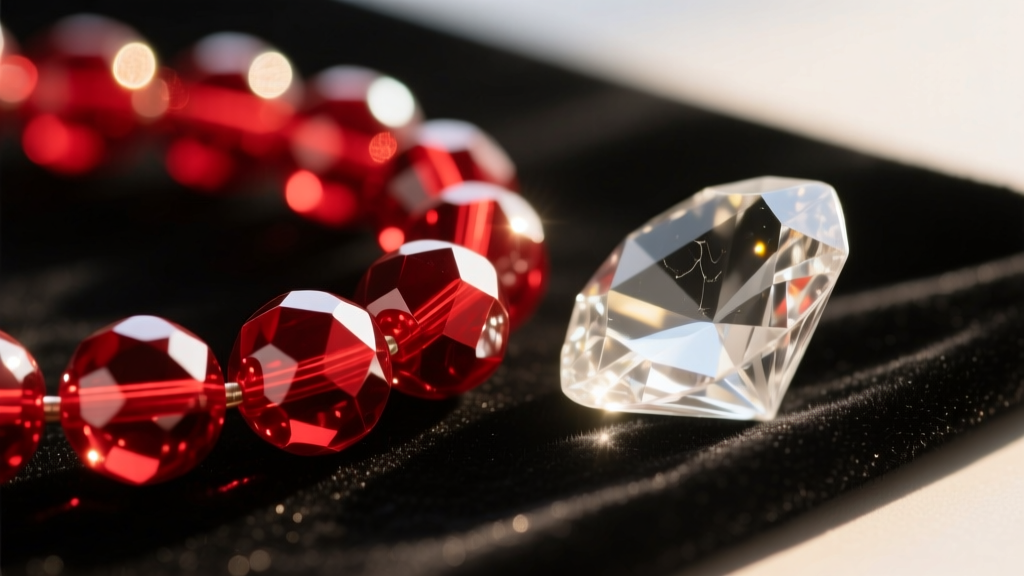
Czech Glass: The Artisan Middle-Ground
For most independent jewelry designers, Czech fire-polished glass represents the sweet spot of the budget-to-value ratio. Brands like Fire Mountain Gems stock extensive lines of these beads, which are faceted and then heated to smooth the edges, resulting in a brilliant sparkle without the sharp edges that can fray beading thread. An 8mm roundel in a festive 'Siam Ruby' or 'Emerald' typically costs between $0.08 and $0.14 per bead when bought in factory packs. The glass is durable enough for everyday wear (Mohs 5.5) and carries a perceived value that easily supports a $35 to $60 retail price point for a finished bracelet.
Crystal: Navigating the 2026 Lead-Free Mandates
Historically, lead oxide was added to crystal to increase its refractive index, giving it that signature rainbow sparkle. However, stringent global safety regulations have accelerated the shift toward lead-free alternatives. When sourcing premium crystal beads for the 2026 season, look to Preciosa, a Czech manufacturer that produces high-grade, eco-friendly lead-free crystals. While they cost roughly 15% more than traditional leaded crystals, they are essential for compliance in markets like the EU and California (Prop 65). Generic 'crystal' beads from unverified overseas marketplaces often lack consistent facet alignment and may still contain unsafe levels of heavy metals, making them a massive liability risk disguised as a budget bargain.
Sourcing Strategies for the 2026 Holiday Season
Where you buy is just as critical as what you buy. The global supply chain for craft materials has stabilized, but shipping delays during Q3 and Q4 remain a reality. To maximize your budget, you must align your sourcing strategy with your production timeline.
Direct-from-Manufacturer (Alibaba / AliExpress)
Ordering directly from manufacturers in Yiwu or Guangzhou can reduce your cost-per-bead by up to 70%. However, this route requires strict quality control. Always order sample strands first to check for dye lot consistency, hole sizing, and structural integrity. More importantly, you must place your bulk orders by late July to ensure delivery before the October holiday rush. The hidden costs here include high shipping fees for small parcels and the lack of buyer protection if a batch arrives with a 20% defect rate.
Domestic Distributors (The Reliable Middleman)
Domestic suppliers like Artbeads or Fire Mountain Gems charge a premium, but they offer immense hidden value: free shipping thresholds, consistent dye lots, and immediate inventory. For a small business, the ability to reorder a specific shade of 'Montana Blue' glass beads in 48 hours during a holiday rush is worth the extra $4 per strand. Utilize their tiered pricing structures; buying full factory packs (usually 50 to 100 strands) often drops the unit price close to wholesale levels.
Hardware Pairings: Gauge Sizes and Hole Diameters
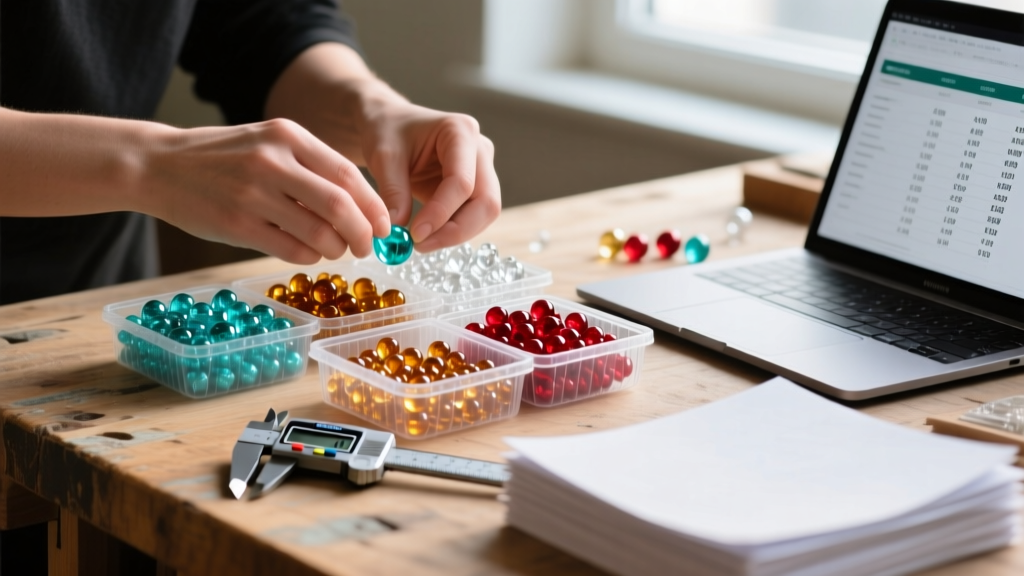
A common budget leak in jewelry making occurs when beads and findings are incompatible, leading to wasted materials and broken components. When sourcing christmas beads for jewelry making, always verify the hole diameter. Standard 8mm glass beads typically have a 0.8mm to 1.0mm hole. This accommodates up to 20-gauge (0.81mm) wire. If you attempt to force 18-gauge wire through a standard glass bead, you risk cracking the bead from the inside out—a costly mistake when working with premium crystals.
For wire-wrapped holiday pendants, invest in bulk spools of 24-gauge and 26-gauge dead-soft copper or gold-filled wire. Buying wire in 1-ounce spools rather than pre-cut headpins reduces your wire cost by approximately 60%. A high-quality flush cutter and a digital caliper are non-negotiable investments; a $25 digital caliper will save you hundreds of dollars in ruined beads and mismatched findings over the course of a year.
Calculating Your Profit Margins on Holiday Jewelry
To truly assess the value of your bead purchases, you must run them through a rigorous Cost of Goods Sold (COGS) formula. Many hobbyists fail to account for the 'invisible' materials: crimp beads, wire guards, and polishing cloths. Here is a practical framework for pricing a holiday beaded bracelet in 2026:
- Primary Beads: 25 x 8mm Czech Glass Roundels @ $0.10 = $2.50
- Accent Beads: 4 x 4mm Gold-Filled Spacer Beads @ $0.15 = $0.60
- Stringing Material: 10 inches of 49-strand beading wire = $0.45
- Findings: 2 Crimp tubes, 1 Lobster clasp, 1 Jump ring = $1.20
- Packaging: Velvet pouch and branded backing card = $1.50
- Total Material COGS: $6.25
Using the standard industry markup of 3x to 4x for wholesale and retail respectively, this bracelet should wholesale for $18.75 and retail for $25.00 to $30.00. If you sourced cheap acrylic beads instead, your material COGS might drop to $2.15, but the perceived value drops drastically, forcing you to cap your retail price at $12.00, ultimately yielding a lower net profit per hour of labor.
Final Verdict: Where to Allocate Your Budget
When evaluating christmas beads for jewelry making, the cheapest option is rarely the most profitable. For the 2026 season, allocate 70% of your bead budget to high-quality Czech glass and lead-free crystals for your signature retail pieces. Reserve the remaining 30% for premium acrylics and base metals to create low-cost 'impulse buy' items for craft fairs or social media giveaways. By understanding the intersection of material durability, optical clarity, and supply chain reliability, you can build a holiday jewelry collection that delights your customers and protects your bottom line.


