Beginner's Guide to Choosing a Permanent Jewelry Welder
Learn how to choose your first permanent jewelry welder. We cover pulse settings, argon gas, pricing, and top beginner models to start your business.

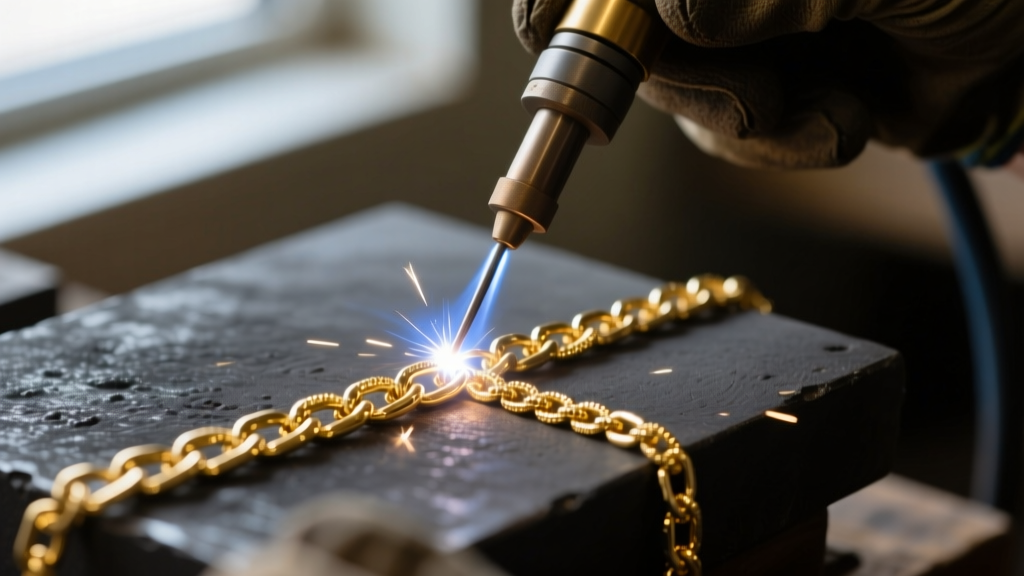
The permanent jewelry trend has evolved from a fleeting pop-up fad into a staple service for independent jewelers, crafters, and boutique owners. As we navigate 2026, the barrier to entry has lowered significantly, but the technical knowledge required to produce safe, lasting welds remains high. If you are looking to add custom-fit, clasp-free chains to your repertoire, investing in the right equipment is your first critical step. This guide breaks down exactly what a permanent jewelry welder is, how to choose the right model for your budget, and the metallurgical realities of fusing delicate chains without ruining them.
Understanding the Technology: CD vs. Micro-TIG
When shopping for a permanent jewelry welder, you will primarily encounter two types of technology: Capacitive Discharge (CD) and Micro-TIG (Tungsten Inert Gas). Understanding the difference is vital for your business model and the types of chains you intend to sell.
Capacitive Discharge (CD) Welders
CD welders are the most common entry-point for beginners. They work by storing electrical energy in capacitors and releasing it in a rapid, high-intensity burst (measured in Joules or Watt-seconds). This microsecond burst fuses the metal before the heat can travel down the chain, preventing damage to nearby links or gemstone beads. CD welders are highly forgiving, portable, and relatively affordable, making them the undisputed champions of the pop-up event circuit.
Micro-TIG Welders
Micro-TIG welders use a continuous, highly controlled electrical arc. While they offer pinpoint precision and are phenomenal for intricate ring resizing or heavy clasp soldering, they have a steeper learning curve. The continuous heat means you must have excellent foot-pedal control to avoid melting a delicate 1.0mm cable chain. For pure chain-welding at high volume, a high-quality CD welder is often preferred by beginners due to its consistent, repeatable pulse output.
The Non-Negotiable Role of Argon Gas
One of the most common beginner mistakes is attempting to weld precious metals in ambient air. When sterling silver or karat gold is exposed to the extreme heat of an electrical arc in the presence of oxygen, it instantly oxidizes. This results in a dark, crusty firescale that weakens the weld and ruins the aesthetic of the chain.
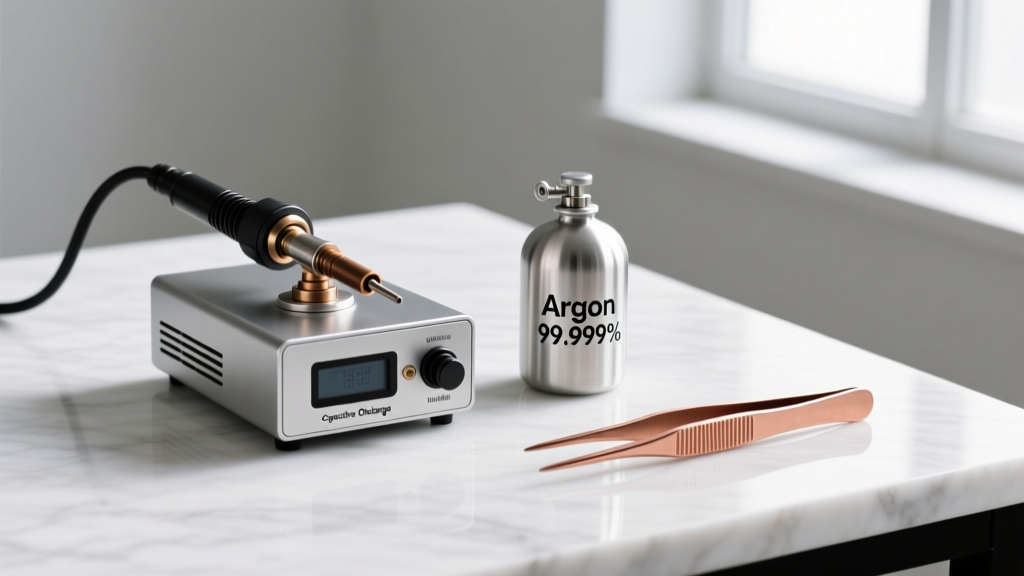
To prevent this, your permanent jewelry welder must be equipped with an argon gas shield. Argon is an inert gas that displaces oxygen around the weld pool, ensuring a clean, bright, and structurally sound fusion. According to industry standards outlined by Rio Grande, you should use 99.99% pure argon. You will need a small regulator and a specialized hose to direct a gentle stream of gas over the tungsten electrode and the chain link. While it adds to your initial overhead, selling oxidized, brittle chains will destroy your brand reputation instantly.
Pricing Tiers and What to Buy in 2026
The market is currently flooded with cheap, unbranded welders, but when you are welding near a client's skin, reliability and safety are paramount. Here is a breakdown of what you can expect to spend based on current 2026 market rates.
| Welder Tier | Technology | Price Range | Best For |
|---|---|---|---|
| Entry-Level | Basic CD | $400 - $800 | Hobbyists, low-volume pop-ups |
| Mid-Tier Pro | Advanced CD / Pulse | $1,200 - $2,500 | Full-time mobile jewelers, boutiques |
| Master Studio | Laser / Micro-TIG | $4,500 - $8,000+ | High-end studios, complex repairs |
For a beginner, a mid-tier CD pulse welder from a reputable brand like Sunstone Welders offers the best balance of safety, consistency, and warranty support. Avoid ultra-cheap imports that lack proper grounding or shielding gas ports.
Dialing In Your Pulse Settings by Metal
A permanent jewelry welder is only as good as its operator's understanding of metallurgy. Different alloys conduct heat and melt at vastly different rates. The energy output (Joules) must be carefully calibrated to the wire gauge and metal type of your chain.
- 14k Gold-Filled (1.0mm - 1.5mm): Gold-filled wire has a brass core. Brass melts at a lower temperature than the gold exterior. Use a lower pulse (12-18 Joules). If you use too much energy, you will blow a hole straight through the link, vaporizing the brass core.
- Sterling Silver (1.2mm - 2.0mm): Silver is highly thermally conductive. It pulls heat away from the weld zone rapidly, requiring a higher energy burst (20-35 Joules) to achieve proper fusion. Always use maximum argon flow to prevent severe firescale.
- Solid 14k Gold (1.0mm - 1.5mm): Solid gold requires a balanced pulse (15-25 Joules). It melts cleanly but can warp if the pulse duration is too long.
Always keep a piece of scrap chain from your supplier to run test welds before touching the client's custom-fitted piece.
Essential Workspace and Safety Gear
Welding jewelry produces intense ultraviolet (UV) and infrared (IR) light, similar to a miniature arc welding flash. Staring at the arc without protection can cause 'arc eye,' a painful condition akin to a sunburn on your cornea.
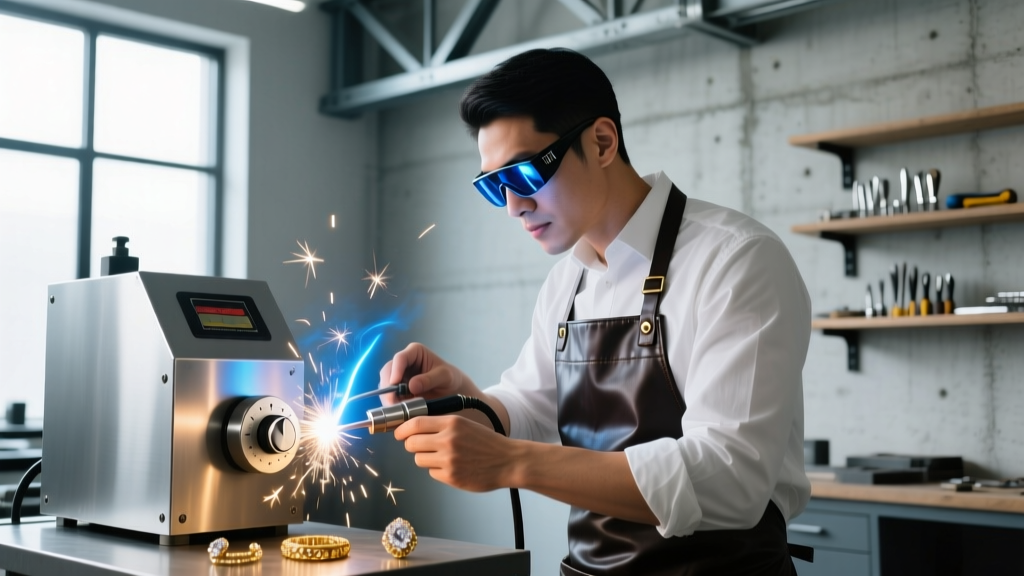
You must invest in auto-darkening welding glasses specifically rated for micro-welding (typically Shade #10 or #11). Standard sunglasses or cheap crafting goggles will not block the harmful UV spectrum. Additionally, wear a heavy leather apron to protect your clothing and skin from microscopic sparks, and ensure your workspace is well-ventilated to clear any trace metal fumes. Always use copper or brass tweezers to hold the chain; steel tweezers can magnetize or accidentally weld themselves to the chain if they touch the arc.
Troubleshooting Common Weld Failures
Even with the best permanent jewelry welder, beginners will encounter failed welds. Here is how to diagnose and fix the three most common issues.
1. The 'Blown' Link (Holes in the Metal)
Cause: Too much energy (Joules) or holding the electrode too close to the metal.
Fix: Drop your pulse setting by 3-5 Joules. Ensure your tungsten electrode is sharpened to a fine point and positioned exactly 1mm above the link gap.
2. The Weak Weld (Snaps with a Light Tug)
Cause: Dirty metal, oxidation, or a blunt tungsten electrode. If the metal has skin oils, lotions, or tarnish, the electrical arc will scatter, resulting in a superficial weld that looks complete but lacks penetration.
Fix: Clean the chain ends with isopropyl alcohol before welding. Sharpen your tungsten electrode using a dedicated diamond file. A blunt electrode causes the arc to wander, creating a wide, weak weld pool.
3. Porosity (Tiny Bubbles in the Weld)
Cause: Inadequate argon gas coverage or welding too quickly.
Fix: Increase your argon flow rate. Ensure the gas nozzle is directed precisely at the weld zone. Wait an extra second after the pulse to let the argon post-flow cover the cooling metal.
Final Thoughts
Mastering a permanent jewelry welder is a blend of technical precision and artistic care. By investing in a reliable CD pulse welder, respecting the necessity of pure argon gas, and taking the time to understand the thermal properties of your chains, you will build a foundation for a thriving, high-end jewelry business. Start with scrap metal, document your pulse settings for every chain style you carry, and prioritize safety above all else. The perfect, seamless weld is entirely within your reach.


