Beginner Guide to Lala Links Permanent Jewelry Welding
Learn how to source, prep, and pulse-arc weld delicate lala links permanent jewelry. Expert settings, tool tips, and troubleshooting for beginners.

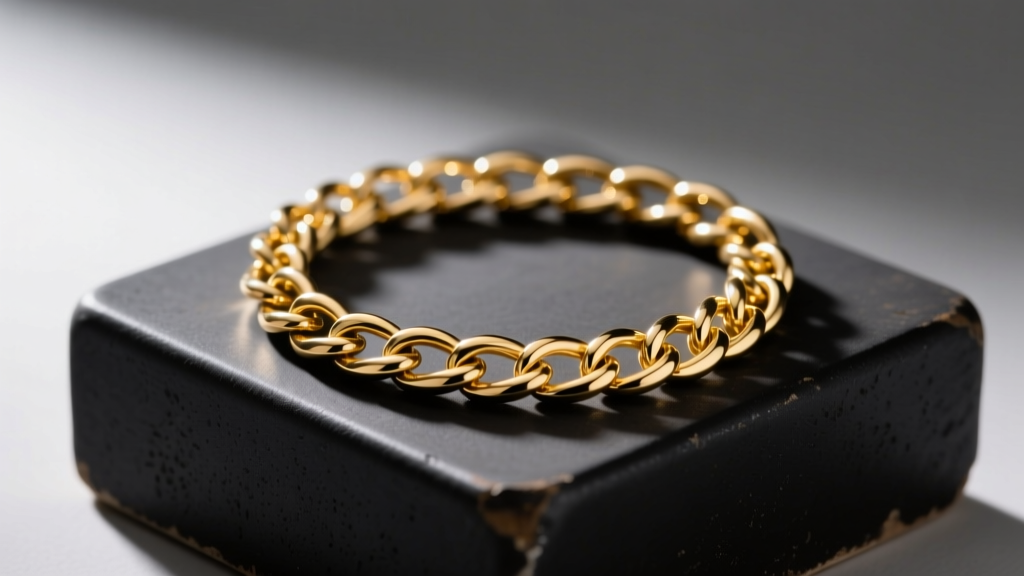
The permanent jewelry industry has evolved rapidly, and as we move through 2026, client preferences have shifted heavily toward ultra-delicate, lightweight chains. Among the most highly requested styles is the lala links permanent jewelry chain. Known for its elegant, slightly elongated oval links and exceptional drape, the lala link style offers high profit margins and a luxurious aesthetic. However, its delicate wire thickness makes it notoriously unforgiving for beginners using pulse arc welders.
This comprehensive guide will walk you through the metallurgy, sourcing, tooling, and exact welding parameters required to master lala links without melting your inventory or burning your clients.
The Anatomy of Lala Links
Before striking an arc, you must understand the physical geometry of the chain you are working with. Lala links typically feature an elongated paperclip or oval silhouette, measuring approximately 1.2mm to 1.6mm in width, with a wire gauge thickness of around 20 to 22 gauge (0.8mm to 0.6mm).
Material Science: 14k Gold-Filled vs. Solid 14k
Most lala links on the market are crafted from 14k gold-filled (GF) wire. This means a thick layer of 14k gold is mechanically bonded to a brass core. When welding 14k GF lala links, your primary risk is burn-through. If your welder's energy output is too high, you will vaporize the gold layer and melt the underlying brass, resulting in a brittle, blackened weld that will snap under minimal tension. Solid 14k gold lala links, while significantly more expensive, are homogeneous and far more forgiving, allowing for slightly higher energy settings and stronger molecular fusions.
Sourcing Authentic Lala Links in 2026
Sourcing high-quality chain is critical. Cheap imports often feature poorly soldered factory links that will melt instantly under a pulse arc welder. When purchasing, look for suppliers who guarantee machine-soldered links and precise karat weight.
- 14k Gold-Filled Lala Links: Typically wholesale between $18 and $28 per foot, depending on the exact weight and supplier.
- Solid 14k Gold Lala Links: Priced dynamically based on the spot price of gold, usually ranging from $90 to $160+ per foot.
Reputable industry suppliers like Rio Grande or specialized permanent jewelry wholesalers are your best bet for consistent quality. Always request a sample foot to test on your specific welder before committing to bulk spools.
Essential Tooling for Delicate Chains
Working with micro-chains requires precision instruments. Standard jewelry pliers will mar the delicate gold surfaces and crush the elongated links.
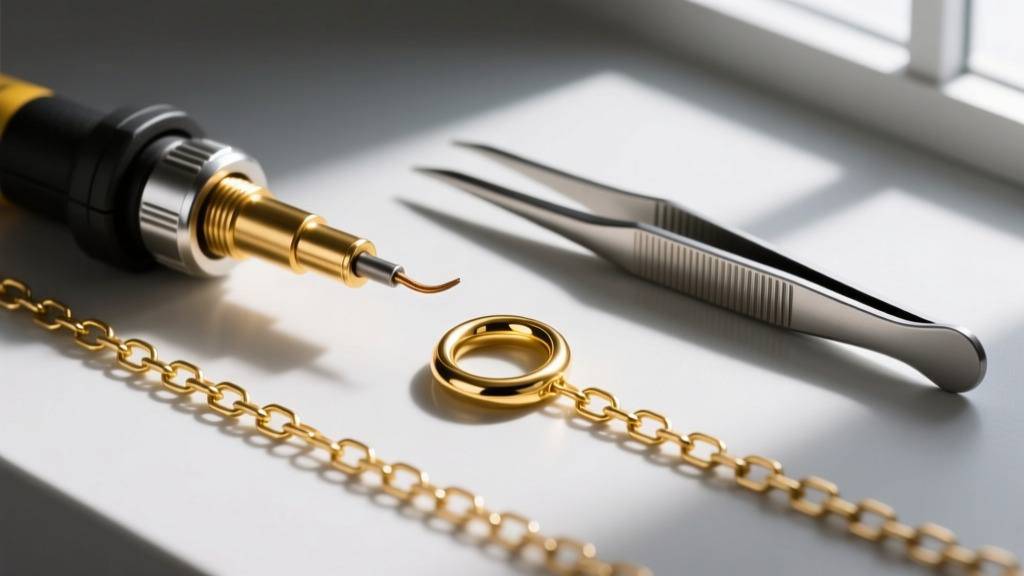
The Must-Have Toolkit
- Pulse Arc Welder: A high-precision machine like the Sunstone Orion mPulse is essential for its low-energy micro-weld capabilities.
- Tweezers: Eurotool or PepeTools fine-point, non-magnetic titanium or brass tweezers. Steel tweezers can interfere with the welder's electromagnetic field and cause arc drift.
- Flush Cutters: Lindstrom or Tronex micro-flush cutters to ensure the chain ends are perfectly flat, leaving no sharp wire burrs.
- Jump Rings: 22-gauge or 24-gauge, 3mm or 4mm outer diameter (OD). The jump ring wire thickness must closely match the chain's wire thickness for a balanced weld.
- Argon Gas: 99.995% pure argon is non-negotiable to shield the tiny weld puddle from atmospheric oxygen.
Step-by-Step Welding Masterclass
Welding lala links permanent jewelry requires a steady hand and a methodical approach. Follow this exact sequence to ensure a seamless, durable bond.
Step 1: Chain Preparation and Sizing
Measure the chain around the client's wrist, adding a half-inch for comfort. Use your micro-flush cutters to snip the chain. Ensure the cut is made exactly at the factory solder joint of the end link, removing it entirely so you are left with a clean, open link to weld to.
Step 2: Jump Ring Alignment
Thread your 3mm 22-gauge jump ring through both end links of the lala chain. Using two pairs of fine-point tweezers, twist the jump ring closed. The seam must be perfectly flush. If you can feel a snag with your fingernail, the weld will fail or look visibly messy.
Step 3: Argon Gas and Positioning
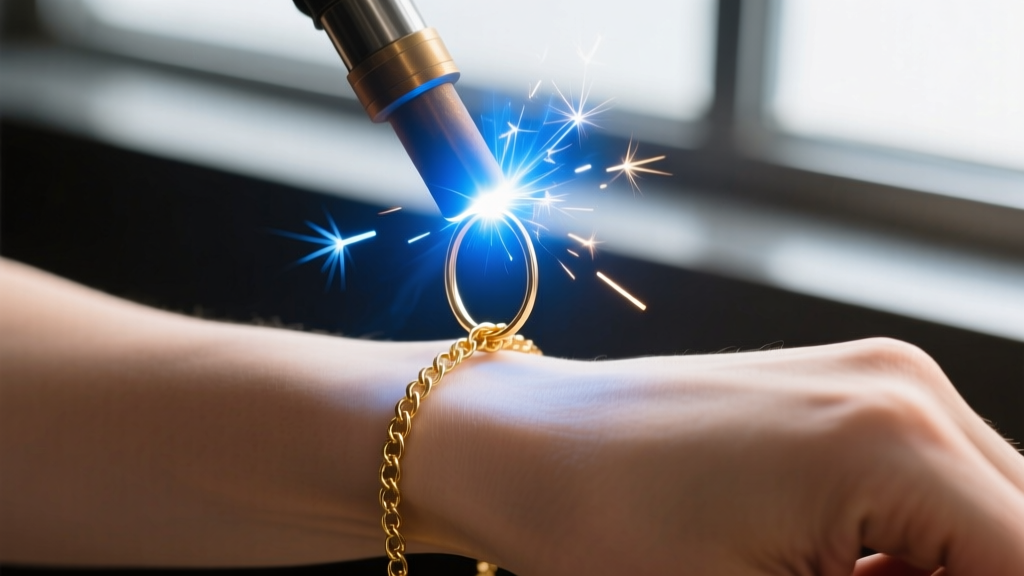
Turn on your argon gas and set the flow to 1.5 CFH (Cubic Feet per Hour). Position the chain flat against a ceramic welding block or directly on the client's wrist (using a protective leather or silicone barrier). Bring the tungsten electrode down until it is approximately 1mm to 1.5mm away from the jump ring seam.
Step 4: The Micro-Weld
Look through your welding microscope. Align the electrode exactly over the seam of the jump ring. Tap the foot pedal. The arc should flash for a fraction of a second, creating a tiny, bright silver puddle that fuses the jump ring to itself and the adjacent chain links.
Optimal Pulse Arc Welder Settings
Dialing in your machine is where most beginners fail. Below is a baseline data table for welding 14k Gold-Filled Lala Links using an Orion-style pulse arc welder. Note: Always test on a scrap piece of chain first, as ambient humidity and electrode sharpness can alter results.
| Parameter | 14k Gold-Filled Lala Links | Solid 14k Gold Lala Links |
|---|---|---|
| Energy (Ws) | 30 - 38 Ws | 40 - 48 Ws |
| Pulse Time | Short / Micro | Short |
| Argon Flow Rate | 1.5 CFH | 1.5 CFH |
| Electrode Gap | 1.0mm - 1.2mm | 1.2mm - 1.5mm |
| Jump Ring Size | 3mm OD / 22 Gauge | 3mm OD / 22 Gauge |
Pro Tip: According to the technical experts at Sunstone Welders, keeping your tungsten electrode sharply filed to a fine point is critical when working with micro-chains. A blunt electrode will scatter the arc, potentially melting the delicate elongated links adjacent to your weld spot.
Troubleshooting Common Failure Modes
Even with the right settings, lala links can present unique challenges. Here is how to diagnose and fix the most common issues encountered by permanent jewelry artists.
Problem 1: The 'Black Soot' Weld
Symptom: The weld spot is covered in a dark, sooty residue that won't wipe off with alcohol.
Cause: Inadequate argon shielding or a dirty chain. The oxygen in the air is reacting with the heated brass core or copper alloys.
Solution: Increase your argon flow slightly to 2.0 CFH. Ensure the chain is wiped down with isopropyl alcohol before welding to remove skin oils and lotions.
Problem 2: Melting the Adjacent Links
Symptom: The jump ring welds, but the beautiful elongated lala links next to it melt into a shapeless ball.
Cause: Energy (Ws) is set too high, or the electrode gap is too wide, causing a broader, hotter arc.
Solution: Drop your energy by 4-5 Ws. Move the electrode closer to the metal (under 1mm) to concentrate the arc into a tighter, more precise pinpoint.
Problem 3: Brittle Welds That Snap
Symptom: The weld looks visually perfect, but the bracelet snaps when the client moves their arm.
Cause: You burned through the 14k gold layer and fused the brass core, which creates a structurally weak and brittle joint. Alternatively, the jump ring gap was too wide, and the metal didn't fully bridge the seam.
Solution: Lower your energy to prevent brass burn-through. Ensure your jump ring seam is completely flush before striking the arc.
Conclusion and Next Steps
Mastering lala links permanent jewelry welding is a rite of passage for serious artists in the industry. By respecting the delicate metallurgy of gold-filled chains, investing in precision micro-tooling, and strictly adhering to low-energy pulse arc settings, you can offer your clients a flawless, durable, and highly sought-after product. Practice on scrap spools until your muscle memory takes over, and soon, welding these micro-chains will become second nature.


