2026 Cost Guide: Making Jewelry With Stones on a Budget
Discover the true costs of making jewelry with stones in 2026. Compare wire wrapping, bezel setting, and stone sourcing to maximize your DIY budget.

The Real Cost of Making Jewelry With Stones: A 2026 Breakdown
When you first transition from basic beading to making jewelry with stones, the financial landscape shifts dramatically. You are no longer just buying strung beads; you are investing in lapidary materials, precious metals, and specialized setting tools. In 2026, the rising costs of raw silver and copper mean that DIY jewelers must be more strategic than ever. A single miscalculated bezel wall or a snapped piece of half-hard wire can eat into your profit margins or blow past your hobby budget.
This comprehensive budget assessment breaks down the exact costs of stone setting, comparing wire wrapping and soldered bezel techniques. We will analyze material grades, stone sourcing strategies, and the hidden failure modes that drain beginner budgets. Whether you are building a personal collection or launching an Etsy shop, understanding the unit economics of making jewelry with stones is the key to sustainable craftsmanship.
Stone Sourcing: Cabochons vs. Faceted Gems on a Budget
The foundation of your budget lies in the stones themselves. According to the GIA Gem Encyclopedia, the cut of a gemstone dictates both its price per carat and the setting method required. Faceted stones require precise prong or tension settings, demanding expensive burs and advanced metalworking skills. For budget-conscious makers, cabochons (smooth, polished, unfaceted stones) offer the highest value-to-effort ratio.
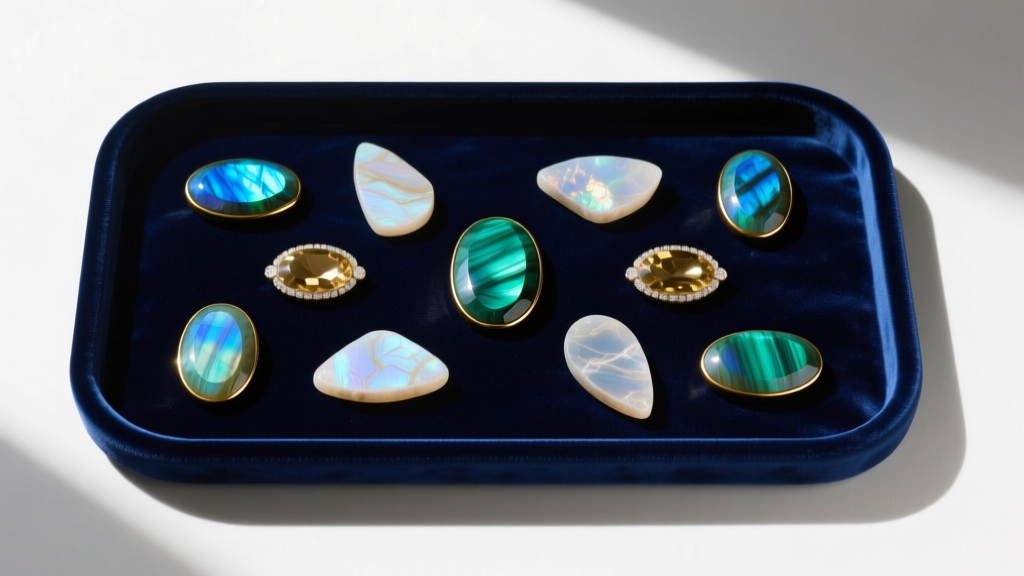
However, not all cabochons are priced equally. 'Calibrated' cabochons are cut to exact millimeter dimensions (e.g., 10x8mm oval), allowing you to purchase mass-produced, pre-made bezel cups. 'Freeform' cabochons are uniquely shaped by the lapidary artist, requiring you to fabricate custom bezels from scratch or use wire wrapping. While freeforms offer artistic flair, they increase your labor time and metal waste.
| Stone Type | Cut Style | Avg Cost (Per Piece) | Mohs Hardness | Best Budget Setting |
|---|---|---|---|---|
| Labradorite | Calibrated Oval | $3.50 - $8.00 | 6.0 - 6.5 | Pre-made Bezel Cup |
| Moonstone | Freeform Slice | $5.00 - $15.00 | 6.0 - 6.5 | Wire Wrapping |
| Turquoise | Calibrated Round | $12.00 - $25.00 | 5.0 - 6.0 | Custom Soldered Bezel |
| Amethyst | Faceted Pear | $8.00 - $20.00 | 7.0 | Prong Setting (High Cost) |
Setting Methods: Wire Wrapping vs. Soldered Bezel
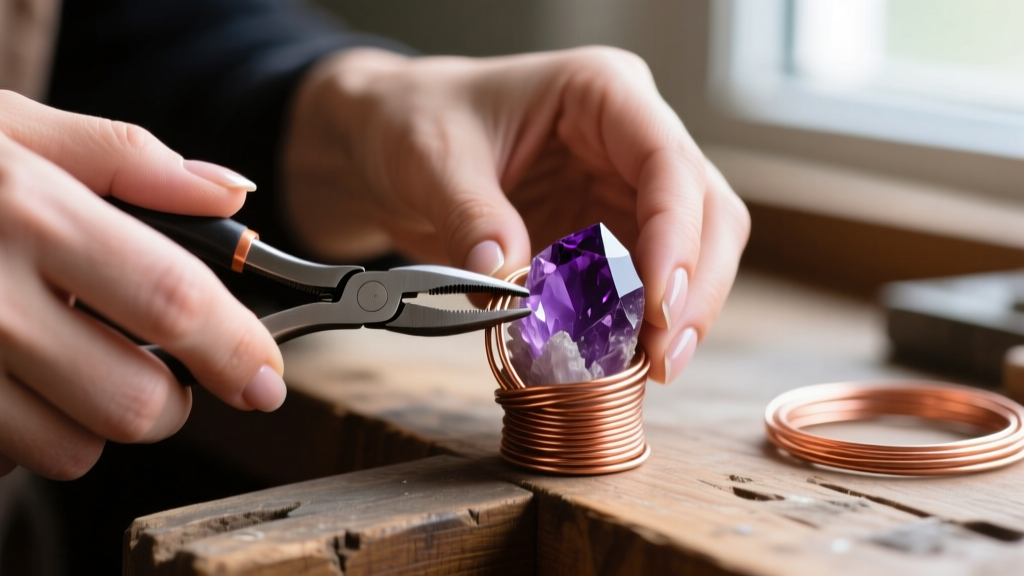
The technique you choose to secure your stones will dictate your ongoing material costs. Making jewelry with stones via wire wrapping requires minimal upfront tooling but consumes a steady stream of wire. Soldered bezel setting requires a massive upfront investment in torches and soldering blocks, but the per-unit metal cost can actually be lower if you fabricate your own settings.
Wire Wrapping Costs & Material Grades
Wire wrapping is the most accessible entry point. To create a secure, professional-looking pendant, you typically need a combination of structural wire and weaving wire. The industry standard for structural frames is 20-gauge or 22-gauge wire, while 24-gauge or 26-gauge wire is used for the intricate weaves that secure the stone.
Material choice is where your budget is tested. Bare copper is an excellent practice material, costing roughly $8 to $12 per ounce. However, for durable, tarnish-resistant pieces, you must upgrade to Argentium silver or fine silver. Argentium .935 silver costs approximately $45 to $60 per ounce in 2026, depending on the spot market. A single complex wire-wrapped pendant using 22-gauge Argentium can consume 15 to 25 grams of silver, translating to $22 to $38 in raw metal costs alone, not including the stone.
Furthermore, you must understand wire temper. 'Dead soft' wire is essential for weaving and wrapping around tight corners without work-hardening and snapping. 'Half-hard' wire is mandatory for structural frames and prongs, as it holds its shape under the tension of the stone. Buying the wrong temper results in broken wire and wasted silver.
Bezel Setting: Where the Budget Bleeds
Bezel setting involves creating a metal collar that is pushed over the girdle of a cabochon. While pre-made sterling silver bezel cups from suppliers like Rio Grande jewelry supply are cheap ($2 to $5 each), they limit your design freedom and often look mass-produced. Fabricating your own bezels from strip wire is the mark of a professional, but it introduces the cost of solder.
For bezel wire, you should almost exclusively use .999 fine silver in a 26-gauge or 28-gauge thickness. Fine silver is softer than sterling, making it much easier to push over the stone with a bezel pusher without scratching the gem. More importantly, fine silver does not contain copper, meaning it will not develop firescale when heated with a torch, saving you hours of cleanup and pickling compound. A 1-foot spool of 28-gauge fine silver bezel wire costs around $18 and yields dozens of custom settings, making the per-unit metal cost surprisingly low once you master the soldering technique.
Hidden Costs: Tools, Failures, and Wasted Silver
When calculating the budget for making jewelry with stones, beginners often forget the consumables and the cost of failure. Here are the hidden budget-drainers you must account for:
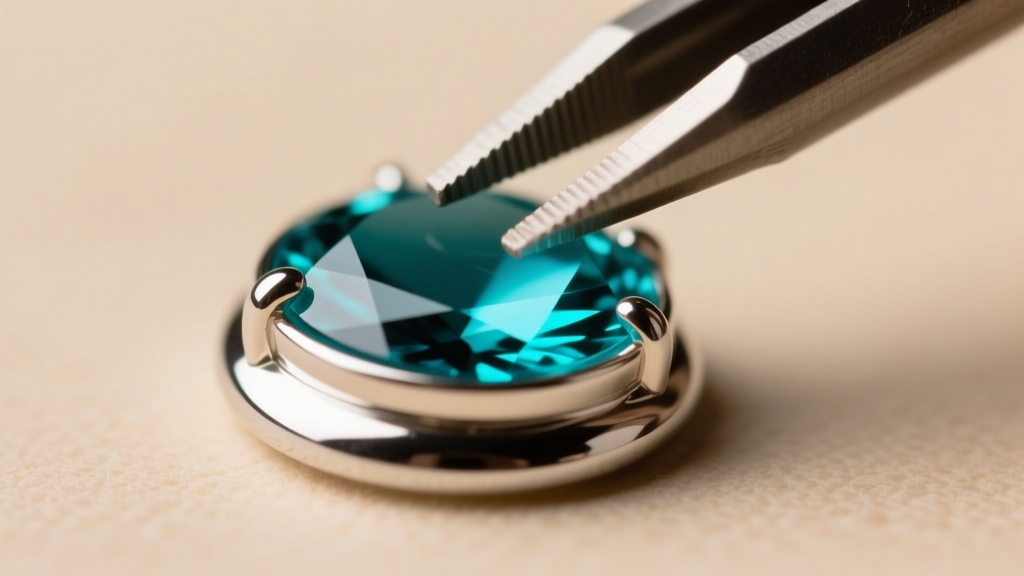
- Pliers and Tool Marring: Cheap steel pliers will leave deep gouges in soft silver and copper wire. You must invest in pliers with nylon jaws or carefully dip the tips in tool dip (like PepeTool's Peel-Off). Replacing a $60 stone because your cheap chain-nose pliers slipped and crushed it is a devastating budget failure.
- Soldering Pickle and Flux: If you are soldering bezels, you need a pickle solution (like sodium bisulfate) to remove oxidation. A slow cooker for the pickle ($25), a copper wire hanger ($5), and prips flux or borax cone ($15) are mandatory recurring costs. Neglecting flux results in black firescale that ruins the polish of the finished piece.
- Abrasive Finishing Consumables: Achieving a mirror finish on a bezel wall requires a progression of sanding discs, from 220 grit up to 1500 grit, followed by polishing compounds like Zam or rouge on a muslin buffing wheel. These consumables wear out quickly and can add $40 to $60 to your initial setup budget.
- Stone Breakage During Setting: Stones with a Mohs hardness below 6.0 (like turquoise, opal, and moonstone) are highly susceptible to cracking if the bezel wire is pushed down with uneven pressure. Always use a bezel rocker or pusher with a perfectly smooth, polished face, and work in a cross-pattern (North, South, East, West) to distribute tension evenly.
The Verdict: Best Value Combinations for Beginners
If your goal is to minimize financial risk while maximizing the perceived value of your handmade jewelry, the optimal starting point in 2026 is wire wrapping freeform cabochons using 20-gauge and 24-gauge bare copper. Copper allows you to master the complex tension mechanics of wire weaving at a fraction of the cost of silver. Once your muscle memory is flawless, you can transition to Argentium silver and calibrated labradorite or moonstone cabochons.
For those willing to invest in a torch setup, fabricating custom bezels with 28-gauge .999 fine silver wire and soldering them to recycled sterling silver backplates offers the highest profit margin. By sourcing unique, freeform lapidary stones from independent gem shows rather than calibrated stones from wholesale catalogs, you elevate your work from 'DIY craft' to 'artisan jewelry,' allowing you to command premium prices that easily absorb the initial tooling costs. Making jewelry with stones is an investment in precision; budget wisely, respect the materials, and your craftsmanship will reflect the value you put into it.


