Clay Jewelry Making: Polymer vs Air-Dry vs Metal Clay Compared
Master clay jewelry making by comparing polymer, air-dry, and metal clay. Discover material properties, durability, and best uses for every project.

The Evolution of Clay Jewelry Making
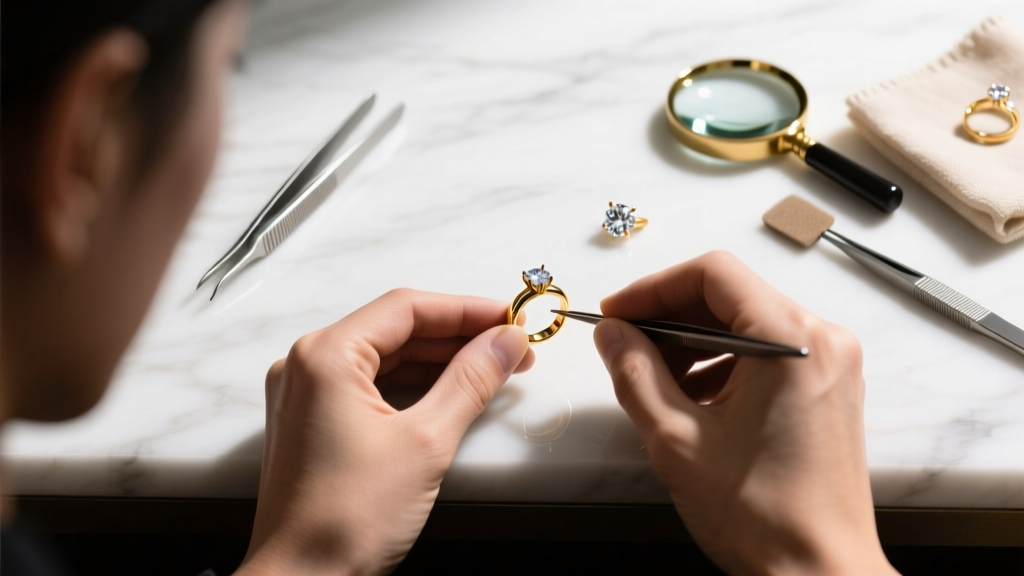
The landscape of clay jewelry making has expanded far beyond simple childhood crafts. Today, independent jewelers and hobbyists leverage three distinct clay mediums to create everything from bold, geometric statement earrings to fine silver pendants. However, treating all clays as interchangeable is a critical mistake that leads to warped designs, broken hardware, and degraded materials. Understanding the chemical composition, curing requirements, and structural limitations of each medium is essential for producing professional-grade, durable jewelry.
In this comprehensive material comparison, we break down the exact properties of polymer clay, air-dry clay, and precious metal clay (PMC). Whether you are sourcing materials for a new Etsy shop or refining your personal craft, this guide provides the technical specifications you need to choose the right medium for your specific design requirements.
Polymer Clay: The Synthetic Standard
Polymer clay is the undisputed heavyweight in the modern clay jewelry making space. Despite the name, it contains no natural clay minerals. Instead, it is a synthetic modeling material based on polyvinyl chloride (PVC) resin, suspended in a plasticizer base with added pigments. This unique chemical structure allows it to remain pliable indefinitely at room temperature until it is heat-cured.
Material Properties and Curing Science
Polymer clay cures through a process of thermal fusion, typically between 265°F and 275°F (130°C). During baking, the PVC particles swell and fuse together, creating a solid, slightly flexible plastic. Underbaking is the most common failure mode in polymer clay jewelry; if the core temperature does not reach the required threshold for a sufficient duration (usually 15 minutes per 1/4 inch of thickness), the plasticizers fail to fully cross-link, resulting in a brittle piece that will snap under the stress of daily wear.
Brand Grades and Formulations
Not all polymer clays are created equal. The hardness and flexibility of the cured product vary wildly by brand:
- Kato Polyclay: The hardest and most rigid formulation. Ideal for intricate millefiori canes and structural components that require zero flex.
- Sculpey Premo: An excellent all-rounder with a slight flex post-baking, making it highly resistant to snapping in thin earring designs.
- Sculpey Soufflé: Cures to a matte, lightweight finish, perfect for large, oversized statement pieces where weight on the earlobe is a concern.
Air-Dry Clay: The Porous Alternative
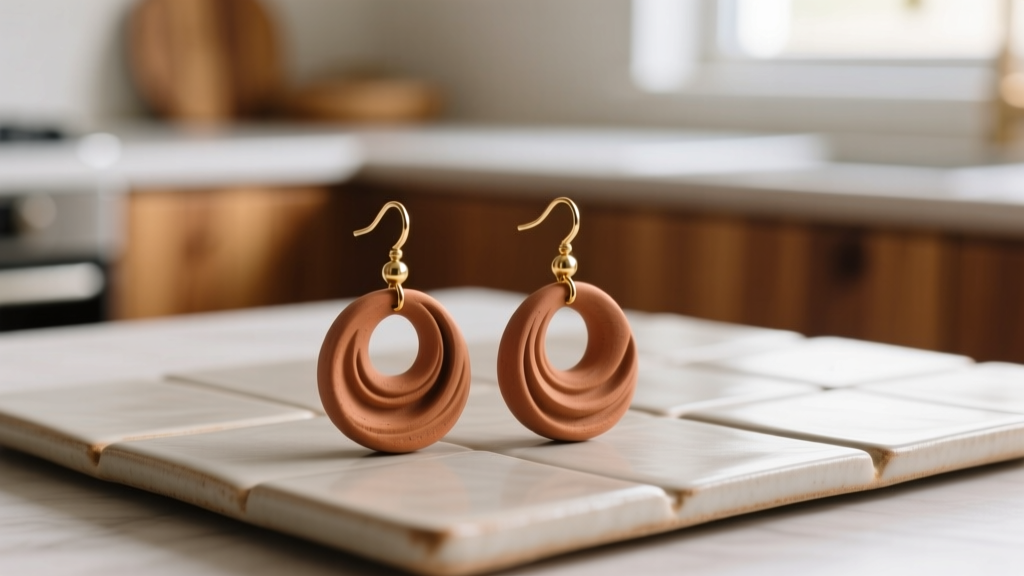
Air-dry clay, such as DAS or Crayola Model Magic, relies on evaporation to cure. It is typically composed of natural clay minerals mixed with a cellulose or resin-based binder. While it is incredibly accessible and requires no specialized equipment like an oven or kiln, its material properties make it the most challenging medium for long-lasting jewelry.
Structural Integrity and Shrinkage
Because air-dry clay cures through water evaporation, it experiences significant shrinkage—often up to 10% of its original volume. This shrinkage is rarely uniform, leading to warping in flat geometric designs. Furthermore, the resulting material is highly porous and inherently brittle.
For jewelry applications, air-dry clay should never be used for high-stress components like jump ring loops or earring post backing plates without heavy reinforcement. To make air-dry jewelry wearable, it must be sealed. A minimum of three coats of water-based polyurethane or a full encapsulation in UV-curing epoxy resin is required to protect the clay from ambient humidity and skin oils, which can cause the material to soften and degrade over time.
Precious Metal Clay (PMC): The Fine Jewelry Tier
Precious Metal Clay bridges the gap between craft materials and fine jewelry. Brands like Art Clay Silver and PMC3 consist of microscopic particles of pure silver (or gold) suspended in an organic, water-soluble binder. It handles like traditional modeling clay but fires into solid, hallmarked precious metal.
Sintering and Shrinkage Dynamics
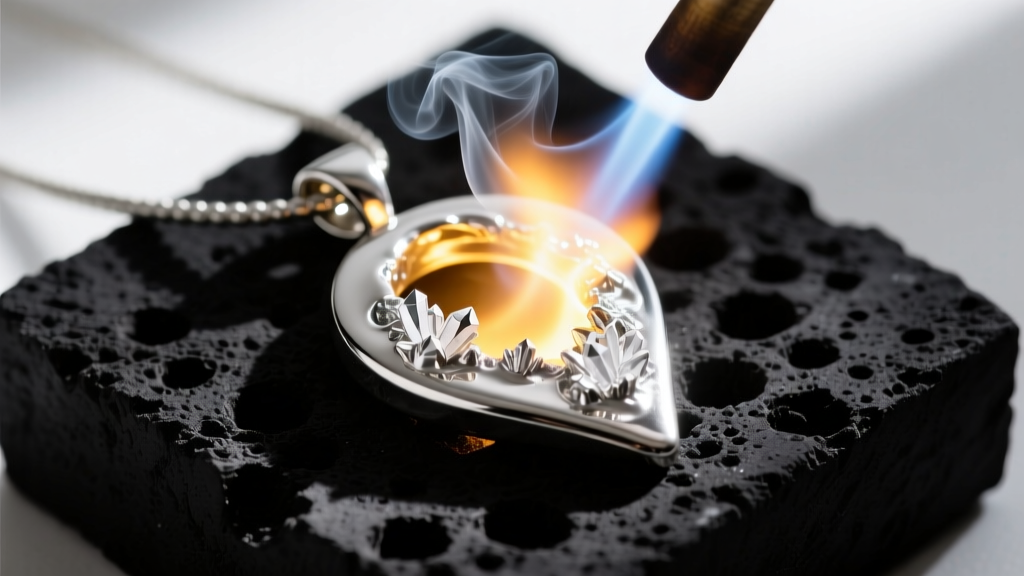
When metal clay is fired—either in a specialized jewelry kiln or with a handheld butane torch at approximately 1200°F (650°C)—the organic binder burns away completely. The remaining metal particles undergo sintering, fusing together to form a solid piece of .999 fine silver.
The critical property to manage in metal clay jewelry making is shrinkage. Because the binder makes up a significant portion of the raw material's volume, pieces will shrink between 10% and 15% during firing. Jewelers must meticulously calculate this shrinkage rate when sizing rings or designing bezels for gemstones. Additionally, because fine silver is relatively soft, metal clay pieces are often tumbled in steel shot to work-harden the surface and increase durability.
Comprehensive Material Comparison Matrix
The following table summarizes the core technical specifications for each medium, providing a quick reference for your material sourcing decisions.
| Property | Polymer Clay | Air-Dry Clay | Metal Clay (Silver) |
|---|---|---|---|
| Base Composition | PVC Resin & Plasticizers | Minerals & Cellulose Binder | .999 Silver & Organic Binder |
| Curing Method | Home Oven (275°F) | Air Evaporation (24-48 hrs) | Kiln or Torch (1200°F+) |
| Shrinkage Rate | Negligible (0-2%) | High (5-10%) | High (10-15%) |
| Post-Cure Durability | High (Flexible/Rigid) | Low (Brittle/Porous) | Medium (Malleable Fine Silver) |
| Approx. Cost (per oz) | $1.50 - $3.00 | $0.50 - $1.00 | $35.00 - $60.00+ |
Adhesives and Hardware Integration: A Critical Warning
The most common point of failure in clay jewelry making is not the clay itself, but the hardware integration. Many beginners reach for E6000 industrial adhesive to glue earring posts to polymer clay. This is a critical error.
E6000 contains tetrachloroethylene, a solvent that actively breaks down the PVC plasticizers in polymer clay. Over a period of 3 to 6 months, the adhesive will chemically degrade the clay, causing the earring post to fall out and the surrounding clay to crumble.
For polymer clay, always use a two-part epoxy (such as Gorilla Epoxy) or a specialized jewelry resin. Alternatively, the most secure method is to mechanically embed the hardware. For earring posts, create a small recess in the raw clay, apply a tiny dot of liquid polymer clay (like Sculpey Bake & Bond), press the post into the recess, and bake the entire piece. This creates a permanent, chemical-free mechanical bond.
When drilling holes for jump rings or wire-wrapping, always use a 20-gauge (0.8mm) or 18-gauge (1.0mm) twist drill bit. For polymer clay, drill after baking to prevent the clay from stretching and distorting. For metal clay, drill before firing, but remember to enlarge your drill bit size by 15% to compensate for the sintering shrinkage.
Final Verdict: Choosing Your Medium
Your choice of material should be dictated by your target market and equipment access. If you are producing trendy, colorful, lightweight fashion jewelry for an online boutique, polymer clay offers the best balance of durability, cost-efficiency, and design versatility. If you are transitioning into the fine jewelry market and have the budget for a kiln and precious metals, metal clay allows you to sculpt intricate, cast-like silver pieces without the need for traditional wax carving and lost-wax casting equipment. Air-dry clay should generally be reserved for temporary projects, mixed-media art, or children's crafting, as its structural limitations make it unsuitable for commercial jewelry production.
For further reading on precise baking schedules and safety data sheets, consult the Sculpey Baking Guide. For technical specifications on firing precious metals, the Rio Grande Metal Clay resource library is an industry-standard reference.


