Essential Care for Wire Wrapping Jewelry Making Projects
Learn expert cleaning, structural maintenance, and storage tips for wire wrapping jewelry making projects to protect metals and delicate gemstones.

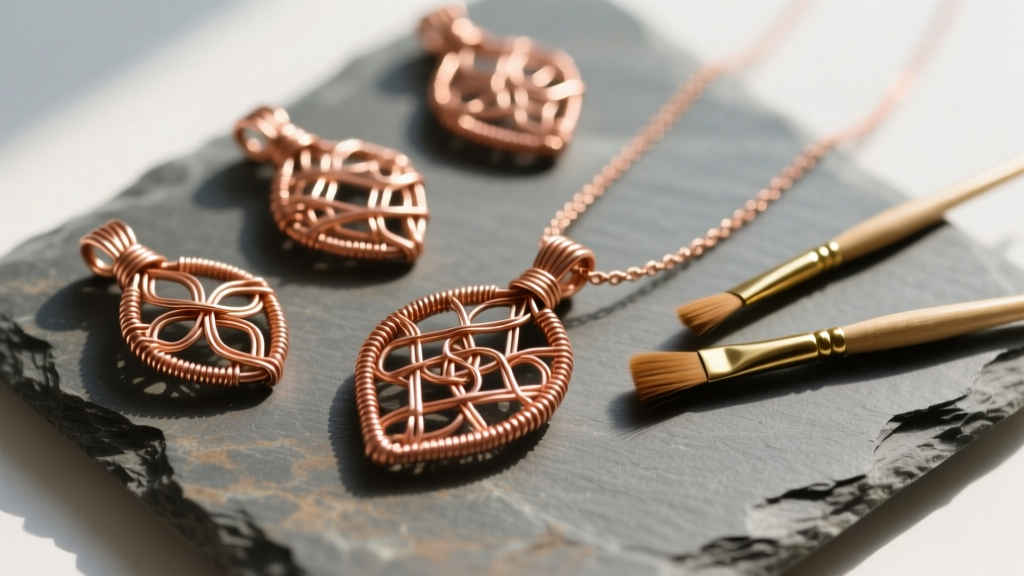
The Metallurgy of Tarnish and Work-Hardening in Wire Art
When you engage in wire wrapping jewelry making, you are fundamentally altering the crystalline structure of your base metals. The physical manipulation required to weave 26-gauge or 28-gauge dead-soft wire around a 20-gauge half-hard frame induces work-hardening. While this provides structural integrity, it also increases the metal's susceptibility to environmental oxidation and microscopic stress fractures if cleaned improperly. Understanding the specific temper and alloy of your wire is the first step in establishing a proper maintenance protocol.
According to metallurgical guidelines from Rio Grande, metals like copper and brass oxidize rapidly when exposed to the sulfur compounds present in human sweat and ambient humidity. Sterling silver (92.5% silver, 7.5% copper) is particularly prone to tarnishing specifically because of that copper content. If you have intentionally applied a patina using Liver of Sulfur to highlight your woven textures, aggressive polishing will strip the dark oxidation from the crevices, ruining the contrast that gives wire-wrapped pieces their three-dimensional depth.
Material-Specific Cleaning Protocols
There is no universal "jewelry cleaner" for wire-wrapped items. Commercial liquid dip cleaners (like Tarn-X) contain thiourea and hydrochloric acid, which can strip patinas, pit porous stones, and leave a white, chalky residue trapped inside tight 28-gauge weaves. Instead, rely on mechanical polishing and targeted chemical baths based on your specific metal choice.
| Metal Type | Wire Gauge & Temper | Safe Cleaning Agent | Strict Prohibitions |
|---|---|---|---|
| Copper | 24g-28g Dead-Soft | Lemon juice & salt bath (brief), Pro Polish pads | Ultrasonic cleaners (causes work-hardened wire to snap) |
| Sterling Silver | 20g-22g Half-Hard | Wenol metal polish, Goddard's Silver Polish Foam | Chlorine bleach, abrasive toothpaste |
| Brass / Bronze | 18g-24g Mixed | Simichrome polish, mild dish soap & warm water | Ammonia-based cleaners (causes stress corrosion cracking) |
| Argentium Silver | 20g-26g Dead-Soft | Warm water, mild soap, soft microfiber cloth | Heavy buffing wheels (removes the germanium oxide layer) |
For intricate woven sections where polishing cloths cannot reach, use a soft-bristled fiberglass scratch brush or a specialized detailing brush dipped in a mild baking soda paste. Always rinse thoroughly with distilled water to prevent mineral deposits from drying inside the wire wraps.
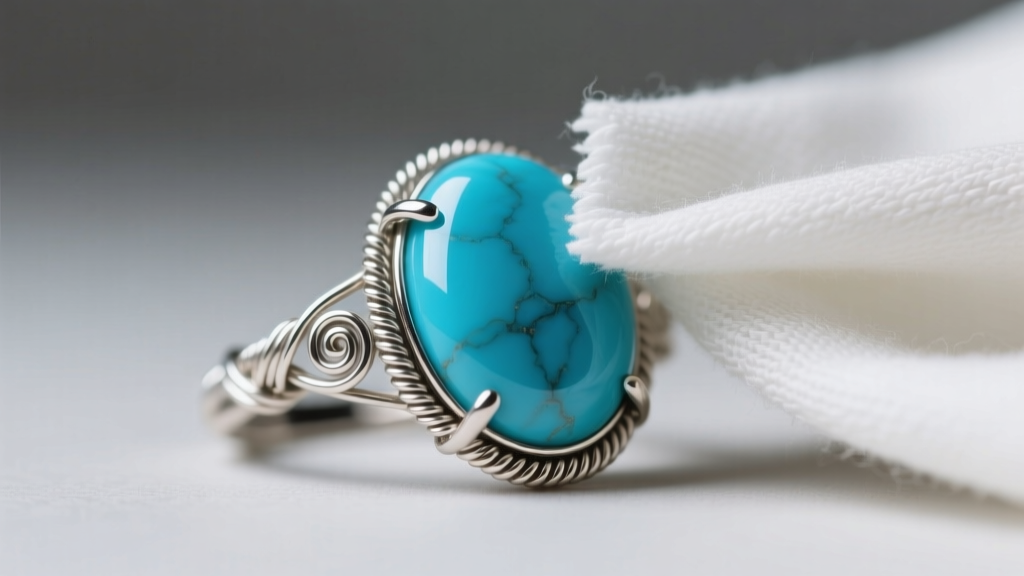
Navigating Gemstone Porosity in Wrapped Settings
One of the most critical aspects of caring for wire-wrapped jewelry is recognizing that, unlike soldered bezel settings, wire wraps are inherently semi-permeable. Liquids, oils, and chemical cleaners can easily seep between the stone and the wire, becoming trapped against the gemstone's surface. This is particularly devastating for porous or fracture-filled stones.
The Gemological Institute of America (GIA) categorizes gemstone care based on hardness (Mohs scale) and structural stability. Here is how to handle common wire-wrapping cabochons:
- Turquoise & Lapis Lazuli (Mohs 5-6, Highly Porous): Never submerge these stones. Oils from the skin can actually enhance turquoise over time, but harsh chemicals will permanently alter its color. Clean only with a dry, soft microfiber cloth, carefully navigating around the 28-gauge weaving wire.
- Opals (Mohs 5.5-6.5, Water-Sensitive): Ethiopian opals are hydrophane and will absorb water, leading to crazing or temporary transparency. Solid Australian opals are safer but still sensitive to thermal shock. Wipe gently with a barely damp cloth and dry immediately.
- Quartz, Amethyst & Agate (Mohs 7+, Non-Porous): These are the workhorses of wire wrapping. They can withstand mild soap, warm water, and gentle brushing. However, prolonged exposure to direct UV light (like leaving them on a sunny windowsill) will cause amethyst and rose quartz to fade irreversibly.
- Labradorite & Moonstone (Mohs 6-6.5, Cleavage Planes): While not highly porous, these feldspar minerals have distinct cleavage planes. Ultrasonic vibrations can cause internal fracturing along these planes, destroying the stone's signature schiller or adularescence.
Structural Maintenance: Re-Tightening and Repair
Wire wrapping relies entirely on mechanical tension. Over time, thermal expansion from body heat, minor impacts, and the natural relaxation of work-hardened metal can cause locking wraps and bail wires to loosen. When a 22-gauge frame wire begins to pull away from the cabochon, or a 24-gauge locking wrap slips, immediate structural maintenance is required to prevent stone loss.
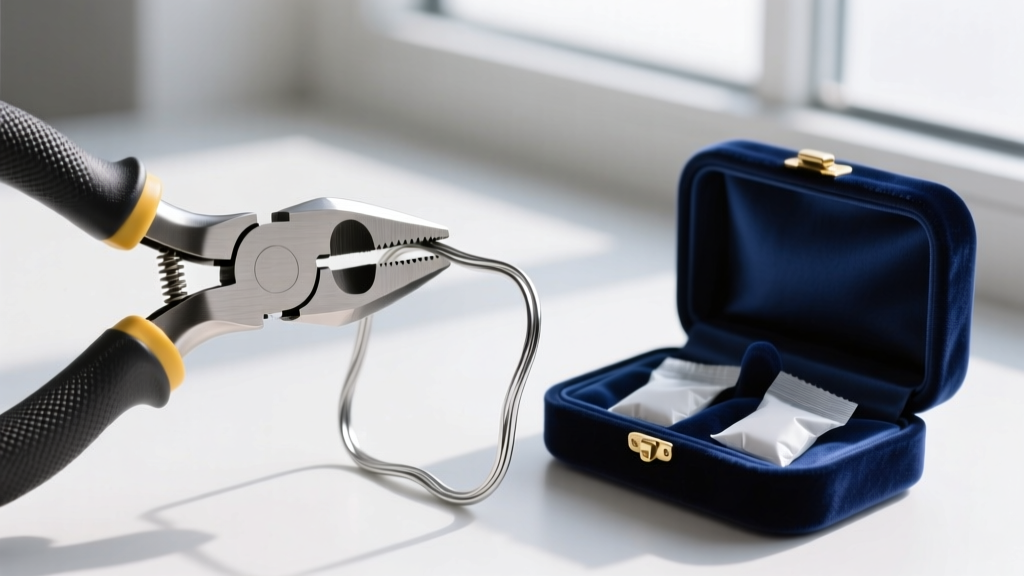
Do not use standard steel chain-nose or flat-nose pliers for repairs. The hardened steel teeth will severely mar the surface of your silver or copper wire, leaving permanent gouges that accelerate future tarnishing. Instead, invest in high-quality nylon jaw pliers (such as those from Tronex or Beadalon). The nylon pads allow you to apply significant squeezing pressure to re-seat a loose frame wire or tighten a woven bail without scratching the metal.
Expert Troubleshooting Tip: If a 28-gauge dead-soft weaving wire snaps while you are attempting to tighten a loose section, do not attempt to solder it. Instead, use a 0.3mm burr to carefully grind down the broken end, and weave a new 3-inch piece of matching wire into the existing pattern, tucking the tail securely beneath the adjacent wrap using a fine awl.
Archival Storage and Anti-Tarnish Strategies
Proper storage is the most effective form of preventive maintenance for wire-wrapped jewelry. Leaving a sterling silver pendant on an open jewelry dish guarantees a thick layer of black silver sulfide within weeks, which requires aggressive polishing that eventually wears down delicate woven textures.
To preserve your wire wrapping jewelry making creations, implement a multi-layered storage strategy:
- Micro-Climates: Store individual pieces in small, zip-sealed polyethylene bags (avoid PVC, which off-gasses sulfur). Squeeze out as much air as possible before sealing.
- Active Tarnish Inhibitors: Place a 3M Anti-Tarnish strip inside each bag. These strips absorb airborne sulfur compounds and hydrogen sulfide, effectively neutralizing the environment for up to six months.
- Humidity Control: Include a small, rechargeable silica gel desiccant packet in your main storage box. High humidity acts as a catalyst for the electrochemical reactions that cause copper and brass to develop verdigris (green corrosion).
- Physical Protection: Wire wraps feature protruding ends and intricate loops that can easily snag on one another. Store pieces flat in compartmentalized boxes lined with Pacific Silvercloth, which contains microscopic silver particles that intercept tarnish-causing gases before they reach your jewelry.
By treating the maintenance of your wire-wrapped pieces as an extension of the crafting process itself, you ensure that the intricate tension, the brilliant patinas, and the delicate gemstones remain pristine for decades. Proper care is not just about cleaning; it is about respecting the metallurgy and geometry that make wire wrapping such a unique and enduring art form.


