Cost-Effective Jewelry Making Techniques: 2026 Budget Guide
Discover cost-effective jewelry making techniques in 2026. Compare material costs, tool investments, and ROI for wire wrapping, beading, and resin.

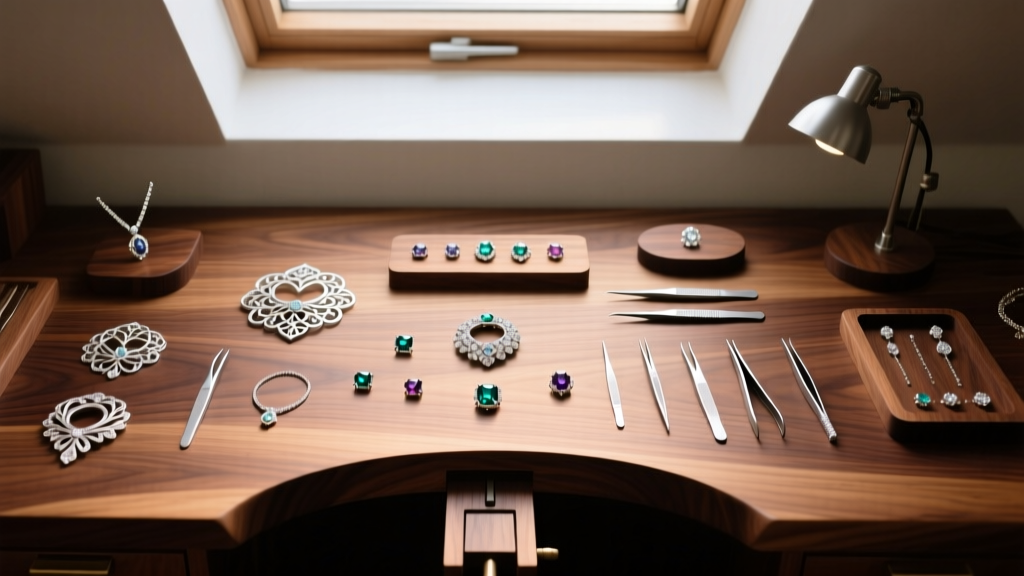
As we navigate the economic landscape of 2026, the rising costs of precious metals and specialized crafting supplies have forced hobbyists and emerging artisans to rethink their studio budgets. Mastering complex jewelry making techniques no longer requires a massive upfront investment in sterling silver or gold-filled materials. Instead, strategic material substitution and a rigorous cost-value assessment of your tools can yield professional results on a fraction of the budget. This guide breaks down the true cost of entry for various methods, helping you allocate your funds where they generate the highest return on investment (ROI) and skill development.
The Economics of Craft: Tools vs. Consumables
The most common mistake beginners make is overspending on consumables while under-investing in hand tools. In wire manipulation and metal forming, your pliers are the direct conduit between your intent and the material. Cheap, unpolished pliers will mar soft metals, leaving deep gouges that require hours of sanding to remove—effectively wasting both time and material. However, you do not need to purchase $90 Swiss-made Lindstrom cutters right out of the gate.
Essential Tool Tier List for Budget Makers
When evaluating hand tools for foundational jewelry making techniques, look for carbon steel with polished jaws. Below is a comparison of budget-friendly tiers that offer excellent longevity without the premium markup of heritage brands.
| Tool Category | Budget Pick (2026) | Approx. Cost | Failure Mode / Limitation |
|---|---|---|---|
| Chain-Nose Pliers | Wubbers Classic Flat Nose | $18.50 | Jaw alignment may shift after 2+ years of heavy gauge bending. |
| Flush Cutters | Beadalon Ergo Flush Cutters | $14.00 | Blade dulls on wire thicker than 18-gauge; requires frequent sharpening. |
| Round-Nose Pliers | Tronex Ergonomic Round Nose | $32.00 | Higher price point, but polished tips prevent wire scarring. |
| Nylon Jaw Pliers | Generic Brand (Amazon/AliExpress) | $9.00 | Nylon pads wear down quickly; replacement pads are hard to source. |
Wire Wrapping: Copper as the Ultimate Proxy
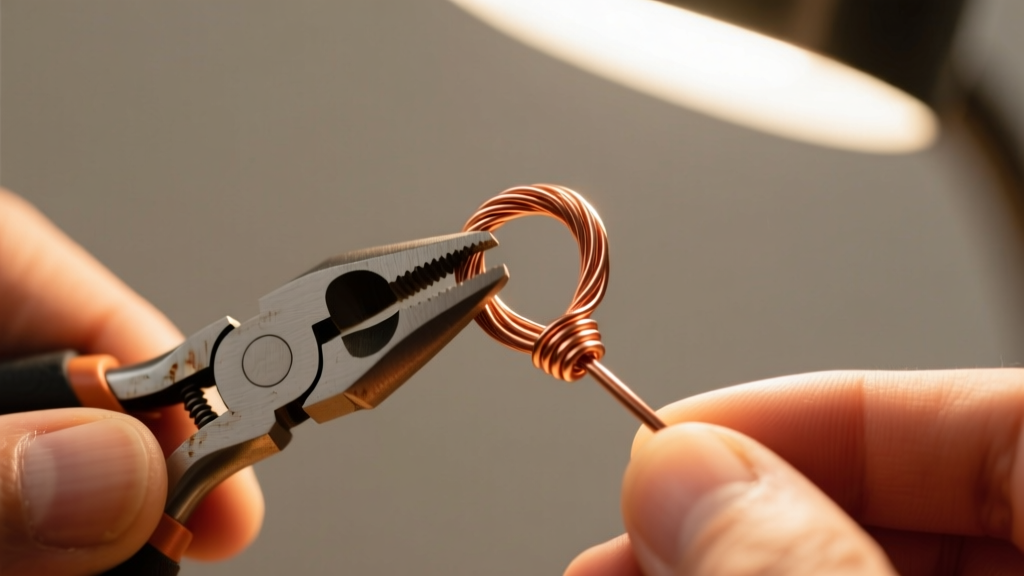
Wire wrapping is one of the most accessible jewelry making techniques, but practicing intricate weaves (like the classic Byzantine or cobra stitch) on sterling silver is financially prohibitive. In 2026, with silver spot prices remaining volatile, raw copper is the undisputed champion for skill acquisition. Copper shares a nearly identical crystalline structure and work-hardening rate to sterling silver, making it the perfect 1:1 proxy for practicing tension, loop consistency, and weave density.
Gauge Selection and the Cost of Work-Hardening
For structural frames and base weaves, 20-gauge dead-soft copper wire is the industry standard for practice. A 16-ounce spool of Artistic Wire or Parawire costs approximately $14 to $18, yielding roughly 120 linear feet. By contrast, an equivalent weight in dead-soft sterling silver would cost upwards of $180.
One critical budget-saving technique is learning to anneal your own copper. When copper is manipulated, it work-hardens and becomes brittle, eventually snapping if bent too sharply. By purchasing a simple $15 butane micro-torch, you can heat the copper to a dull cherry red and quench it in water, instantly resetting its temper back to 'dead-soft.' This allows you to buy cheaper, bulk dead-soft wire and manipulate its hardness yourself, rather than paying a premium for pre-hardened or half-hard tempers from specialty suppliers like Rio Grande.
Beading and Stringing: Allocating Funds Where It Matters
While wire wrapping relies on metal manipulation, bead stringing requires an understanding of tensile strength and drape. The budget trap in this discipline is purchasing cheap 'tiger tail' nylon-coated wire from big-box craft stores. Standard 7-strand tiger tail costs pennies per foot, but it suffers from a catastrophic failure mode: memory kinking. Once bent, it never fully straightens, leading to stiff, unprofessional-looking necklaces that eventually snap at the crimp bead due to metal fatigue.
The Hidden Liability of Pot Metal Findings
Findings—clasps, jump rings, and crimp covers—are the structural joints of your jewelry. Many budget kits include findings made from Zamak (a zinc-aluminum alloy) or hollow base metals. These materials are highly porous and prone to rapid oxidation, often turning the wearer's skin green or snapping under minimal tension.
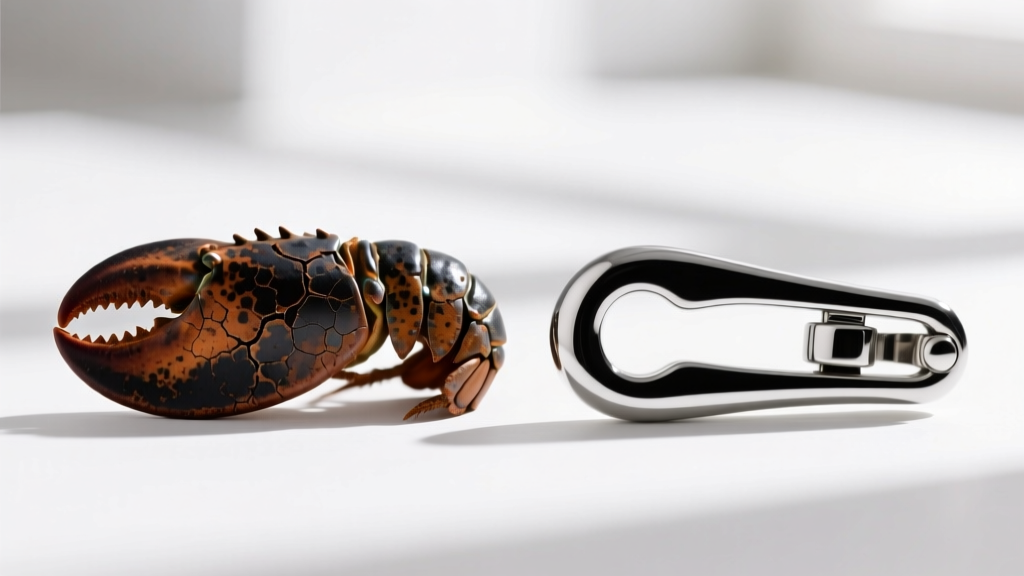
When sourcing findings on a budget, bypass zinc alloys entirely. Instead, opt for 304 stainless steel or solid brass. Stainless steel trigger clasps can be sourced in bulk for roughly $0.40 to $0.60 each via wholesale platforms like Fire Mountain Gems. They offer the corrosion resistance and tensile strength of precious metals at a fraction of the cost, drastically reducing your warranty and replacement liabilities.
Cold Connections: High Perceived Value, Low Overhead
If you want to create structural, architectural jewelry without investing in a $400 oxy-acetylene soldering setup, cold connections are the most cost-effective jewelry making techniques available. Cold connecting involves joining metal components using rivets, eyelets, and tabs rather than heat and solder.
The material overhead for cold connections is astonishingly low. A pack of 100 brass eyelets costs under $8, and a basic hammer and steel bench block can be acquired for $25. By combining these simple hardware elements with upcycled materials—such as leather scraps, acrylic offcuts, or even polished sea glass—you can create high-end, mixed-media statement pieces. The perceived value of a hand-riveted leather and brass cuff vastly exceeds its raw material cost, often yielding a 400% to 600% profit margin for artisans selling at local craft markets.
Strategic Sourcing and Final ROI Verdict
Ultimately, the most budget-friendly approach to jewelry making in 2026 is a hybrid strategy. Invest your capital into mid-tier, polished steel hand tools that will last a decade. Use dead-soft copper and brass for mastering the physical mechanics of wire weaving and cold connections. Reserve your precious metal purchases strictly for final, client-commissioned pieces where the material cost is baked into the retail price. By treating copper and stainless steel as your primary educational mediums, you can achieve mastery in advanced jewelry making techniques without compromising your financial stability.


