DIY Jewelry Kits in 2026: A Budget & Value Assessment
We test top DIY jewelry kits in 2026 to assess real value, material quality, and hidden costs for beginner wire wrapping and beading.

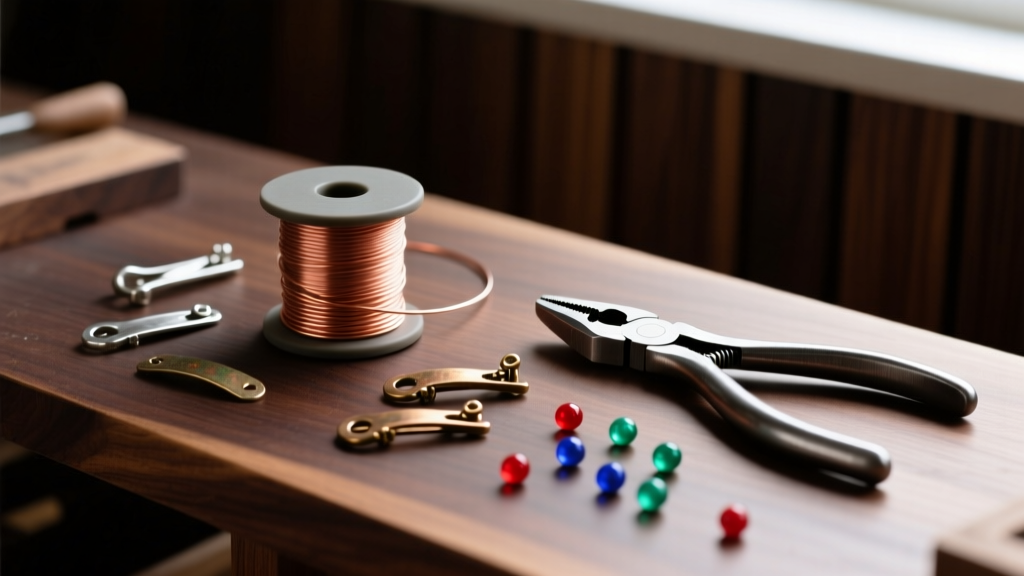
The promise of the all-in-one starter bundle is a cornerstone of the modern crafting boom. If you have browsed Amazon or TikTok Shop recently, you have likely encountered the ubiquitous $25 to $35 mega-bundles boasting thousands of pieces. But as we move through 2026, the gap between marketing hype and metallurgical reality has never been wider. For beginners eager to learn wire wrapping, chainmaille, or basic beading, the financial barrier to entry seems remarkably low. Yet, experienced jewelers know that cheap materials often lead to broken tools, ruined wire, and unwearable finished pieces.
In this comprehensive budget and value assessment, we deconstruct the modern pre-packaged bundle to answer a critical question: Are these DIY jewelry kits actually worth your money, or are they just expensive lessons in frustration? We will examine material grades, tool mechanics, and the hidden costs of starting your jewelry journey.
The Allure of the High-Piece-Count Bundle
Marketing for entry-level crafting supplies relies heavily on the 'volume illusion.' A typical kit advertises '2,500+ Pieces,' which sounds like a massive bounty for a $29.99 price tag. However, when you audit the contents, the reality sets in. The vast majority of that piece count comes from 2mm glass seed beads, flimsy headpins made of easily bent base metal, and jump rings stamped from thin zinc alloy sheets.
While these kits provide a sandbox for absolute novices to understand basic spatial relationships in jewelry design, they severely limit your ability to practice proper technique. When your materials fail before your skills do, it creates a false sense of incompetence. To truly assess value, we must look past the plastic organizer trays and examine the molecular reality of the metals provided.
Deconstructing the 'Value': Material Grades & Failure Modes
The most significant point of failure in budget-friendly DIY jewelry kits is the metallurgy of the findings and wire. Understanding material grades is essential for anyone transitioning from a casual hobbyist to a serious maker.
The 'Tibetan Silver' and Zinc Alloy Trap
Most kits include charms, pendants, and spacer beads labeled as 'Tibetan Silver' or 'Antique Bronze.' In reality, these are cast zinc alloys (often referred to as pot metal) with a microscopic plated finish. Not only do these materials tarnish rapidly when exposed to the natural oils in human skin, but they are also notoriously brittle. Attempting to open a jump ring attached to a cast zinc charm often results in the ring snapping or the charm's loop breaking off entirely. Furthermore, unregulated imported alloys can sometimes contain trace amounts of lead or cadmium, making them entirely unsuitable for jewelry intended for children or prolonged skin contact.
Wire Hardness and the Work-Hardening Problem
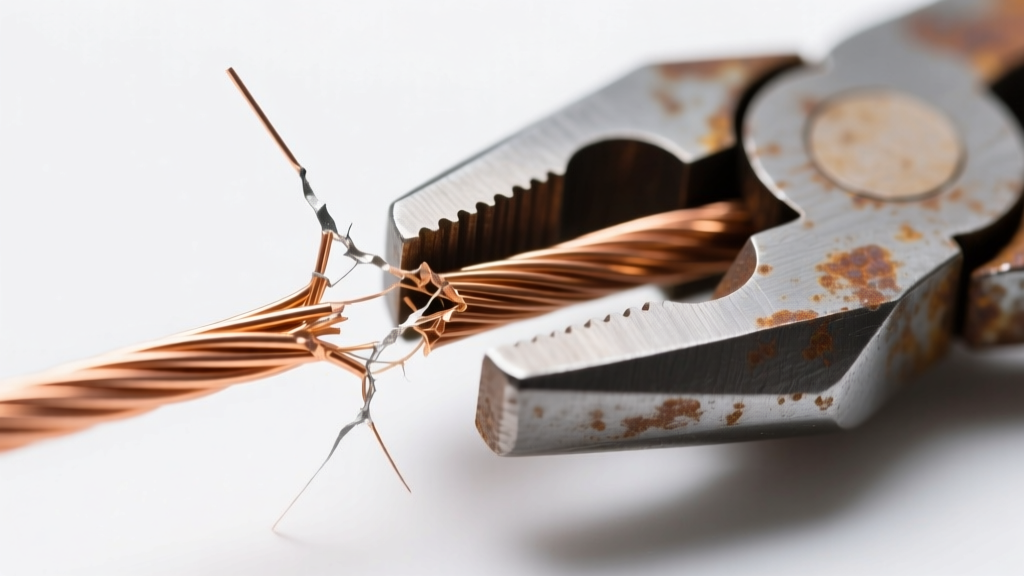
Wire wrapping requires an understanding of temper (hardness). Budget kits almost exclusively include 'dead soft' aluminum or copper-plated aluminum wire. While dead soft wire is easy to bend, it lacks the structural integrity to hold a shape. When you attempt to create a wrapped loop or a sturdy ear wire using 20-gauge dead soft wire, the metal work-hardens rapidly. If you over-manipulate it, the wire will snap. Professional makers typically use half-hard copper, brass, or sterling silver for structural components because the temper provides a balance of malleability and spring-back. For a deep dive into wire temper and gauge selection, the Fire Mountain Gems Encyclopedia remains an indispensable, free resource for understanding how different alloys behave under stress.
Tool Quality: When Budget Pliers Ruin Your Wire
Perhaps the most damaging aspect of a low-tier kit is the inclusion of unbranded, mass-produced hand tools. Jewelry making is an exercise in precision, and your tools are the conduit between your intent and the metal.
The Jaw Alignment and Pinch Mark Dilemma
A standard kit includes a pair of flush cutters, chain-nose pliers, and round-nose pliers. The flush cutters in these bundles are rarely truly flush. Because the pivot pins are loosely set and the steel is soft, the cutting edges misalign under pressure. Instead of shearing the wire cleanly, they pinch it, leaving a sharp, jagged burr on one side of the cut. This 'pinch mark' will scratch your beads, snag on clothing, and poke the wearer's skin.
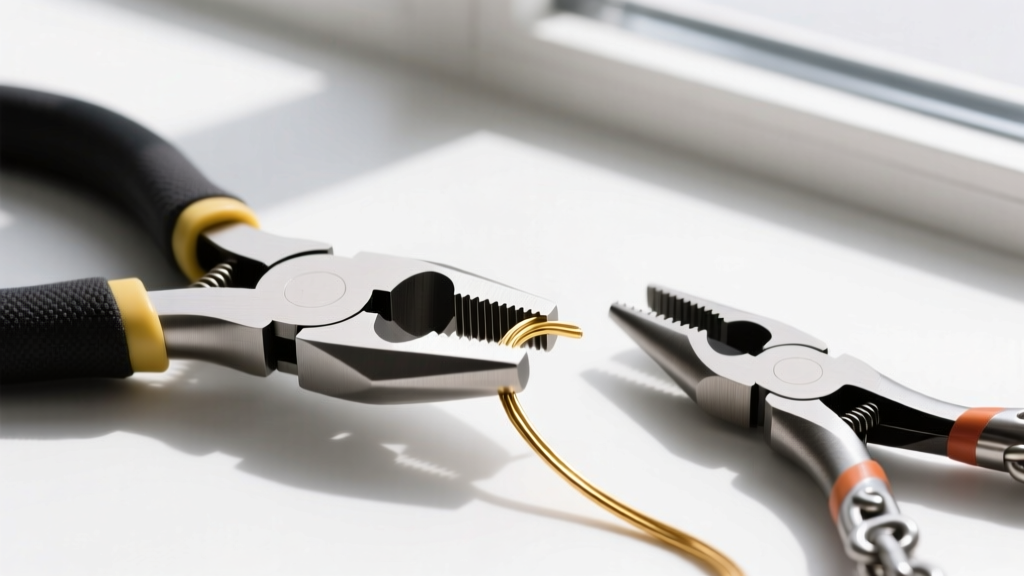
Similarly, the chain-nose pliers included in budget kits often feature serrated 'teeth' on the inside of the jaws. These teeth are designed for gripping thick hardware, not delicate 22-gauge or 24-gauge wire. The moment you clamp down to close a jump ring or grip a loop, those teeth will permanently mar and scratch the surface of your metal, instantly degrading the perceived value of your finished piece. As outlined in the Halstead Bead tool guide, investing in smooth-jawed or nylon-jawed pliers is a non-negotiable step for anyone working with soft metals or precious wire.
Cost Breakdown: Pre-Packaged Kit vs. Curated Sourcing
To accurately assess value, we must compare the $30 mega-kit against a thoughtfully curated starter list sourced from reputable jewelry suppliers. While the upfront cost of individual sourcing is higher, the cost-per-wearable-item is drastically lower because the materials will not end up in the trash.
| Category | $30 Amazon Mega-Kit | Curated $75 Starter Bundle (Rio Grande / Fire Mountain) |
|---|---|---|
| Wire Quality | Dead-soft aluminum, prone to snapping and fading. | Half-hard solid copper & brass (20g, 22g, 24g) for structural integrity. |
| Findings | Zinc alloy, weak steel springs in clasps, snagged jump rings. | Solid brass or nickel-free silver-plated, flush-cut jump rings. |
| Tools | Soft steel, misaligned jaws, serrated teeth that mar wire. | Carbon steel or stainless steel, smooth jaws, true flush cutters. |
| Wearability | High risk of skin discoloration and allergic reactions. | Hypoallergenic options, durable finishes, professional drape. |
| Long-Term Value | Low. Tools require replacement within a month of heavy use. | High. Tools last for years; materials yield sellable inventory. |
As the table illustrates, the $30 kit is essentially a 'trial subscription' to the hobby. If you only intend to make one or two beaded bracelets on a rainy afternoon, it suffices. But if your goal is to master wire wrapping or create gifts that people will actually wear, the curated route prevents the hidden costs of replacing ruined wire and broken tools.
The Verdict: Who Should Actually Buy a Kit?
Pre-packaged DIY jewelry kits are not inherently evil; they simply serve a very specific, narrow demographic. They are excellent for parents looking for a low-stakes, disposable craft activity for teenagers, or for mixed-media artists who need a massive volume of cheap, base-metal spacer beads that will be painted or sealed with resin.
However, for the aspiring jeweler who wants to learn proper wire manipulation, create durable ear wires, or eventually sell their work at local craft fairs, these kits represent a negative return on investment. The frustration of fighting poor-quality tools and brittle metals will stall your learning curve far more than the initial savings will help your wallet.
Recommended Starter Paths Over Pre-Packaged Kits
Instead of dropping $30 on a plastic box of mixed alloys, take that same budget and visit a dedicated jewelry supply website. Purchase two spools of high-quality solid copper wire (one 20-gauge for structure, one 24-gauge for wrapping), a single pack of smooth-jawed chain-nose pliers, and a reliable pair of micro-flush cutters. Copper is an exceptional, forgiving practice metal that mimics the behavior of sterling silver and gold-filled wire without the financial anxiety. By focusing your budget on the tactile interface—your tools and your primary structural materials—you build a foundation of skill that will serve you for a lifetime of making.


