Do It Yourself Permanent Jewelry: 2026 Cost & Value Guide
We break down the true costs of do it yourself permanent jewelry in 2026, comparing DIY micro-welder setups to studio visits for maximum value.

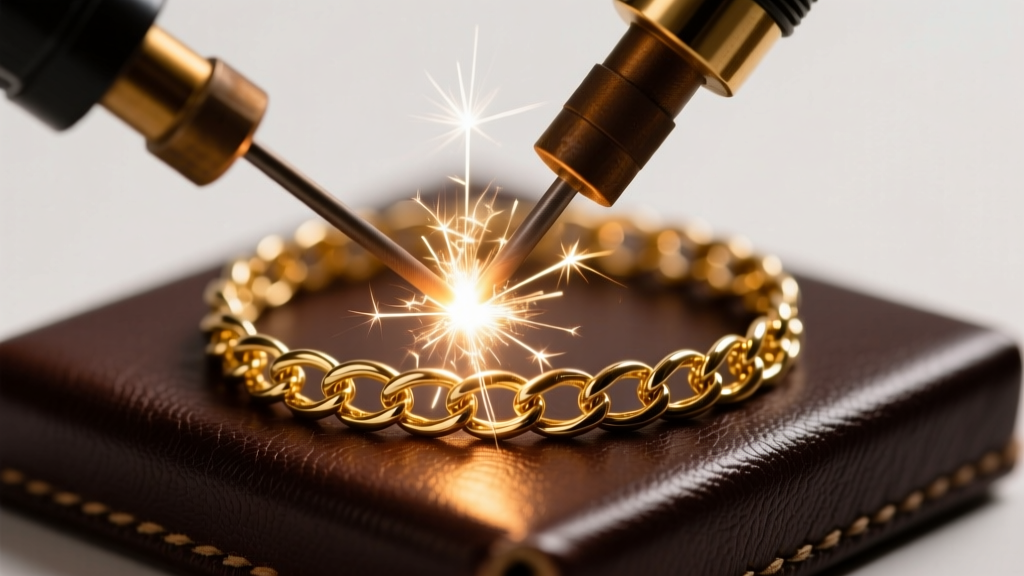
The Allure of the At-Home Micro-Welder
Permanent jewelry has transitioned from a niche boutique offering to a mainstream staple in the accessories market. As we navigate 2026, the appeal of do it yourself permanent jewelry is stronger than ever, driven by the desire for personalized, clasp-less chains and the seemingly simple process of micro-TIG welding. However, the gap between watching a satisfying 30-second social media weld and actually executing a structurally sound, aesthetically pleasing joint is vast. For hobbyists and aspiring entrepreneurs alike, understanding the true financial and technical investment is critical before purchasing your first pulse arc welder.
Many beginners assume that buying a budget-friendly welder is the only hurdle. In reality, the ecosystem of permanent jewelry requires a precise alignment of metallurgy, shielding gases, and optical safety. This guide provides a rigorous budget and value assessment to help you determine if a DIY setup is a financially sound decision for your specific needs.
Breakdown: Studio Visits vs. DIY Setup Costs
To evaluate the value of a DIY approach, we must first establish the baseline cost of the traditional studio experience. In 2026, the national average for a permanent jewelry appointment ranges from $65 to $150 per weld, depending on the chain material and studio overhead. Below is a comparative cost analysis for a consumer versus a DIY hobbyist.
| Expense Category | Studio Visit (Per Person) | DIY Hobbyist Setup (Entry-Level) | DIY Prosumer Setup (Business-Ready) |
|---|---|---|---|
| Welding Equipment | $0 | $800 - $1,200 | $2,500 - $3,500 |
| Shielding Gas (Argon) | $0 | $180 (Tank + Regulator) | $250 (Larger Tank + Flowmeter) |
| Safety Optics | $0 | $45 | $120 |
| Chain Inventory (Starter) | $65 - $150 (Retail) | $150 (Wholesale) | $500+ (Wholesale) |
| Consumables & Tools | $0 | $75 | $150 |
| Total Initial Outlay | $65 - $150 | $1,250 - $1,650 | $3,520 - $4,520 |
As the data illustrates, the barrier to entry for DIY permanent jewelry is heavily front-loaded. If you are only planning to weld bracelets for yourself and a few close friends, the ROI (Return on Investment) will remain negative for years. However, if you plan to host pop-up events or integrate welds into an existing jewelry business, the break-even point can be reached in as few as 30 to 40 welds.
The Hidden Expenses of DIY Welding
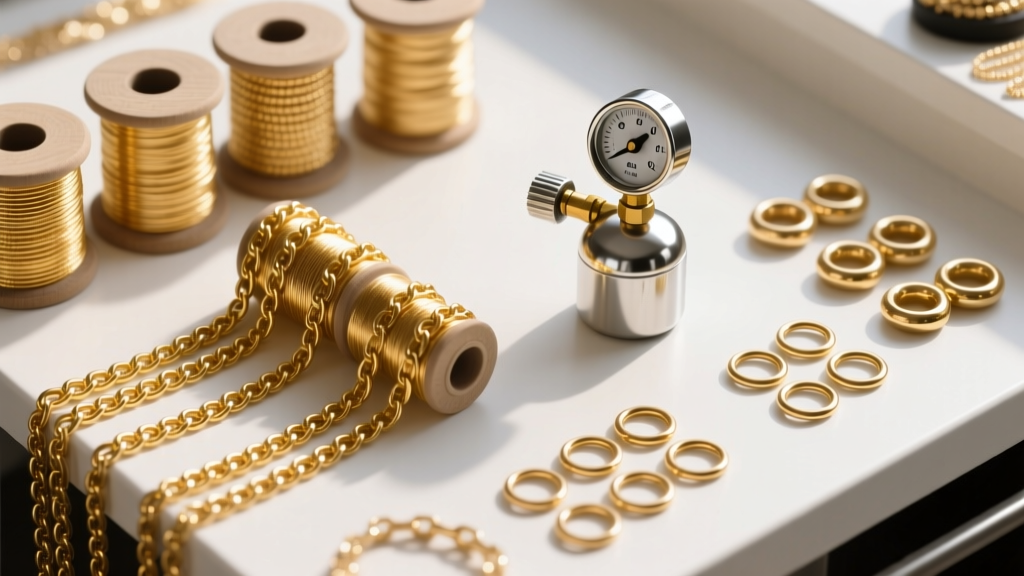
When budgeting for your setup, the welder itself is only the beginning. The hidden costs of consumables and gases frequently catch beginners off guard, leading to compromised welds and wasted materials.
Argon Gas: The Non-Negotiable Shield
You cannot weld karat gold or sterling silver in ambient air without severe oxidation. When the micro-arc superheats the metal, atmospheric oxygen causes the alloys (like copper and zinc in 14k gold) to oxidize instantly, resulting in a brittle, blackened, and structurally weak joint. You must use 99.99% pure Argon gas to displace the oxygen around the weld pool. A standard 40-cubic-foot cylinder costs around $150 to $200 upfront, plus a $30 to $40 refill fee. Budgeting for a quality dual-gauge regulator with a precise flowmeter is essential; running the gas too high wastes money, while running it too low ruins the weld.
Metallurgy and Material Sourcing
A critical failure mode for beginners is attempting to weld gold-filled (GF) or gold-plated chains. The intense heat of the pulse arc will instantly vaporize the microscopic gold layer, exposing the brass or copper core, which oxidizes and snaps under tension. For do it yourself permanent jewelry, you must source solid 14k gold, 18k gold, or solid sterling silver from reputable wholesale suppliers like Rio Grande or Stuller. Solid 14k yellow gold chain typically costs between $25 and $45 per foot at wholesale, requiring a significant upfront inventory investment compared to the $6 per foot you might pay for gold-filled alternatives.
Equipment Tiers: What Are You Actually Paying For?
Not all pulse arc welders are created equal. The market in 2026 is segmented into distinct tiers, each offering different levels of control over the welding parameters.
- Budget/Import Tier ($600 - $1,000): These generic welders often lack precise joule control and have inconsistent capacitor discharge. They may work for thick sterling silver but struggle with delicate 14k gold chains, often annealing (softening) the surrounding links due to prolonged heat dissipation.
- Mid-Tier / Entry Pro ($1,500 - $2,200): Models like the Sunstone PMI150 offer reliable 110v operation, consistent pulse delivery, and adjustable energy settings (measured in joules or voltage). This is the sweet spot for serious hobbyists and part-time pop-up vendors.
- Premium Tier ($2,800+): Industry standards like the Sunstone Welders Orion series provide micro-processor-controlled pulses, allowing you to dial in exact energy outputs for ultra-fine jump rings and complex alloys without blowing a hole through the chain.
Expert Insight: When welding a standard 14k gold cable chain, you typically need a pulse energy between 15 and 25 joules. If your machine only offers vague 'High/Low' toggles, you will inevitably melt delicate chains or fail to fuse thicker rolo chains. Precise energy control is the primary value driver in premium welders.
Safety and Liability: The Price of Cutting Corners
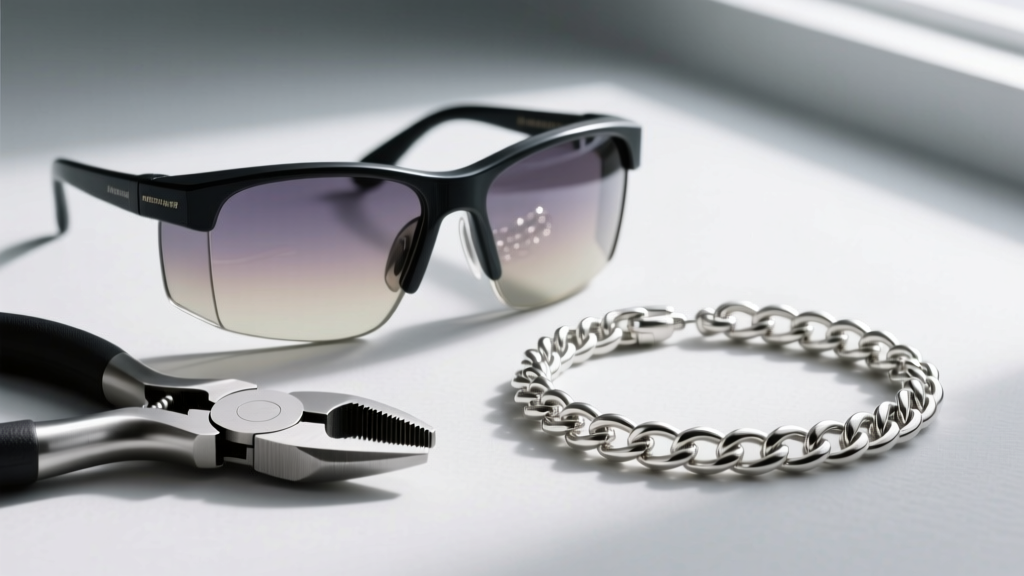
Micro-TIG welding produces an intense flash of ultraviolet (UV) and infrared (IR) light. Staring at the arc without proper protection will cause 'arc eye' (photokeratitis), a painful condition akin to a sunburn on your corneas. Standard jewelry magnification visors do not provide adequate shade. You must invest in specialized auto-darkening welding glasses rated for Shade 8 to Shade 13. These glasses instantly darken when they detect the flash of the arc, allowing you to position the chain with the lights on, and protecting your eyes the millisecond the weld fires. Budget at least $50 to $120 for high-quality, optically clear auto-darkening lenses.
Furthermore, welding vaporizes microscopic metal particles and flux residues. A localized fume extractor or a well-ventilated workspace is mandatory to prevent inhalation of heavy metal particulates, especially when working with white gold alloys that may contain nickel or palladium.
Calculating Your Break-Even Point
Let us assume you purchase a reliable mid-tier DIY setup for $1,800, including the welder, argon tank, safety gear, and an initial inventory of solid 14k gold chain. If you charge friends and local clients $75 per weld, and your material cost per bracelet averages $15, your profit margin per weld is $60.
Dividing your $1,800 initial investment by your $60 profit margin yields a break-even point of exactly 30 welds. If you host a single pop-up event at a local boutique and complete 15 welds a day, your entire DIY studio is paid for in a single weekend. From a pure value perspective, the DIY route is highly lucrative for micro-entrepreneurs, provided you have the marketing channels to secure consistent bookings.
Final Verdict: Is the Investment Justified?
The value of do it yourself permanent jewelry hinges entirely on your end goal. If you are a casual crafter looking to save money on a personal bracelet, the $1,500+ barrier to entry makes DIY entirely unjustifiable; simply visit a local studio and enjoy the experience. However, if you are an existing jewelry maker, a market vendor, or an aspiring entrepreneur, investing in a quality pulse arc welder, pure argon shielding, and solid karat gold inventory is one of the highest-ROI equipment purchases you can make in 2026. By mastering the metallurgy and respecting the safety protocols, your DIY setup will transition from a sunk cost to a highly profitable revenue stream.


