Unique Handmade Jewelry Ideas: Material Properties Guide
Discover unique handmade jewelry ideas by mastering material properties. Compare metals, resins, and polymers for durable, striking DIY designs.

The Science of Standing Out in 2026
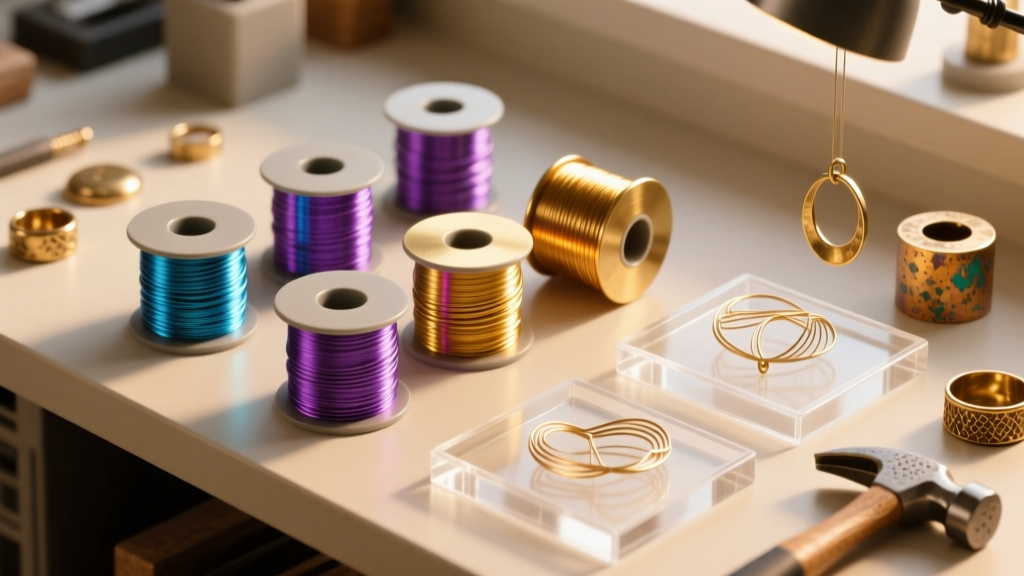
Generating truly unique handmade jewelry ideas requires moving beyond standard sterling silver and mass-produced glass beads. In the contemporary 2026 DIY landscape, true originality is born from a deep understanding of material science. When you comprehend how different metals work-harden, how polymers cure, and how textiles bear tensile loads, you unlock design possibilities that casual crafters simply cannot execute. This guide dives deep into the metallurgical and chemical properties of advanced jewelry materials, providing the technical foundation you need to bring avant-garde concepts to life.
Whether you are engineering a kinetic wire-wrapped pendant or casting botanical inclusions in crystal-clear resin, the physical limitations and advantages of your chosen medium will dictate your design. By mastering these properties, you transition from a hobbyist assembling kits to a true jewelry artisan engineering wearable art.
Reactive Metals: Niobium and Titanium
When brainstorming structural yet colorful components, reactive metals offer unparalleled advantages. According to the metallurgical guides from Rio Grande, understanding the crystalline structure of these metals is vital for cold-forging and wire wrapping.
Niobium: The Anodizing Powerhouse
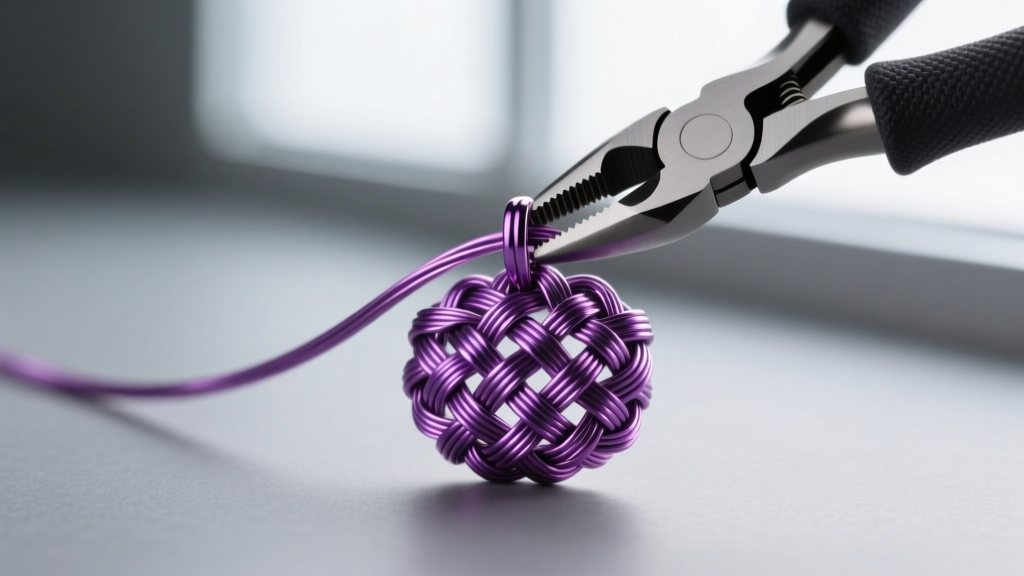
Niobium (Nb) is a transition metal that is entirely nickel-free, making it a hypoallergenic powerhouse for ear wires and sensitive skin applications. Unlike copper or silver, niobium does not work-harden quickly. You can weave, twist, and bend 20-gauge niobium wire repeatedly without needing to anneal it, as it lacks a traditional annealing point in a standard jeweler's torch setup. Instead, its true magic lies in anodizing. By submerging the metal in a mild electrolyte solution (like baking soda and water) and applying specific DC voltages, you alter the thickness of the oxide layer, which refracts light to produce vivid, permanent colors without dyes.
- 15 Volts: Cobalt Blue
- 30 Volts: Deep Purple
- 60 Volts: Brassy Gold
- 90 Volts: Vibrant Green
Titanium: Grade Selection is Critical
Titanium is famous for its high strength-to-weight ratio, but many DIY jewelers ruin their tools by buying the wrong grade. Grade 5 Titanium (Ti-6Al-4V) is an aerospace alloy that will instantly dent your flush cutters and snap under bending pressure. For jewelry making, you must source Grade 1 or Grade 2 Commercially Pure (CP) Titanium. Grade 1 is dead-soft and can be cold-forged and wire-wrapped, though it requires significantly more hand strength than half-hard sterling silver. According to Halstead Bead, titanium's high melting point means it cannot be soldered with standard jeweler's torches; you must rely on cold connections, rivets, or laser welding.
| Material | Vickers Hardness (HV) | Work-Hardening Rate | Best Application |
|---|---|---|---|
| Niobium (Pure) | 60-80 HV | Extremely Low | Complex wire weaving, anodizing |
| Titanium (Grade 1 CP) | 120-150 HV | Moderate | Cold forging, structural jump rings |
| Sterling Silver | 65-115 HV | High | Prong settings, traditional wrapping |
Polymer Chemistry: UV vs. Epoxy Resins
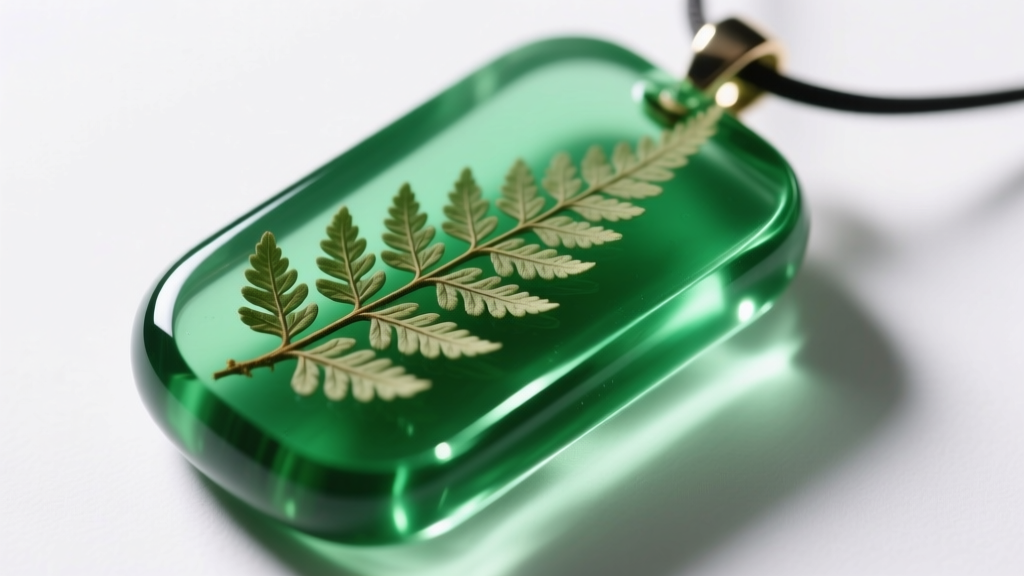
Resin allows for optical illusions, deep encapsulations, and fluid shapes that metal cannot achieve. However, treating all resins as interchangeable is a common failure point. When developing unique handmade jewelry ideas involving botanical inclusions or geode effects, selecting the correct polymer matrix is non-negotiable.
Epoxy Resin: The Deep-Pour Standard
Two-part epoxy resin relies on a chemical reaction between the resin (Part A) and a polyamine hardener (Part B). High-quality jewelry epoxies feature a Shore D hardness of around 80, making them highly scratch-resistant once fully cured. The critical property here is the exothermic reaction. When mixed, epoxy generates its own heat. If you pour a 1-inch thick bezel, the trapped heat can cause the resin to "flash cure," boiling the liquid and creating a cracked, yellowed mess. For deep pendants, you must use specialized slow-cure, low-exotherm epoxies and pour in 1/4-inch layers, allowing 12 hours between pours.
UV Resin: Speed vs. Brittleness
UV resin is a single-component acrylate oligomer that cures via photopolymerization when exposed to ultraviolet light (typically 365nm to 405nm wavelengths). While a 36W UV-LED lamp can cure a thin layer in 60 seconds, UV resin has severe structural limitations. It is inherently brittle and will warp or shrink if poured thicker than 3mm. Furthermore, cheap UV resins lack HALS (Hindered Amine Light Stabilizers), meaning your crystal-clear pendant will yellow and degrade within six months of sun exposure. Always check the Safety Data Sheet (SDS) for UV stabilizers before purchasing. For comprehensive resin chemistry troubleshooting, Resin Obsession provides excellent technical breakdowns on avoiding tacky, under-cured surfaces.
Patina and Oxidation Chemistry
Surface treatments can completely transform a basic wire wrap into an antique-looking artifact. However, chemical patinas are highly substrate-specific.
- Liver of Sulfur (Potassium Sulfide): The industry standard for oxidizing sterling silver and copper. It creates a spectrum of colors from pale gold to deep gunmetal black depending on water temperature and concentration. It must be neutralized in a baking soda bath to halt the reaction.
- Silver Black (Tellurium Dioxide): A rapid, room-temperature oxidizer that produces a velvety, matte black finish on silver instantly. Crucially, it does not work on copper or brass. Attempting to use it on base metals will result in a flaky, uneven gray smudge.
Understanding these chemical affinities prevents wasted materials and allows you to intentionally mix metals—such as oxidizing a silver frame while leaving a copper core bright and polished through selective masking with nail polish or wax.
Troubleshooting Material Failures in DIY Projects
Even experienced makers encounter material failures. Here is a practical decision framework for diagnosing common issues:
- Tacky Epoxy Resin: This is almost always a stoichiometry error. If you measure by volume instead of weight, or if you scrape the sides of the mixing cup into your mold, the ratio is thrown off. Always use a digital gram scale for 1:1 or 2:1 epoxies, and mix for a full three minutes, scraping the sides and bottom meticulously.
- Wire Snapping During Wrapping: If your 20-gauge sterling silver wire snaps while weaving, it has work-hardened beyond its tensile limit. You must anneal it. Heat the wire with a torch until it glows a dull cherry red (approx. 1100°F), then quench in water. This realigns the crystalline structure, returning it to a dead-soft state.
- Resin Inclusions Rotting: Never encapsulate fresh flowers or organic matter in epoxy without sealing them first. The moisture inside fresh organics will turn brown and rot inside the airtight polymer. Always dry inclusions in silica gel for 5-7 days, then seal them with a clear acrylic spray before casting.
Sourcing Specialty Materials
To execute high-level designs, you must source from specialized suppliers rather than generic craft stores. For reactive metals and precision-milled wire, industrial jewelry suppliers offer certified metal purity and exact temper grades. For polymers, seek out vendors that provide SDS sheets and batch-test for UV resistance. Investing in premium raw materials reduces your failure rate and elevates the perceived value of your finished pieces, ensuring your unique designs stand the test of time and wear.