How to Reach a Handmade Jewelry Profit Margin 70 80 Percent
Learn the exact pricing formulas, material sourcing tricks, and perceived value tactics to secure a handmade jewelry profit margin 70 80 percent.
The Math Behind the Magic: Margin vs. Markup
When independent makers first launch their shops, the most common pricing mistake is confusing markup with profit margin. Achieving a handmade jewelry profit margin 70 80 percent is the gold standard for sustainable businesses, but it requires precise mathematical discipline. Markup is the percentage added to your cost to determine the price. Margin is the percentage of the final selling price that is actual profit.
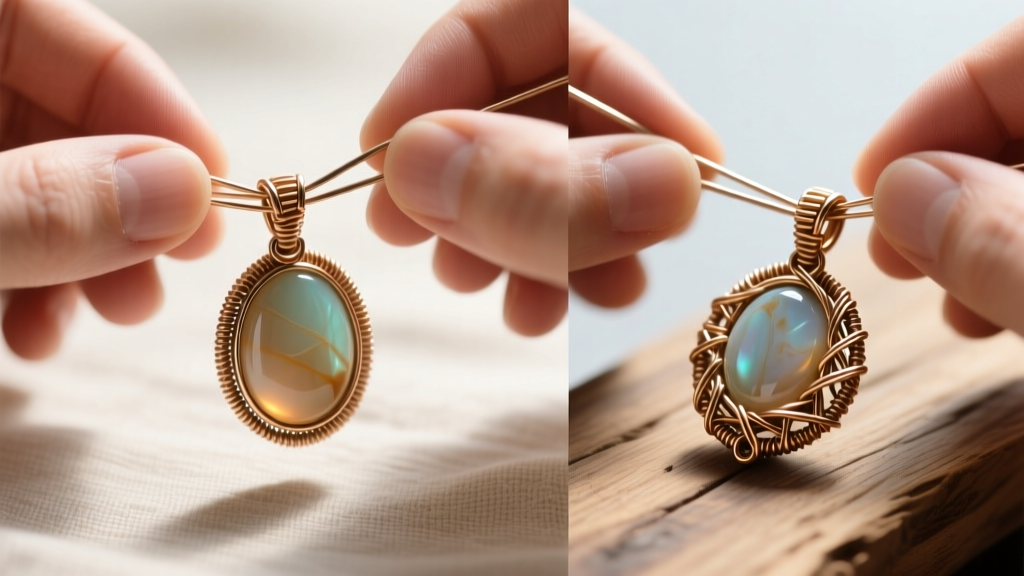
For example, if a wire-wrapped pendant costs you $15 in materials and labor (Cost of Goods Sold, or COGS) and you apply a 300% markup, your retail price is $60. Your profit is $45. To find your margin, divide the profit by the revenue ($45 / $60), which equals a 75% profit margin. Understanding this distinction is the first step to pricing your handmade jewelry for long-term viability.
Strategic Material Sourcing: The Foundation of High Margins
You cannot achieve premium margins using discount craft store supplies. High-end buyers can spot cheap materials instantly, and cheap materials lead to tarnishing, breakage, and negative reviews. To protect your margins, you must source wholesale metals that offer luxury appeal at manageable costs.
14/20 Gold-Filled vs. Gold Vermeil vs. Plated
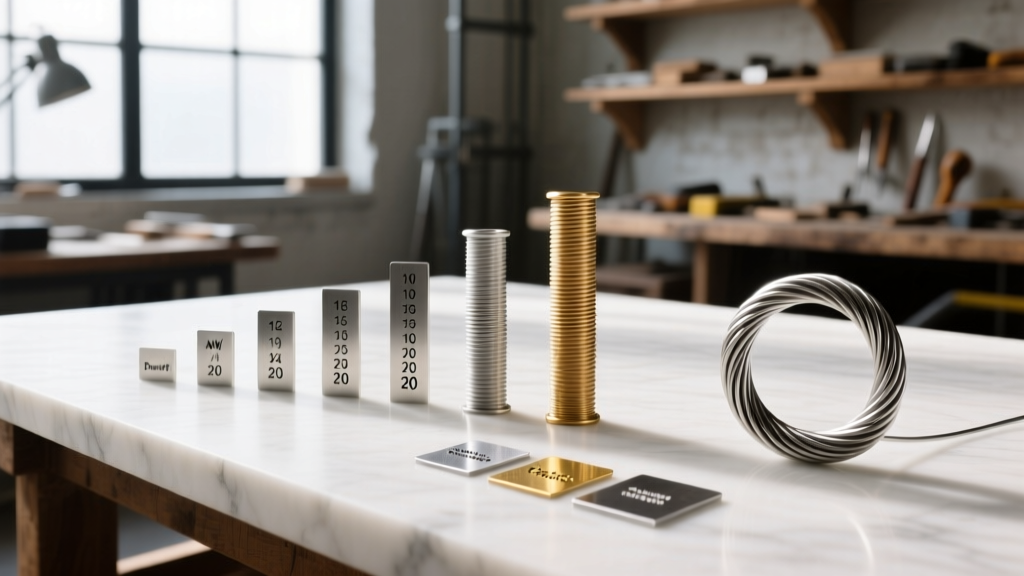
For wire wrapping and structural components, 14/20 gold-filled wire is your best investment. By law, 14/20 gold-filled wire contains 5% solid 14k gold by weight, mechanically bonded to a brass core. A spool of 20-gauge, half-hard 14/20 gold-filled wire costs roughly $45 for 144 inches (about $0.31 per inch). In contrast, gold vermeil (2.5 microns of gold over sterling silver) costs more and is unsuitable for wire wrapping because the gold layer will flake off when manipulated with nylon-jaw pliers. Brass or copper wire plated with a microscopic layer of gold costs pennies but will tarnish within weeks, destroying your brand's perceived value.
Upgrading to Argentium Silver
If you work with silver, consider upgrading from standard 925 sterling to Argentium 935 silver. Argentium contains germanium, making it highly tarnish-resistant and brighter than traditional sterling. While the upfront cost per ounce is about 15-20% higher than standard sterling, you can charge a 30% premium on the final piece, easily absorbing the material cost and boosting your overall margin.
Wholesale vs. Retail Pricing Matrix
To visualize how material choices impact your bottom line, review this cost-to-retail matrix for a standard wire-wrapped gemstone pendant. This assumes a $25 hourly labor rate and 45 minutes of production time ($18.75 labor cost).
| Material Tier | Material Cost | Labor Cost | Total COGS | Retail Price | Profit Margin |
|---|---|---|---|---|---|
| Craft Store Plated Brass + Dyed Glass | $3.50 | $18.75 | $22.25 | $45.00 | 50.5% |
| 925 Sterling Silver + 4mm Amethyst | $12.00 | $18.75 | $30.75 | $95.00 | 67.6% |
| 14/20 Gold-Filled + 4mm Ceylon Sapphire | $18.50 | $18.75 | $37.25 | $165.00 | 77.4% |
As the table demonstrates, utilizing premium materials like 14/20 gold-filled wire and genuine gemstones allows you to command a luxury retail price, effortlessly pushing your handmade jewelry profit margin 70 80 percent into reality.
Elevating Perceived Value Without Inflating COGS
A high margin relies heavily on perceived value. If your $165 sapphire pendant arrives in a flimsy plastic baggie, the buyer will experience cognitive dissonance and likely request a refund. You must invest in packaging that justifies the premium price tag.
Sourcing custom-branded kraft boxes with a velvet or cotton insert costs roughly $1.20 to $1.80 per unit when ordered in batches of 500 from suppliers like Packola or Uline. Adding a heavy-weight, 100% cotton rag paper authenticity card printed with your logo and metal care instructions adds another $0.35 per unit. This $2.15 packaging investment elevates the unboxing experience to match fine jewelry boutiques, validating the higher price point and ensuring your margins remain intact through customer loyalty and repeat purchases.
The 4x Pricing Formula for Beginners
According to Halstead Bead's comprehensive pricing guide, a reliable baseline for handmade jewelry is the 4x formula. This ensures you cover COGS, overhead, marketing, and profit.
- Step 1: Calculate Direct COGS. Add exact material costs (down to the millimeter of wire and the exact number of jump rings) plus your hourly labor rate. Never pay yourself less than $20/hour as a skilled artisan.
- Step 2: Add Overhead (15%). Factor in tool depreciation (e.g., your $65 Lindstrom RX chain-nose pliers will eventually need replacing), studio lighting, and shipping supplies like bubble mailers and thermal labels.
- Step 3: Multiply by 2 for Wholesale. This gives you your minimum wholesale price, ensuring you can sell to boutiques without losing money.
- Step 4: Multiply Wholesale by 2 for Retail. This final 4x multiplier establishes your direct-to-consumer retail price, naturally building in the buffer needed to absorb platform fees and still retain a 75% margin.
Common Pitfalls That Destroy Your Margins
Even with the right formula, hidden costs can erode your profits. The Etsy Seller Handbook frequently warns makers about the reality of marketplace fees. If you sell on Etsy, you must account for the 6.5% transaction fee, the 3% + $0.25 payment processing fee, and potential off-site ads fees (15% for shops under $10k in annual revenue).
If you price a necklace at $50, Etsy will deduct approximately $4.75 in base fees. If your COGS was $15, your actual net profit is $30.25, resulting in a 60.5% margin—well below your 70-80% target. To counter this, you must either raise your retail prices to $75+ or focus on driving traffic to your own Shopify store where transaction fees are capped at 2.9% + $0.30.
Another critical failure mode is ignoring the cost of returns and breakage. Always factor a 5% 'shrinkage' allowance into your overhead calculations to cover the occasional lost package or snapped chain during transit.
Conclusion
Securing a handmade jewelry profit margin 70 80 percent is not about cutting corners; it is about elevating your materials, mastering the mathematics of pricing, and presenting your work as the luxury art it is. By sourcing 14/20 gold-filled and Argentium silver, utilizing the 4x pricing formula, and investing in premium packaging, you position your brand to thrive in a competitive market while fairly compensating yourself for your craftsmanship.