How to Make Wire Jewelry on a Budget: 2026 Cost Guide
Learn how to make wire jewelry on a budget with our 2026 cost breakdown. Compare copper, brass, and sterling silver wire prices and tool investments.

The True Cost of Learning How to Make Wire Jewelry
When beginners first research how to make wire jewelry, the barrier to entry seems deceptively low. A spool of craft store copper wire and a cheap pair of pliers can get you started for under $25. However, as you transition from simple wrapped loops to complex woven pendants and structural clasps, the hidden costs of material waste, tool replacement, and metal oxidation quickly compound. In 2026, with precious metal spot prices continuing their upward trajectory, understanding the precise economics of wire wrapping is no longer optional—it is essential for maintaining a sustainable hobby or launching a profitable small business.
This comprehensive budget and value assessment breaks down the exact costs of wire materials, essential tooling, and hidden consumables. We will evaluate where you can safely cut corners and where investing in premium equipment will ultimately save you money by preventing structural failures and material waste.
Wire Materials: Budget vs. Premium Breakdown
The foundation of any wire-wrapped piece is the metal itself. Wire is categorized by three main metrics: material composition, gauge (thickness), and temper (hardness). For beginners, navigating these variables is the first major financial hurdle. Buying the wrong temper for a specific technique is the most common cause of material waste.
For instance, using dead soft wire to create a structural hook clasp will result in a piece that deforms the moment it is worn. Conversely, attempting to weave tight, intricate coils using half-hard wire will cause rapid work-hardening, leading the wire to snap mid-project and forcing you to scrap the entire piece. Understanding these metallurgical properties is crucial for budget management.
2026 Wire Material Cost Comparison
| Material | Temper | Gauge | Avg. Price (2026) | Best Use Case & Value |
|---|---|---|---|---|
| Bare Copper | Dead Soft | 20g | $14.00 / 4oz spool | Practice, weaving, prototyping. Excellent value. |
| Jeweler's Brass | Half-Hard | 22g | $18.50 / 4oz spool | Affordable gold-tone alternative for structural frames. |
| Sterling Silver | Dead Soft | 24g | $32.00 / 1oz spool | Fine weaving and binding wraps on premium pieces. |
| Sterling Silver | Half-Hard | 20g | $48.00 / 1oz spool | Clasps, ear wires, and load-bearing structural frames. |
| Argentium Silver | Dead Soft | 20g | $58.00 / 1oz spool | High-tarnish resistance. Best for bridal or heirloom pieces. |
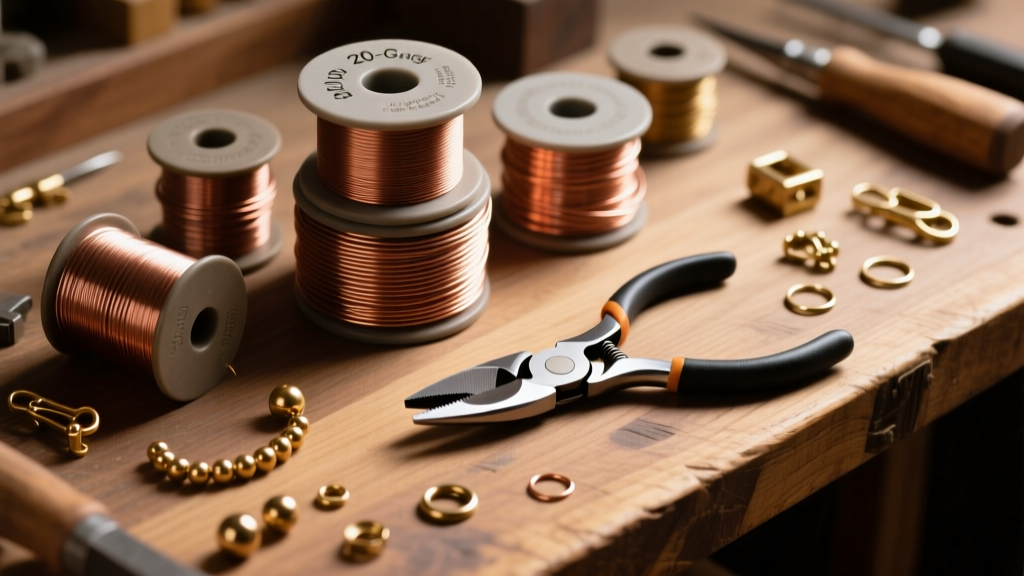
According to industry suppliers like Rio Grande, the price of sterling silver has surged over the last few years, making copper and brass indispensable for the learning phase. A 4oz spool of 20-gauge copper provides roughly 48 feet of wire, offering hundreds of practice hours for the cost of a single ounce of sterling.
Essential Tools: Where to Save and Where to Spend
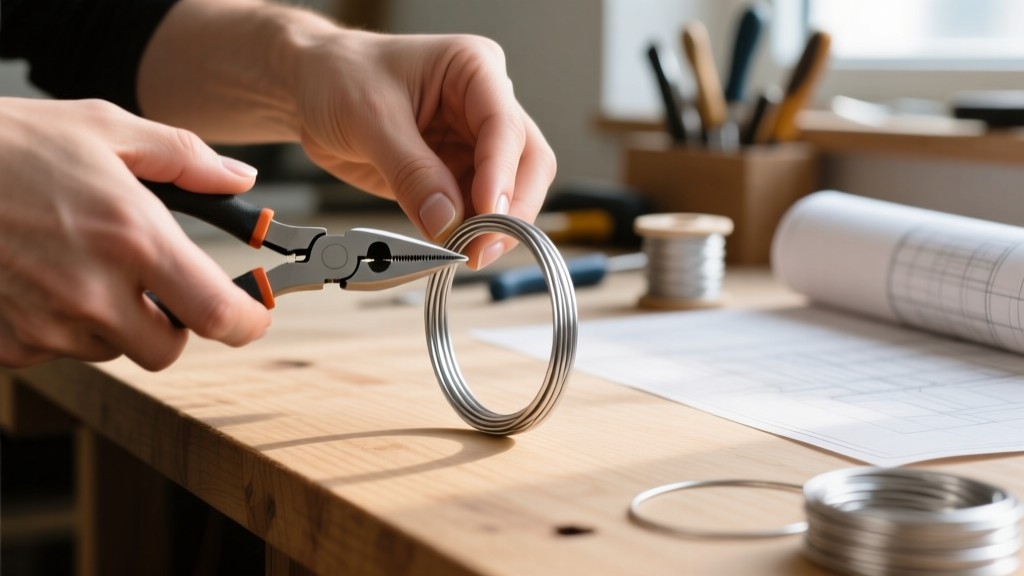
The most critical mistake new wire artists make is purchasing a $15 multi-piece jewelry tool kit from a general e-commerce marketplace. These budget tools are typically cast from low-grade steel, feature poorly aligned jaws, and lack flush-cutting capabilities. When a cutter leaves a sharp burr or 'pinch' on the end of your wire, it not only ruins the aesthetic of your weave but also creates a micro-fracture that compromises the structural integrity of the jewelry.
To truly understand how to make wire jewelry that lasts, you must invest in precision cutters and non-marring pliers. You do not need a massive arsenal; three high-quality tools will outlast a dozen cheap sets.
The 'Buy It For Life' Tool Matrix
- Flush Cutters (The Workhorse): The Xuron 410 Micro-Shear (approx. $22) is the undisputed champion of budget-friendly precision. It cuts wire up to 18-gauge soft and 20-gauge half-hard with a perfectly flat edge. For those willing to spend more, the Lindstrom RX 8060 (approx. $68) offers ergonomic grips and a spring mechanism that reduces hand fatigue during long weaving sessions.
- Chain Nose Pliers: You need a pair with smooth, un-serrated jaws to prevent marring the metal. Wubbers brand pliers (approx. $18-$24) offer exceptional value. Their jaws meet perfectly at the tip, which is vital for closing jump rings and tucking in sharp wire ends.
- Nylon Jaw Pliers: Often overlooked by beginners, nylon jaw pliers (approx. $16) are essential for straightening kinked wire and hardening your finished frames without scratching the metal. They pay for themselves by salvaging wire that would otherwise be thrown in the scrap bin.
Hidden Costs and Failure Modes in Wire Wrapping
Budgeting for wire and pliers is only the first step. The hidden costs of jewelry making lie in finishing materials, work-hardening failures, and tarnish management. Let us examine the specific failure modes that drain your wallet and how to mitigate them.
1. Work-Hardening and Snapping
Every time you bend wire, it becomes harder and more brittle—a process known as work-hardening. If you are weaving a complex Celtic knot with 24-gauge dead soft wire and you make a mistake, attempting to unbend and re-bend the wire will almost certainly cause it to snap. Value Tip: Always cut 20% more weaving wire than you think you need. The cost of an extra two feet of copper is negligible compared to the frustration of restarting a three-hour weave.
2. Patina and Polishing Consumables
Bare copper and sterling silver will oxidize. To achieve that professional, high-contrast antiqued look, you will need a patina solution. Liver of Sulfur (LOS) from reputable suppliers like Fire Mountain Gems costs around $15 for a small jar that lasts for dozens of batches. However, you must also budget for polishing cloths, brass brushes, and potentially a rotary tumbler with stainless steel shot (a $60-$120 investment) if you plan to scale your production.
Sourcing Strategies for Maximum Value
Where you buy your materials dictates your profit margins and your learning curve. Local craft stores often mark up basic copper wire by 300% and rarely carry tempers specifically suited for jewelry (they often stock only 'craft wire' which is too soft for structural work).
For the best value, establish accounts with dedicated jewelry supply houses. Buying sterling silver by the troy ounce spool from dedicated suppliers ensures you are getting genuine .925 or .935 (Argentium) alloys, rather than silver-plated copper wire that will flake and tarnish unpredictably. Additionally, keep a dedicated 'scrap jar' for your clean silver cut-offs. Once you accumulate a few ounces of sterling scrap, you can send it to a refinery or trade it back to your supplier for credit, effectively recouping 40-60% of your wasted material costs.
Final Verdict: Is Wire Wrapping Cost-Effective?
So, is learning how to make wire jewelry a budget-friendly endeavor? The answer depends entirely on your purchasing strategy. If you approach it by buying pre-packaged retail kits and cheap tools, you will spend hundreds of dollars on subpar materials that yield unwearable results.
However, if you adopt a strategic approach—mastering techniques on bulk copper wire, investing in three precision tools, and sourcing precious metals from wholesale suppliers—wire wrapping remains one of the most cost-effective and high-ROI jewelry-making disciplines available in 2026. By respecting the metallurgy and budgeting for the hidden consumables, you can build a professional-grade studio for under $150.


