How to Make Your Own Jewelry: Comparing Metal Wire Grades
Discover how to make your own jewelry by comparing copper, brass, sterling silver, and gold-filled wire properties, gauges, and hardness.

The Metallurgy of DIY Jewelry Making
When you first learn how to make your own jewelry, the sheer volume of wire options can be paralyzing. You are not just choosing a color; you are selecting a specific metallurgical alloy that dictates how the metal will behave under the pressure of your pliers. Understanding the crystalline structure, ductility, and tensile strength of your materials is what separates a frustrating, broken project from a professional-grade piece of wire-wrapped art. As we navigate the jewelry supply landscape in 2026, material costs and alloy availability have shifted, making it more important than ever to understand exactly what you are buying.
Every time you bend a piece of wire, you are altering its internal grain structure. This phenomenon, known as work-hardening, increases the metal's tensile strength but decreases its ductility. If you push a metal past its yield point without annealing it, it will suffer from metal fatigue and snap. To master wire wrapping, beading, and permanent jewelry fabrication, you must deeply understand the baseline properties of base and precious metals.
Decoding Wire Hardness: Dead Soft vs. Half-Hard
Wire is manufactured and sold in specific hardness tempers. The two most common for jewelry makers are Dead Soft and Half-Hard. According to the Rio Grande metallurgical guides, the temper of the wire dictates its immediate use case and how much manipulation it can withstand before breaking.
- Dead Soft: This wire has been fully annealed. The metal grains are relaxed, making it extremely pliable. It is ideal for weaving, tight spirals, and sculptural wire wrapping. However, it lacks structural integrity and will easily pull out of shape if used for clasps or jump rings.
- Half-Hard: This wire has been partially work-hardened at the mill. It offers a balance of malleability and rigidity. It is the gold standard for making jump rings, ear wires, and structural frames that need to hold their shape under mild tension.
- Full-Hard: Rarely used in hand-fabrication, this wire is extremely stiff and springy. It is typically reserved for specialized findings or heavy-duty clasps that require maximum tensile strength.
Material Comparison Chart: Base vs. Precious Metals
Choosing the right metal requires balancing your budget with the desired longevity of the piece. Base metals are excellent for practicing techniques, but they come with specific failure modes like rapid oxidation and skin discoloration. Precious metals offer longevity but require a higher upfront investment. Below is a detailed comparison of the most common wires used by independent jewelers.
| Metal Alloy | Composition | Work-Hardening Rate | Tarnish Resistance | Approx. Cost (20g, 1oz) |
|---|---|---|---|---|
| Raw Copper | 99.9% Cu | Slow (Highly ductile) | Poor (Oxidizes quickly) | $4.00 - $6.00 |
| Jeweler's Brass | 70% Cu, 30% Zn | Fast (Brittle when bent) | Poor (Patina develops) | $5.00 - $8.00 |
| Nickel Silver | 60% Cu, 20% Ni, 20% Zn | Medium (Springy memory) | Medium (Requires lacquer) | $7.00 - $10.00 |
| Sterling Silver | 92.5% Ag, 7.5% Cu | Medium (Predictable) | Low (Copper causes tarnish) | $35.00 - $45.00 |
| Argentium Silver | 93.5% Ag, Germanium | Medium (Firescale resistant) | Excellent (Highly pure) | $45.00 - $60.00 |
| 14k Gold-Filled | 5% 14k Gold, Brass Core | Medium (Behaves like brass) | High (Thick gold layer) | $25.00 - $35.00 |
Note: Prices fluctuate based on the global commodities market and specific wire gauge tolerances.
The Argentium Advantage in Modern Fabrication
While traditional Sterling Silver (925) has been the industry standard for centuries, Argentium Silver (935) has gained massive traction. By replacing some of the copper content with the metalloid germanium, Argentium forms a transparent, self-healing oxide layer that virtually eliminates tarnish. Furthermore, when soldering or fusing Argentium, the germanium prevents the formation of firescale (the purple/black staining common in standard sterling), saving you hours of cleanup and pickling.
Understanding Gauge Sizes and Structural Tolerances
The American Wire Gauge (AWG) system is logarithmic, meaning that a small numerical change represents a significant shift in physical thickness. Misjudging your gauge will result in either a piece that is too fragile to wear or one that is too bulky and heavy. The Gemological Institute of America (GIA) and leading jewelry suppliers emphasize the importance of matching the gauge to the specific mechanical stress the component will endure.
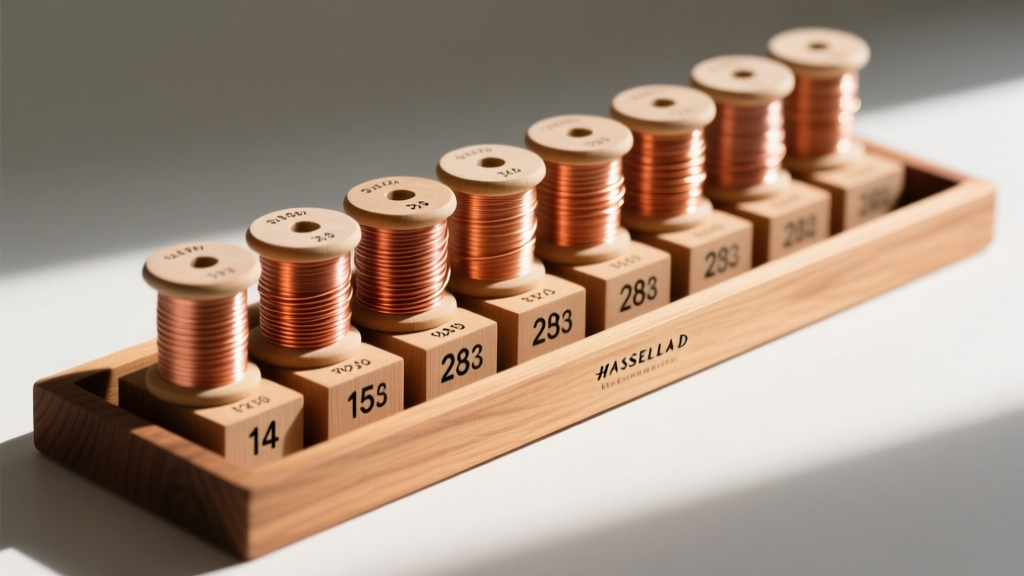
- 14 to 16 Gauge (1.6mm - 1.3mm): Used for heavy-duty structural elements, thick bangles, and the base frames of large pendants. Requires heavy-duty flush cutters and significant hand strength.
- 18 to 20 Gauge (1.0mm - 0.8mm): The most versatile range. 20-gauge is the undisputed king of ear wires, jump rings, and general wire wrapping. It is thick enough to hold its shape but thin enough to pass through most standard gemstone beads.
- 22 to 24 Gauge (0.6mm - 0.5mm): Ideal for weaving, coiling, and securing cabochons in bezel settings. It work-hardens quickly and is prone to snapping if over-manipulated.
- 26 to 28 Gauge (0.4mm - 0.3mm): Used exclusively for fine detailing, micro-macrame integration, and delicate woven patterns. It is as thin as a human hair and requires specialized, perfectly flush micro-cutters to avoid leaving sharp, dangerous burrs.
Real-World Troubleshooting: Metal Fatigue and Annealing
One of the most common frustrations when learning how to make your own jewelry is wire snapping mid-wrap. This is rarely a defect in the wire; it is a failure to manage metal fatigue. When you bend brass or nickel silver, the zinc and nickel alloys create a rigid crystalline lattice that resists deformation. If you bend the wire back and forth to 'test' it, you are rapidly accelerating work-hardening, leading to a catastrophic shear failure.
Never bend a piece of wire back and forth to test its hardness. Make your bends decisively. If you make a mistake, use your fingers or nylon-jaw pliers to gently coax the wire back into place, rather than creating a sharp, repetitive stress fracture.
The Art of Annealing
If you are working with dead soft copper or sterling silver and the metal becomes too stiff to manipulate, you must anneal it. Annealing involves heating the metal with a butane or oxy-propane torch until it reaches a dull cherry red (approximately 1100°F / 593°C for sterling silver, and slightly lower for pure copper). Once it reaches this temperature, immediately quench it in a bowl of room-temperature water. This rapid cooling shocks the crystalline structure back into a relaxed, soft state. Warning: Never quench brass or gold-filled wire in water immediately after heating, as the zinc can leach and the gold layer can delaminate or blister.
Sourcing Quality Materials and Tools
The quality of your final piece is directly tethered to the precision of your raw materials. Discount marketplace wires often suffer from severe gauge inconsistencies—a spool labeled as 20-gauge might fluctuate between 19.5 and 21 gauge, ruining the symmetry of your wire weaves. For reliable, laser-measured tolerances, professional jewelers source from established suppliers like Rio Grande, OttoFrei, or specialized wire mills that guarantee AWG compliance. Additionally, investing in a high-quality digital micrometer caliper allows you to verify the exact diameter of your wire before beginning complex, multi-hour weaving projects, ensuring your tension and spacing remain mathematically perfect from start to finish.


