Top Jewelry Making Methods for 2026: Hybrid Wire & Resin Trends
Discover the top jewelry making methods for 2026. Learn how to blend wire wrapping and UV resin to create trending, durable hybrid DIY jewelry pieces.

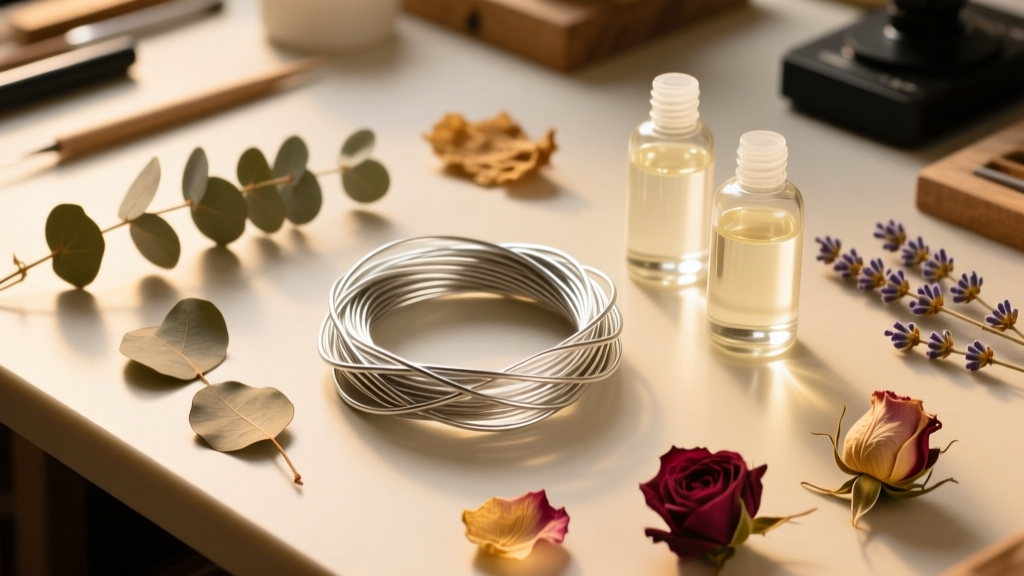
The landscape of independent jewelry design is undergoing a massive textural shift. As we move through 2026, the minimalist, hyper-polished aesthetics of the early 2020s have given way to a demand for tactile, organic, and deeply personal adornments. For DIY artisans and small-batch creators, this means adapting your toolkit to meet consumer desires for pieces that feel both architectural and naturally wild. This is where hybrid jewelry making methods come into play, specifically the sophisticated blending of traditional wire wrapping with modern UV resin encapsulation.
By merging the structural integrity of metalwork with the glass-like, magnifying properties of resin, makers are producing 'suspended' jewelry that captures botanicals, raw crystals, and intricate wire weaves in a durable, waterproof matrix. This guide breaks down the technical specifications, material science, and market viability of this dominant 2026 trend.
The Evolution of DIY: Why Hybrid Jewelry Making Methods Are Dominating 2026
Historically, wire wrapping and resin casting were treated as entirely separate disciplines within the jewelry making community. Wire artists focused on the mechanical tension and weaving of metal, while resin casters relied on silicone molds and epoxy pouring techniques. However, the modern consumer is increasingly drawn to 'mixed-media' storytelling. According to trend forecasts from industry leaders like Fire Mountain Gems, buyers are actively seeking pieces that showcase the raw process of their creation.
Hybrid jewelry making methods satisfy this craving by leaving the metallic 'skeleton' of the piece partially exposed while using resin as both an adhesive and a lens. This technique allows for the suspension of fragile elements—like dried fern fronds, gold leaf flakes, or crushed turquoise—that would otherwise be impossible to secure using only mechanical wire tension. Furthermore, the rapid curing time of modern UV resins has eliminated the 24-hour wait times associated with traditional two-part epoxies, allowing makers to iterate and layer designs in a single afternoon.
The Aesthetic Shift: Organic Meets Architectural
The defining look of 2026 is 'Architectural Organic.' Think of a rigid, geometric brass bezel that houses a chaotic, asymmetrical tangle of oxidized copper wire, all frozen beneath a dome of crystal-clear resin. This contrast between hard, calculated metal lines and soft, fluid resin inclusions creates a visual depth that commands premium pricing in the artisan market.
Deep Dive: Blending 20-Gauge Wire Wrapping with UV Resin
To successfully execute hybrid jewelry making methods, you must understand the structural limitations of both materials. Wire provides the armature; resin provides the volume and seal. If your wire frame is too weak, the shrinkage of the resin during the curing process will warp the metal inward, ruining the piece.
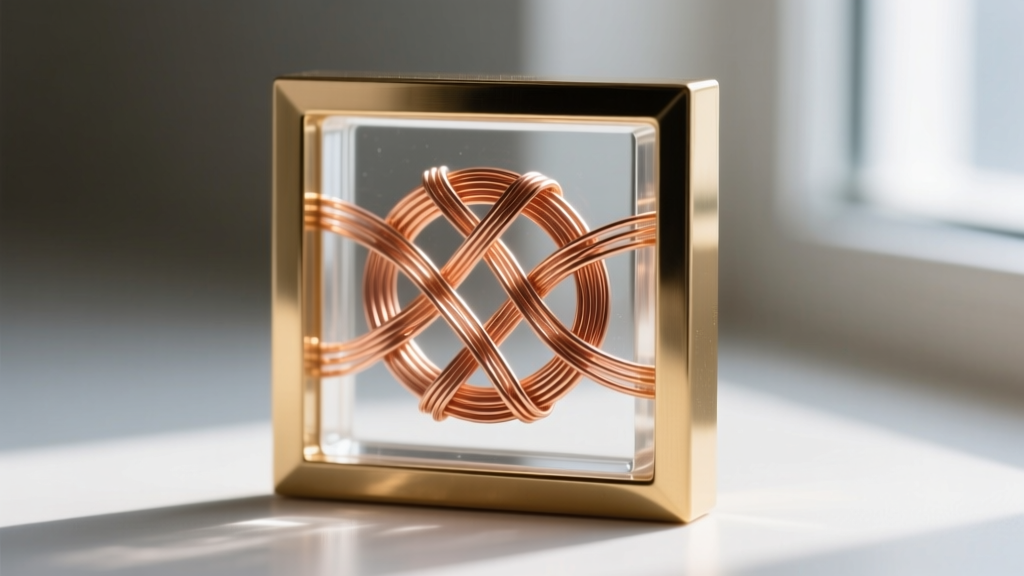
For the structural skeleton of your hybrid pieces, you should exclusively use 20-gauge (0.81mm) half-hard wire. Dead-soft wire is too malleable and will bend under the 5-8% volumetric shrinkage that occurs when urethane acrylate-based UV resins cure. Half-hard Argentium silver or solid brass offers the necessary tensile strength to hold its shape. For the intricate weaving and binding that sits inside the resin, step down to 28-gauge (0.32mm) dead-soft wire. This ultra-thin wire allows for micro-weaves that look incredibly complex when magnified by the resin dome.
Material Sourcing & Cost Breakdown
Sourcing the correct chemical formulation for your resin is critical. Standard epoxy yellows over time when exposed to UV light, which will ruin the aesthetic of a clear botanical pendant. You must source a high-grade, non-yellowing UV resin. Suppliers like Let's Resin offer specialized hard-top UV formulas designed specifically for jewelry layering.
| Material | Specification | Est. Cost (USD) | Primary Use |
|---|---|---|---|
| Argentium Silver Wire | 20-Gauge, Half-Hard (1 oz) | $45.00 | Structural Bezels & Frames |
| Copper Wire | 28-Gauge, Dead-Soft (4 oz) | $12.00 | Internal Weaving & Binding |
| UV Resin (Hard) | Urethane Acrylate, 250g | $28.00 | Encapsulation & Doming |
| UV LED Lamp | 36W to 48W Dual-Source | $35.00 | 60-Second Layer Curing |
| Renaissance Wax | Micro-Crystalline, 65ml | $14.00 | Pre-Resin Wire Sealing |
Step-by-Step Framework for the 'Suspended Flora' Technique
Creating a flawless hybrid piece requires a meticulous approach to layering. Rushing the resin application will result in trapped air bubbles and cloudy inclusions. Follow this framework to master one of the most popular hybrid jewelry making methods of the year.
- Step 1: Forge and Clean the Armature. Construct your 20-gauge outer frame and solder or tightly weave the 28-gauge internal elements. Clean the entire metal structure in a warm ultrasonic bath or with a mild dish soap and a soft brass brush to remove all finger oils and oxidation.
- Step 2: Seal Porous Inclusions. If you are embedding dried flowers, raw earth, or porous stones, you must seal them first. Dip the botanicals in a micro-crystalline wax or spray them with a clear acrylic fixative. If you skip this, the moisture inside the organic matter will react with the UV resin, causing a permanent milky 'bloom' inside your clear pendant.
- Step 3: The Base Layer. Apply a 1mm thick base layer of UV resin to the back of your wire frame (if using a closed-back bezel) or onto a piece of low-tack transfer tape (if creating an open-back design). Cure under a 36W UV lamp for 60 seconds.
- Step 4: Placement and Tacking. Arrange your sealed botanicals and wire weaves. Apply tiny micro-drops of resin to 'tack' them in place, curing each drop for 10 seconds so the elements don't float to the top during the final pour.
- Step 5: The Dome and Final Cure. Flood the piece with resin, using a silicone brush to pull the resin to the very edges of the wire frame. Utilize the surface tension to create a slight dome. Cure for 120 seconds, flip, and cure the back for an additional 60 seconds to ensure complete polymerization.
Troubleshooting Common Resin-Wire Adhesion Failures
One of the most frequent points of failure in hybrid jewelry making methods is the resin pulling away from the wire frame, leaving a visible gap or 'meniscus line.' This happens for two reasons: chemical contamination and thermal shock.
First, copper and raw silver oxidize rapidly. If the metal is oxidized, the resin cannot form a mechanical bond with the surface. Always polish your wire immediately before pouring. Second, UV lamps generate intense localized heat. If you cure a thick 5mm layer all at once, the rapid exothermic reaction will cause the resin to boil, shrink violently, and pull away from the metal edges. Always build your dome in layers no thicker than 2mm, curing between each application to manage the thermal expansion.
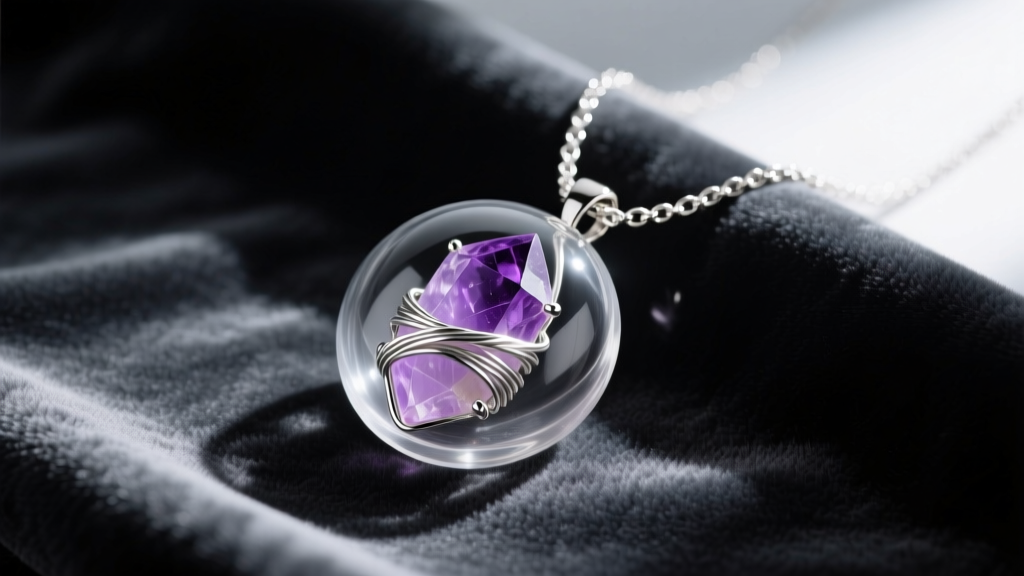
Market Viability: Pricing Your Hybrid Creations
Because hybrid jewelry making methods require a high degree of technical skill and multiple distinct material costs, these pieces command a premium in the 2026 market. Consumers recognize the complexity of suspending a fragile, hand-woven wire lotus flower inside a flawless resin dome.
When pricing your work, abandon the simple 'cost of materials times three' model. Instead, use a time-and-complexity matrix. A standard hybrid pendant takes approximately 45 minutes of active bench time (excluding design and curing). Factor in your hourly bench rate (e.g., $30/hour), add your material costs (typically $8 to $15 for silver and resin), and then apply a standard retail markup of 2.2x. A piece that costs $12 in materials and $22 in labor should wholesale at $34 and retail for a minimum of $75 to $85. Positioning your work correctly ensures that your mastery of these advanced jewelry making methods is financially sustainable.
Final Thoughts on Adapting Your Jewelry Making Methods
The fusion of wire wrapping and UV resin represents a maturation of the DIY jewelry space. It demands a deeper understanding of metallurgy, polymer chemistry, and aesthetic composition. By mastering these hybrid jewelry making methods, you elevate your brand from simple craft to wearable, micro-sculptural art. As trends continue to favor the deeply personal and the texturally rich in 2026, the artisans who embrace these complex, mixed-media techniques will be the ones defining the future of independent jewelry design.