How to Make Bead Jewelry: Comparing Stringing Wires and Threads
Discover the best stringing materials when you make bead jewelry. We compare tensile strength, drape, and durability of wire, silk, and nylon.

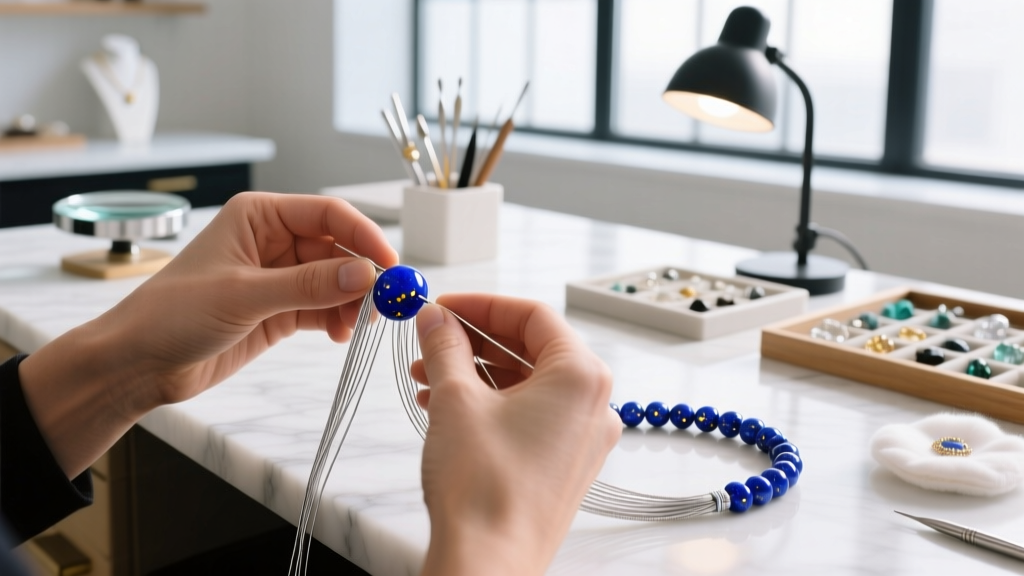
The Foundation of Beadwork: Why Material Science Matters
When you make bead jewelry, the visual appeal of your gemstones, glass, or pearls is only half the equation. The structural foundation—the stringing material hiding inside the bead holes—dictates the longevity, drape, and ultimate wearability of the piece. Choosing the wrong stringing medium is the leading cause of catastrophic failure in DIY jewelry, resulting in snapped necklaces and scattered gemstones.
Understanding the material properties of flexible beading wires, silk threads, and synthetic nylons is not just a technicality; it is a core competency for any serious jewelry maker. This guide breaks down the tensile strength, abrasion resistance, and mechanical behavior of the most common stringing materials available in 2026, providing a definitive framework for matching your medium to your beads.
The Physics of Stringing: Tensile Strength vs. Drape
Every stringing material exists on a spectrum between tensile strength (how much weight it can hold before snapping) and drape (how fluidly it hangs on the body). A material with high tensile strength, like a thick stainless steel wire, may offer immense durability but will result in a stiff, unnatural necklace. Conversely, a material with exceptional drape, like pure silk thread, lacks the shear strength to support heavy gemstones without stretching or breaking.
The modern solution to this physics problem is composite engineering. By wrapping high-carbon steel micro-wires in a seamless extruded nylon jacket, manufacturers have created flexible beading wires that offer the best of both worlds. However, traditional threads still hold a vital place in specific applications where knotting and fluid movement are paramount.
Flexible Beading Wire: The Workhorse for Heavy Gems
Flexible beading wire is the undisputed standard for stringing heavy gemstones, crystal beads, and glass. Brands like Soft Flex Company and Accu-Flex engineer these wires using bundles of microscopic steel strands encased in nylon. The number of strands directly correlates to the wire's flexibility, kink-resistance, and drape.
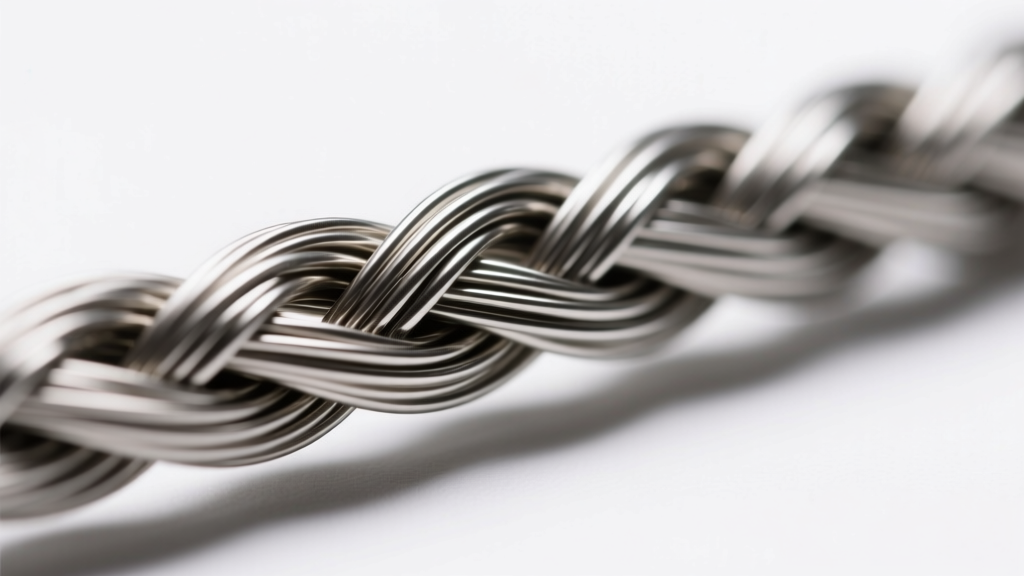
Strand Count and Diameter Breakdown
Selecting the correct diameter and strand count is critical. A wire that is too thick will abrade the inside of delicate bead holes, while a wire with too few strands will permanently kink if bent during wear. Below is a technical specification matrix for standard beading wires.
| Strand Count | Common Diameters | Tensile Strength (Approx.) | Best Use Case & Properties |
|---|---|---|---|
| 7-Strand | 0.012" - 0.024" | 10 - 20 lbs | Economy projects. Prone to permanent kinking. Stiff drape. |
| 21-Strand | 0.013" - 0.024" | 15 - 25 lbs | Standard mid-range jewelry. Good balance of cost and flexibility. |
| 49-Strand | 0.010" - 0.024" | 20 - 30+ lbs | Professional/heirloom pieces. Extremely kink-resistant. Fluid drape. |
Pro Tip: Always choose the thickest diameter that can comfortably pass through your bead holes twice. For standard 1mm gemstone beads, a 0.018" or 0.019" 49-strand wire is the industry gold standard, offering maximum strength without compromising the bead's structural integrity.
Silk and Nylon Threads: The Traditionalist's Choice
While steel-core wires dominate the gemstone market, organic and synthetic threads remain irreplaceable for specific bead types. When you make bead jewelry featuring freshwater pearls, amber, or high-end coral, knotting between each bead is mandatory to prevent catastrophic loss if the strand breaks and to protect the soft nacre of the pearls from grinding against one another.
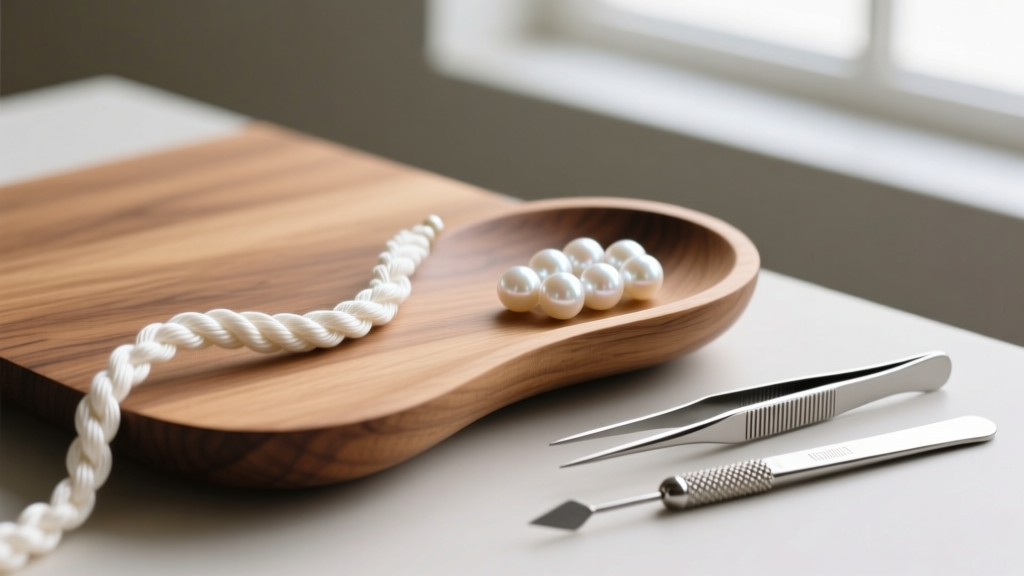
Knotting Mechanics and Abrasion Resistance
Natural silk thread (available in sizes like #2, #4, and #6) offers an unparalleled, luxurious drape that synthetic materials struggle to replicate. However, silk is highly susceptible to UV degradation, moisture damage, and stretching over time. Synthetic nylon threads, such as Nymo or Silamide, offer vastly superior abrasion resistance and do not stretch, making them ideal for seed bead weaving and loom work.
Failure Mode Alert: Never use silk or nylon thread to string faceted glass or sharp-edged crystal beads (like Swarovski or Preciosa). The microscopic glass edges act like tiny knives, slicing through the fibers from the inside out. Always reserve threads for smooth, rounded beads or pearls.
Memory Wire and Elastic: Niche Applications
Memory wire is a hardened, tempered steel that holds its pre-coiled shape. It requires no clasps and is cut with specialized, heavy-duty memory wire shears (standard flush cutters will be instantly ruined by the hardened steel). While excellent for rapid, clasp-free bangle and choker production, memory wire offers zero drape and can pinch the skin or hair if not finished with proper glued end-caps or wrapped loops.
Stretch elastic (like Stretch Magic) is composed of polyurethane. It is incredibly popular for beginner bracelets, but it suffers from severe long-term degradation. UV exposure, body oils, and the friction of bead holes cause elastic to dry rot and snap, usually within 12 to 24 months of regular wear. For heirloom-quality jewelry, elastic should be avoided entirely.
Decision Matrix: Matching Material to Bead Type
To eliminate guesswork, use this rapid decision framework when sourcing materials for your next project. According to educational resources from Fire Mountain Gems, matching the stringing medium to the bead's weight and hole geometry is the primary indicator of a piece's lifespan.
- Heavy Gemstones & Faceted Glass: 49-strand nylon-coated stainless steel wire (0.018" diameter). Finish with 2x2mm sterling silver crimp tubes and wire guardians.
- Pearls, Amber & Coral: 100% natural silk thread (Size #4 or #6, matched to hole size). Hand-knotted between every bead using a beading awl.
- Seed Beads & Loom Work: Braided polyethylene (FireLine) or bonded nylon (Nymo Size D). These offer zero stretch and pass through tiny 0.5mm holes multiple times.
- Large-Hole Art Beads & Lampwork: Heavy-duty 0.024" 49-strand wire or leather cord. Ensure crimp beads are appropriately scaled up to 3x3mm to secure the thicker wire.
Conclusion: The Hidden Hardware of Heirloom Jewelry
The difference between amateur craft jewelry and professional, heirloom-quality beadwork rarely lies in the beads themselves; it lies in the hidden engineering. When you make bead jewelry, investing in premium 49-strand wire, sterling silver crimp tubes, and high-quality thread conditioners transforms a fragile craft project into a durable, wearable asset. By respecting the material properties of your stringing mediums and matching them precisely to your bead geometry, you ensure your creations will endure decades of wear without failure.


