2026 Trends: Choosing the Right Arc Welder for Permanent Jewelry
Discover 2026 permanent jewelry trends and learn how to choose the best arc welder for permanent jewelry, covering joules, portability, and mixed metals.

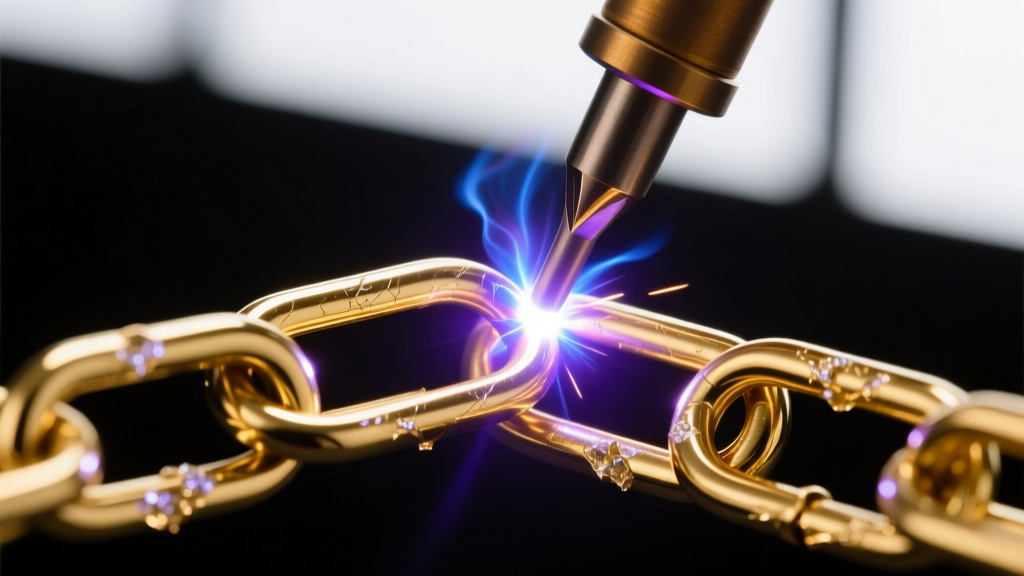
The permanent jewelry industry has evolved from a niche pop-up novelty into a cornerstone of modern accessory retail. As we navigate 2026, the aesthetic demands placed on jewelers have shifted dramatically, moving away from ultra-dainty, easily broken chains toward bold, architectural, and mixed-metal designs. This evolution means that the equipment on your workbench must evolve as well. Selecting the right arc welder for permanent jewelry is no longer just about making two ends of a chain stick together; it is about mastering thermal dynamics, preserving metallurgical integrity, and adapting to rapidly changing consumer trends. Whether you are a seasoned studio owner or a mobile pop-up entrepreneur, understanding the technical nuances of pulse arc technology is critical for your bottom line and your brand's reputation.
The 2026 Shift: From Dainty to Industrial Permanent Jewelry
In the early 2020s, the market was saturated with 18-gauge to 20-gauge delicate cable chains. Today, the trend has swung heavily toward what industry analysts call 'industrial permanent.' Consumers are requesting 14-gauge to 12-gauge heavy Cuban links, thick paperclip chains, and chunky figaro patterns in both solid 14k gold and high-quality gold-filled alloys. Fusing a 1.5mm thick link requires a massive, localized burst of energy that older, entry-level capacitive discharge welders simply cannot provide without causing severe oxidation or structural weak points. According to trend reports from Stuller's permanent jewelry hub, the demand for mixed-metal layering—such as welding a rose gold jump ring to a sterling silver chain—has also spiked, requiring welders with advanced pulse-shaping capabilities to manage differing melting points without burning through the lower-temperature alloy.
Pulse Arc Technology: Decoding Joules and Electrodes
When shopping for an arc welder for permanent jewelry, you will primarily encounter Pulse Arc (often referred to as micro-TIG) systems. Unlike laser welders, which use concentrated light, pulse arc welders use a non-consumable tungsten electrode to create an electrical arc, shielded by argon gas. The critical metric here is not watts, but Joules (energy output).
- Entry-Level (10-15 Joules): Sufficient for 18g-20g delicate chains and thin jump rings. Struggles with anything over 1.0mm thickness.
- Mid-Tier (15-30 Joules): The sweet spot for 2026 trends. Easily handles 14g-16g chains, thick paperclips, and standard gold-filled links.
- Professional (30-50+ Joules): Necessary for heavy industrial links, clasps, and welding near gemstone settings where precise heat dissipation is required.
Furthermore, the tungsten electrode itself matters. For permanent jewelry, a 2% ceriated or 1.5% lanthanated tungsten rod, sharpened longitudinally to a fine point using a diamond nib file, provides the most stable arc and prevents the tungsten from spitting into your gold weld pool.
2026 Trend Matrix: Chain Styles and Welder Settings
To illustrate how modern trends dictate machine settings, review the matrix below. This data is synthesized from field tests using industry-standard pulse arc systems like those offered by Orion Welders and Sunstone Welders.
| Chain Trend (2026) | Gauge / Thickness | Recommended Joules | Argon Flow (CFH) | Electrode Tip |
|---|---|---|---|---|
| Dainty Satellite | 20g / 0.8mm | 8 - 12 J | 5 - 7 CFH | Fine Point |
| Standard Paperclip | 16g / 1.3mm | 15 - 20 J | 8 - 10 CFH | Medium Point |
| Chunky Curb / Cuban | 12g / 2.0mm+ | 28 - 35 J | 12 - 15 CFH | Blunt / Flat |
| Mixed-Metal Jump Rings | 18g / 1.0mm | 10 - 14 J | 10 CFH | Fine Point |
Pro Tip: When welding high-mass chains like the Chunky Curb, you must increase your argon gas flow rate. The larger weld pool takes longer to cool, and without adequate shielding gas, the joint will oxidize and turn black instantly.
The Pop-Up Economy: Portability and Power Constraints
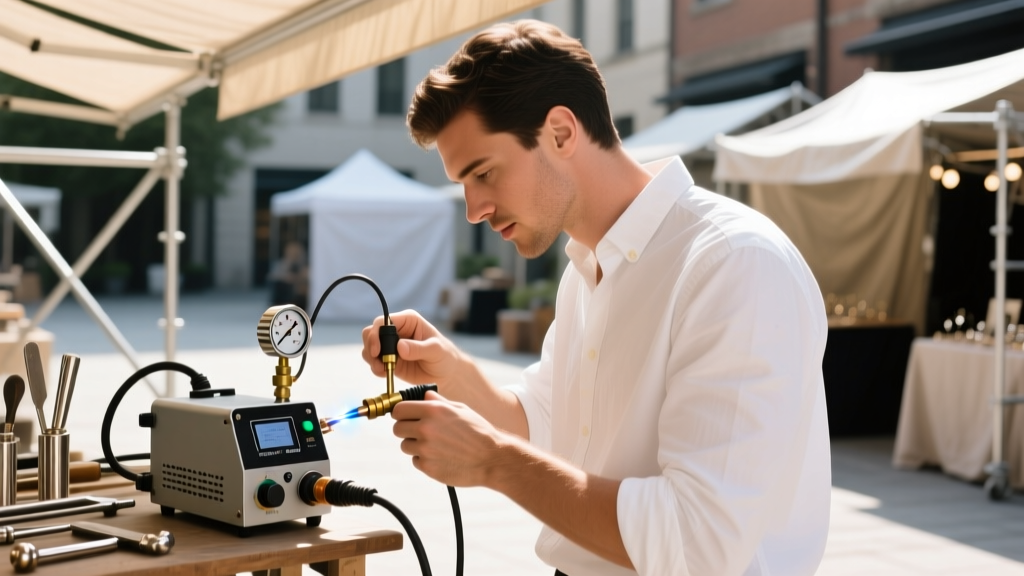
The business model of permanent jewelry relies heavily on mobility. Bridal showers, corporate events, and weekend markets require you to pack your studio into a single flight case. The best arc welder for permanent jewelry in a mobile context must balance power with a compact footprint. In 2026, manufacturers have introduced 'hybrid' portable arc systems that run on high-capacity 24V lithium-ion battery banks, eliminating the need to hunt for a grounded AC outlet at crowded vendor fairs. These battery systems typically weigh under 8 pounds, a massive improvement over traditional transformer-based units.
However, the true bottleneck of mobility is the argon gas. Argon is heavy, and standard industrial tanks are not TSA-friendly or easy to haul in a sedan. Smart jewelers are now utilizing micro-regulators paired with 20oz to 40oz aluminum argon cylinders (similar in size to paintball tanks), which provide roughly 400 to 800 welds before requiring a refill. Investing in a welder with an auto-standby gas valve is crucial here; it prevents argon bleed when the foot pedal is not engaged, saving you precious gas during a busy 8-hour pop-up.
Troubleshooting Mixed Metals and Gold-Filled Alloys
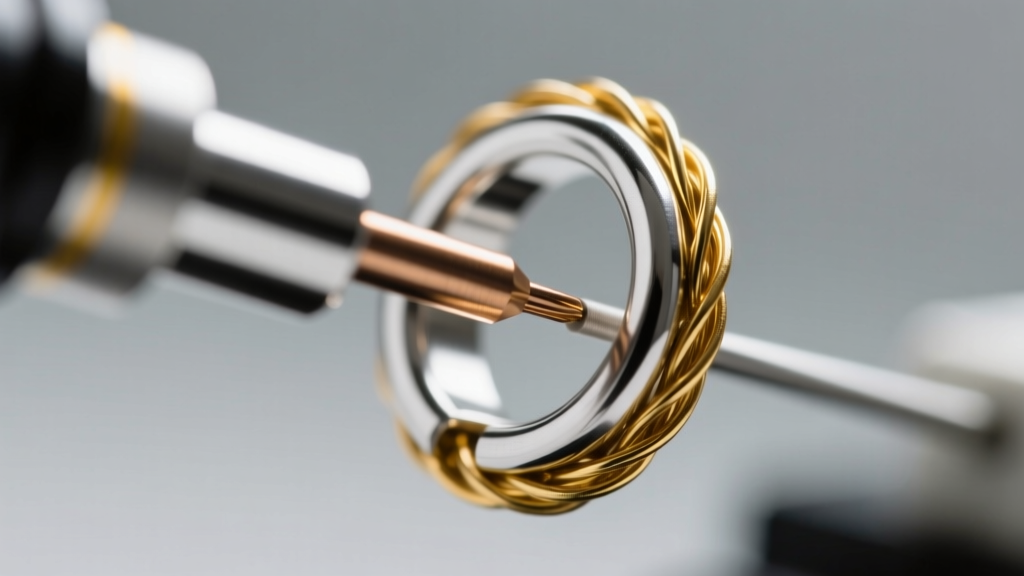
As a style analyst, I must address the elephant in the room: gold-filled chain. While solid 14k gold is the premium standard, 1/20 14k gold-filled chains dominate the accessible luxury market. Gold-filled wire consists of a brass core mechanically bonded to a thick outer layer of 14k gold. When you apply an electrical arc to gold-filled jump rings, the intense heat can easily penetrate the gold layer and expose the brass core. Brass contains zinc, which vaporizes and oxidizes at high temperatures, leaving a porous, black, and brittle weld.
To combat this in 2026, advanced jewelers use a 'pulse-shaping' technique. By programming the welder to ramp up slowly, hold for a microsecond, and ramp down gradually, you fuse the outer gold layers together without boiling the inner brass. Additionally, using a slightly larger jump ring made of solid 14k gold to bridge two gold-filled chain ends acts as a thermal buffer, ensuring a clean, color-matched weld that will not tarnish or snap under tension.
Essential Welder Accessories for the Modern Studio
Beyond the machine itself, mastering the arc welder for permanent jewelry requires a curated ecosystem of accessories:
- Microscope or High-Mag Loupe: A 10x to 20x magnification visor is non-negotiable for aligning 16g links safely without straining your eyes over hundreds of welds.
- Ceramic Welding Blocks: Unlike charcoal blocks, high-fired ceramic reflects heat back into the weld pool, requiring fewer joules and protecting your workbench from scorch marks.
- Pickling Solution: Even with perfect argon shielding, minor surface oxidation occurs. A warm citric acid or sodium bisulfate pickle bath ensures the weld seam is pristine before the client leaves your chair.
Ultimately, the right equipment bridges the gap between a fleeting trend and a lifelong accessory. By aligning your pulse arc technology with the bold, mixed-metal, and heavy-gauge demands of 2026, you future-proof your studio and elevate the permanent jewelry experience for every client.


