How to Make Jewelry with Stones: A Wire Wrapping Guide
Learn how to make jewelry with stones using our step-by-step wire wrapping guide. Master bezels, bail creation, and secure raw crystal pendants.

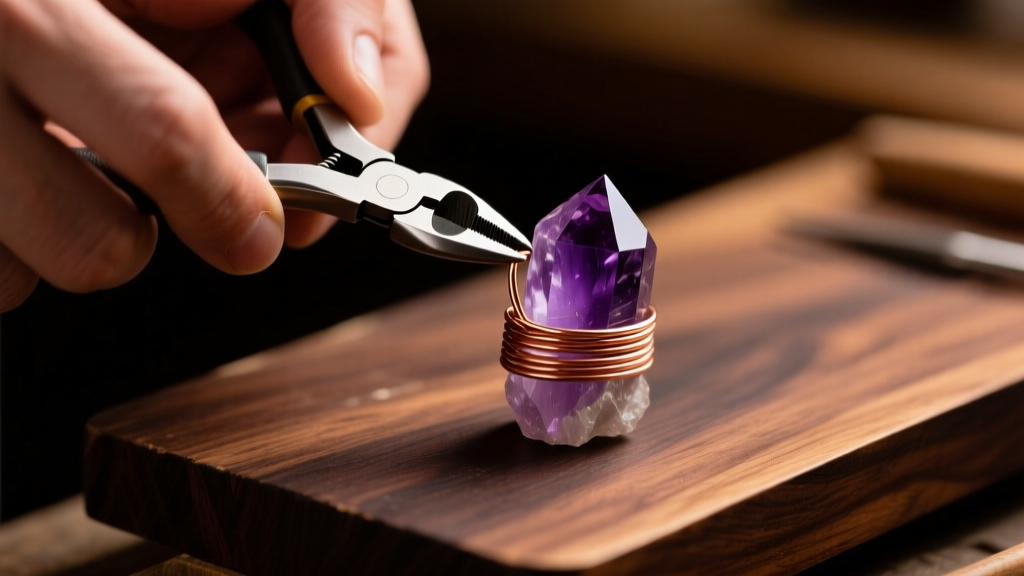
The Art of Tension: Why Wire Wrap Stones?
When you set out to make jewelry with stones, you are faced with a fundamental choice: use heat and solder, rely on chemical adhesives, or master the ancient art of mechanical tension. Wire wrapping is the premier method for securing raw crystals, cabochons, and uncalibrated gemstones without exposing them to the thermal shock of a jeweler's torch or the degrading effects of epoxy glues. By leveraging the structural memory and work-hardening properties of non-ferrous metals, you can create intricate, heirloom-quality bezels and bails that hold stones securely through pure geometry and friction.
This comprehensive guide will walk you through the exact metallurgy, tooling, and step-by-step techniques required to weave a secure wire bezel for a standard 30mm x 20mm cabochon or raw crystal cluster.
Essential Materials: Wire Temper and Gauge Explained
Before bending a single millimeter of metal, you must understand wire temper and gauge. According to the metallurgical standards outlined by Rio Grande, a leading jewelry supply authority, wire temper dictates how easily the metal bends and how well it holds its shape. For a woven stone pendant, you need a combination of structural rigidity and weaving flexibility.
| Wire Gauge (AWG) | Temper | Best Application in Stone Wrapping |
|---|---|---|
| 18 or 20 Gauge | Half-Hard | Core frame wires, structural bail, and heavy prongs. Resists bending under pressure. |
| 22 Gauge | Half-Hard | Secondary frame wires, smaller stone bezels, and wrapped loop bails. |
| 24 or 26 Gauge | Dead Soft | Weaving wire. Flows easily around core wires without springing back or snapping. |
| 28 or 30 Gauge | Dead Soft | Micro-weaving, securing tiny accent beads, and intricate filigree details. |
Material Selection: For beginners, bare copper is the ideal practice metal due to its low cost and excellent malleability. For finished, wearable pieces, upgrade to Argentium Sterling Silver (which resists tarnish better than traditional sterling) or 14/20 Gold-Filled wire. Avoid craft-store aluminum wire, as it lacks the tensile strength to hold a heavy stone securely over time.
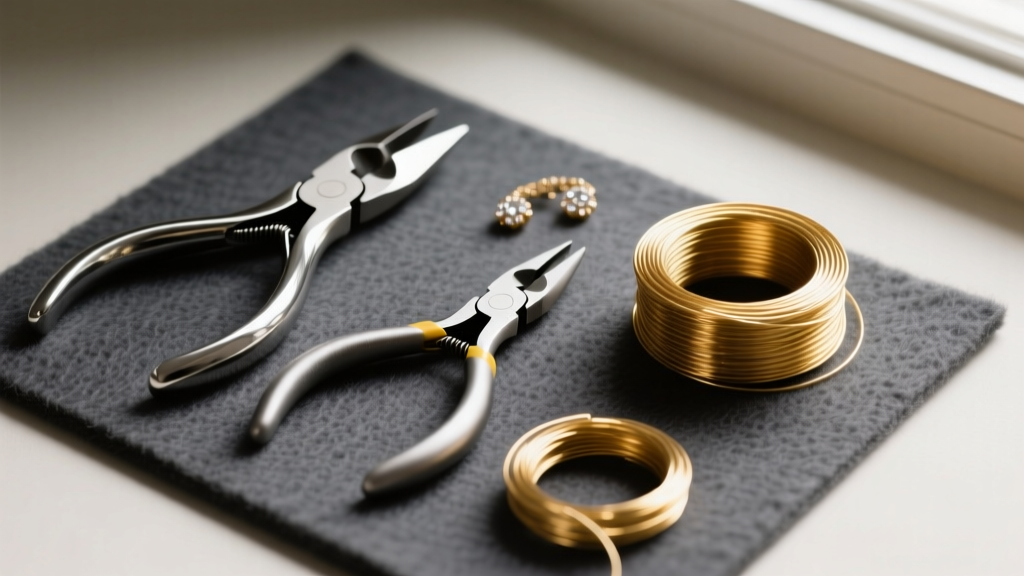
Step-by-Step: Creating a Woven Bezel Pendant
To make jewelry with stones that looks professional and holds up to daily wear, precision in your foundational weave is critical. We will be executing a classic figure-eight weave around a dual-core frame.
Step 1: Building the Core Frame
Cut two pieces of 20-gauge half-hard wire, each measuring exactly 14 inches. Lay them parallel to each other on your bench block, separated by about 3 millimeters. Using a piece of painter's tape, secure the two wires together at the top and bottom to maintain uniform spacing. Take your 26-gauge dead soft weaving wire (cut a 4-foot length) and anchor it tightly around the left core wire, about 2 inches from the bottom. Wrap it three times tightly to lock it in place.
Step 2: The Figure-Eight Weave
Bring the weaving wire over the top of the right core wire, pass it between the two core wires, and wrap it under and around the left core wire. Pull the wire taut after every single pass. The secret to a professional finish is not just the pattern, but the tension. If your weave is loose, the structural integrity of the bezel will fail when you attempt to push the wire over the stone. Continue this figure-eight pattern for approximately 6 inches, which will form the bottom cradle of your pendant.
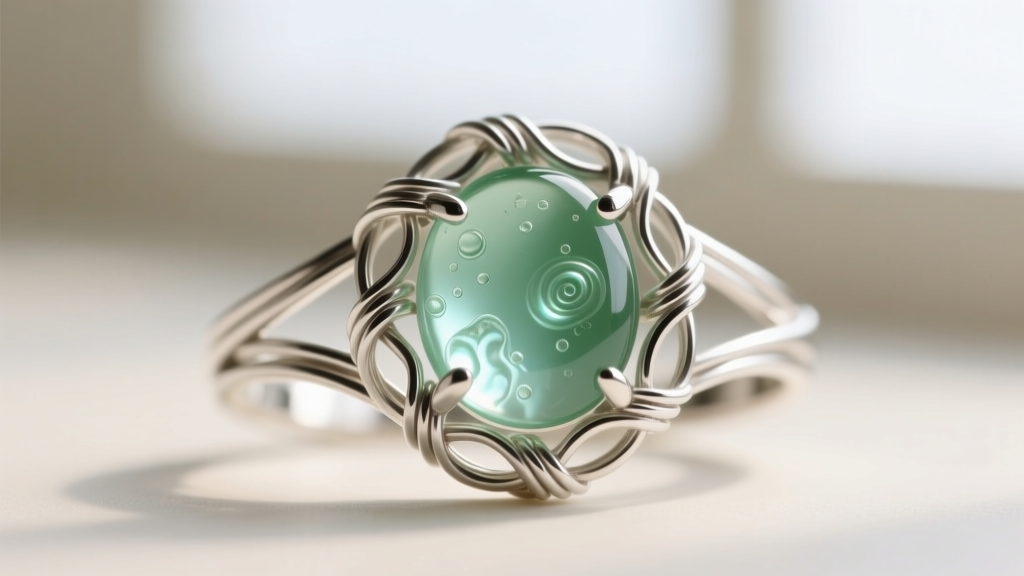
Step 3: Seating the Stone and Forming the Bail
Remove the painter's tape and place your 30mm cabochon into the woven cradle. Gently bend the un-woven core wires upward, hugging the sides of the stone. Using your nylon jaw pliers, press the core wires firmly against the stone's girdle (the outer edge). To secure the stone, you will now bend the core wires inward over the front face of the stone, creating a cage or prong system. Finally, gather the remaining wire tails at the top, bind them tightly with your 26-gauge weaving wire, and use round-nose pliers to roll them backward into a secure, wrapped bail for your chain.
Troubleshooting Common Wire Wrapping Failures
Even experienced jewelers encounter structural issues when learning how to manipulate metal around unyielding minerals. Here is how to solve the most common problems:
- Marring the Wire: Steel pliers will easily scratch and dent soft copper and silver. Always use nylon jaw pliers when gripping the frame wires, or wrap the jaws of your chain-nose pliers in a single layer of masking tape.
- Work Hardening and Snapping: As you bend dead soft wire, the metal crystals compress and the wire becomes brittle (work-hardened). If your 26-gauge weaving wire suddenly feels stiff and resistant, stop immediately. Snip it, tuck the tail, and start a new piece. Forcing it will result in a clean snap.
- Stones Slipping Out: If your cabochon falls out of the finished bezel, you likely failed to account for the stone's anatomy. Wire wrapping requires a stone with a distinct ridge, girdle, or natural indentation. Completely smooth, highly polished tumbled stones without a ridge will eventually slide through the wire cage under the weight of gravity.
Stone Selection and the Mohs Hardness Scale
Not all stones are created equal, and applying the wrong amount of wire tension can destroy your material. The Gemological Institute of America (GIA) utilizes the Mohs Hardness Scale to rank mineral durability. When you make jewelry with stones, you must adjust your technique based on this scale.
Raw quartz, agate, and jasper (Mohs 6.5 to 7) are incredibly durable and can withstand the heavy pressure of a tight wire bezel. However, if you are wrapping raw fluorite, selenite, or malachite (Mohs 3 to 4), you must use a much gentler touch. For these softer stones, build a slightly oversized wire cage and rely on a woven cross-wire on the back of the stone to prevent it from falling through, rather than squeezing the frame wires tightly against the fragile edges, which will cause the crystal to cleave or chip.
Mastering the interplay between metal tension and mineral fragility is what elevates a DIY craft project into genuine jewelry design. With the right gauges, precise tension, and an understanding of your materials, you can create stunning, solder-free stone pendants that will last a lifetime.


