How to Make Twine Hold Jewelry for Lasting DIY Gifts
Learn how to make twine hold jewelry securely for handmade gifts. Discover wire-core methods, crimping tricks, and occasion-matching fiber guides.

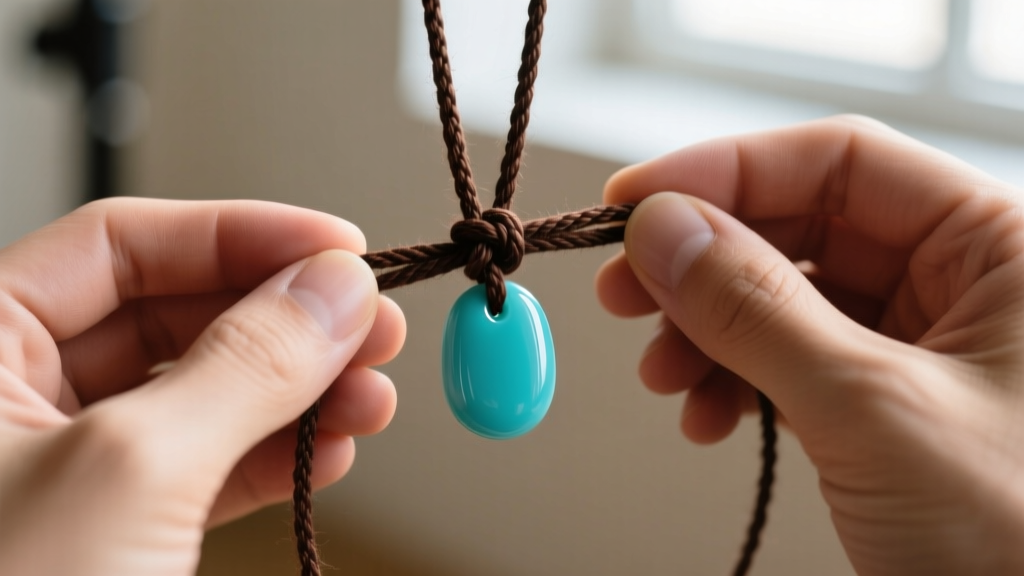
In the landscape of 2026 DIY gifting, handmade jewelry crafted with natural fibers remains a top choice for its rustic, bohemian, and sustainable appeal. Whether you are designing sea-glass necklaces for a beach wedding or layered hemp bracelets for a festival-goer, organic textures offer a deeply personal touch. However, natural and synthetic twines present a unique structural challenge: they fray, stretch, and degrade under the weight of metal and stone. If you want your handmade gifts to survive daily wear, understanding how to make twine hold jewelry securely is the most critical skill in your repertoire.
This guide moves beyond basic knotting, diving into the structural engineering of fiber-based jewelry. We will explore material grades, wire-core reinforcements, and occasion-specific design frameworks to ensure your twine jewelry gifts are as durable as they are beautiful.
The Challenge of Twine in Jewelry Gifting
Unlike metal chains or leather cords, twine—whether jute, hemp, or linen—is composed of twisted short fibers. When subjected to the constant tension of a heavy pendant or the friction of a sliding clasp, these fibers slowly unspool and snap. Furthermore, natural twines are hygroscopic; they absorb moisture from the skin and environment, leading to stretching and eventual rot. To create a gift that lasts, you must mitigate these failure points through strategic material selection and modern jewelry-making hardware.
Choosing the Right Twine for the Occasion
Not all twines are created equal. Matching the fiber to the recipient's lifestyle and the occasion is the first step in creating a lasting gift. Below is a comparison of popular jewelry twines and their structural properties.
| Twine Type | Tensile Strength | Best Occasion | Preparation Needed |
|---|---|---|---|
| Waxed Linen (0.5mm - 1.0mm) | High | Anniversaries, Everyday Wear | None (wax coating prevents fraying) |
| Natural Hemp (1.0mm+) | Medium | Festivals, Casual Boho Gifts | Requires sealing with beeswax or glue |
| Silk Cord (Size 2 - 6) | Medium-High | Elegant Gifting, Pearl Knotting | Must be stretched before knotting |
| Nylon (C-Lon / S-Lon) | Very High | Beach Weddings, Active Lifestyles | Melt ends with a thread burner |
For high-end gifts, Irish waxed linen is the gold standard. According to Fire Mountain Gems, the wax coating not only provides a beautiful luster but also acts as a barrier against moisture and skin oils, significantly extending the lifespan of the fiber.
Core Techniques: How to Make Twine Hold Jewelry Securely
To ensure your twine jewelry doesn't fail when the recipient puts it on, you must combine traditional fibers with modern structural techniques. Here are three professional methods to reinforce twine.
1. The Wire-Core Method (For Heavy Pendants)
If you are gifting a heavy stone pendant (like agate, jasper, or turquoise) on a hemp or linen cord, the twine will eventually stretch and snap under the weight. The solution is a wire core.
- Take a piece of 26-gauge or 28-gauge dead-soft wire (copper or sterling silver).
- Thread the wire through the center of a 1.0mm or thicker twisted twine.
- The wire takes the structural load, while the twine provides the aesthetic exterior.
- Finish the ends by wrapping the exposed wire around a sturdy jump ring, then crimping the twine over the wrap with a micro-crimp tube.
2. The Micro-Crimp and Glue Matrix
Knots can slip, especially on synthetic or heavily waxed twines. When attaching a clasp, use a mechanical crimp combined with an adhesive.
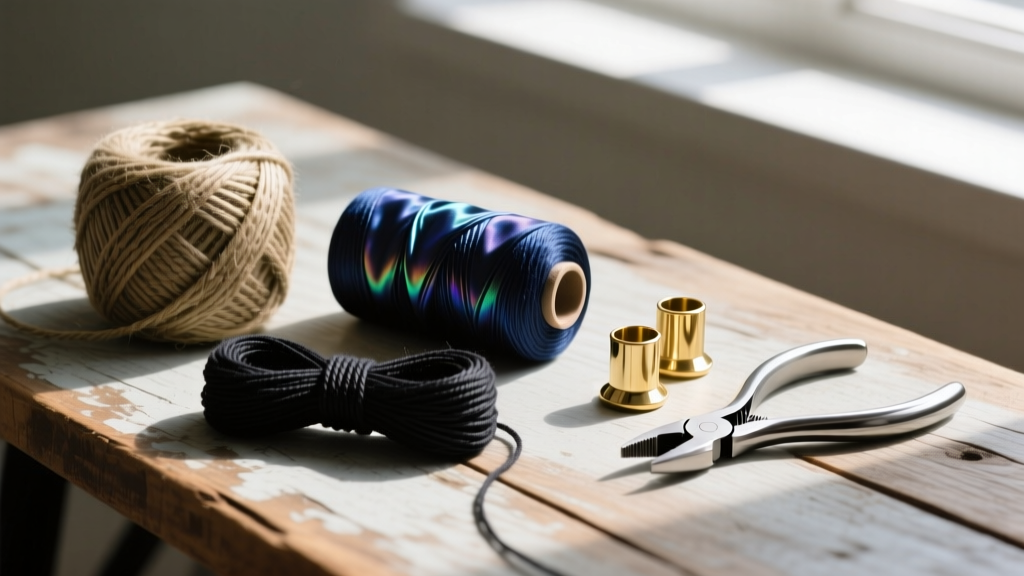
- Use 1.5mm x 2mm micro crimp tubes (sterling silver or gold-filled).
- Pass the twine through the tube, add a tiny drop of GS Hypo Cement or E6000 jewelry adhesive, and pull it back through to create a doubled loop.
- Use a micro-crimp plier to fold and secure the tube. The adhesive wicks into the fibers, creating an unbreakable matrix that prevents the twine from pulling through the metal.
3. Traditional Knotting with Modern Sealants
For sliding macrame closures or pendant bails, the Surgeon's Knot is vastly superior to the standard square knot because the extra twist increases friction. After pulling the knot tight, do not just trim the ends. Apply a micro-drop of clear nail polish or specialized thread sealant to the knot, let it cure for 10 minutes, and then trim flush with a pair of precision flush cutters. This melts the fibers together and prevents unspooling.
Occasion Matching: Designing Twine Jewelry for Specific Gifts
The way you engineer your twine jewelry should reflect the environment in which it will be worn. A gift for a beach wedding requires vastly different structural considerations than a gift for a music festival.
Beach Weddings & Coastal Anniversaries
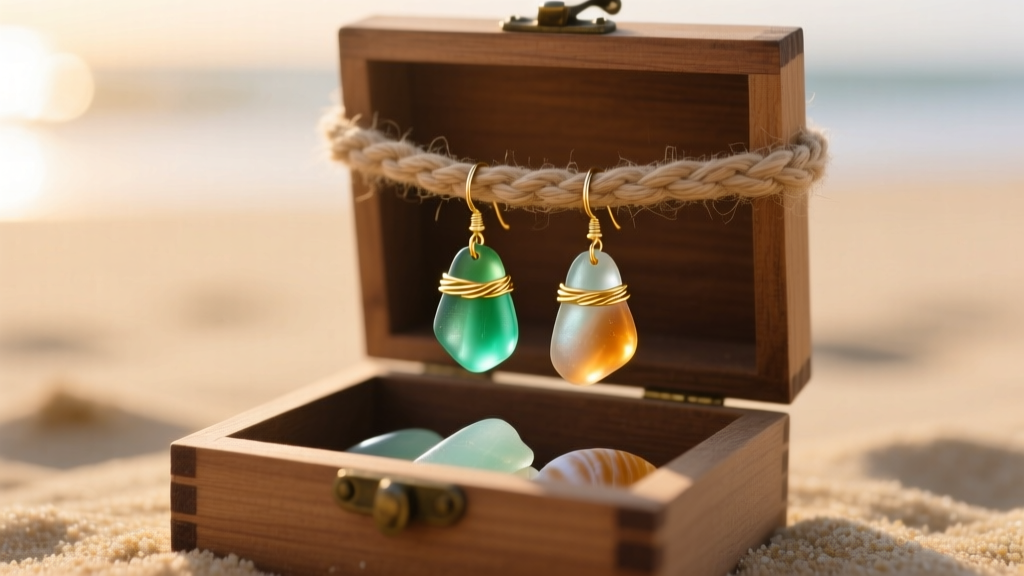
Coastal environments are brutal on natural fibers. Saltwater and high humidity will cause natural hemp and jute to rot and snap within months. For beach-themed gifts, you must use synthetic waxed linen or nylon braided cords. If you are wrapping sea glass or driftwood, use a 20-gauge stainless steel or titanium wire wrap to secure the stone to the synthetic twine, ensuring the metal won't rust in the ocean air.
Festival & Boho Gifting
Festival jewelry is subjected to sweat, dust, and constant movement. Layered hemp bracelets are a staple here, but the friction between multiple layers can cause abrasion. To prevent this, incorporate seed beads or small brass spacer beads between the twine strands. The beads act as ball bearings, reducing fiber-on-fiber friction. Additionally, condition the hemp with natural beeswax to waterproof it against sweat.
Finishing and Sealing: The Final Step for Longevity
The ends of your twine are the most vulnerable points. If you are not using crimps or wire wrapping, you must seal the ends. For nylon cords (like C-Lon), a thread burner or hot knife will melt the end into a hard, rounded bead that won't pass through your knot. For natural fibers like linen or cotton, dip the last 1/4 inch of the twine into a 50/50 mixture of water and PVA glue (like Mod Podge). Hang it to dry, which will create a stiff, needle-like tip that makes threading beads easier and prevents fraying during the crafting process.
Troubleshooting Common Twine Failures
Even experienced makers encounter structural issues. Here is how to troubleshoot the most common twine failures before packaging your gift:
- Failure Mode: Twine snapping exactly at the clasp.
The Fix: You are likely bending the twine at a sharp 90-degree angle against a hard metal jump ring. Use a wire guardian (French wire) to create a smooth, curved loop that protects the fiber from metal abrasion. - Failure Mode: Pendant bail slipping off the cord.
The Fix: The cord is too thin for the bail hole. Instead of buying a new bail, wrap the twine with 28-gauge colored craft wire in a tight coil to increase the cord's diameter, creating a custom, snug fit inside the bail. - Failure Mode: Knots loosening over time.
The Fix: Natural fibers stretch when they absorb ambient moisture. Always pre-stretch your twine by pulling it firmly between your hands several times before tying your final knots. This forces the microscopic fibers to seat tightly against one another.
Conclusion
Learning how to make twine hold jewelry is about bridging the gap between organic beauty and mechanical durability. By selecting the right fiber for the occasion, reinforcing high-stress areas with wire cores or micro-crimps, and properly sealing your knots, you elevate a simple craft into a lasting heirloom. When your recipient puts on your handmade gift years from now, the twine will hold strong, a testament to the care and expertise you poured into every knot.

