2026 Trends: Making Jewelry With Beads in the Neo-Maximalist Era
Discover 2026's top trends for making jewelry with beads. Learn how to blend baroque pearls, raw glass, and asymmetrical wirework for neo-maximalist designs.

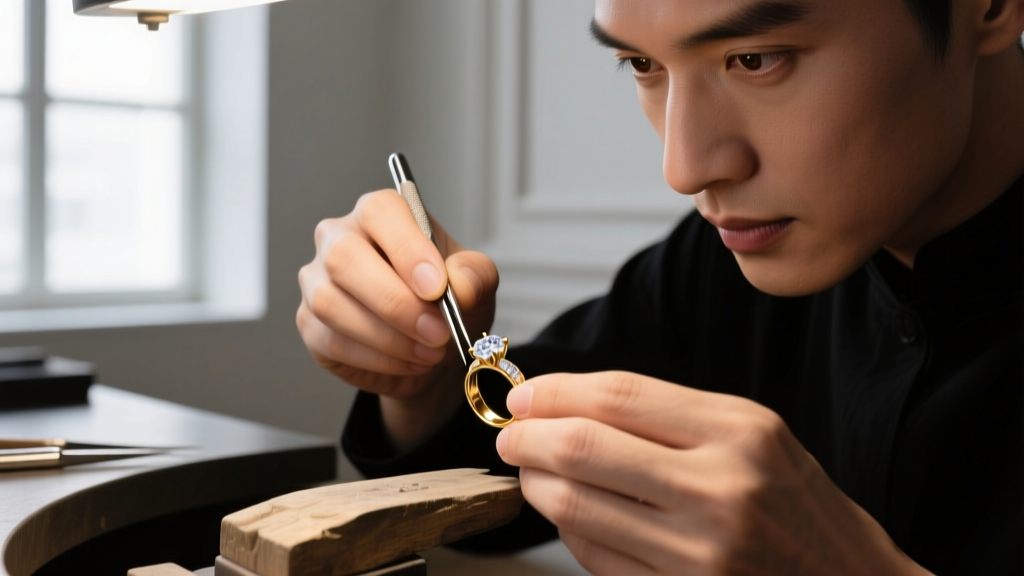
The landscape of making jewelry with beads has fundamentally shifted as we move through 2026. Gone are the days of perfectly symmetrical seed bead weaving and predictable, mass-produced charm bracelets. Today’s most sought-after independent jewelry designers are embracing Neo-Maximalism—a design philosophy that celebrates organic asymmetry, mixed-media textures, and deliberate imperfections. For DIY artisans and small-batch creators, this trend offers a lucrative and highly creative avenue to stand out in a saturated market.
According to recent market analyses by Halstead Bead Trends, consumer demand for artisanal, one-of-a-kind beaded pieces has surged by 34% over the last eighteen months. Buyers are no longer looking for flawless uniformity; they want narrative, texture, and structural innovation. This guide will break down the exact materials, technical frameworks, and design rules you need to master the 2026 neo-maximalist bead aesthetic.
The Shift: From Symmetrical Seed Beads to Neo-Maximalism
Historically, traditional beadwork relied heavily on geometric precision. Peyote stitch, brick stitch, and right-angle weave demanded uniform bead sizes to maintain structural integrity. While these techniques remain valuable, the 2026 trend cycle prioritizes curated chaos. Neo-maximalism in beadwork involves combining vastly different bead sizes, shapes, and materials within a single focal cluster, often suspended by architectural wire-wrapping rather than traditional stringing.
This approach requires a deeper understanding of material physics. When you are making jewelry with beads of varying densities—such as pairing heavy lampwork glass with lightweight wooden or bone beads—you must engineer the piece to drape correctly without twisting or pulling uncomfortably on the wearer's neck.
Core Materials Defining the 2026 Bead Aesthetic
To execute this trend, your material sourcing must pivot away from standard catalog rounds and ovals. The neo-maximalist palette relies on three primary categories:
Baroque Freshwater Pearls (Grade AA to AAA)
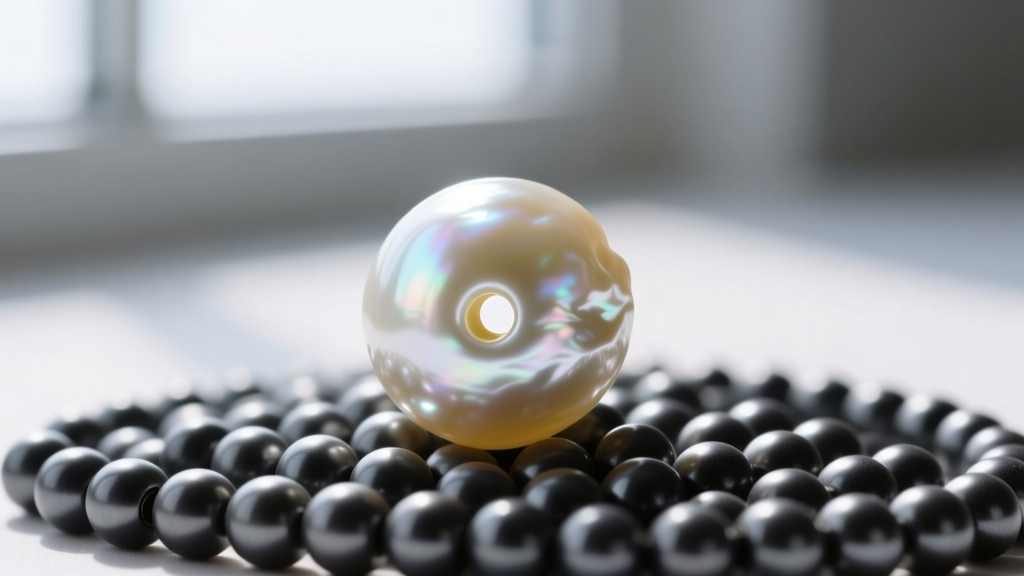
Perfectly round pearls are taking a backseat to heavily textured, irregular baroque and Edison pearls. According to the GIA Pearl Value Factors, while shape is a traditional value metric, the modern artisan market heavily favors the unique luster and overtone play found in high-grade (AA to AAA) baroque specimens. Look for Edison pearls in the 9mm to 12mm range with metallic peacock or bronze overtones. Crucial detail: Baroque pearls often have off-center drill holes. Always test-string your pearls on a flexible beading wire before committing to a wire-wrapped link to ensure they hang with the desired orientation.
Recycled Czech Glass & Matte Lampwork
Sustainability is no longer a niche selling point; it is a baseline expectation. Sourcing recycled Czech glass beads with matte, frosted, or AB (Aurora Borealis) finishes adds a necessary tactile contrast to high-luster pearls. Pair 8mm matte charcoal glass rounds with intricate, hand-pulled lampwork focal beads featuring metallic foil inclusions.
Technical Execution: Wire Gauges and Tension Control
When making jewelry with beads in an asymmetrical, mixed-media style, standard stringing wire (like 49-strand Accu-Flex) is often insufficient for creating structural, three-dimensional clusters. You must integrate wire wrapping to create articulated, movable joints. Understanding wire hardness and gauge is non-negotiable.
- 20-Gauge (0.81mm) Half-Hard Sterling Silver: The workhorse for structural loops, jump rings, and framing large focal beads. Half-hard wire holds its shape under the weight of heavy glass beads without warping.
- 24-Gauge (0.51mm) Dead-Soft: Used for lashing, weaving, and securing top-drilled pearls to a structural frame. Dead-soft wire work-hardens as you manipulate it, locking the bead in place.
- 28-Gauge (0.32mm) Dead-Soft: Reserved exclusively for delicate coiling and micro-macramé style bead weaving around thicker armature wires.
Below is a compatibility chart to prevent the frustration of mismatched drill holes and wire gauges:
| Bead Material / Type | Average Hole Size | Maximum Wire Gauge (Single Pass) | Recommended Wire Hardness |
|---|---|---|---|
| Edison / Baroque Pearl | 0.8mm - 1.2mm | 20-Gauge (0.81mm) | Half-Hard |
| Czech Glass Round (6-8mm) | 0.8mm - 0.9mm | 20-Gauge (0.81mm) | Dead-Soft / Half-Hard |
| Seed Beads (Size 8/0) | 1.0mm - 1.2mm | 18-Gauge (1.02mm) | Dead-Soft |
| Lampwork Focal (Large) | 1.5mm - 2.5mm | 16-Gauge (1.29mm) | Half-Hard / Full-Hard |
Design Framework: The Rule of Asymmetrical Weight
The biggest failure mode for beginners attempting neo-maximalist designs is poor weight distribution. An asymmetrical necklace that looks stunning on a jewelry bust will often slide sideways and choke the wearer if the gram weight is not properly balanced. To solve this, professional designers use the Rule of Asymmetrical Weight.
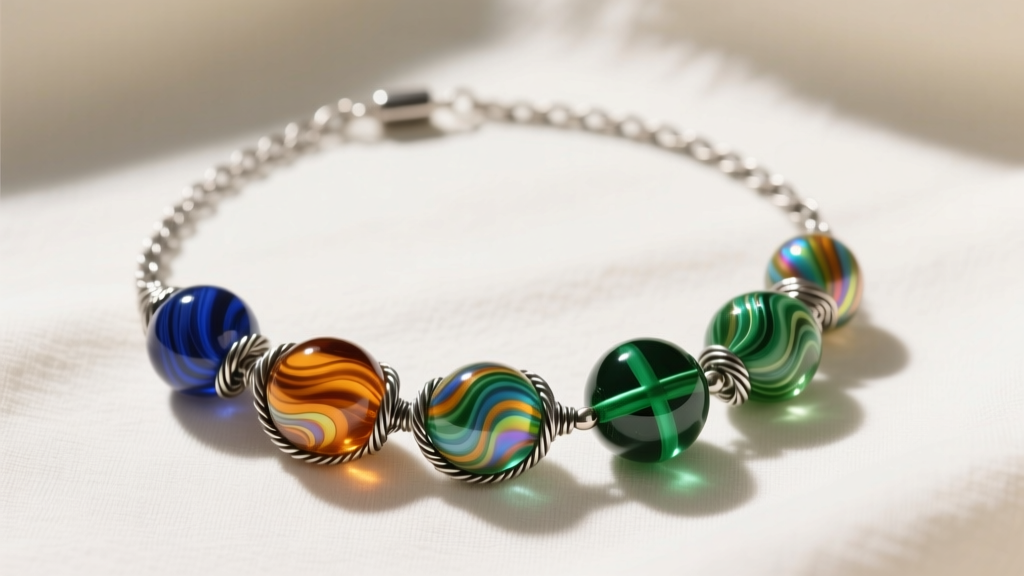
When designing a piece where the left side features a heavy, 45-gram cluster of wire-wrapped beads and the right side features a delicate chain or sparse seed bead strand, you must introduce a counter-weight. This does not mean making the right side visually identical. Instead, use dense, small materials on the lighter side to anchor the piece.
Actionable Framework for Weight Balancing:
- Weigh Your Focal Cluster: Use a digital jewelry scale to measure the heavy side of your design (e.g., 40 grams).
- Calculate the Counter-Weight: The back/clasp area and the opposing side must equal at least 60% of the focal cluster's weight to prevent sliding.
- Implement Hidden Density: Use heavy materials like solid bronze or thick sterling silver chain links near the clasp on the lighter side. You can also use large, heavy metal spacer beads hidden beneath the collarbone to act as a pendulum anchor.
- Clasp Placement: Move the clasp to the front or side of the neck (using a decorative toggle or magnetic clasp) rather than the nape of the neck, which alters the center of gravity.
Finishing Techniques: Moving Beyond Crimp Beads
In 2026, exposed, flattened crimp beads are considered a hallmark of amateur jewelry making. The neo-maximalist aesthetic demands high-end, couture-level finishing, even on wild, asymmetrical designs. According to the Fire Mountain Gems Wire Wrapping encyclopedia, integrating professional findings elevates the perceived value of your work exponentially.
Replace standard crimp beads with French wire (gimp) and wire guardians. French wire is a delicate, coiled metal thread that protects your flexible beading wire from fraying against the sharp edges of metal jump rings or heavy bead holes. Slide a sterling silver wire guardian onto your beading wire, pass the wire through your clasp, and bring it back through the guardian before securing it with a crimp bead covered by a crimp cover. The crimp cover, when closed properly with crimping pliers, mimics a seamless, perfectly round metal bead, integrating flawlessly into your beadwork pattern.
Conclusion: Future-Proofing Your Beadwork
Mastering the art of making jewelry with beads in the current market requires more than just stringing beautiful components together. It demands an architectural approach to weight, a curator's eye for contrasting textures, and a commitment to professional-grade finishing. By embracing the neo-maximalist trend—mixing high-grade baroque pearls with recycled glass and structural wire-wrapping—you position your DIY jewelry brand at the cutting edge of 2026's most exciting design movement. Start experimenting with asymmetrical weight distribution today, and let the organic imperfections of your materials dictate your next masterpiece.


