How to Make Custom Jewelry: Argentium Silver Bezel Setting Guide
Master the technical art of custom jewelry fabrication. Learn Argentium silver metallurgy, exact bezel gauges, and advanced stone-setting mechanics.

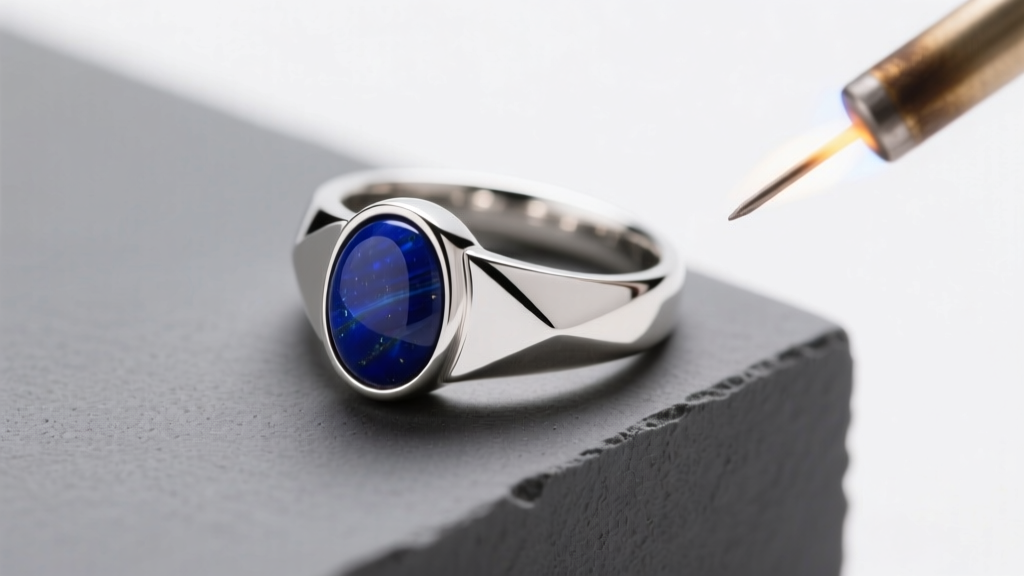
When you decide to make custom jewelry at a professional level, moving beyond basic wire wrapping and cold connections into metallurgical fabrication is a mandatory evolution. Bezel setting remains one of the most secure and aesthetically refined methods for encapsulating cabochon and faceted gemstones. However, traditional sterling silver (925) presents significant technical hurdles, primarily the formation of firescale (copper oxide) and the necessity of precise solder alloys. This is where Argentium silver fundamentally alters the fabrication landscape.
This expert deep dive explores the precise metallurgy, thermal dynamics, and mechanical tolerances required to fabricate a flawless bezel-set ring using Argentium silver. We will bypass generic beginner advice and focus strictly on the material science and structural engineering required for high-end custom jewelry making.
The Metallurgy of Argentium Silver for Custom Fabrication
Standard sterling silver is an alloy of 92.5% silver and 7.5% copper. When heated, the copper migrates to the surface and oxidizes, creating a stubborn black firescale that requires aggressive pickling and extensive polishing. Argentium silver replaces a portion of the copper with germanium. This addition fundamentally changes the crystalline behavior of the alloy during thermal cycling.
According to Ganoksin's metallurgical archives, the germanium in Argentium forms a transparent, protective oxide layer that completely inhibits firescale formation. More importantly for custom fabricators, Argentium possesses the unique ability to fuse to itself without the use of solder paste or wire. This fusion occurs because the alloy's eutectic point allows the metal to become tacky and bond at the molecular level before reaching a full liquid melt, eliminating the visible seam lines and structural weaknesses associated with traditional soldered bezel cups.
Expert Insight: Never use standard sulfuric acid or sodium bisulfate (Sparex) pickles on Argentium if you can avoid it. The hydrogen ions can cause copper flashing on the surface. Use a warm, diluted citric acid solution (pH ~2.0) to safely remove borax-based flux residues without compromising the germanium oxide layer.
Material Sizing: Gauges, Tempers, and Tolerances
Precision in material selection dictates the success of the stone-setting phase. If your bezel wire is too thick, you will struggle to push the metal over the gemstone's girdle without work-hardening it to the point of fracture. If your backplate is too thin, the thermal mass will be insufficient for even fusing.
| Component | Wire/Sheet Gauge | Thickness (mm) | Required Temper | Mechanical Purpose |
|---|---|---|---|---|
| Bezel Wire | 28g or 30g | 0.32 / 0.25 | Dead Soft | Maximum ductility for folding over the stone girdle without tearing. |
| Ring Band | 14g or 12g | 1.62 / 2.05 | Half-Hard | Structural rigidity to prevent the ring from ovaling under finger pressure. |
| Backplate | 24g | 0.51 | Dead Soft | Adequate thermal mass for fusing while allowing easy sawing and sanding. |
When sourcing materials from suppliers like Rio Grande, always verify the temper. Dead soft Argentium has undergone a full annealing process, realigning its grain structure for maximum malleability. Attempting to set a stone in a half-hard 28-gauge bezel will result in severe work-hardening and inevitable metal fatigue.
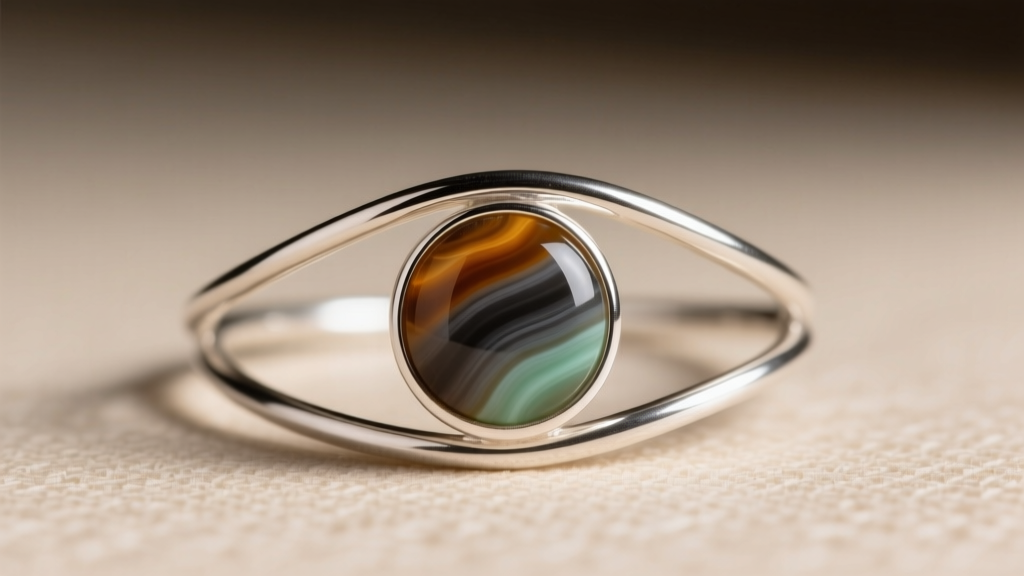
Thermal Dynamics: Fusing the Bezel Cup
Fusing Argentium requires a different thermal approach than soldering. You are not melting a filler metal; you are bringing the base metal to its solidus-liquidus threshold.
Preparation and Fluxing
Cut your 28-gauge bezel wire to the exact circumference of your stone plus 0.5mm for the kerf and compression. Form the wire around a mandrel and bring the ends together perfectly flush. Apply a microscopic layer of self-pickling flux (such as My-T-Flux or Stay-Silv white paste) strictly to the seam. Excess flux will create a glassy barrier that inhibits the fusion capillary action.
The Heat Quotient
Use a butane micro-torch with a pinpoint flame. Heat the entire bezel cup broadly to raise the ambient temperature of the metal to approximately 800°F (426°C). Once the flux turns clear and glassy, concentrate the flame directly on the seam. Argentium fuses at roughly 1650°F (899°C). Watch for the 'slump'—the exact moment the seam visually shrinks and pulls together into a single, continuous bead of metal. Remove the heat immediately. Overheating will cause the bezel to ball up and destroy the structural integrity of the cup.
Mechanical Setting: Work Hardening and Burnishing
Once the bezel cup is fused, pickled, and soldered to the ring shank, the mechanical setting begins. This phase relies entirely on controlled plastic deformation of the metal.
Seat the cabochon into the cup. Using a high-carbon steel bezel pusher, begin at the 12 o'clock position. Apply pressure at a 45-degree angle, pushing the metal down and inward toward the stone. Move to the 6 o'clock position, then 3 and 9. This opposing-vector technique prevents the stone from shifting and ensures even compression.
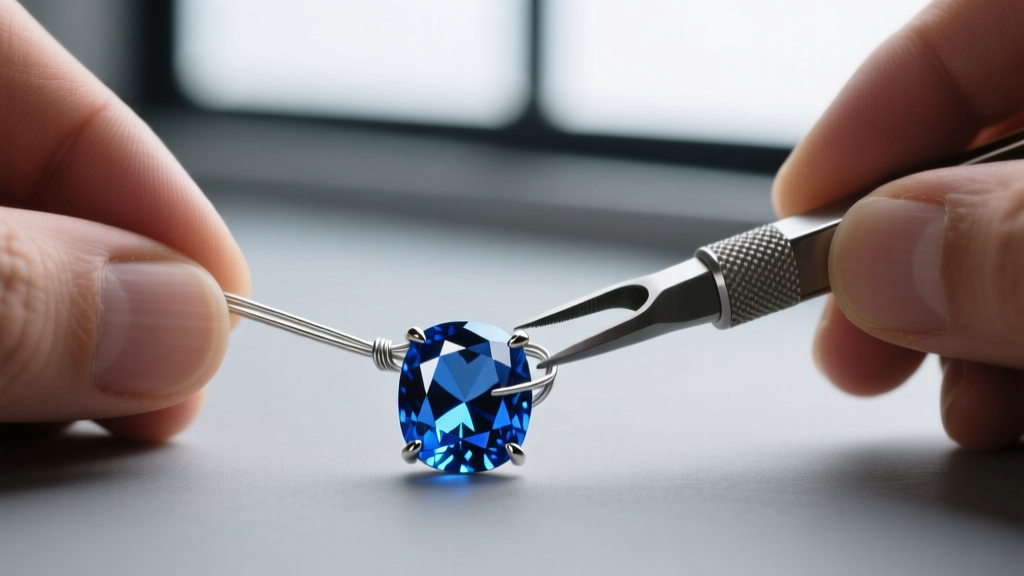
After the initial 45-degree push, the bezel will look jagged. Switch your pusher angle to a shallow 15 degrees and walk the tool continuously around the perimeter to fold the metal flat against the stone's crown. Finally, use a polished agate burnisher to compress the silver at the molecular level. Burnishing increases the Vickers hardness of the bezel rim, locking the stone in place and creating a mirror finish without removing any metal mass.
Troubleshooting Structural and Aesthetic Failures
Even experienced fabricators encounter structural anomalies when attempting to make custom jewelry with advanced alloys. Here is how to diagnose and correct the most common bezel-setting failures:
- Bezel Tearing During the Push: This is a classic symptom of over-hardening. If the Argentium was not fully annealed before setting, or if you are using a gauge thicker than 28g, the crystalline structure will fracture under compressive stress. Solution: Remove the stone, anneal the bezel cup with a torch until it reaches a dull red (approx. 1100°F), quench in water, and resume setting.
- Gapping at the Fusion Seam: If a visible line or microscopic gap remains after fusing, the thermal mass was uneven, or the seam was not perfectly flush before heating. Solution: Do not attempt to fill the gap with solder. Re-flux, apply a tiny snippet of Argentium fusing wire, and re-heat until capillary action draws the metal into the void.
- Point-Loading and Stone Fracture: Cabochons with sharp corners (like squares or marquises) are highly susceptible to cleavage fractures if the bezel pusher applies direct downward pressure on the apex. Solution: Never push directly into a corner. Push the metal along the flat edges, allowing the excess metal to naturally fold over the corners in a controlled, sweeping motion.
- The 'Wavy' Bezel Rim: Caused by inconsistent pusher angles and failing to use a bezel rocker. Solution: Employ a serrated bezel rocker to aggressively seat the metal against the stone's girdle before switching to the flat pusher for the final 15-degree fold.
Mastering these metallurgical and mechanical principles transforms the process from a simple craft into a precise engineering discipline. By respecting the thermal properties of Argentium silver and the physical tolerances of gauge sizing, you elevate your ability to make custom jewelry that is both structurally enduring and visually immaculate.


