Essential Tools & Metals for Making Metal Jewelry: 2026 Guide
Discover exactly what to buy for making metal jewelry in 2026. Our expert guide covers metal grades, sheet gauges, torches, and bench tools.

The 2026 Shift Toward Hand-Fabrication
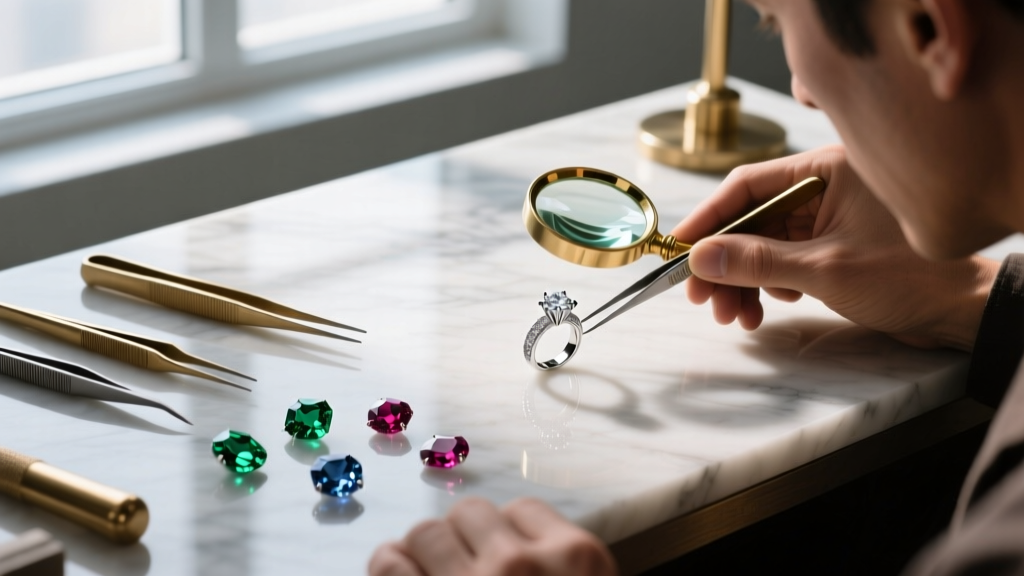
The landscape of making metal jewelry has evolved significantly by 2026. With consumers increasingly demanding transparency, bespoke craftsmanship, and sustainable sourcing, the era of relying solely on mass-cast components is fading. Today’s independent jewelers are returning to the bench, embracing traditional hand-fabrication techniques like sawing, forging, and soldering to create structurally superior and highly original pieces. However, transitioning from simple wire-wrapping or bead-stringing to true metalsmithing requires a strategic investment in raw materials and precision bench tools. This buying guide cuts through the noise, providing actionable, expert-level advice on exactly what to look for when sourcing metals and outfitting your bench for professional-grade fabrication.
Decoding Metal Alloys: What to Buy and Avoid
When making metal jewelry from scratch, your choice of alloy dictates your workflow, your tool wear, and your final retail price. Understanding the metallurgical differences between common jewelry metals is non-negotiable.
Sterling Silver (925) vs. Argentium (960)
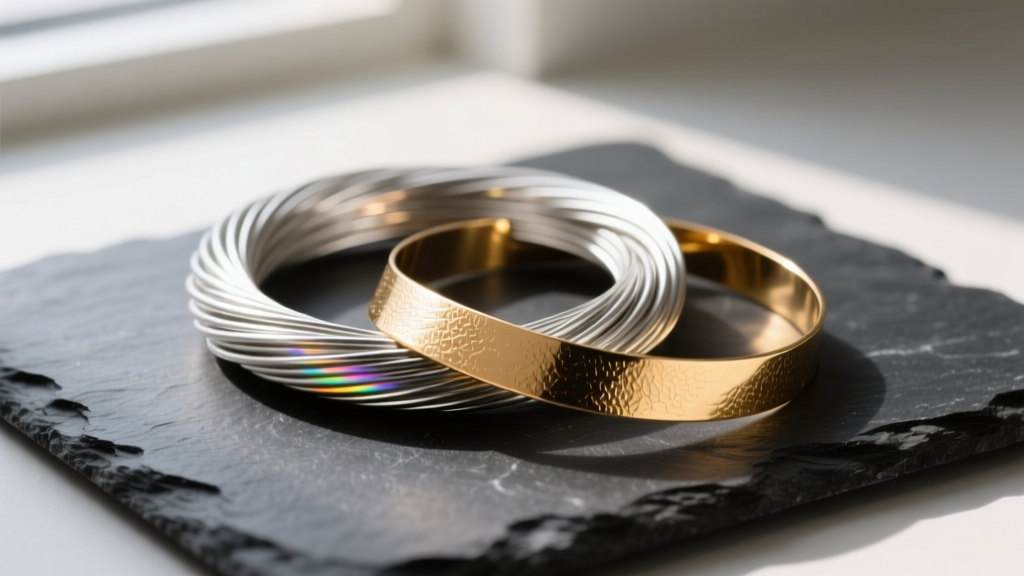
Standard Sterling Silver (92.5% silver, 7.5% copper) remains the industry workhorse. It work-hardens predictably and takes a brilliant polish. However, the copper content causes firescale (a purple-grey oxidation) when heated, requiring tedious cleanup or the use of boric acid fluxes. Enter Argentium Silver. Patented and increasingly accessible in 2026, Argentium replaces some copper with germanium. This makes it highly tarnish-resistant and allows it to be fused to itself without solder. While Argentium carries a 20% to 30% price premium over standard sterling, the time saved on pickling and polishing makes it a favorite for production jewelers.
Practice Metals: Brass, Copper, and the Nickel Trap
Beginners should never practice sawing or soldering on expensive silver. Copper (dead soft) is excellent for learning annealing and forging. Brass (an alloy of copper and zinc) mimics the hardness of sterling silver beautifully, making it the perfect stand-in for learning prong setting and bezel pushing. A critical warning: Avoid 'Nickel Silver' (also called German Silver). Despite the name, it contains zero silver and is composed of copper, nickel, and zinc. Nickel is a severe contact allergen, and many modern markets ban it in jewelry. Instead, opt for Red Brass (CuZn15), which offers a warm, rose-gold-like hue and is entirely hypoallergenic.
| Alloy | Composition | Best Application | 2026 Market Note |
|---|---|---|---|
| Sterling 925 | 92.5% Ag, 7.5% Cu | Everyday rings, soldered chains | Standard pricing, high availability |
| Argentium 960 | 96% Ag, Cu, Germanium | Fusing, high-end bezels | 25% premium, saves finishing time |
| Red Brass | 85% Cu, 15% Zn | Practice, fashion jewelry | Low cost, hypoallergenic alternative |
| Copper (C110) | 99.9% Cu | Etching, forming, rivets | Work-hardens rapidly, requires frequent annealing |
Sheet and Wire Gauges: A Fabricator's Cheat Sheet
Buying the wrong temper or gauge is the most common (and expensive) mistake novices make when making metal jewelry. Metal is sold by gauge (thickness) and temper (hardness). For fabrication, you generally want Dead Soft or Half-Hard tempers. Full-hard metal will snap if bent sharply and is nearly impossible to forge without immediate annealing.
- 28 to 26 Gauge (0.32mm - 0.40mm): Ideal for delicate woven wire accents, micro-bezel walls for small cabochons, and fine filigree work. Too fragile for structural elements.
- 24 Gauge (0.51mm): The gold standard for standard bezel wire. It is thin enough to push easily over a stone with a bezel roller, but thick enough to hold its shape during soldering.
- 22 to 20 Gauge (0.64mm - 0.81mm): Essential for ear wires, jump rings, headpins, and light structural bands. 20-gauge half-hard wire is the universal standard for French ear wires.
- 18 to 16 Gauge (1.02mm - 1.29mm): Used for heavy-duty jump rings, ring shanks, and the structural backplates of complex pendants. 18-gauge sheet is perfect for stamping and deep texturing.
- 14 to 12 Gauge (1.63mm - 2.05mm): Reserved for heavy men's rings, bold forged cuffs, and hinge mechanisms. Requires significant torch heat to anneal and heavy-duty rolling mills to thin.
The Bench Setup: Essential Tools for Making Metal Jewelry
You do not need a $10,000 studio to start fabricating, but you do need precision tools. Cheap tools introduce friction, fatigue, and ruined materials into your workflow.
Saws, Blades, and Lubricants
The jeweler's saw is your primary cutting tool. While a standard German steel C-frame saw ($25) is adequate, upgrading to a Knew Concepts Titanium Lever Action Frame ($160+) is a revelation. The titanium frame is incredibly rigid and lightweight, reducing wrist fatigue during long piercing sessions. More important than the frame, however, are the blades. Throw away the generic bulk blades. Buy Pike Swiss Laser Gold or Vallorbe Glardon blades. For cutting 20-gauge to 18-gauge sheet metal, use a 2/0 or 3/0 blade. For intricate scrollwork and tight curves, step down to a 4/0 or 5/0. Always use a lubricant like BurLife or simple beeswax on the blade to prevent binding and snapping.
Torches and Soldering Essentials
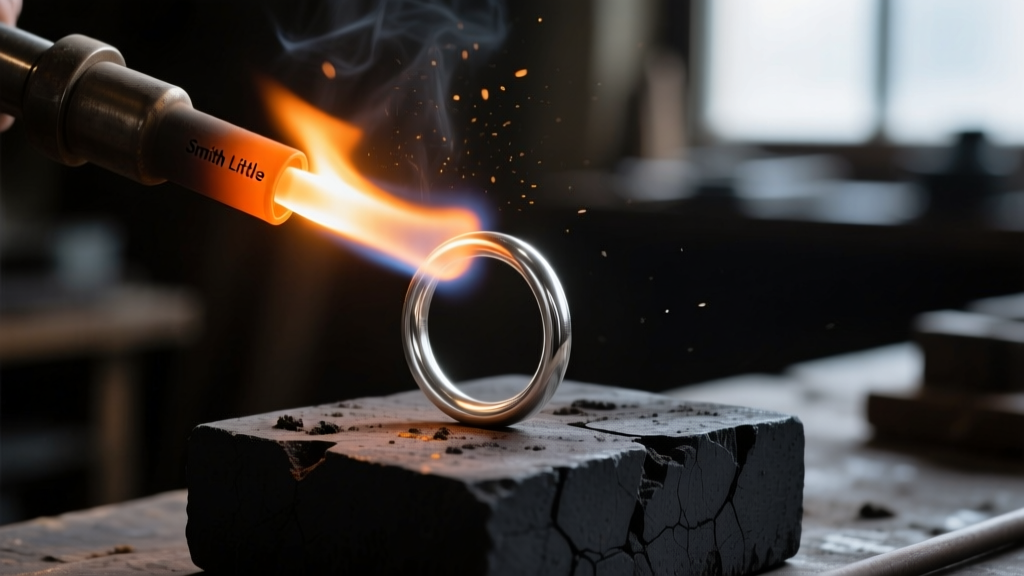
When making metal jewelry, precise heat control is the difference between a seamless solder joint and a melted ring. The industry standard for bench jewelers is the Smith Little Torch running on Acetylene and Oxygen. It produces a pinpoint, high-temperature flame capable of soldering a 1mm jump ring without melting the surrounding shank. However, Acetylene/Oxygen setups require expensive, heavy tanks and strict ventilation. For the 2026 home studio, a high-quality Propane/MAPP gas torch with a micro-tip (like the Max Flame or specific Bernzomatic pencil tips) is a viable, budget-friendly alternative for soldering silver up to 14-gauge, though it struggles with large thermal mass items like heavy belt buckles.
Solder Grades and Pickle
Silver solder is not like hardware store plumbing solder; it contains high silver content and melts at much higher temperatures. You must buy it in three grades to perform multi-step soldering:
- Hard Solder (Melts ~1450°F): Used for the first joint, like closing a ring shank or attaching a bezel cup.
- Medium Solder (Melts ~1390°F): Used for secondary joints, like attaching a bail to a pendant that already has a soldered bezel.
- Easy Solder (Melts ~1325°F): Used for final, delicate repairs or attaching jump rings.
After soldering, the metal must be cleaned in a 'pickle'—a warm, mild acid bath that removes oxidation and flux residue. In 2026, most jewelers have abandoned toxic sulfuric acid in favor of food-grade Citric Acid or sodium bisulfate (Sparex #2), which is safer for the skin and the environment.
Pro Bench Tip: Never put steel tools (like tweezers or binding wire) into your pickle pot. The acid will strip the copper out of your sterling silver and plate it onto the steel, resulting in a permanent, rose-colored copper flash on your silver jewelry. Always use copper or plastic tweezers.
Where to Source: Trusted Suppliers for 2026
Sourcing raw metals requires trusted partners who guarantee alloy purity. Avoid marketplaces like Amazon or eBay for precious metals, as counterfeit alloys and inaccurate gauges are rampant. Instead, establish trade accounts with dedicated jewelry suppliers. OttoFrei and Rio Grande remain the gold standards for North American jewelers, offering certified precious metals, extensive technical support, and tiered pricing based on your annual volume. For smaller, curated quantities of specialized brass and copper alloys, Halstead Bead is an excellent resource that caters specifically to independent makers scaling their businesses.
Final Bench Advice
Making metal jewelry is an exercise in patience and metallurgy. Start by mastering the jeweler's saw on brass sheet before you ever touch a torch. Invest in high-quality saw blades, understand the thermal properties of your chosen alloys, and respect the chemistry of your soldering process. By strategically selecting your materials and tools based on the specific demands of fabrication, you will build a bench setup in 2026 that supports a lifetime of professional, handcrafted jewelry design.


