Top Metals to Consider When Starting a Permanent Jewelry Business
Compare gold-filled, sterling silver, and titanium chains. Learn which metals ensure durability and profit when starting a permanent jewelry business.

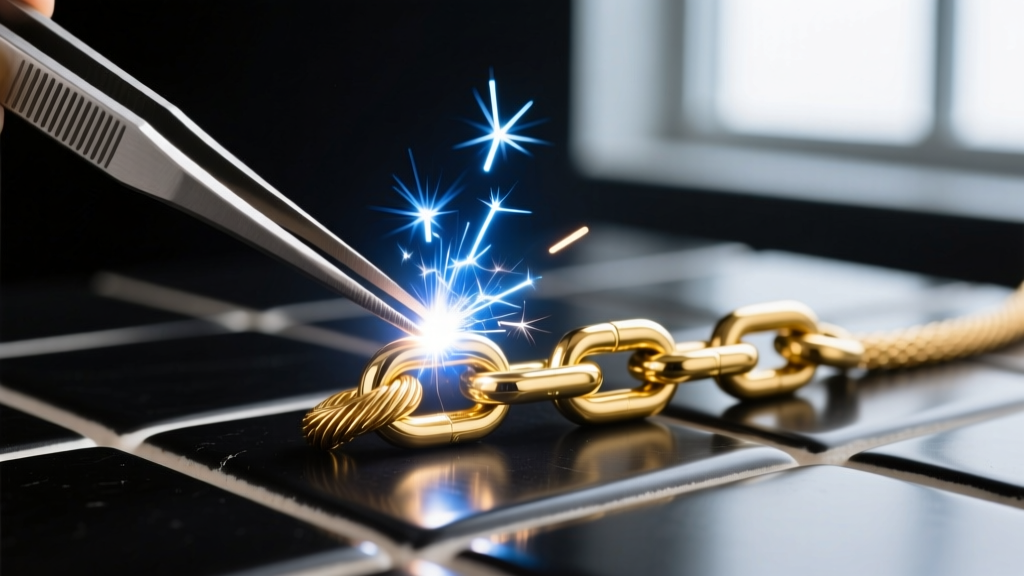
The permanent jewelry industry has evolved from a fleeting trend into a staple service offering for modern jewelry studios and boutique retailers. However, the success of your studio hinges on a critical, often overlooked variable: the metallurgical properties of the chains you source. When starting a permanent jewelry business, selecting the right materials is not just about aesthetics; it is about weldability, tensile strength, tarnish resistance, and ultimately, your profit margins. A chain that snaps three days after welding will destroy your reputation, while a chain that is too expensive will price you out of the local market.
This comprehensive material guide breaks down the exact alloys, gauges, and chain structures you need to understand to build a resilient, profitable inventory in 2026.
The Big Three: Solid Gold, Gold-Filled, and Silver Alloys
Most permanent jewelry studios operate on a tiered pricing model. To execute this, you must understand the chemical composition and welding behavior of the three primary metal categories. Standard sterling silver, for instance, contains 7.5% copper, which oxidizes rapidly and creates porous, brittle welds under a pulse arc welder. Instead, industry professionals pivot to specialized alloys.
14k Gold-Filled (1/20 14k GF)
Gold-filled wire consists of a brass core mechanically bonded to a thick outer layer of 14k gold (comprising at least 5% of the total weight). It is the undisputed workhorse for studios starting a permanent jewelry business. It welds beautifully because the brass core conducts the electrical arc evenly, and the gold layer is thick enough that the heat of a pulse arc welder will not burn through to the base metal if calibrated correctly.
Solid 14k Gold (Yellow, Rose, and White)
Solid 14k gold is an alloy of 58.5% pure gold mixed with copper, silver, and zinc. According to the Gemological Institute of America (GIA), the specific ratio of these alloy metals dictates the color and the melting point. White gold, often alloyed with nickel or palladium, requires a slightly higher energy setting on your welder than yellow gold. Solid gold offers the highest retail markup and zero risk of the base metal showing through post-weld.
Argentium Silver vs. Traditional Sterling
While traditional 925 sterling silver is cheap to source, it tarnishes and yields weak welds. Argentium silver (93.5% or 96% silver, alloyed with germanium) is the superior choice for permanent jewelry. The germanium creates a transparent, self-healing oxide layer that prevents tarnish and results in a significantly stronger, cleaner weld under argon gas.
Material Comparison & Profitability Matrix
When building your initial wholesale order, use this matrix to balance your inventory. Prices reflect average 2026 wholesale costs for standard cable chains.
| Metal Type | Composition | Weldability (Pulse Arc) | Tarnish Resistance | Wholesale Cost (per ft) | Retail Price (per in) |
|---|---|---|---|---|---|
| 14k Gold-Filled | Brass core, 5% 14k Gold | Excellent | High | $4.00 - $8.00 | $3.50 - $5.00 |
| Solid 14k Yellow | 58.5% Gold, Cu/Ag/Zinc | Excellent | Very High | $35.00 - $60.00 | $12.00 - $18.00 |
| Argentium Silver | 93.5% Ag, Germanium | Very Good | High | $8.00 - $12.00 | $4.00 - $6.00 |
| Grade 2 Titanium | 99% Pure Titanium | Poor (Requires Laser) | Very High | $6.00 - $10.00 | $5.00 - $7.00 |
Note: Titanium is highly hypoallergenic but possesses high electrical resistance, making it nearly impossible to weld with standard pulse arc welders like the Sunstone Orion 150s. It requires a dedicated laser welder, a crucial equipment consideration when starting a permanent jewelry business.
Understanding Gauge, Link Structure, and Tensile Strength
Material composition is only half the battle; the physical geometry of the chain dictates its longevity. Permanent jewelry is subjected to daily friction, snagging, and moisture. You must evaluate chains based on wire diameter and link structure.
The Danger of Hollow Links
Many wholesale suppliers offer 'lightweight' gold-filled chains. These are often hollow-link chains (like large tubular rope chains). When the electrode of a pulse arc welder strikes a hollow link, the thin metal collapses, resulting in a melted, brittle ball rather than a clean fusion. Always source solid-wire links for the jump rings and the chain itself.
Optimal Wire Diameters
For everyday wear (bracelets and anklets), the individual wire making up the chain links should be between 0.40mm and 0.65mm in thickness. Anything thinner (e.g., 0.25mm delicate chains) will stretch and snap under the tension of a snag. Anything thicker than 0.80mm becomes too rigid for a comfortable, draped fit on the wrist and requires higher welder voltage, which can blow out the surrounding links.
Chain Styles and Welding Compatibility
Not all chain patterns are created equal when it comes to the micro-welding process. The surface area where the jump ring meets the chain link is your weld zone.
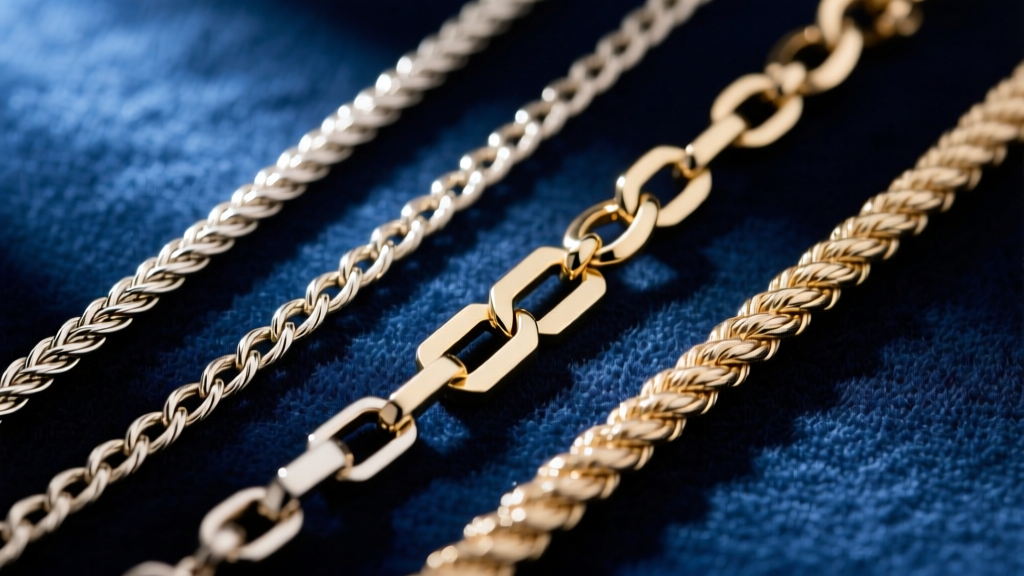
- Cable Chains: The most reliable and beginner-friendly. The uniform, round oval links provide a consistent surface area for the jump ring to rest against, ensuring a strong, predictable weld.
- Curb and Cuban Chains: These lay flat against the skin, reducing snagging. However, the flattened links mean the jump ring only makes contact with the edge of the link. You must use a slightly larger jump ring or file a micro-flat spot on the curb link to ensure adequate metal-to-metal contact for the arc.
- Paperclip Chains: Highly trendy, but notoriously difficult to weld if the links are elongated and thin. The large open spaces mean less structural support. If offering paperclip chains, ensure the wire gauge is at least 0.55mm to prevent the links from warping under the heat of the weld.
- Rope Chains: The twisted geometry of a rope chain scatters the electrical arc, leading to inconsistent welds and localized overheating. Many master welders avoid rope chains entirely or use a specialized jump ring with a flat pad to bridge the gap.
Sourcing Wholesale Chains: Where to Buy in 2026
When starting a permanent jewelry business, your supply chain is your lifeline. Avoid consumer marketplaces where metal purity is frequently misrepresented. Instead, establish trade accounts with verified refiners and jewelry suppliers.
Pro Tip: Always request a 'mill certificate' or a detailed metallurgical breakdown from your wholesale supplier when ordering large spools of gold-filled chain to verify the 1/20 14k GF ratio.
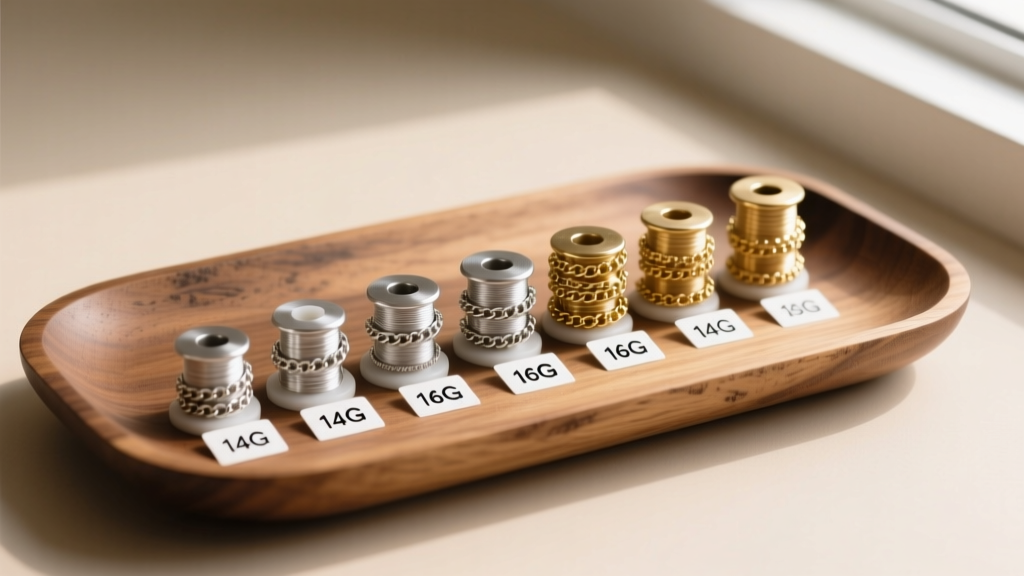
Established industry giants like Rio Grande and Stuller offer unparalleled reliability, vast inventories of solid 14k and Argentium silver chains, and exact gauge specifications. For specialized gold-filled chains and pre-cut jump rings tailored specifically for pulse arc welding, dedicated permanent jewelry wholesalers have emerged as vital partners, offering chains spooled on anti-tarnish tabs to preserve the metal during studio storage.
Final Verdict: Building Your Initial Inventory
To launch successfully, do not overcomplicate your initial menu. A highly curated, structurally sound inventory outperforms a massive, untested catalog. Start with three chain styles in 14k Gold-Filled (Cable, Curb, and a sturdy Paperclip) and two styles in Solid 14k Yellow Gold. Master the weld parameters on these specific metals and gauges using your pulse arc welder. Once you have dialed in your voltage settings and established a reputation for chains that do not break, you can confidently expand into Argentium silver, rose gold alloys, and more complex woven patterns.


