One Step Looper Tool for Jewelry Making: Wire Material Guide
Discover how wire hardness and temper affect your one step looper tool for jewelry making. Compare copper, silver, and steel properties for perfect loops.

The Mechanics of a One Step Looper Tool for Jewelry Making
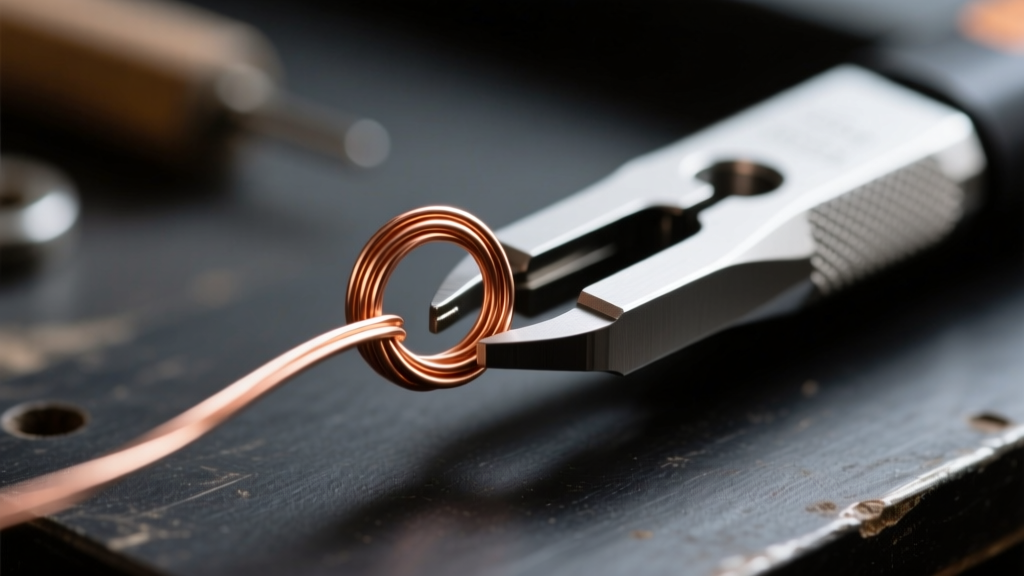
When you first pick up a one step looper tool for jewelry making, the dual-action mechanism feels like pure magic. Unlike traditional round-nose pliers that require a multi-step wrist rotation to form a loop, a one-step looper utilizes a complex internal cam and pivot system. As you squeeze the handles, a flush-cutting blade first shears the wire, and a fraction of a second later, a hardened steel bending pin sweeps the cut end into a perfect, consistent loop. However, this mechanical advantage comes with strict metallurgical limitations. The tool's jaws are typically forged from high-carbon steel, designed to cut and bend non-ferrous metals within specific hardness thresholds. Pushing a one step looper tool for jewelry making beyond its material limits will result in jaw slippage, chipped cutting blades, or incomplete loops. Understanding the interplay between wire temper, tensile strength, and the tool's mechanical leverage is essential for any serious jewelry maker looking to produce uniform headpins and eye pins at scale.
Wire Temper and Hardness: The Deciding Factors
The success of your loops depends entirely on the Vickers Hardness (HV) of the wire you are feeding into the jaws. Wire temper dictates how much the metal resists deformation. When the bending pin forces the wire into a 360-degree circle, the metal undergoes rapid work hardening. If the wire is already too hard before it enters the tool, the internal spring-back will force the loop open the moment the jaws release. Conversely, if the wire is too soft and thick, the cutting blade may deform the wire rather than shearing it cleanly.
- Dead Soft (approx. 40-60 HV): Highly malleable. Bends effortlessly with zero spring-back. Ideal for 20-gauge and 18-gauge loopers, but can kink if the wire isn't seated flush against the bending pin.
- Half Hard (approx. 90-110 HV): The industry standard for ear wires and structural loops. Offers a balance of malleability and structural integrity. Best suited for 22-gauge and 20-gauge loopers.
- Spring Hard / Memory Wire (300+ HV): Extremely rigid. Never use a standard one step looper tool for jewelry making on memory wire or spring-hard stainless steel; it will instantly chip the carbon-steel cutting edge and permanently misalign the pivot.
For a deeper understanding of how annealing and work-hardening affect your metals, the Rio Grande metallurgy resource center offers comprehensive charts on wire temper and Vickers hardness scales that every bench jeweler should bookmark.
Material Comparison: How Different Metals React
Different alloys behave uniquely under the sheer force of the looper's cutting blade and the lateral pressure of the bending pin. Let us break down the most common jewelry metals and how they interact with your tools.
Pure Copper and Brass
Copper and brass are the ultimate practice metals. Pure copper in a dead-soft temper has a Vickers hardness of roughly 45 HV. When using a one step looper tool for jewelry making on 20-gauge copper, the tool will glide through the cut and form a tight, flush loop with minimal hand fatigue. However, brass is an alloy of copper and zinc, making it inherently stiffer. A 20-gauge half-hard brass wire will exhibit noticeable spring-back. To compensate, you must hold the handles closed for an extra second, allowing the metal to plastically deform and settle into the pin's curvature.
Sterling Silver and Gold-Filled
Sterling silver (.925) and 14k gold-filled wires are the workhorses of fine jewelry production. Sterling silver work-hardens rapidly. When you loop a 22-gauge half-hard sterling silver headpin, the loop itself will become nearly spring-hard by the time the tool releases, which is highly desirable for securing briolettes and pearls. Gold-filled wire features a thick outer layer of karat gold bonded to a brass core. Because of the brass core, gold-filled wire is slightly stiffer than sterling silver of the same gauge. If you are using an 18-gauge looper on gold-filled wire, ensure you are purchasing dead-soft temper; otherwise, the tool's pivot screw may strip under the required torque.
Stainless Steel and Titanium
Stainless steel (specifically 316L surgical grade) and titanium are notoriously unforgiving. 316L stainless steel has a high tensile strength and a Vickers hardness that often exceeds 150 HV even in its softest state. Standard loopers will fail to cut 22-gauge stainless steel cleanly, leaving a sharp, pinched burr. If you must loop steel or titanium, you need a heavy-duty looper equipped with tungsten-carbide inserts or specially heat-treated jaws, and you must strictly limit your work to 24-gauge or 26-gauge dead-soft wire.
Data Table: Wire Material Properties vs. Looper Tool Performance
The following table provides a practical decision framework for matching your wire material and gauge to the appropriate looper tool size and expected performance outcome.
| Metal / Alloy | Temper | Avg. Hardness (HV) | Max Gauge (Standard Looper) | Spring-Back Factor | Tool Wear Rate |
|---|---|---|---|---|---|
| Pure Copper | Dead Soft | 45 HV | 18 Gauge | Negligible | Very Low |
| Brass (Yellow) | Half Hard | 95 HV | 20 Gauge | Moderate | Low |
| Sterling Silver | Half Hard | 110 HV | 20 Gauge | Low | Low-Medium |
| 14k Gold-Filled | Dead Soft | 85 HV | 18 Gauge | Low | Low |
| 316L Stainless Steel | Dead Soft | 160 HV | 24 Gauge | High | High (Blade Dulling) |
| Memory Wire | Spring Hard | 350+ HV | DO NOT USE | Extreme | Catastrophic Failure |
Troubleshooting Tool Wear and Jaw Slippage
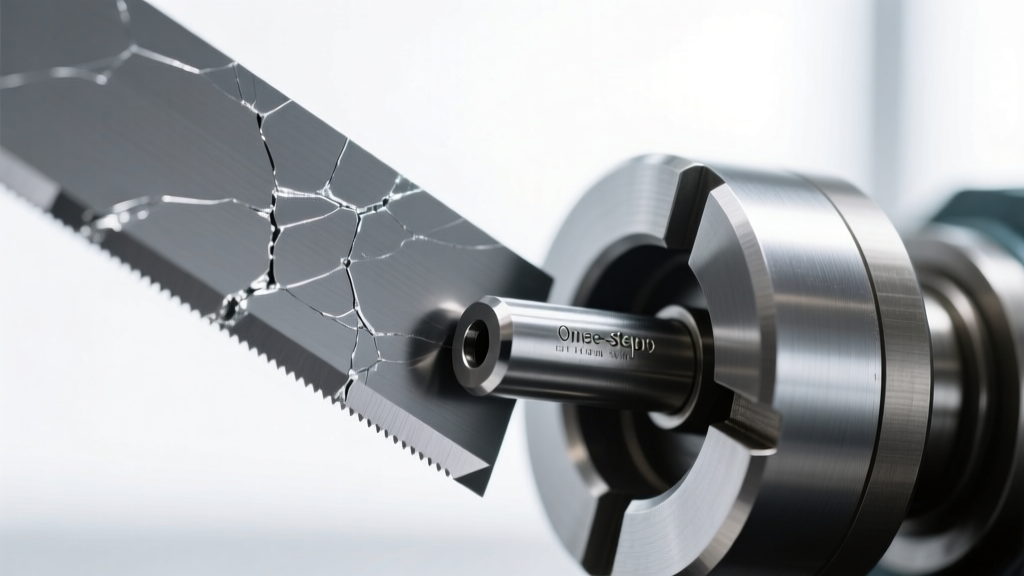
Even the most premium tools from top-tier manufacturers like Wubbers or Euro Tool will eventually succumb to friction and metal fatigue. The most common failure mode in a one step looper tool for jewelry making is jaw slippage, where the cutting blade and the bending pin fall out of precise alignment. This results in loops that are not fully closed or wire ends that are crushed rather than sheared.
Expert Troubleshooting Tip: If your loops are suddenly failing to close flush, do not immediately apply more hand pressure. Squeezing harder will only warp the internal cam. Instead, open the jaws and inspect the pivot screw. Over time, the lateral force of bending 20-gauge wire can loosen this screw. Use a precision jeweler's screwdriver to tighten the pivot just enough to eliminate side-to-side play in the jaws, then apply a micro-drop of synthetic watch oil to the joint.
Another critical issue is blade dulling. If you notice a small 'tail' or burr left on the inside of your loop, the flush-cutting blade has developed a microscopic nick. While you cannot easily sharpen the internal blade of a one-step looper without specialized jig equipment, you can mitigate the issue by rotating your wire 90 degrees before inserting it into the jaws, ensuring the nick doesn't align with the primary cutting vector.
Best Practices for High-Volume Production
If you are using a one step looper tool for jewelry making to produce hundreds of headpins for a production run—such as creating custom rosaries or pearl knotted strands—ergonomics and material consistency become paramount. Hand fatigue will alter your grip strength, leading to inconsistent loop closures.
- Batch by Gauge and Metal: Never switch between 22-gauge sterling and 20-gauge copper in the same session without recalibrating your grip expectation. The mechanical resistance difference will cause micro-strains in your wrist.
- Use a Bench Pin: While loopers are designed for handheld use, resting the side of your hand against a leather bench pad stabilizes your wrist, ensuring the wire is always fed into the jaws at a perfect 90-degree angle.
- Pre-Cut Your Wire: Some production jewelers prefer to pre-cut their wire to exact lengths using heavy-duty flush cutters, using the one-step looper strictly for the looping action. This bypasses the cutting blade entirely, doubling the lifespan of your looper tool.
Final Thoughts on Material Selection
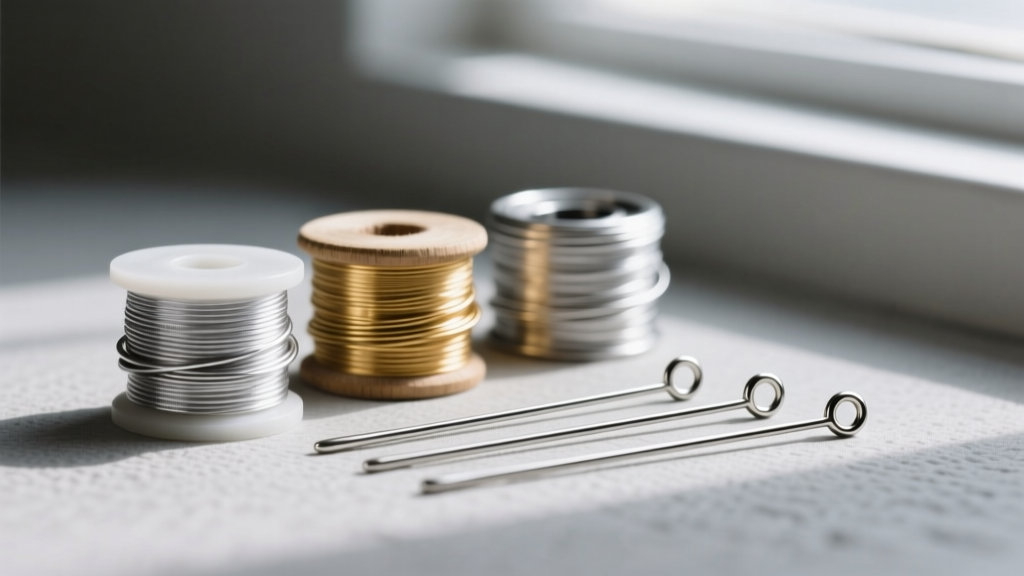
Mastering the one step looper tool for jewelry making is less about brute force and more about respecting the metallurgical properties of your chosen wire. By matching the correct temper and gauge to your specific tool's capacity, you will achieve factory-quality, uniform loops that elevate the professional finish of your jewelry designs. Always prioritize dead-soft or half-hard tempers for non-ferrous metals, reserve your heavy-duty tools for steel, and maintain your pivot joints religiously. When you align material science with mechanical precision, your jewelry making workflow becomes faster, cleaner, and infinitely more enjoyable.


