Orion MPulse Permanent Jewelry Welder: Complete Buying Guide
Discover everything you need to know before buying the Orion mPulse permanent jewelry welder, from watt-second settings to argon gas requirements.

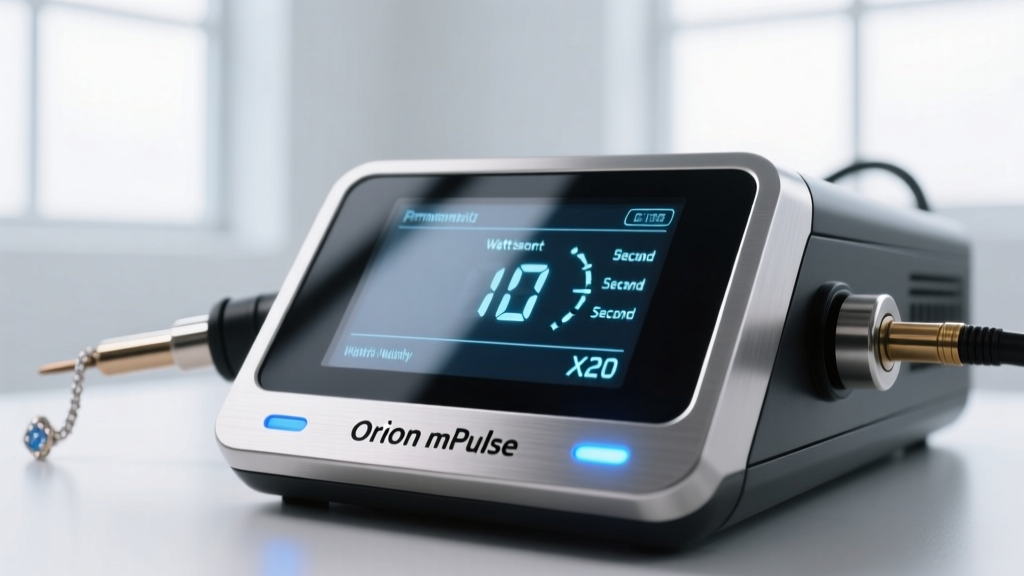
The permanent jewelry boom has fundamentally changed how independent jewelers and studio artists approach custom chain sizing and welded accessories. At the heart of this movement is pulse arc welding technology, and the orion mpulse permanent jewelry welder has emerged as a definitive industry standard. Whether you are transitioning from traditional soldering torches or scaling a mobile permanent jewelry business, selecting the right welder is a high-stakes investment. This comprehensive buying guide breaks down the engineering, power specifications, accessory requirements, and real-world troubleshooting insights you need to know before purchasing an Orion mPulse system in 2026.
Why Pulse Arc Technology Dominates Permanent Jewelry
Unlike laser welders that use concentrated light energy, or traditional torches that rely on open flames and solder alloys, pulse arc welders utilize a high-voltage electrical spark to fuse metal. The Orion mPulse operates on this micro-TIG (Tungsten Inert Gas) principle. When the tungsten electrode comes within a fraction of a millimeter of the grounded workpiece, a controlled electrical arc jumps the gap, instantly melting the metal at the joint without the need for filler solder.
This solderless fusion is precisely why the system is favored for permanent jewelry. Solder joints on delicate 14k gold or sterling silver chains can create weak points, discoloration, or bulky seams that catch on clothing. Pulse arc welding creates a seamless, homogenous weld bead that retains the exact metallurgical properties of the base chain. According to equipment specialists at Rio Grande, pulse arc systems like the mPulse drastically reduce the risk of melting adjacent links, provided the operator masters the watt-second settings.
Decoding Watt-Seconds (Ws) and Power Delivery
The most critical specification on any Orion mPulse permanent jewelry welder is its Watt-Second (Ws) output. A Watt-Second is a unit of energy equivalent to one joule. The mPulse series typically offers adjustable energy outputs ranging from 15Ws up to 50Ws or 80Ws, depending on the specific model tier you purchase.
Understanding how to map Ws to metal thickness and thermal conductivity is the difference between a flawless weld and a vaporized chain link. Gold and silver are highly conductive; they dissipate heat rapidly. If your Ws setting is too low, the metal will merely tack together, resulting in a brittle joint that snaps under tension. If the Ws is too high, the intense localized heat will blow a hole straight through a delicate 0.3mm cable chain.
Pro-Tip: Always perform test welds on scrap pieces of the exact chain and jump ring combination you are using. Thermal mass changes drastically when welding a 1mm jump ring to a 0.4mm chain versus welding two identical jump rings together.
| Material | Wire Diameter / Chain Gauge | Recommended Ws Setting | Argon Flow Rate |
|---|---|---|---|
| Sterling Silver | 0.3mm - 0.5mm (Delicate Chain) | 15 - 22 Ws | 5 - 8 CFH |
| 14k Yellow Gold | 0.6mm - 0.8mm (Standard Chain) | 25 - 35 Ws | 5 - 8 CFH |
| 14k Gold Filled | 1.0mm+ (Heavy Jump Rings) | 40 - 55 Ws | 8 - 10 CFH |
| Platinum | 0.5mm - 0.8mm | 35 - 50 Ws | 10 CFH |
The Non-Negotiable Role of Argon Shielding Gas
A common mistake among novice buyers is attempting to use the Orion mPulse permanent jewelry welder in 'air mode' to save money on gas cylinders. While the machine will technically fire without argon, the results on precious metals will be catastrophic. When silver or karat gold reaches its melting point in the presence of atmospheric oxygen, it instantly oxidizes, creating a porous, brittle, and heavily discolored weld bead known as firescale.
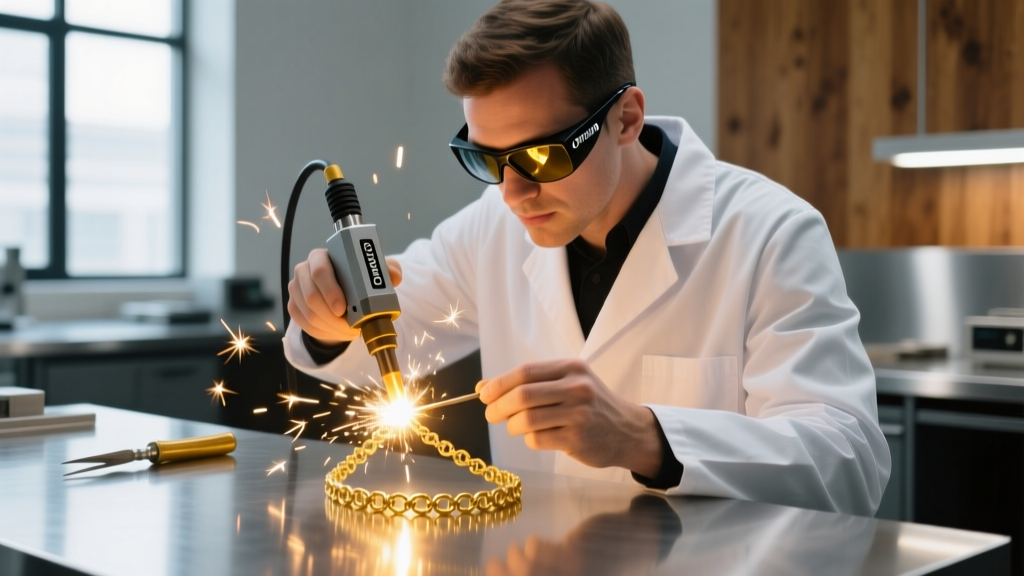
Argon is an inert gas that is heavier than air. When delivered through the mPulse handpiece nozzle at 5 to 10 Cubic Feet per Hour (CFH), it blankets the weld puddle, displacing oxygen and ensuring a bright, clean, and structurally sound fusion. When budgeting for your studio setup, you must factor in the cost of an argon cylinder, a precision flowmeter regulator, and the recurring gas refills. Sourcing high-purity argon (99.995% or better) from local welding suppliers like Airgas or Praxair is highly recommended over pre-filled disposable canisters, which lack the pressure stability required for consistent micro-welding.
Evaluating Bundles: Electrodes, Grounding, and Optics
Orion offers the mPulse in various configurations, from bare-bones base units to comprehensive studio bundles. When analyzing what to look for, pay close attention to the included accessories, as sourcing them separately can inflate your initial overhead by hundreds of dollars.
Tungsten Electrode Selection
The mPulse relies on a non-consumable tungsten electrode to carry the arc. For permanent jewelry, you should exclusively use 2% Ceriated Tungsten (grey tip) or 1.5% Lanthanated Tungsten (gold tip). These alloys provide excellent arc stability at the low amperages used in jewelry welding. Avoid pure green-tip tungsten, which is designed for high-amperage AC aluminum welding and will ball up unpredictably on a pulse arc machine.
Furthermore, the electrode must be sharpened correctly. According to metallurgical guidelines from Orion Welders, tungsten must be ground longitudinally (parallel to the electrode's axis) using a diamond burr or dedicated grinder. Circumferential grinding creates ridges that cause the electrical arc to wander, resulting in asymmetrical weld beads and accidental melting of adjacent chain links.
The Grounding Clamp
A pulse arc circuit is only as good as its ground. The mPulse requires the workpiece to be electrically grounded to complete the circuit. High-quality studio bundles include a specialized copper grounding paddle or a wide-jaw alligator clip. Ensure the grounding surface is clean and free of oxidation; a poor ground connection will cause the machine to misfire or deliver inconsistent energy pulses.
Orion mPulse vs. Entry-Level Laser Welders
Many artists debate between investing in a pulse arc system like the Orion mPulse or an entry-level YAG/Fiber laser welder. While lasers offer pinpoint accuracy and do not strictly require argon gas for all metals, the financial barrier to entry is vastly different.
| Feature | Orion mPulse (Pulse Arc) | Entry-Level Jewelry Laser |
|---|---|---|
| Average Price Point (2026) | $1,695 - $2,495 | $6,500 - $12,000+ |
| Learning Curve | Moderate (Requires arc gap mastery) | Steep (Requires focal point mastery) |
| Portability | Highly Portable (Under 10 lbs) | Low (Benchtop, heavy cooling units) |
| Consumables | Tungsten electrodes, Argon gas | Flashlamps, protective optics |
| Best Use Case | Mobile events, chain welding, sizing | Complex repairs, stone-in-place welding |
For 90% of permanent jewelry businesses, the Orion mPulse provides more than enough capability to weld chains, attach custom charms, and size bracelets, all while maintaining the mobility required for pop-up retail events and bridal suites.
Real-World Troubleshooting and Failure Modes
Even with premium equipment, operators will encounter technical hurdles. Recognizing these failure modes early will save you from ruining expensive inventory and damaging your professional reputation.
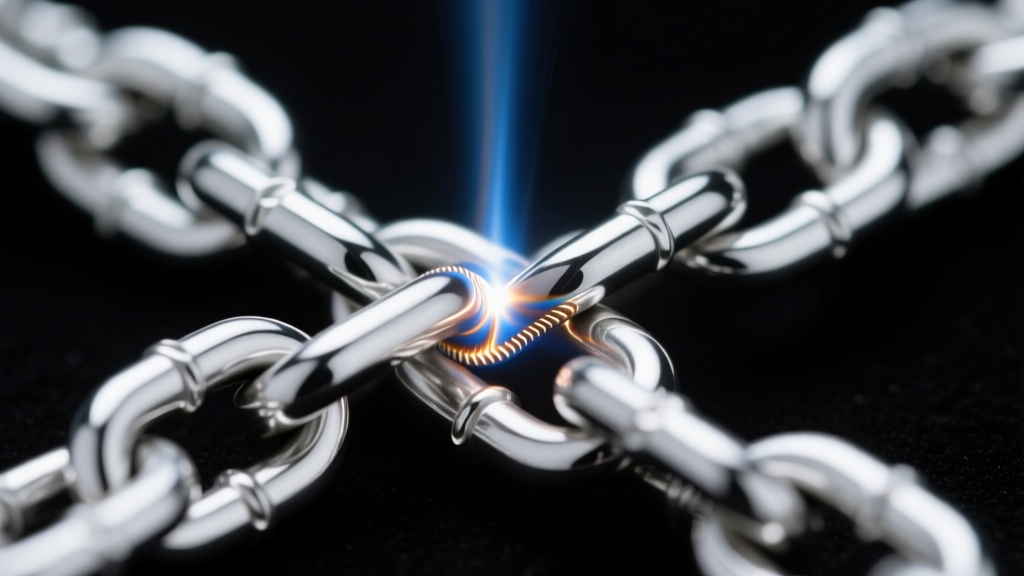
- Porosity and Pitting: If your weld bead looks like a sponge under magnification, you have porosity. This is almost always caused by insufficient argon flow, a drafty room blowing the gas shield away, or moisture trapped in the chain links. Always degrease chains with isopropyl alcohol before welding.
- Weak or 'Cold' Welds: If the joint snaps easily when flexed, the Ws setting was too low to achieve full penetration. The metal tacked on the surface but did not fuse through the cross-section. Increase your Ws by 3-5 increments and re-test.
- Electrode Sticking: If the tungsten electrode physically fuses to the gold or silver chain, you either touched the metal while the arc was firing, or your ground connection failed mid-pulse. Carefully snap the electrode free and re-sharpen the tip; a contaminated tip will cause erratic arcing.
- Blown Links (Over-penetration): Caused by excessive Ws or holding the handpiece too close to the workpiece. The ideal arc gap for the mPulse is roughly 0.5mm to 1.0mm. Utilize the included optical visor or stereo microscope to maintain a consistent standoff distance.
Final Verdict: ROI and Studio Integration
The orion mpulse permanent jewelry welder remains an unparalleled workhorse for independent jewelers. Its balance of portability, intuitive digital controls, and relatively low entry cost makes it the smartest acquisition for artists focused on welded chain accessories. While the ongoing cost of argon gas and the necessity of meticulous electrode maintenance require a disciplined workflow, the resulting solderless, high-strength welds justify the effort entirely. When purchasing, prioritize bundles that include a quality optical visor, a precision argon regulator, and an assortment of ceriated tungsten electrodes to ensure your studio is fully operational from day one.
For further education on precious metal metallurgy and welding compatibility, refer to the educational resources provided by the Gemological Institute of America (GIA) and specialized jewelry fabrication manuals. Mastering the mPulse is not just about buying the tool; it is about understanding the thermal dynamics of the metals you are permanently joining.


