Is the Cost of Permanent Jewelry Worth It? Care & Cleaning Guide
Discover if the cost of permanent jewelry is worth it. Learn expert DIY cleaning, maintenance, and care tips to protect your welded chains.

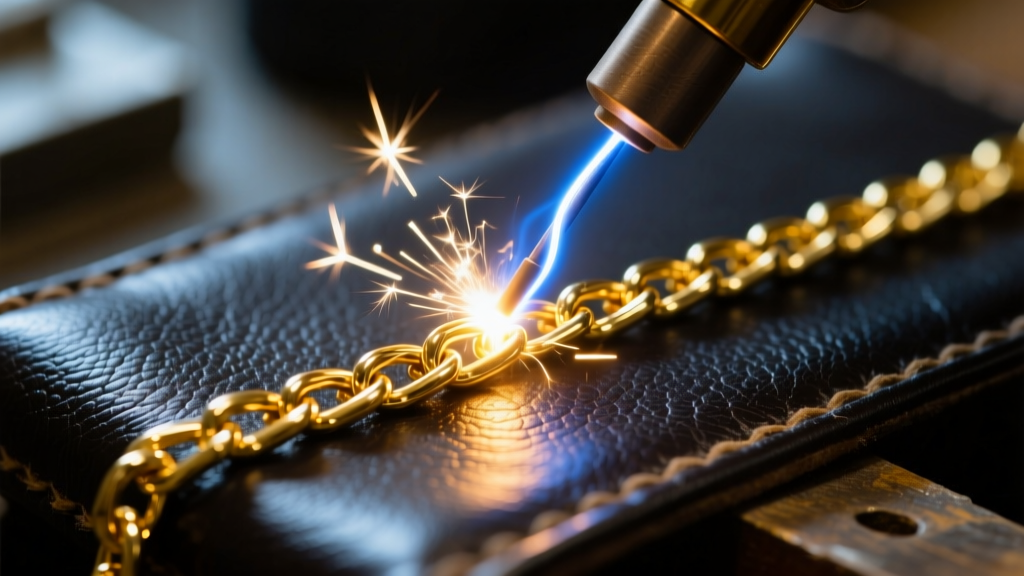
The True Cost of Permanent Jewelry: Investment vs. Upkeep
As of 2026, the permanent jewelry trend has evolved from a niche boutique offering into a mainstream wardrobe staple. However, as consumers look past the initial novelty, a critical question remains: is the cost of permanent jewelry actually justified over the long term? When you factor in the price of solid gold chains, the welding fee, and the potential for future repairs, the investment can range from $65 to over $150 per piece. To ensure your welded bracelet or anklet lasts a lifetime—and to truly maximize your return on investment—rigorous at-home care and maintenance are non-negotiable.
Unlike traditional jewelry with clasps that can be easily removed for deep cleaning, permanent pieces are subjected to 24/7 wear. They endure constant exposure to sebum, environmental pollutants, lotions, and friction. In this comprehensive guide, we will break down the hidden maintenance costs of permanent jewelry and provide expert-level, DIY cleaning protocols to keep your micro-welded chains pristine without requiring expensive studio touch-ups.
Breakdown: What You Actually Pay For (And How to Protect It)
To understand how to care for your jewelry, you must first understand the materials you are paying for. The initial cost of permanent jewelry is heavily dictated by the metal grade and chain style. Below is a comparative analysis of the most common materials used in modern welding studios, alongside their specific maintenance vulnerabilities.
| Material Grade | Avg. Cost (Bracelet) | Tarnish Resistance | Weld Integrity | Maintenance Level |
|---|---|---|---|---|
| 14k Solid Gold | $75 - $110 | Excellent | High (Strong HAZ) | Low |
| 18k Solid Gold | $100 - $150+ | Superior | Medium (Softer metal) | Low |
| Gold-Filled (14/20) | $35 - $55 | Good (Until worn) | Poor (Cannot be arc welded) | High |
| Sterling Silver (.925) | $40 - $65 | Poor (Oxidizes) | High (Requires argon gas) | High |
According to metallurgical guidelines from Rio Grande Jewelry Supply, the heat-affected zone (HAZ) around a micro-weld is the most vulnerable point on any permanent chain. Proper care isn't just about making the chain shine; it is about preventing chemical corrosion at the weld site, which can lead to catastrophic chain failure.
DIY Daily & Weekly Cleaning Routines for Welded Chains
Because permanent jewelry cannot be unclasped, you must clean it while it is still on your body. This requires specific techniques to avoid stretching the delicate links or stressing the micro-weld.
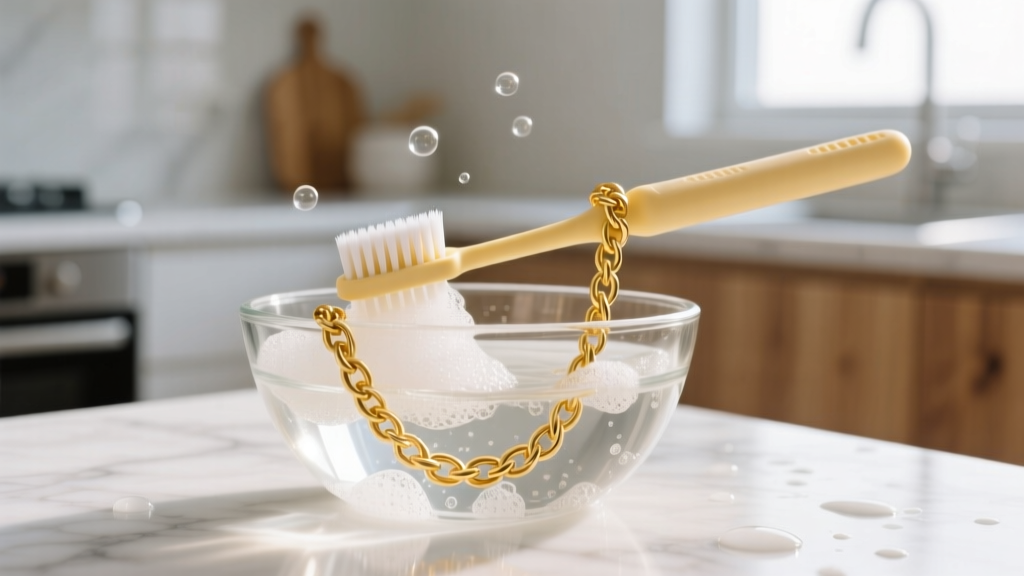
The Mild Soap Soak Method
The safest and most effective way to remove daily buildup of dead skin cells and lotion from a 14k gold cable or figaro chain is the mild soap soak. Follow this exact protocol:
- Step 1: Mix 1 cup of warm (not hot) distilled water with 2 drops of phosphate-free, dye-free dish soap (such as original Dawn).
- Step 2: Submerge your wrist or ankle in the solution for exactly 10 to 15 minutes. This softens hardened sebum trapped inside the chain links.
- Step 3: Using a soft-bristled baby toothbrush, gently brush the chain in a linear motion. Never scrub in a circular motion, as this can twist and warp the delicate oval links.
- Step 4: Rinse thoroughly under lukewarm tap water and pat dry with a lint-free microfiber cloth. Ensure the area around the weld is completely dry to prevent moisture trapping.
What to Strictly Avoid
Never use commercial silver dips or thiourea-based chemical cleaners on permanent jewelry. The Gemological Institute of America (GIA) warns that harsh chemical baths can degrade the alloy metals (like copper and zinc) present in 14k gold, leading to structural weakening over time. Furthermore, avoid ultrasonic cleaners if your permanent bracelet features soldered charms with soft gemstones like opals, pearls, or turquoise, as the high-frequency vibrations will shatter the stones and fracture the micro-weld.
Troubleshooting Common Permanent Jewelry Issues
Even with meticulous care, 24/7 wear guarantees that your jewelry will encounter environmental stressors. Here is how to troubleshoot and resolve the most common issues without incurring costly studio repair fees.
Tarnish and Oxidation on Sterling Silver Links
If you opted for a sterling silver permanent anklet to keep costs down, you will inevitably face oxidation. The sulfur in the air and the natural acids in your sweat will cause the silver links to turn black or green.
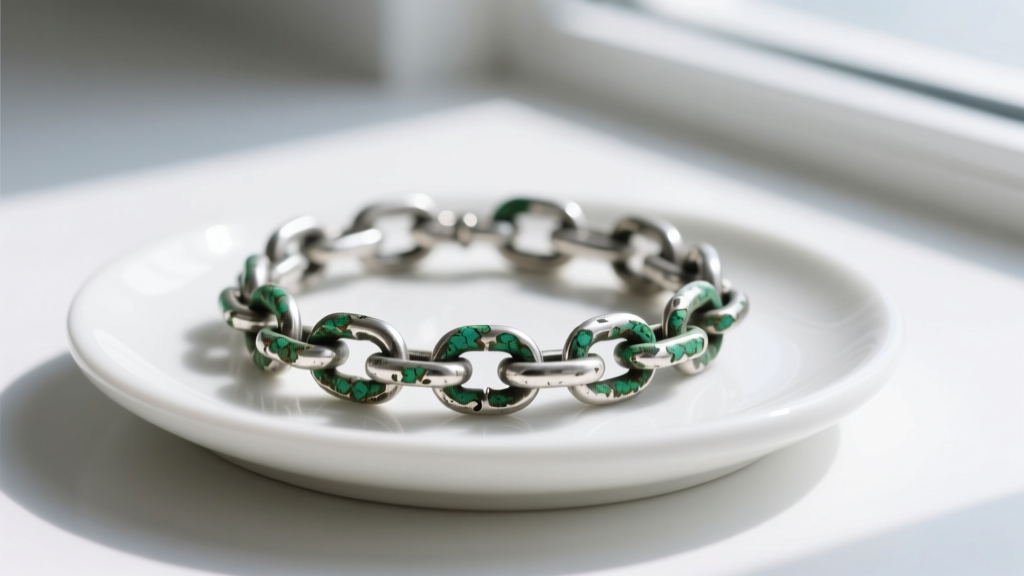
The DIY Fix: Create a paste using baking soda and a few drops of water. Apply it gently to the tarnished links using a cotton swab, avoiding the weld spot. Rinse immediately. For routine maintenance, use a treated jeweler's polishing cloth (impregnated with micro-abrasives) once a week to restore the high-polish finish.
Snagged Micro-Welds and Chain Stretching
Chains thinner than 1.2mm (approximately 18-gauge) are highly susceptible to stretching if caught on heavy winter sweaters or pet claws. Once a cable chain stretches, the links lose their structural integrity and become permanently deformed.
Expert Insight: If you notice the chain stretching near the weld point, do not attempt to squeeze the links back into shape with pliers. This will work-harden the gold and cause it to snap. Instead, apply a piece of medical tape over the snagged area to prevent further pulling, and take it to a professional welder for a link replacement.
Environmental Factors: Pools, Hot Tubs, and Saunas
The hidden cost of permanent jewelry often reveals itself after a summer vacation. Chlorine in swimming pools and hot tubs is the ultimate enemy of karat gold. Chlorine reacts with the copper and silver alloys in 14k and 18k gold, causing a phenomenon known as 'stress corrosion cracking.' This can cause the micro-weld to spontaneously snap days after your swim.
Preventative Action: If you cannot remove your permanent jewelry before swimming, coat the chain in a thin layer of petroleum jelly to create a temporary hydrophobic barrier against chlorinated water. Immediately upon exiting the pool, wash the chain with fresh water and mild soap to neutralize any residual chlorine.
When DIY Maintenance Fails: Knowing When to Re-Weld
Despite your best efforts, chains can break. When evaluating the long-term cost of permanent jewelry, you must factor in the occasional re-welding fee (typically $15 to $25). However, if you are in a pinch or traveling, you can perform a temporary DIY repair.
If the chain snaps at a jump ring or an added charm loop, use a pair of chain-nose pliers to attach a 16-gauge (1.29mm) solid 14k gold jump ring with an inner diameter of 3.0mm. Never use plated or gold-filled jump rings for a repair. The base metal core of a plated jump ring will create a galvanic reaction when in constant contact with solid gold and sweat, rapidly corroding the jump ring and potentially damaging your permanent chain. While a jump ring defeats the seamless 'permanent' aesthetic, it secures your investment until you can visit a studio with an argon gas micro-welder.
Final Verdict: Is the Investment Justified?
Ultimately, the cost of permanent jewelry is entirely worth it if you treat it as a long-term investment rather than disposable fashion. By committing to a weekly mild-soap cleaning routine, avoiding harsh chemicals, and understanding the metallurgical limits of your specific chain gauge, you can ensure your welded bracelet remains a seamless, shining staple for decades. The upfront cost is easily offset by the elimination of broken clasps, lost jewelry, and the daily convenience of a piece that is always perfectly styled.


