Permanent Jewelry Fort Wayne: 2026 Maker's Welding Guide
Master permanent jewelry in Fort Wayne with our 2026 technical welding guide. Learn argon flow, chain sourcing, and mobile pop-up power specs.

The Midwest Maker: Why Fort Wayne is a Hub for Permanent Jewelry
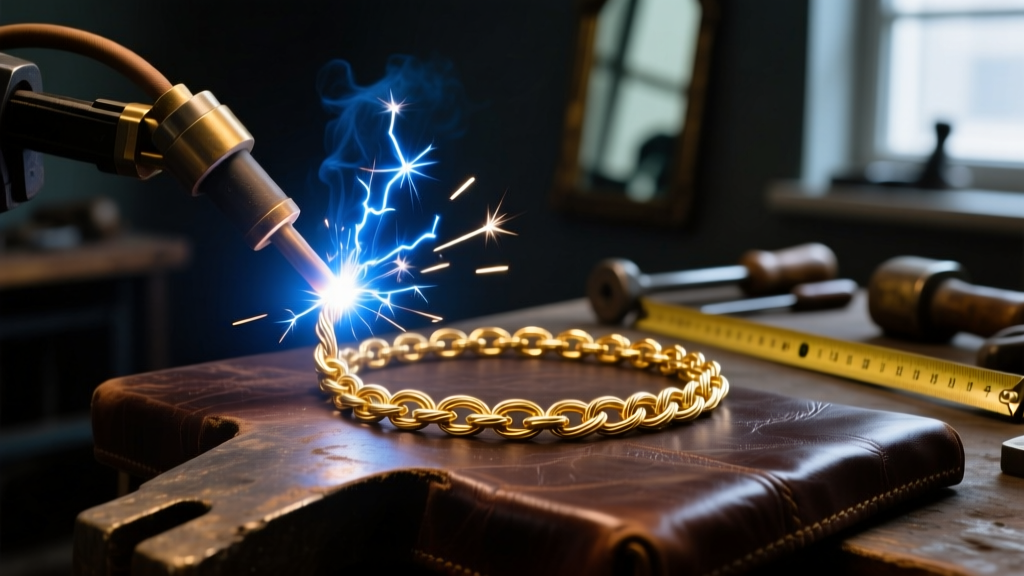
The permanent jewelry movement has evolved from a niche DIY craft into a highly technical, lucrative mobile business. For makers in the Midwest, Fort Wayne, Indiana, has emerged as a surprising but thriving hub for artisan jewelers. With a robust local boutique culture, a strong collegiate presence from Purdue Fort Wayne, and high-foot-traffic community events like the Three Rivers Festival, the demand for welded, clasp-less chains is at an all-time high in 2026. However, transitioning from a hobbyist beading setup to a professional pulse arc welding operation requires a deep understanding of metallurgy, electrical engineering, and local environmental factors.
Operating a permanent jewelry business in Allen County is not just about buying a welder and setting up a table. It requires mastering the technical nuances of micro-welding, understanding how Indiana's unique climate affects precious metals, and sourcing high-quality wholesale materials. This expert deep dive will equip Fort Wayne makers with the precise technical specifications needed to deliver flawless, durable welds every single time.
Technical Welding Specs for Indiana's Climate
One of the most overlooked variables in DIY jewelry making is the impact of local climate on micro-welding and metal storage. Fort Wayne experiences drastic seasonal shifts, from humid, sweltering summers to dry, static-heavy winters. These environmental factors directly impact both your inventory and your welding arc.
Managing Humidity and Tarnish
During the summer months, especially when hosting outdoor pop-ups near Promenade Park or Parkview Field, ambient humidity can exceed 80 percent. This moisture accelerates the oxidation of sterling silver chains before they even reach the welding table. To combat this, professional makers must store their silver inventory in airtight anti-tarnish bags with 3M anti-tarnish strips. Never leave sterling silver exposed on a velvet display tray for more than two hours in high humidity, as the resulting microscopic tarnish layer will interfere with the electrical conductivity required for a clean pulse arc weld.
Winter Static and Chain Alignment
Conversely, Fort Wayne winters bring dry air and heavy indoor heating, creating severe static electricity in your studio. Static causes delicate 1.2mm cable chains to cling to your brass tweezers and jump unpredictably when you are trying to align the end links under the microscope. The technical solution is to treat your studio workspace with an ionizing blower or use a specialized anti-static spray on your silicone bench mats. Eliminating static is crucial for maintaining the sub-millimeter precision required for seamless chain welding.
Argon Gas, Electrodes, and Arc Tuning
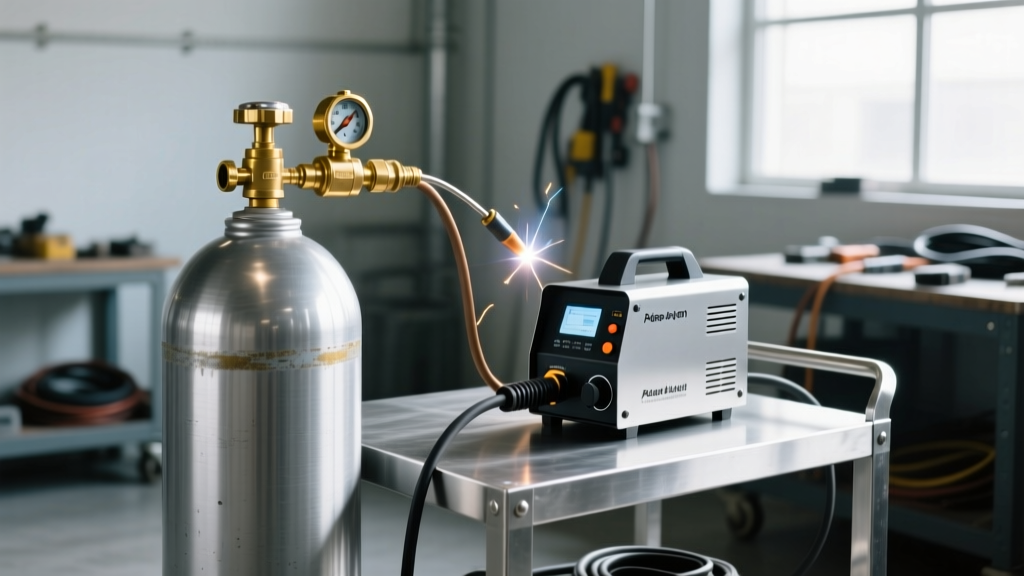
The core of any permanent jewelry operation is the pulse arc welder, such as the industry-standard Orion mPulse or Zapp systems. According to the engineering guidelines from Sunstone Welders, the success of your weld relies entirely on your shielding gas and electrode preparation.
You must use 99.999 percent pure Argon gas. Do not use welding blends meant for MIG or TIG industrial welding, as the trace amounts of oxygen or CO2 will cause black soot and porosity on 14k gold. For delicate jewelry chains, set your Argon flowmeter to a precise 3 to 5 Cubic Feet per Hour (CFH). Setting the flow too high creates turbulence, which actually pulls ambient oxygen into the weld zone and ruins the finish.
Your tungsten electrode must be 1.0mm lanthanated tungsten, sharpened to a fine point using a dedicated diamond lap. Never use a standard bench grinder, as the steel particles will contaminate the tungsten and cause the arc to wander. The electrode should hover exactly 1.5mm above the chain link when the argon purge initiates.
Sourcing Wholesale Chains for the Fort Wayne Market
Local retail prices for permanent jewelry in Fort Wayne typically range from $2.50 to $6.00 per inch, depending on the material and complexity of the link. To maintain healthy profit margins, makers must bypass retail craft stores and source directly from authoritative precious metal suppliers like Rio Grande or Stuller. Buying in bulk spools (usually 10 to 50 feet) drastically reduces your cost per inch.
When selecting chains, avoid anything with a laser-welded seam that runs parallel to the link, as these can split under the thermal shock of the pulse arc. Always opt for solid drawn links or high-quality soldered chains. Below is a technical breakdown of the most popular chains for the Midwest market and their required welding parameters.
| Chain Style | Material | Gauge / Thickness | Weld Energy (Ws) | Fort Wayne Retail Price |
|---|---|---|---|---|
| Classic Cable | 14k Gold Filled | 1.2mm | 15 - 18 Ws (High) | $3.50 / inch |
| Flat Curb | Sterling Silver | 1.5mm | 22 - 26 Ws (High) | $2.75 / inch |
| Figaro | Solid 14k Gold | 1.3mm | 18 - 20 Ws (Low) | $8.50 / inch |
| Box Chain | 14k Gold Filled | 1.1mm | 12 - 15 Ws (Low) | $4.00 / inch |
Mobile Setup & Power Requirements for Local Events
A major advantage of permanent jewelry is its mobility. Fort Wayne makers frequently book pop-ups at local farmers markets, bridal showers in the Village of Coventry, and corporate events at the Sweetwater Sound campus. However, powering a sensitive pulse arc welder off the grid requires strict adherence to electrical engineering principles.
Never plug a $1,500 pulse arc welder into a cheap, modified sine wave portable generator. The dirty power and harmonic distortion produced by modified sine wave inverters will instantly fry the logic board and capacitors of your welder. You must invest in a Pure Sine Wave portable power station, such as the EcoFlow Delta Pro or Jackery Explorer 1000 Plus. Pure sine wave inverters replicate the smooth, clean alternating current of a standard wall outlet, protecting your equipment's delicate microprocessors.
Furthermore, when setting up your mobile argon tank, always secure it to your cart with a heavy-duty ratchet strap. A tipped tank at a crowded outdoor festival is a severe safety hazard and can shear the brass flowmeter valve, turning the cylinder into a dangerous projectile.
Safety, Licensing, and Business Operations in Allen County
Transitioning from a DIY enthusiast to a licensed business owner in Fort Wayne requires navigating local regulations. While permanent jewelry does not involve piercing the skin and therefore does not require a body art license from the Allen County Department of Health, you must still operate as a legitimate retail entity.
You will need to register your LLC with the Indiana Secretary of State and obtain a Registered Retail Merchant Certificate from the Indiana Department of Revenue. This allows you to collect and remit the 7 percent Indiana state sales tax on all jewelry sold. Additionally, if you are setting up at public venues or private markets, you will often need a temporary vendor permit from the city of Fort Wayne.
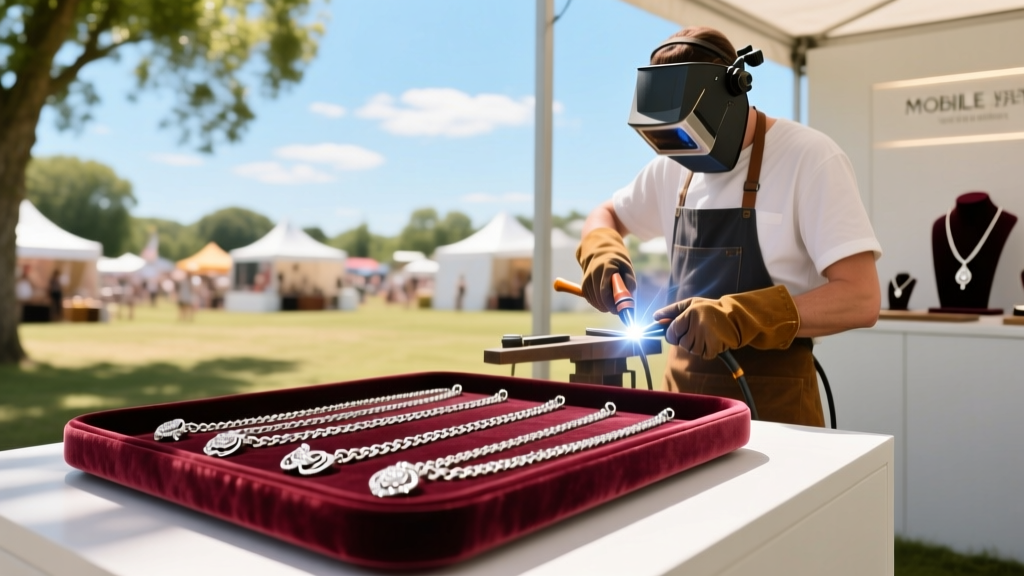
From a studio safety perspective, always provide ANSI Z87.1 rated shade 9 auto-darkening welding goggles for yourself and your clients. The ultraviolet flash from a pulse arc welder is intense enough to cause arc eye (photokeratitis) if proper precautions are not taken. Keep a pair of certified safety glasses on hand for clients who wear prescription eyewear and cannot use the standard welding mask.
Conclusion
Building a successful permanent jewelry business in Fort Wayne requires far more than just a steady hand and a good eye for design. It demands a rigorous commitment to technical excellence, from tuning your Argon flow and managing Indiana's humidity, to sourcing premium chains and utilizing pure sine wave power for mobile events. By mastering these deep technical details and adhering to strict safety and business protocols, Midwest makers can elevate their craft and dominate the local welded jewelry market in 2026 and beyond.


