Permanent Jewelry Tools: A Material & Properties Guide
Compare permanent jewelry tools by material properties. Discover how carbon steel, titanium, and tungsten affect your welds and chain finishes.

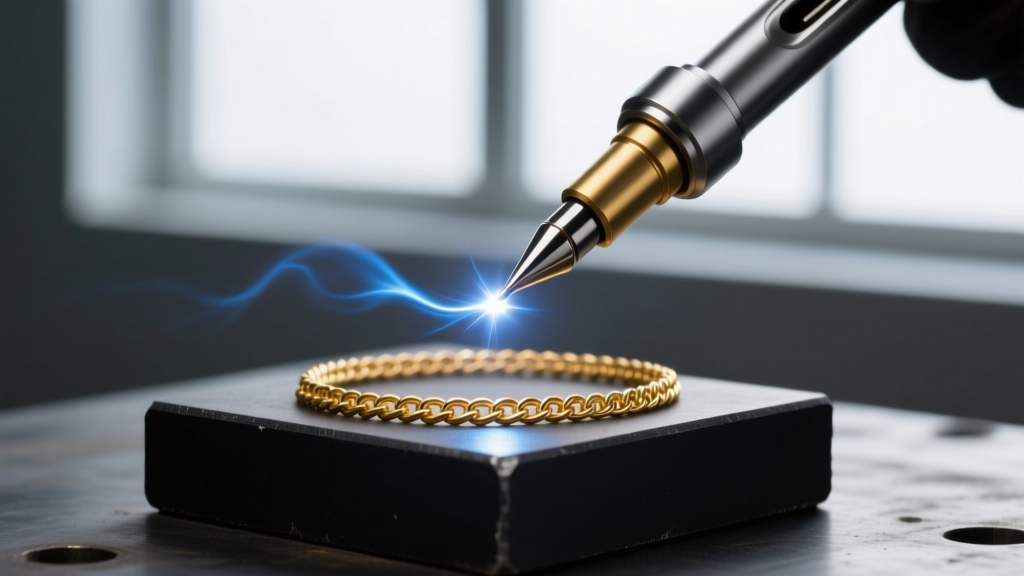
When building a professional studio, selecting the right permanent jewelry tools goes far beyond brand loyalty or aesthetics. The metallurgical properties of your hand tools, welding electrodes, and grounding tweezers directly dictate the structural integrity of your welds, the finish of your chains, and the longevity of your equipment. A deep understanding of material science separates hobbyists from high-volume professionals.
In the permanent jewelry industry, you are constantly manipulating delicate 14k gold-filled, sterling silver, and titanium chains ranging from 1.2mm to 3.0mm in thickness. The tools you use to cut, hold, and weld these materials must possess specific hardness, thermal conductivity, and electrical properties. This guide breaks down the material composition of essential permanent jewelry tools, helping you make informed, science-backed purchasing decisions.
The Metallurgy of Permanent Jewelry Hand Tools
The most frequent point of failure in permanent jewelry welding is poor fit-up. If the two ends of a chain do not meet perfectly flush, the pulse arc welder will either blow a hole through the delicate links or create a brittle, porous weld. The material of your flush cutters is the primary variable in achieving a flawless cut.
Carbon Steel vs. Stainless Steel Flush Cutters
Most entry-level flush cutters are manufactured from standard stainless steel, but high-end professional cutters utilize high-carbon steel (typically 1095 grade). High-carbon steel can be heat-treated to a Rockwell hardness of 58-62 HRC. This extreme hardness allows the cutting edges to be ground to a razor-sharp 15-degree bevel that shears through 20-gauge brass and silver links without pinching.
Conversely, 440C stainless steel cutters offer superior rust resistance but generally max out around 56-58 HRC. Over time, stainless edges dull and roll, leading to a 'pinch cut' that leaves a microscopic burr on the chain link. This burr prevents flush alignment, resulting in weak weld joints. However, carbon steel requires strict maintenance; if left un-oiled, it will develop iron oxide (rust). If rust particles transfer to a sterling silver chain during cutting, the iron contamination will cause black, un-weldable spots when the pulse arc energy hits the metal.
Titanium Pliers for Delicate Chain Manipulation
When holding chains in place for welding, standard steel pliers can mar soft metals like 18k gold or pure silver. Professional studios increasingly rely on Grade 5 (6Al-4V) titanium pliers and tweezers. Titanium possesses a high strength-to-weight ratio and, crucially, is non-magnetic. When using magnetic welding jigs or grounding plates, steel tools can pull the delicate chain out of alignment. Titanium eliminates this magnetic interference.
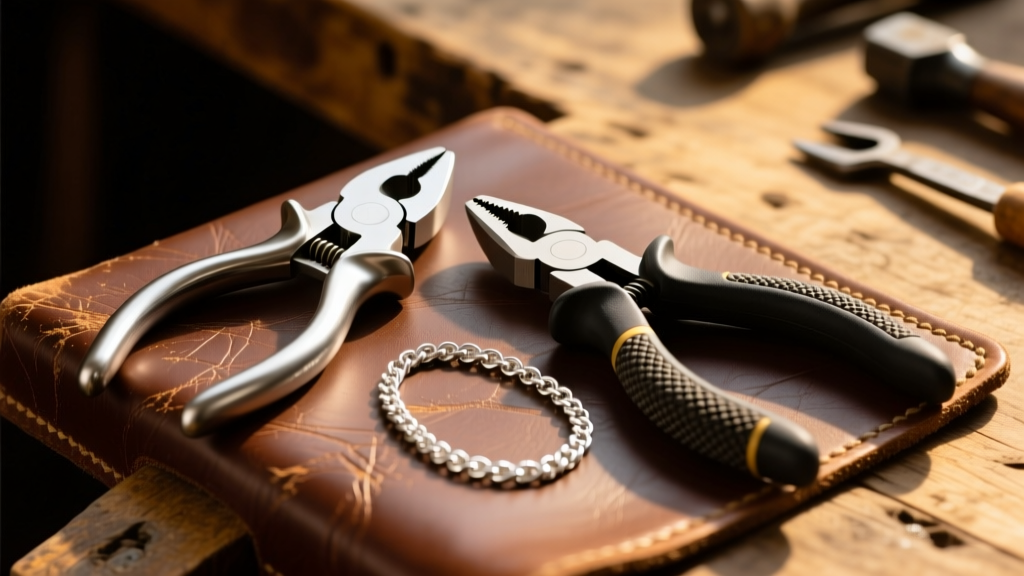
Furthermore, titanium has exceptionally low thermal conductivity. If you accidentally touch the titanium tweezers to the chain link immediately after a pulse arc weld, the heat will not travel up the tool into your fingers, nor will the tool act as a heat sink that rapidly quenches the weld pool, which can cause micro-cracking in certain silver alloys.
Welding Tool Materials: Electrodes and Grounding
The pulse arc welder is the heart of a permanent jewelry studio. However, the machine is only as effective as the materials used in its consumable tooling—specifically the welding electrode and the grounding tweezers.
Tungsten vs. Copper Electrodes for Pulse Arc Welders
Pulse arc welding relies on a non-consumable electrode to create an electrical arc that melts the base metal. Tungsten is the universal standard for this process due to its extraordinarily high melting point (3,422°C). However, not all tungsten is created equal. According to the American Welding Society classifications, jewelers should avoid 2% Thoriated tungsten (red tip) due to its low-level radioactivity, which is unnecessary for the low-amperage (15-40 amps) settings used in permanent jewelry.
Instead, opt for 2% Ceriated (grey tip) or 1.5% Lanthanated (gold tip) tungsten electrodes. These materials offer superior arc starting at low amperages and maintain a sharper, more stable point. A stable arc is critical when welding 1.5mm curb chains, as a wandering arc will melt adjacent links, ruining the drape of the bracelet.
The Role of C11000 Copper in Grounding Tweezers
To complete the electrical circuit, the chain must be grounded. Standard steel tweezers have high electrical resistance, which can cause secondary arcing at the grip point, scorching the chain and burning the client's skin. Professional permanent jewelry grounding tweezers are machined from C11000 (Electrolytic Tough Pitch) copper or beryllium copper alloys. These materials offer near 100% electrical conductivity, ensuring the welding current flows cleanly through the chain to the weld point without generating excess resistance heat at the grip.
Material Comparison Chart for Permanent Jewelry Tools
| Tool Type | Ideal Material Grade | Key Property | Best Application | Est. Price Range |
|---|---|---|---|---|
| Flush Cutters | 1095 High-Carbon Steel | 60 HRC Hardness | Shearing 1.2mm - 2.5mm chains | $45 - $85 |
| Chain Holding Tweezers | Grade 5 (6Al-4V) Titanium | Non-Magnetic / Low Thermal | Aligning links near the weld zone | $30 - $60 |
| Welding Electrode | 2% Ceriated Tungsten | Low-Amp Arc Stability | Pulse arc welding gold/silver | $15 - $25 (pack) |
| Grounding Tweezers | C11000 Copper | High Electrical Conductivity | Completing circuit without arcing | $40 - $70 |
| Jaw Pliers | Nylon / Delrin Polymer | Non-Marring Surface | Bending jump rings and clasps | $20 - $40 |
How Tool Materials Affect Chain Integrity
Understanding the interaction between your tool materials and your jewelry materials is vital for preventing long-term failure modes like galvanic corrosion and structural marring.
Preventing Galvanic Corrosion and Marring
When steel tools are used aggressively on zinc-based alloys or lower-karat golds, microscopic steel particles can become embedded in the softer jewelry metal. Over time, exposure to moisture and sweat causes these embedded steel particles to rust, creating unsightly brown spots on the client's permanent bracelet. Using titanium or nylon-jaw tools for all manipulation prior to welding eliminates this cross-contamination risk.
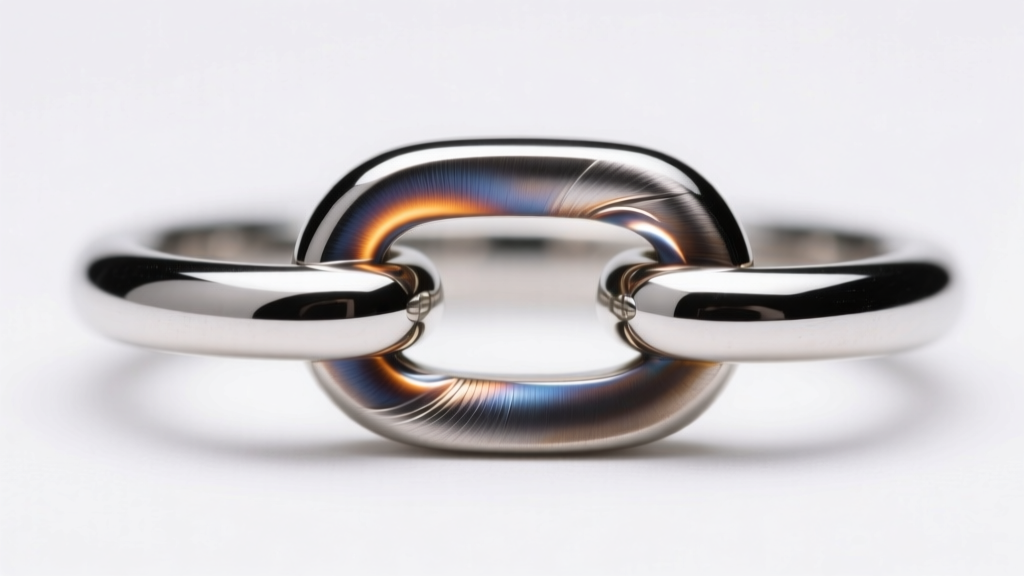
Additionally, the finish of your welding block matters. While ceramic blocks are common, they can be abrasive. Many top studios, referencing techniques from master jewelers at Rio Grande, utilize high-purity graphite blocks or specialized copper-anvil blocks for permanent jewelry. Graphite provides a smooth, non-marring surface that won't scratch highly polished mirror-finish chains while they are being welded.
Maintenance and Longevity of Your Tool Kit
Investing in high-grade materials requires specific maintenance protocols to preserve their metallurgical advantages. Carbon steel flush cutters must be wiped with a light machine oil (like 3-in-One) after every use to prevent iron oxide formation. Never use them to cut steel memory wire or stainless steel chains, as this will instantly chip the 15-degree bevel edge.
For your tungsten electrodes, the material properties degrade if the tip becomes contaminated with melted gold or silver. You must regularly re-grind the tungsten tip using a diamond lapidary wheel or a dedicated tungsten grinder to maintain a precise 15-to-30-degree taper. A blunted or contaminated tungsten tip will cause the arc to flare outward, melting the delicate side-links of a permanent jewelry chain. By respecting the material science behind your permanent jewelry tools, you ensure every weld is seamless, strong, and visually flawless.
For further reading on advanced welding supplies and metallurgical best practices, the educational resources provided by Stuller offer excellent benchmarks for professional studio setups.


