Permanent Jewelry Welding Machine: 2026 Buyer's Guide
Discover what to look for in a permanent jewelry welding machine. Compare pulse arc specs, joules, argon needs, and top 2026 models for DIY and pro use.

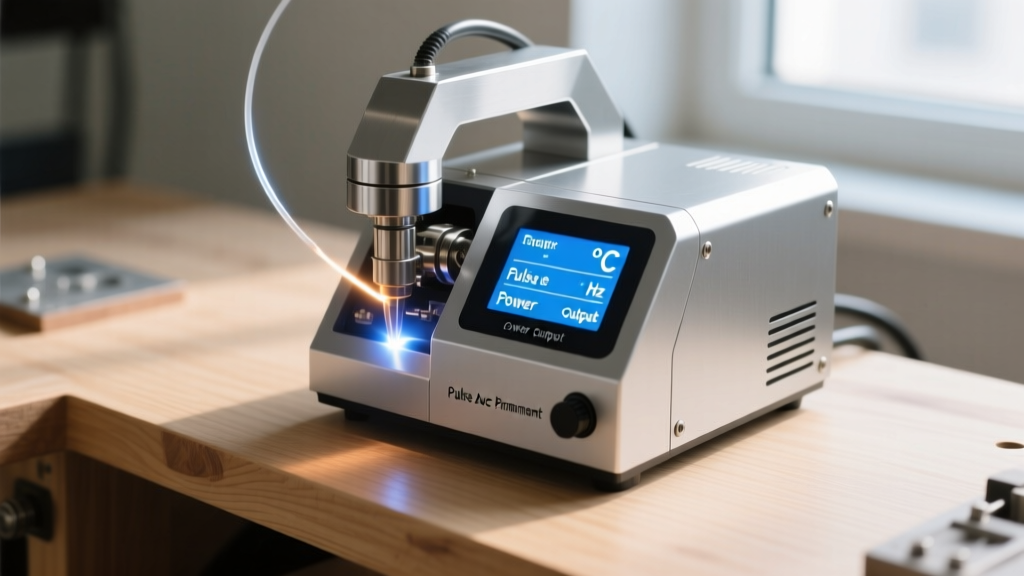
The Shift to Pulse Arc Technology in Permanent Jewelry
The permanent jewelry movement has evolved from a fleeting pop-up trend into a cornerstone of modern boutique and DIY jewelry making. At the heart of this craft is the permanent jewelry welding machine, a specialized tool designed to fuse delicate chains without the use of traditional clasps. While early adopters sometimes experimented with micro-TIG or laser setups, the industry standard in 2026 is undeniably the pulse arc welder. Unlike continuous current TIG welders that risk melting fine chains, or laser welders that carry a prohibitive $15,000+ price tag, pulse arc technology uses capacitive discharge to deliver a precise, localized burst of energy. This creates a seamless, durable weld on materials ranging from 14k gold and gold-filled wire to sterling silver and stainless steel.
Choosing the right equipment requires looking past flashy marketing and understanding the underlying electrical specifications. Whether you are launching a mobile pop-up business or outfitting a permanent studio, this guide breaks down the exact metrics you need to evaluate before investing in your setup.
Core Specifications: Joules, Pulse Duration, and Spot Size
When evaluating a permanent jewelry welding machine, the manufacturer's spec sheet will highlight several critical metrics. Understanding how these interact is the difference between a seamless weld and a melted chain link.
Understanding Energy Output (Joules)
Joules measure the total energy delivered in a single weld pulse. For permanent jewelry, you are typically working with wire gauges between 1.2mm (16ga) and 0.4mm (26ga). Entry-level machines often cap out at 15 to 40 Joules, which is sufficient for fine 22ga gold-filled chains but will struggle to penetrate thicker sterling silver jump rings or clasp connectors. Mid-range to professional units offer 40 to 120 Joules. Having a higher maximum Joule rating gives you the headroom to weld thicker structural components, even if you dial it down to 8 Joules for delicate work.
Pulse Duration and Heat Control
Energy alone does not dictate weld quality; the speed of delivery matters just as much. Pulse duration is measured in milliseconds (ms). A short pulse (2ms to 5ms) delivers energy rapidly, ideal for highly conductive metals like fine silver or thin gold-filled chains where you want to avoid heat travel that could weaken adjacent links. A longer pulse (10ms to 20ms) allows the metal to pool and flow via capillary action, which is essential for welding thicker gauge sterling silver or stainless steel. Machines that allow independent adjustment of both Joules and pulse duration offer the ultimate versatility.
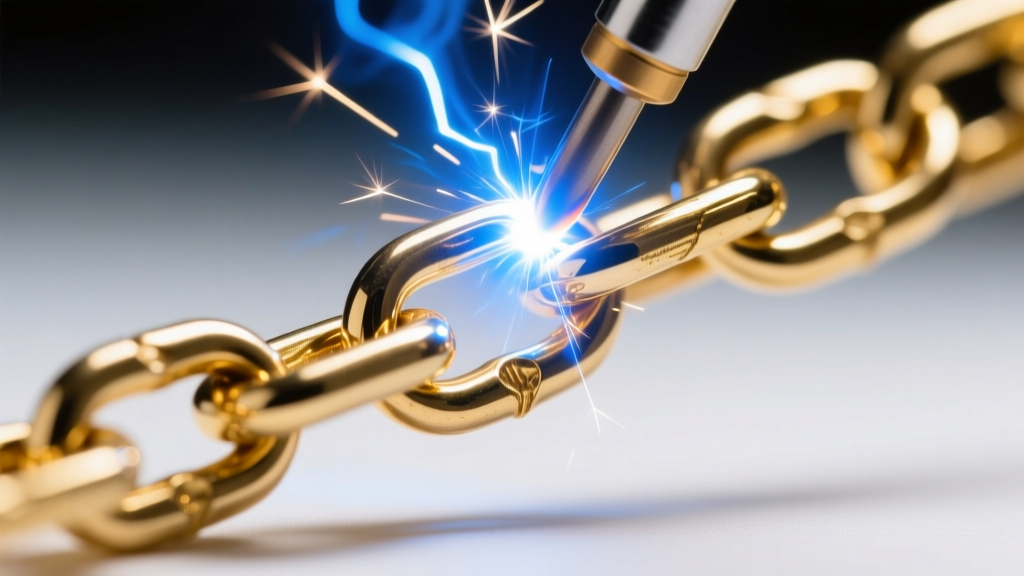
The Argon Factor: Shielding Gas Requirements
A common mistake among beginners is attempting to weld sterling silver or high-karat gold in ambient air. When these metals are heated to their melting point, they react with oxygen, creating fire scale (oxidation) that results in a dark, brittle, and visually unappealing weld. To prevent this, professional permanent jewelry setups utilize Argon shielding gas.
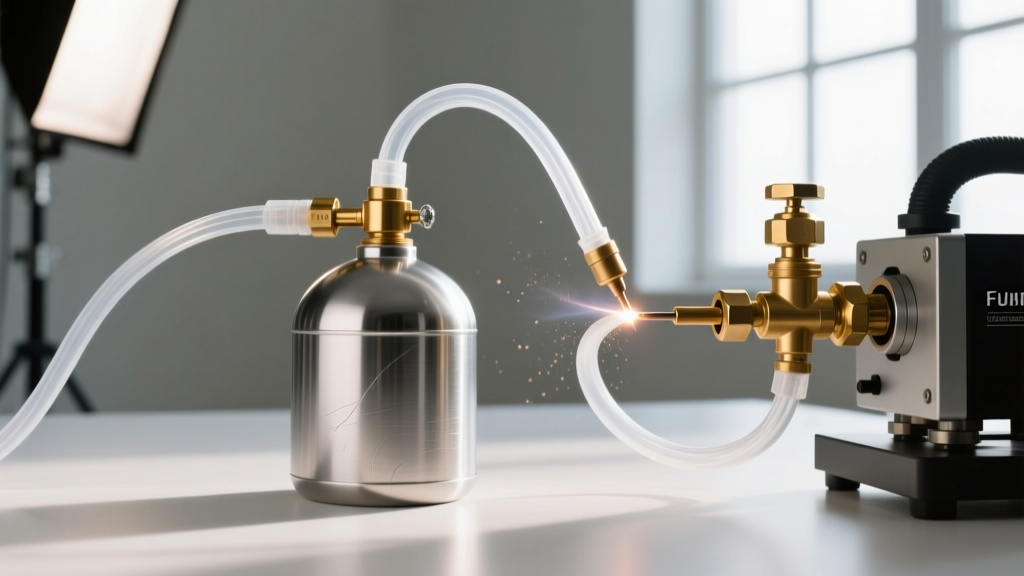
You do not need a massive industrial cylinder; a standard 20-cubic-foot tank of 99.99% pure Argon is sufficient for thousands of welds. The gas is routed through a flow meter set to roughly 3 to 5 Cubic Feet per Hour (CFH) and directed at the weld pool through a small nozzle. According to metallurgical guidelines from Rio Grande, inert gas shielding is non-negotiable for maintaining the structural integrity and color match of precious metal welds.
| Metal Type | Ambient Air Result | Argon Shielded Result |
|---|---|---|
| Sterling Silver | Heavy black oxidation, brittle joint | Bright, seamless, highly ductile |
| 14k / 18k Gold | Surface pitting, slight discoloration | Smooth pool, perfect color match |
| Gold-Filled | Burns off outer karat layer, exposing brass | Preserves outer layer if pulsed correctly |
| Stainless Steel | Sugaring (severe porosity and weakness) | Clean, strong, corrosion-resistant joint |
Troubleshooting Common Weld Failures
Even with a top-tier permanent jewelry welding machine, user error can lead to frustrating results. Here is a diagnostic framework for the three most common issues encountered by DIY makers and boutique jewelers:
- Problem: The chain link melts and snaps entirely.
Cause: Joules are set too high for the specific wire gauge, or the electrode is held too far from the joint.
Fix: Drop the energy setting by 15%, ensure your tungsten tip is sharp, and lower the microscope to bring the electrode closer to the metal. - Problem: The weld looks dull, grey, or black.
Cause: Lack of argon shielding gas, insufficient gas flow, or the metal was not cleaned prior to welding.
Fix: Increase argon flow to 5 CFH, ensure the nozzle is pointed directly at the weld zone, and clean the chain with a brass brush and isopropyl alcohol before arcing. - Problem: The weld is brittle and breaks when lightly pulled.
Cause: Pulse duration is too short, preventing the metal from properly pooling and fusing.
Fix: Increase the pulse time (ms) to allow capillary action to draw the molten metal into the gap between the jump ring and the chain.
Electrodes and Optics: The Hidden Costs
The machine itself is only half of the equation. The consumable and optical components dictate your daily workflow and safety. Pulse arc welders rely on tungsten electrodes to deliver the spark. For jewelry applications, 2% Ceriated (Grey) or 1.5% Lanthanated (Gold) tungsten in 0.5mm to 1.0mm diameters are the industry standard. These alloys strike an arc easily at low currents and maintain a sharp point longer than pure tungsten. You will need a diamond sharpening wheel or a dedicated tungsten grinder to keep the tip needle-sharp; a blunt tip will cause the arc to wander, resulting in asymmetrical welds.
Furthermore, you must never look at a pulse arc weld with the naked eye. The UV flash can cause immediate flash burn (welder's flash). A high-quality trinocular stereo microscope equipped with an auto-darkening welding filter (typically Shade 8 to 10) is mandatory. Brands like Sunstone Welders integrate these auto-darkening lenses directly into their optical mounts, ensuring the moment the arc strikes, the lens darkens in milliseconds to protect your retinas while maintaining perfect visibility of the weld pool.
Pricing Tiers: What Your Budget Actually Gets You
When shopping for a permanent jewelry welding machine, the market is broadly divided into three distinct tiers based on capability, build quality, and precision.
Entry-Level / Hobbyist ($1,200 - $2,500)
Machines in this range typically max out at 30 to 40 Joules and offer limited pulse duration controls. They are excellent for DIY enthusiasts, mobile pop-ups focusing exclusively on fine gold-filled chains, and low-volume weekend markets. However, they may lack integrated argon ports or advanced optical mounts, requiring you to source and rig your own microscope and gas delivery system.
Mid-Range / Boutique Standard ($3,000 - $5,500)
This is the sweet spot for dedicated permanent jewelry businesses. These units deliver 60 to 90 Joules, feature independent pulse duration dials, and come as complete packages with auto-darkening microscopes and integrated argon solenoids. They can effortlessly handle sterling silver, thick gold chains, and custom charm attachments without breaking a sweat.
Professional / Master Jeweler ($6,000 - $10,000+)
Top-tier pulse arc and entry-level micro-laser systems reside here. They offer up to 150 Joules, digital touchscreens with programmable memory settings for specific chain types, and ultra-precise optical alignment. If you plan to weld platinum, thick stainless steel, or run a high-volume studio with multiple operators, this tier provides the reliability and repeatability required for enterprise-level output.
Final Verdict: Choosing Your Setup
Investing in a permanent jewelry welding machine is an investment in your brand's reputation. A weak weld that snaps after a week of wear will destroy customer trust, while a seamless, invisible fuse turns clients into walking billboards for your craft. Prioritize machines that offer independent control over both Joules and pulse duration, ensure your budget includes a 99.99% pure argon setup, and never compromise on auto-darkening optics. By focusing on these technical pillars rather than just the aesthetic of the machine, you will secure a setup capable of delivering flawless, permanent results for years to come.


