Saltwater Permanent Jewelry: Best Metals for Ocean Wear
Discover the best metals and chain styles for saltwater permanent jewelry. Learn how to prevent corrosion and weld ocean-ready bracelets.

The Corrosive Reality of Ocean Water on Welded Chains
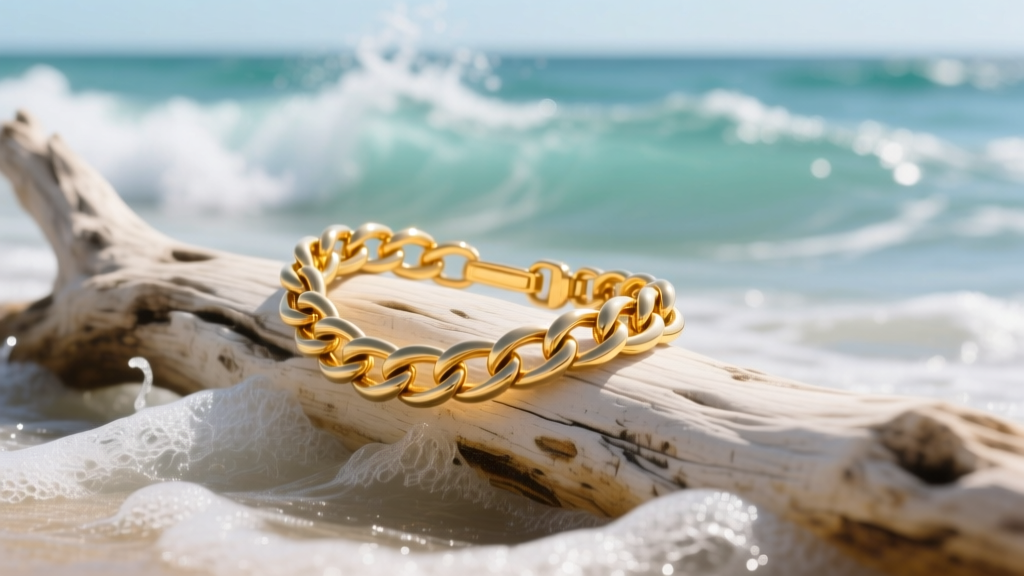
Permanent jewelry has revolutionized the DIY and custom accessory market, offering clients a seamless, clasp-free experience. However, when clients request saltwater permanent jewelry for beach vacations or coastal living, standard material choices often fail. Ocean water is a potent 3.5% sodium chloride (NaCl) solution that acts as a highly conductive electrolyte. When combined with the microscopic heat-affected zones (HAZ) created during pulse-arc or laser welding, inferior metals succumb to rapid galvanic and crevice corrosion.
Unlike traditional jewelry with clasps that can be removed before swimming, permanent bracelets and anklets endure continuous marine exposure. Sand acts as an abrasive, wearing down protective oxide layers, while evaporating seawater leaves behind concentrated salt crystals that lodge into chain links. To create truly ocean-ready permanent jewelry in 2026, makers must understand the intersection of metallurgy, chain geometry, and weld passivation.
Top-Tier Metals for Saltwater Permanent Jewelry
When sourcing materials for marine environments, you must prioritize metals that sit at the noble end of the galvanic series or those that form impenetrable passive oxide layers. According to the GIA Gem Encyclopedia, understanding a metal's chemical stability is paramount for long-term wearability.
ASTM F136 Titanium (Grade 23)
Titanium is the undisputed champion of saltwater resistance. Specifically, ASTM F136 (Ti-6Al-4V ELI) is a medical-grade alloy that is entirely immune to chloride-induced pitting. When exposed to oxygen, titanium instantly forms a microscopic, self-healing layer of titanium dioxide. Even if beach sand scratches the chain, the oxide layer reforms in milliseconds. For permanent jewelry, titanium offers the added benefit of being incredibly lightweight and hypoallergenic, though it requires specialized welding techniques.
Solid 14k and 18k Gold (Nickel-Free)
Solid gold is a staple for premium saltwater permanent jewelry. While pure 24k gold is completely inert, it is too soft for chain links. 18k gold (75% gold) offers superior corrosion resistance compared to 14k (58.3% gold) because it contains fewer base metals like copper and zinc, which are vulnerable to saltwater oxidation. However, 14k gold provides better tensile strength for delicate 1.2mm chains. The critical rule for 2026 is to strictly source nickel-free alloys, such as palladium-white gold or standard yellow gold, as nickel can trigger severe contact dermatitis when trapped against the skin by dried salt.
Niobium
Niobium is a lesser-known but exceptional refractory metal. Like titanium, it relies on a passive oxide layer for corrosion resistance. It is highly malleable, making it easier to manipulate for jump rings, and it can be anodized to produce vibrant, fade-resistant colors without the use of chemical dyes that might degrade in the ocean.
The Danger Zone: Metals That Fail in Marine Environments
To protect your brand's reputation, avoid offering the following metals to clients who intend to wear their permanent jewelry in the ocean:
- Sterling Silver (925): The 7.5% copper content in sterling silver reacts aggressively with sulfur and chlorides, leading to rapid, stubborn black tarnish and eventual structural weakening.
- Gold-Filled and Gold-Plated: While the outer karat gold layer is safe, the brass or copper core is a disaster waiting to happen. If the welding electrode burns through the micron-thick gold layer, or if sand abrasion exposes the core, catastrophic galvanic corrosion will occur, turning the client's skin green and snapping the chain.
- Brass and Bronze: These copper-heavy alloys will undergo dezincification and pitting within weeks of regular saltwater exposure.
Chain Link Geometry: Mitigating Crevice Corrosion
Material selection is only half the battle; chain geometry dictates how easily salt can be flushed out. Crevice corrosion occurs when a stagnant solution of saltwater becomes trapped in a micro-environment, depleting the oxygen and creating a highly acidic, localized corrosion cell. Industry suppliers like Rio Grande offer various chain styles, but not all are suitable for the beach.
| Chain Style | Saltwater Suitability | Failure Mode / Notes |
|---|---|---|
| Box Chain | Excellent | Smooth, flat surfaces allow salt crystals to be easily rinsed away with fresh water. |
| Cable Chain | Very Good | Simple oval links offer minimal crevices. Ensure the weld joint is smoothed flush. |
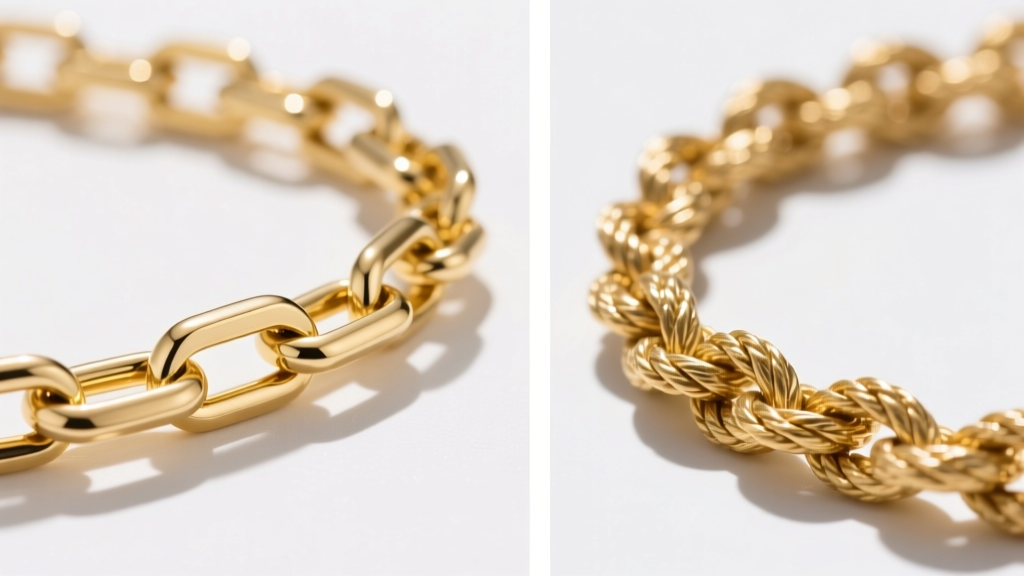
| Curb Chain | Good | Lays flat, but interlocking twists can trap fine beach sand, requiring ultrasonic cleaning. |
| Rope Chain | Poor | The tight, spiraled twists act as a sponge for saltwater, almost guaranteeing crevice corrosion. |
| Snake Chain | Very Poor | Microscopic gaps between the smooth exterior plates trap moisture and salt directly against the core. |
Welding Parameters and Post-Weld Passivation
The weld joint is the weakest link in any permanent bracelet. When welding titanium for saltwater exposure, using a standard pulse-arc welder in ambient air will result in a brittle, oxidized weld that snaps under tension. Titanium must be welded using a laser welder or a specialized TIG spot welder with 99.999% pure argon gas shielding. The argon displaces oxygen, preventing the formation of titanium nitride and oxygen embrittlement in the heat-affected zone.
For solid gold, pulse-arc welding is generally sufficient, but the weld point must be polished flush. Any microscopic pitting left by the electrode will become a nesting ground for salt crystals. After welding, always passivate the joint. For titanium, a brief soak in a diluted citric acid solution removes free iron contamination from the welding electrode and accelerates the formation of the protective oxide layer.
2026 Material Selection Matrix for Coastal Jewelers
Use this quick-reference matrix when consulting with clients about their lifestyle and permanent jewelry expectations. Pricing reflects average wholesale costs for 1.2mm - 1.5mm gauge chains.
| Material | Ocean Durability | Welding Difficulty | Approx. Wholesale Cost (per inch) |
|---|---|---|---|
| ASTM F136 Titanium | 10/10 (Immune) | High (Requires Argon) | $1.50 - $3.00 |
| Solid 18k Yellow Gold | 9/10 (Excellent) | Medium | $18.00 - $25.00 |
| Solid 14k Yellow Gold | 8/10 (Very Good) | Easy | $9.00 - $14.00 |
| Niobium | 9/10 (Excellent) | Medium | $2.00 - $4.50 |
| Sterling Silver | 2/10 (Poor) | Easy | $0.80 - $1.50 |
By prioritizing noble metals, selecting open-geometry chains like box or cable, and utilizing proper argon-shielded welding techniques, you can confidently offer saltwater permanent jewelry that survives the surf. Always educate your clients on the vital aftercare step: a thorough rinse in fresh water and a gentle wash with mild soap after every ocean swim to ensure their seamless bracelet remains as pristine as the day it was welded.


