Best Welder for Permanent Jewelry: 2026 Buyer's Guide
Discover the best welder for permanent jewelry in 2026. Compare pulse arc vs. laser, argon gas specs, and top brands for your studio.

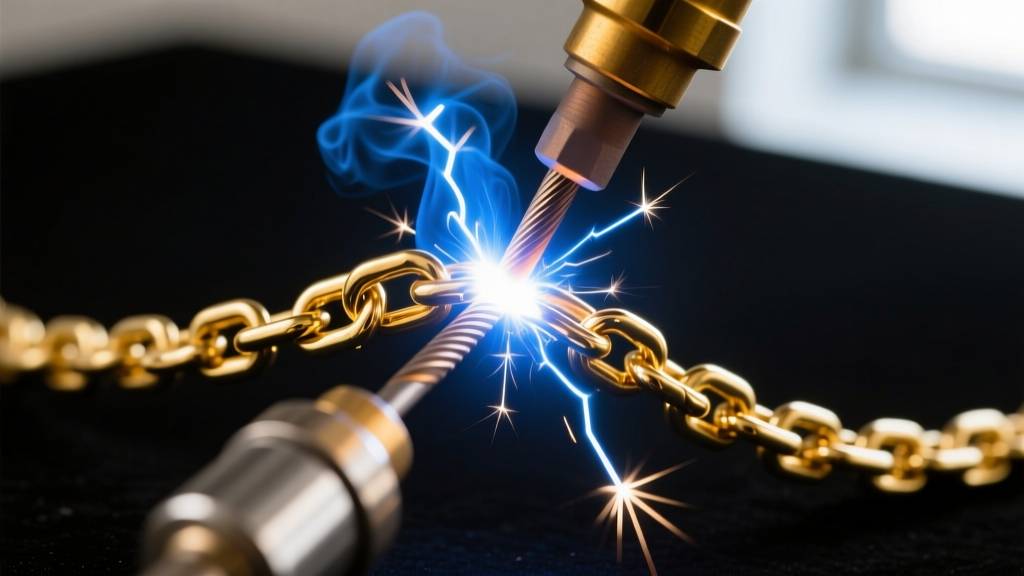
The Rise of Permanent Jewelry: Why Your Welder Matters
The permanent jewelry trend has evolved from a fleeting pop-up phenomenon into a staple service for modern jewelry studios and independent makers. As we move through 2026, the market has matured, and so has the technology required to deliver flawless, durable micro-welds. Choosing the right welder for permanent jewelry is no longer just about finding a machine that sparks; it is about precision, thermal control, and long-term operational costs. A poor-quality weld will oxidize, snap under tension, or leave an unsightly dark mark on delicate 14k gold-filled or solid gold chains. In this comprehensive buyer's guide, we break down the exact specifications, material science, and hidden costs you need to evaluate before investing in your studio's most critical piece of equipment.
Pulse Arc vs. Laser Welders: The Core Decision
The most fundamental choice you will make is between pulse arc welding and laser welding. While both technologies can fuse a jump ring closed without solder, they operate on entirely different physical principles and cater to different business models. Pulse arc welders use a tungsten electrode to create a high-frequency electrical spark, melting the metal in a localized area. Laser welders, on the other hand, use concentrated light energy to fuse metals without physical contact.
For 95% of permanent jewelry businesses, a pulse arc welder is the undisputed champion. It offers the perfect balance of affordability, portability, and effectiveness for chain-to-chain welding. Laser welders are phenomenal for complex bench repairs, resizing rings near heat-sensitive gemstones, and welding thick structural joints, but their massive price tags and larger footprints make them overkill for standard permanent jewelry link closures.
| Feature | Pulse Arc Welder | Laser Welder |
|---|---|---|
| Average Price Range | $1,500 - $5,500 | $12,000 - $25,000+ |
| Shielding Gas Required | Yes (Argon) | No (Usually) |
| Learning Curve | Moderate (Requires electrode management) | Steep (Requires focal point precision) |
| Best Use Case | Chain links, jump rings, lightweight findings | Complex repairs, thick metals, stone setting |
| Portability | High (Fits in a backpack or small tote) | Low (Heavy, bench-mounted units) |

5 Critical Specs to Evaluate in a 2026 Welder
When shopping for a pulse arc welder for permanent jewelry, ignore the marketing fluff and focus on these five technical specifications that directly impact your weld quality and daily workflow.
1. Energy Output (Joules) and Pulse Duration
Energy in pulse arc welders is measured in Joules (J) or Watt-seconds (Ws). For permanent jewelry, you are typically working with thin chains (0.8mm to 2.5mm) and small jump rings. You need a machine that can dial down to 5 to 10 Joules for delicate gold-filled chains without blowing a hole through the metal, while still offering up to 35 to 40 Joules for thicker solid 14k gold or sterling silver rope chains. Equally important is pulse duration; machines that allow you to adjust the arc time (from 3ms to 15ms) give you control over the heat-affected zone, preventing the annealing of the surrounding chain links.
2. Optical System: Microscope vs. Digital Screen
Traditional bench welders use stereo microscopes with auto-darkening lenses to protect your eyes from the intense UV flash. However, the 2026 standard for mobile permanent jewelry artists is the high-definition digital screen with integrated camera systems. Digital screens reduce eye strain during long pop-up events and allow you to easily demonstrate the welding process to clients. Ensure the screen has an anti-glare coating and a refresh rate high enough to eliminate flickering under bright studio or mall lighting.
3. Tungsten Electrode Compatibility
The electrode is your point of contact. The best machines accommodate standard 1.5mm or 2.0mm tungsten electrodes. For permanent jewelry, you should be using lanthanated (gold or blue tip) or thoriated (red tip) tungsten. Lanthanated is preferred in 2026 due to the lack of radioactivity compared to thoriated, while still providing excellent arc stability at low Joules.
4. Argon Gas Integration and Flow Control
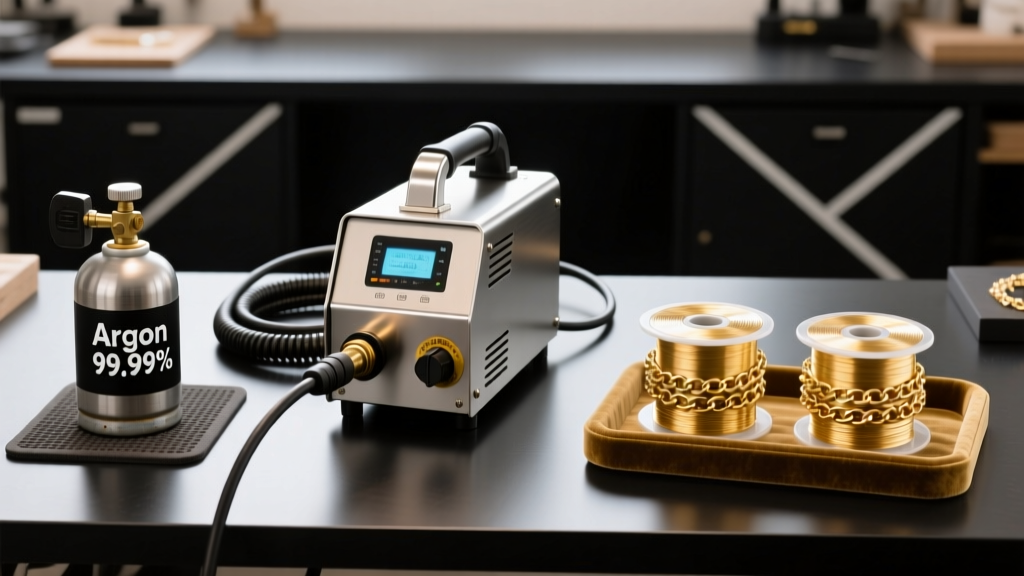
Argon gas is non-negotiable for pulse arc welding. It shields the molten metal pool from oxygen, preventing oxidation (fire scale) and ensuring a bright, clean weld. Look for a welder that features a built-in solenoid valve that automatically triggers the gas flow a fraction of a second before the spark and lingers for a second after. This pre-flow and post-flow cycle is critical for clean welds on silver and white gold.
5. Footprint and Power Draw
If you are traveling to farmers' markets, bridal expos, or boutique pop-ups, your welder needs to be portable. Top-tier permanent jewelry welders weigh between 8 and 15 lbs and operate on standard 110V/220V auto-switching power supplies, meaning you won't blow a circuit breaker at a crowded venue when sharing power with a clothing steamer.
Mastering Argon Gas Flow Rates
Many beginners buy a great welder but ruin their chains with poor gas management. You must use 99.999% pure argon (often labeled as Grade 5 or welding-grade argon). Do not use argon blends meant for MIG welding, as the active gases will cause porosity in your precious metal welds.
The ideal flow rate for permanent jewelry is surprisingly low: 5 to 8 Cubic Feet per Hour (CFH). If the flow is too high, the gas turbulence will actually pull atmospheric oxygen into the weld pool, causing a dark, sooty weld that requires pickling. If the flow is too low, the shield is insufficient. Invest in a high-quality dual-gauge regulator with a precise flowmeter, not a cheap pressure-only regulator, to maintain this exact flow rate.
Top Contenders and Pricing Tiers for 2026
Based on current market performance, reliability, and support, here are the primary tiers of pulse arc welders dominating the permanent jewelry space.
Entry-Level / Budget ($1,200 - $2,000)
Brands like Vevor or generic imports found on Amazon fall into this category. They will close a jump ring, but they often lack precise low-end Joule control, making them risky for expensive solid gold chains. The optical systems are usually basic, and the internal solenoid valves tend to stick after a year of heavy use. Only recommended for hobbyists practicing on brass and copper.
Mid-Tier / Professional Standard ($2,500 - $4,500)
This is the sweet spot for dedicated permanent jewelry businesses. The Sunstone Orion 62e and the Pepe Puk U6 are the industry benchmarks here. According to Sunstone Welders, their Orion series is specifically tuned for the micro-welding needs of jewelry artists, offering touchscreen interfaces, precise energy dials down to 5 Joules, and excellent argon integration. These machines pay for themselves quickly and offer robust manufacturer warranties and domestic tech support.
Premium / Bench-Grade ($5,000 - $8,000)
Machines like the Stuller Pulse Arc Pro or advanced laser-hybrid systems. These are typically bought by established brick-and-mortar jewelers who add permanent jewelry as an ancillary service to their existing repair and custom fabrication bench. They offer incredible power and dual-voltage capabilities but are often too heavy and expensive for a mobile-only permanent jewelry artist.
Hidden Costs: Electrodes, Gas, and Maintenance
When budgeting for your welder for permanent jewelry, you must factor in the ongoing consumables. The machine itself is just the entry fee.
- Argon Gas: A standard 40 cubic foot cylinder costs about $150 to $200 to purchase outright, with refills running $30 to $50. At a 5 CFH flow rate, a tank will last roughly 8 hours of continuous arcing, which translates to months of weekend pop-up events.
- Tungsten Electrodes: A pack of ten 1.5mm lanthanated electrodes costs around $25. However, you also need a dedicated diamond nib file or a low-RPM bench grinder to maintain the tip.
- Electrode Sharpening: The tungsten tip must be ground to a precise 15-degree to 20-degree point. A blunt tip will scatter the arc, resulting in a wide, messy weld that damages the surrounding chain links. Always grind longitudinally (parallel to the electrode's length), never circumferentially, to ensure the arc tracks straight to the point.
- Protective Gear: While modern digital screens filter UV light, you should still provide safety glasses for yourself and your clients, as well as a leather welding pad to protect your work surface and the client's skin from stray sparks.
Final Verdict: Matching the Machine to Your Business Model
Selecting the best welder for permanent jewelry ultimately comes down to your specific operational needs. If you are a mobile artist doing high-volume pop-ups, prioritize a lightweight, digital-screen pulse arc welder in the $3,000 range from a reputable supplier like Rio Grande or directly from the manufacturer. Ensure it has excellent low-Joule control for gold-filled chains and reliable argon gas solenoid integration.
Do not compromise on the shielding gas or the tungsten preparation. A $4,000 machine will produce ugly, brittle welds if you use impure gas or a blunt electrode. Master the material science of the micro-weld, invest in a professional-grade pulse arc system, and your permanent jewelry business will have the foundation it needs to thrive in 2026 and beyond.


