How to Make a Jewelry Christmas Tree: Expert Wire Armature Guide
Master how to make a jewelry christmas tree with our expert guide on wire armatures, gauge selection, and load-bearing branch structures for heavy beads.

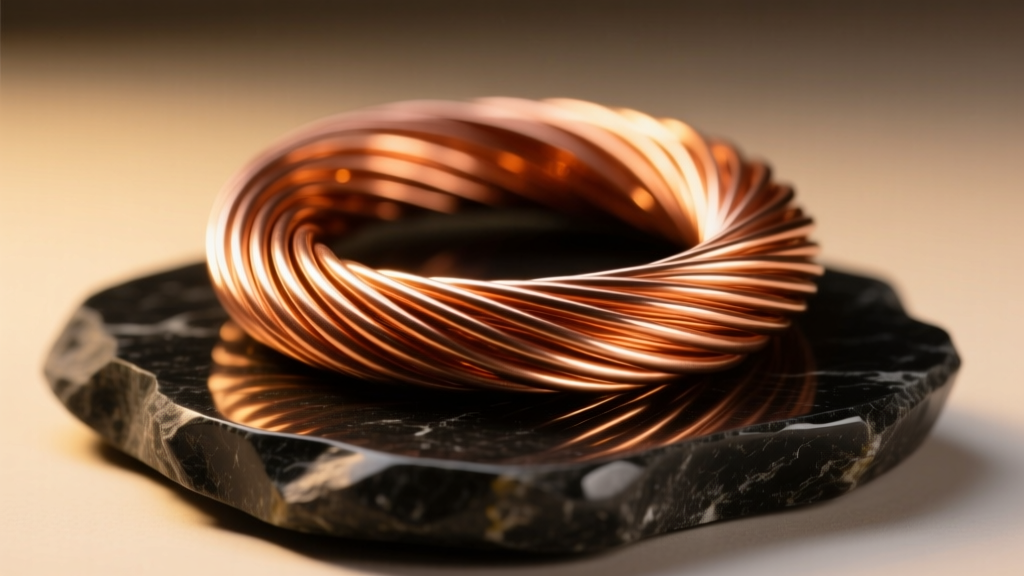
The Engineering of a Wire-Wrapped Tree
When learning how to make a jewelry christmas tree, most hobbyists treat the project as a simple seasonal craft, relying on flimsy craft wire and hot glue. The result is almost always a sagging, asymmetrical structure that collapses under the weight of its own gemstones. As a jewelry designer, you must approach this project not as a craft, but as an exercise in structural engineering and metallurgy. A premium wire-wrapped tree requires a deep understanding of tensile strength, work hardening, and center-of-gravity distribution. In this 2026 masterclass, we bypass the basic tutorials and dive into the technical specifications required to build a heirloom-quality jewelry tree capable of supporting heavy quartz points, glass beads, and metallic findings without structural failure.
Material Science: Selecting the Right Wire Alloys and Tempers
The most common point of failure in DIY wire trees is the improper selection of wire temper and alloy. Wire temper dictates how stiff the metal is and how it will react to bending. According to metallurgical standards outlined by Rio Grande, wire is generally categorized into dead-soft, half-hard, and full-hard tempers.
Dead-soft wire (like standard C110 electrolytic tough pitch copper) is highly malleable and perfect for intricate weaving and wrapping. However, it lacks the yield strength to serve as a load-bearing armature. If you use dead-soft wire for the main trunk or primary branches, the tree will slowly bend and droop over time due to the sheer weight of the beads and the force of gravity. For the structural skeleton of your tree, you must use half-hard or full-hard wire. Cartridge brass (C260) in a half-hard temper offers an exceptional strength-to-weight ratio, providing the rigid backbone needed for sprawling branches while retaining a beautiful golden hue that mimics traditional holiday aesthetics.
Wire Gauge and Application Chart
| Wire Gauge | Temper | Alloy Recommendation | Structural Application | Est. Cost (per oz) |
|---|---|---|---|---|
| 10 to 12 GA | Half-Hard | Bare Brass or Copper | Main trunk and base anchor | $3.50 - $5.00 |
| 14 to 16 GA | Half-Hard | Brass or Nickel Silver | Primary load-bearing branches | $4.00 - $6.50 |
| 18 to 20 GA | Dead-Soft | Copper or Argentium | Secondary twigs and bead pins | $5.00 - $8.00 |
| 24 to 28 GA | Dead-Soft | Enamel-Coated Copper | Decorative weaving and lashing | $2.00 - $4.00 |
Building the Load-Bearing Armature
The trunk is the central pillar of your jewelry christmas tree and must be engineered to withstand lateral torque and vertical compression. A single piece of 10-gauge wire is too rigid to twist into a natural-looking bark texture. Instead, the industry-standard technique is to bundle multiple strands of 12-gauge or 14-gauge half-hard wire and twist them uniformly.
The Twisted Trunk Technique
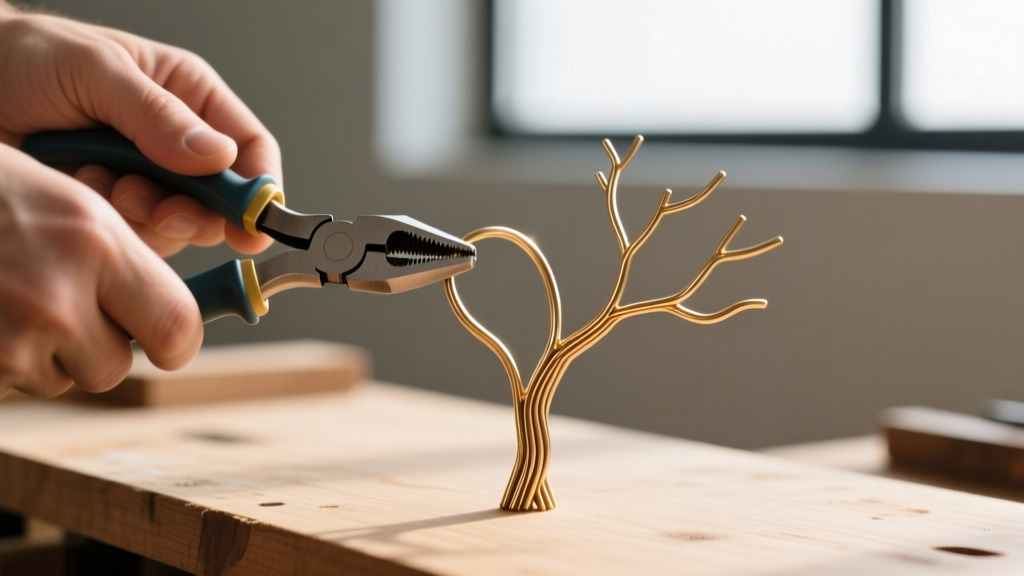
Cut four to six lengths of 12-gauge half-hard brass wire, each measuring exactly 24 inches. Bundle them together and secure the top two inches tightly with 24-gauge dead-soft copper wire using a tight Navajo wrap. To achieve a flawless, uniform twist without kinking the metal, secure the bound end in a heavy-duty bench vise and the loose ends in the chuck of a low-speed hand drill. Apply steady, moderate tension while running the drill at a low RPM. This mechanical twisting ensures the wires compress evenly, creating a trunk with immense structural integrity and a beautiful spiral texture. Once twisted, the wire will have work-hardened significantly, increasing its rigidity and making it an ideal anchor for heavy embellishments.
Branching Out: Managing Metal Fatigue and Weight Distribution
Attaching branches to the trunk is where most amateur designs fail. Wrapping a 16-gauge branch wire around a thick 12-gauge trunk creates bulky, unsightly joints and weakens the branch wire through excessive bending (metal fatigue). When wire is bent back and forth, the crystalline structure of the metal fractures, leading to catastrophic snapping.
To avoid this, utilize the 'V-Notch Lashing' method. Use a pair of heavy-duty flush cutters to score a shallow V-notch into the trunk wire where you want the branch to sit. Seat your 14-gauge half-hard branch wire into this notch, then secure it by wrapping tightly with 26-gauge dead-soft wire. The notch prevents the branch from sliding down the trunk under heavy loads, while the thin wrapping wire provides tensile binding without compromising the structural core. According to the masterclasses at Wire-Sculpture, keeping your structural bends to a single, decisive motion preserves the tensile strength of half-hard alloys.
Advanced Embellishment: Integrating Gemstones and Findings
Once the armature is complete, the tree must be decorated. When learning how to make a jewelry christmas tree that looks professional, avoid simply stringing beads onto the branch wires. Instead, use advanced wire-weaving techniques to integrate the stones directly into the architecture of the tree.
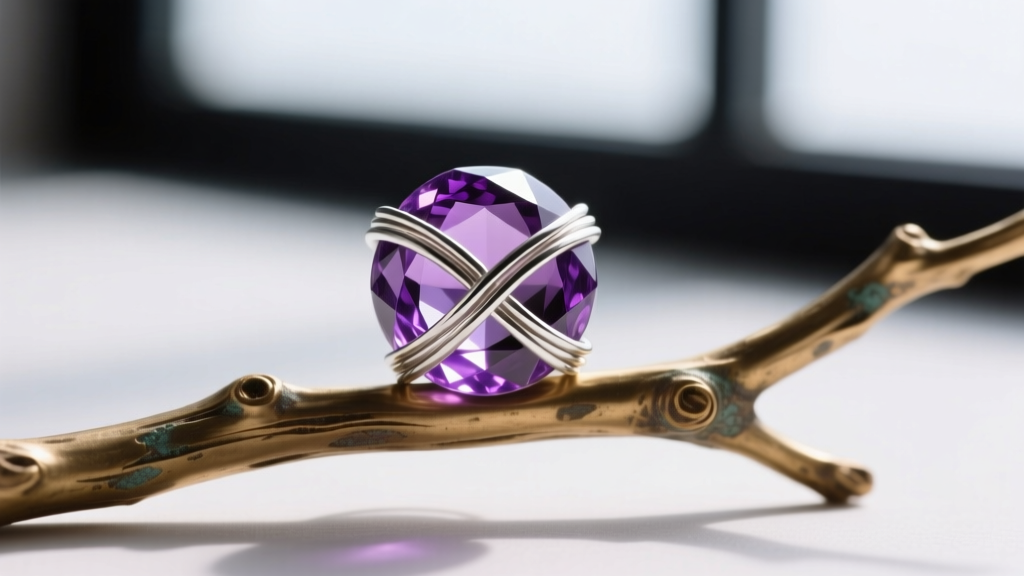
For top-drilled briolettes (like teardrop amethysts or green onyx), create a wrapped briolette link using 20-gauge dead-soft wire, then lash this link to the branch using 28-gauge wire. For undrilled rough crystals or cabochons, construct a micro-macrame or wire-wrapped bezel cage directly on the branch. A figure-eight weave using 26-gauge tarnish-resistant silver wire not only secures the stone firmly but adds a secondary layer of metallic texture that catches the light beautifully when placed near holiday illumination.
Base Anchoring and Center of Gravity Calculations
A structurally sound trunk is useless if the base cannot support the tree's top-heavy center of gravity. As you add heavy glass beads and crystal points to the upper branches, the center of mass shifts upward, creating a tipping hazard. To counteract this, you must engineer a weighted base.
Do not rely on a simple wire loop base. Instead, splay the bottom three inches of your trunk wires outward into a wide, multi-pronged star shape. Embed these prongs into a two-part jeweler's epoxy resin (such as Devcon 5-Minute Epoxy) poured into a shallow, heavy stone mold or a cast-iron trivet. For added stability, embed small steel washers or lead-free fishing sinkers into the wet epoxy beneath the wire prongs. This lowers the center of gravity drastically, ensuring the tree remains perfectly upright even if bumped or placed on an uneven mantelpiece.
Troubleshooting Common Structural Failures
Sagging Branches
If your primary branches are drooping after adding beads, you have likely used dead-soft wire or a gauge that is too thin. You can temporarily fix this by 'splinting' the branch. Lay a piece of 18-gauge half-hard wire along the underside of the sagging branch and bind them together tightly with 28-gauge weaving wire from the trunk all the way to the branch tip.
Unraveling Weaves
If your decorative 26-gauge weaving wire keeps slipping or unraveling at the ends, you are failing to lock your weaves. Always terminate a weave by passing the tail wire through the center of the core wires, or secure it with a microscopic drop of cyanoacrylate (CA) glue applied with a needle tip. Avoid using standard craft glues, as they dry brittle and will flake off when the wire naturally expands and contracts with room temperature changes.
Discoloration and Tarnish
Bare copper and brass will oxidize rapidly when handled, leaving dark fingerprints on your finished tree. To preserve the brilliant metallic finish, seal the entire armature with a micro-crystalline wax (like Renaissance Wax) or a specialized jewelry lacquer. Apply the sealant in a well-ventilated area using a soft brush, ensuring you coat the underside of the branches and the intricate weave joints where moisture tends to accumulate.
Final Thoughts on Structural Jewelry Design
Mastering how to make a jewelry christmas tree is a profound test of a jeweler's technical skill. By respecting the metallurgical properties of your wire, engineering a robust load-bearing armature, and calculating the center of gravity, you elevate a simple holiday decoration into a permanent, gallery-quality piece of structural wire art. Invest in high-quality half-hard alloys, maintain your flush cutters to ensure clean breaks, and never compromise on the integrity of your base anchor. With these expert techniques, your wire-wrapped tree will stand as a sparkling, structurally flawless centerpiece for decades to come.


