How to Fix Broken China Jewelry: Step-by-Step Restoration Guide
Learn how to fix broken china jewelry with our step-by-step restoration guide. Discover the best adhesives, tools, and techniques for porcelain.

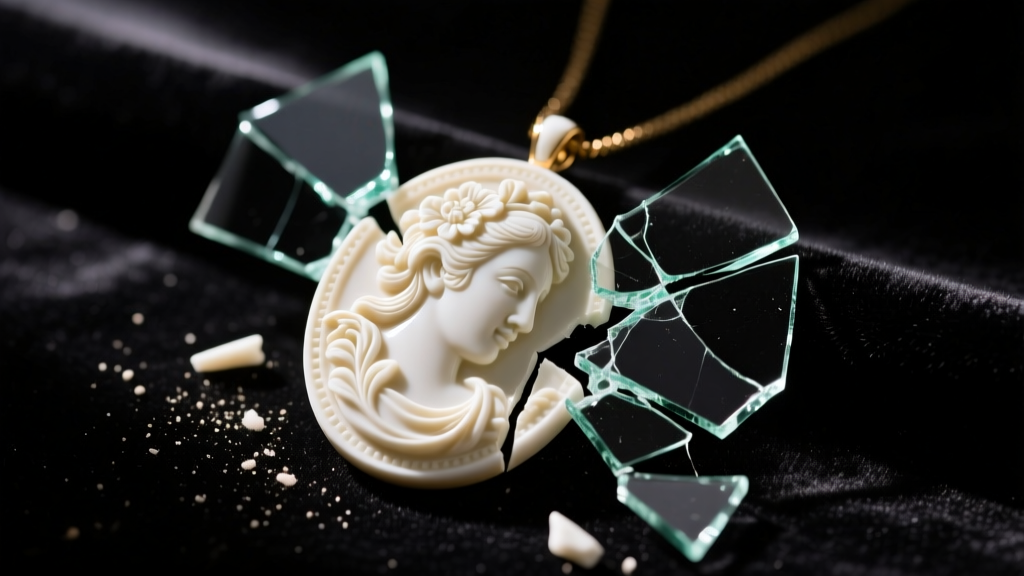
There are few things more heartbreaking for a jewelry collector than dropping a cherished piece of ceramic or porcelain. Whether it is a hand-painted Limoges pendant, a vintage Wedgwood jasperware brooch, or a delicate ceramic bead bracelet, the vitrified nature of these materials means they do not bend or dent—they shatter. Repairing broken china jewelry requires a fundamentally different approach than soldering metals or re-tipping prongs. It demands an understanding of material science, conservation-grade adhesives, and extreme patience.
In this comprehensive guide, we will walk you through the exact methodologies used by jewelry conservators to restore fractured porcelain and ceramic pieces. From diagnosing the fracture type to selecting the right chemical bonding agent, you will learn how to bring your damaged heirlooms back to life.
Understanding China and Porcelain in Jewelry
Before attempting any repair, it is vital to understand the material you are working with. 'China' in the context of jewelry usually refers to porcelain, bone china, or earthenware. Porcelain is fired at extremely high temperatures (often exceeding 1,200°C), causing the silica and kaolin clay to vitrify into a glass-like, non-porous state. Bone china incorporates bone ash, making it slightly more translucent and resilient, while earthenware remains porous and is heavily reliant on its glaze for structural integrity.
When porcelain breaks, it typically exhibits a conchoidal fracture—a smooth, curved breakage pattern similar to shattered glass or flint. Because the edges are incredibly sharp and the material is rigid, dry-fitting the pieces can be deceptive. The microscopic glass shards along the fracture line can easily grind against each other, creating 'dust' that will prevent a seamless bond if not properly managed.
Diagnosing the Break: Clean Fractures vs. Micro-Shattering
Not all broken china jewelry can be repaired at home. Assess the damage under a 10x jeweler's loupe or a digital microscope before proceeding:
- Clean Fractures: The piece has broken into two or three large, distinct segments with matching edges. This is highly repairable using capillary-action adhesives.
- Micro-Shattering: The impact point has exploded into dozens of tiny, splintered shards (often seen in thin ceramic cameos). This requires gap-filling resins and extensive color-matching, often necessitating a professional conservator.
- Glaze Flaking: The ceramic body is intact, but the painted glaze has chipped away. This is an inpainting issue, not a structural bonding issue.
Essential Tools and Adhesives for Ceramic Repair
The biggest mistake amateurs make when fixing broken china jewelry is reaching for standard super glue. Cyanoacrylate (CA) glue yellows over time, becomes brittle, and cannot be easily reversed without damaging the porous ceramic body. According to guidelines published by the Conservation OnLine (CoOL) repository, conservators rely on specific, stable polymers.
Adhesive Comparison Chart
| Adhesive Type | Best Use Case | Reversibility | Cure Time |
|---|---|---|---|
| Hxtal NYL-1 | High-strength, invisible mending of porcelain | Low (requires strong solvents) | 24-48 hours |
| Paraloid B-72 | Museum conservation, reversible structural fixes | High (dissolves in acetone) | 2-4 hours |
| UV-Cure Resin | Quick fills, gap bonding, missing shard replacement | None (permanent) | 3-5 mins (under UV) |
| Cyanoacrylate (CA) | Temporary tacking, non-porous edge alignment | Low (risks staining china) | 10-30 seconds |
Required Tool Kit
- Degreasing Agents: 99% Isopropyl Alcohol (IPA) and pure acetone.
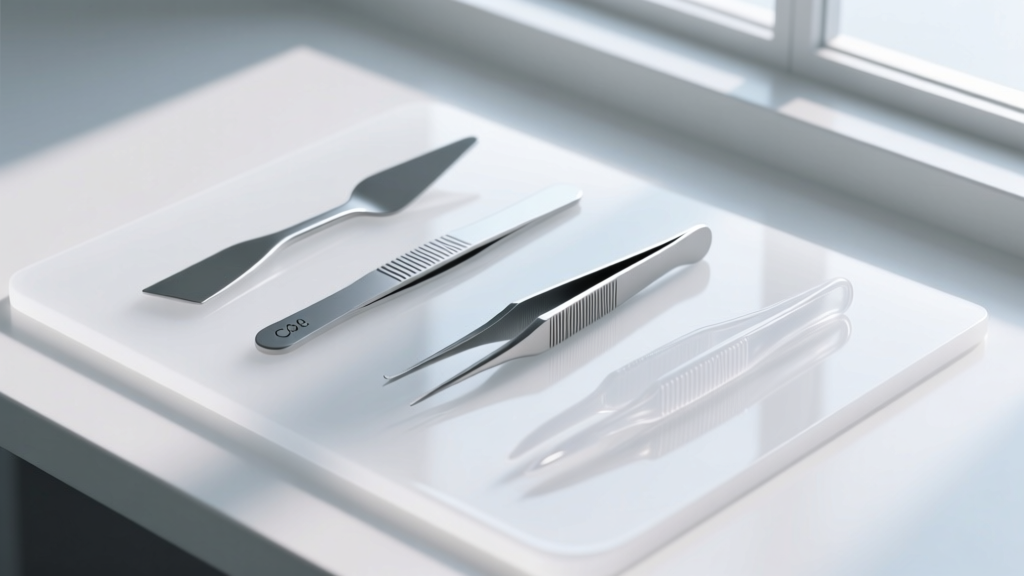
- Application Tools: Wooden micro-spatulas, 000 sable brushes, and silicone-tipped tweezers.
- Clamping & Alignment: Museum wax, low-tack painter's tape, and miniature sandbags.
- Finishing: Micro-Mesh sanding pads (grits 1500 through 12000) and dry conservation pigments.
Step-by-Step Guide to Fixing Broken China Jewelry
Step 1: Assessment and Dry Fitting
Begin by laying out all fragments on a sterile, well-lit silicone mat. Using a soft brush, gently sweep away any loose ceramic dust. Do not wipe the edges with a cloth, as fibers can snag on the microscopic glass shards. Perform a 'dry fit' by holding the pieces together without adhesive to understand the geometry of the break. Use tiny dabs of museum wax on the exterior to temporarily hold the pieces in alignment if the fracture is complex.
Step 2: Surface Preparation and Degreasing
Ceramics, especially older earthenware or unglazed porcelain backs, can absorb oils from your skin over the years. Dip a cotton swab in 99% IPA and gently roll it along the fracture edges. For heavily soiled vintage pieces, a brief application of acetone may be necessary. Allow the solvents to evaporate completely. Never use water, as it can seep into the porous ceramic body and later cause the adhesive to fail or trigger mold growth inside the micro-fissures.
Step 3: Adhesive Application and Alignment
If you are using Hxtal NYL-1 (the gold standard for invisible porcelain repair), mix the resin and hardener at a precise 3:1 ratio by weight. Let it sit for 10 minutes to allow air bubbles to escape. Apply a microscopic amount to one side of the fracture using a micro-spatula. Press the pieces together. The adhesive should pull into the seam via capillary action. If excess squeezes out, immediately wipe it away with a cotton swab lightly dampened with acetone before it begins to gel.
Step 4: Curing and Clamping
Unlike metal soldering, you cannot use high-heat clamps on china. Secure the piece using low-tack painter's tape, ensuring the tape does not pull on any delicate painted glazes. Support the jewelry piece in a miniature sandbag so gravity keeps the fracture aligned. Allow Hxtal NYL-1 to cure for a full 48 hours at room temperature (ideally 70°F/21°C). Do not rush this step; premature handling will compromise the tensile strength of the polymer chain.
Advanced Finishing Techniques: Invisible Mending vs. Kintsugi
Once the structural bond is cured, the seam will likely be visible as a hairline scar. You have two primary aesthetic routes for finishing your broken china jewelry.
The Invisible Mending Route
To hide the seam, conservators use a technique called optical inpainting. Mix a tiny amount of Hxtal NYL-1 with dry conservation pigments (such as Gamblin Conservation Colors) to match the exact hue of the ceramic glaze. Apply this tinted epoxy into the microscopic divots along the seam using a 000 sable brush. Once cured, carefully polish the area with Micro-Mesh pads, starting at 1500 grit and working up to 12000 grit, followed by a gentle application of Renaissance Wax to restore the gloss.
The Kintsugi Route
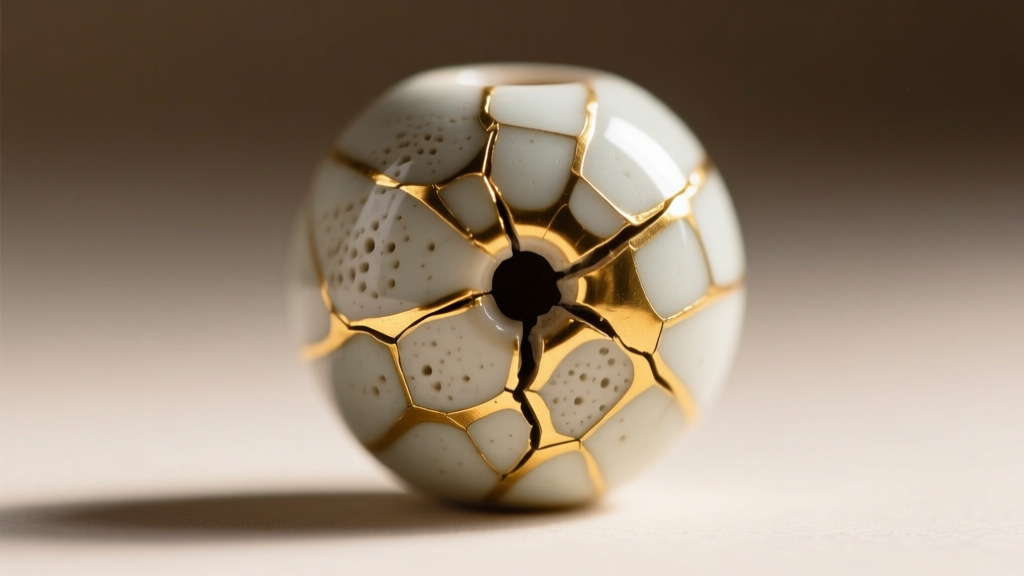
Originating in Japan, Kintsugi embraces the breakage as part of the object's history. Instead of hiding the seam, you highlight it. While traditional Kintsugi uses toxic urushi lacquer and 23k gold powder (which takes weeks to cure in a humid box), modern jewelers often use a UV-cure resin mixed with high-grade mica gold powder. Apply the gold-tinted resin to the seam, flash-cure it with a 365nm UV flashlight, and buff away the excess. This results in a stunning, durable gold vein that honors the piece's resilience.
Preventative Care for Restored China Jewelry
Restored porcelain requires specific care to ensure the longevity of the adhesive bond. According to the Getty Conservation Institute, environmental fluctuations are the enemy of composite repairs.
- Avoid Ultrasonic Cleaners: The high-frequency cavitation bubbles can easily penetrate micro-fissures and shatter the ceramic from the inside out, or dissolve reversible adhesives like Paraloid B-72.
- Thermal Shock Prevention: Never expose repaired bone china or porcelain to sudden temperature changes (e.g., wearing it in a freezing outdoor climate and then immediately jumping into a hot bath). The ceramic and the epoxy expand at different rates, which will shear the bond.
- Proper Storage: Store restored pendants and brooches in individual, acid-free tissue pouches. Prevent them from knocking against harder gemstones like diamonds or sapphires, which will easily scratch the ceramic glaze.
When to Seek a Professional Conservator
While this guide equips you to handle clean fractures on standard jewelry pieces, some scenarios demand professional intervention. If the broken china jewelry features historical significance, museum provenance, or complex micro-shattering across a painted portrait cameo, do not attempt a DIY fix. The American Institute for Conservation (AIC) maintains a directory of certified professionals who specialize in objects and ceramics. A professional can utilize specialized consolidation techniques, such as localized vacuum-desiccation, to draw reversible adhesives deep into porous ceramic networks without altering the original surface patina.
By respecting the material science of porcelain and utilizing conservation-grade methodologies, you can successfully rescue your broken china jewelry, ensuring it remains a wearable piece of history for decades to come.


