How to Fix Broken Jewelry: Metal Properties & Repair Guide
Learn how to fix broken jewelry by understanding metal properties. Compare gold, silver, and platinum repair methods, soldering temps, and costs.

The Metallurgy of Repair: Why Material Dictates Method
When a cherished piece snaps, bends, or loses a stone, the immediate question is always how to fix broken jewelry safely and permanently. However, jewelry repair is not a one-size-fits-all process. The fundamental reality of the jeweler’s bench is that metallurgy dictates methodology. A technique that seamlessly restores a sterling silver chain could completely destroy a platinum setting or shatter the stones in a titanium ring.
Understanding the thermal conductivity, melting points, and work-hardening characteristics of different metals is the first step in any successful restoration. According to the Gemological Institute of America (GIA), improper heat application during repair is one of the leading causes of secondary damage to gemstones and metal alloys. In 2026, with the rise of alternative metals and advanced lab-grown diamond settings, knowing the exact material properties of your jewelry is more critical than ever before attempting or commissioning a repair.
Material Comparison Chart: Repair Properties
Before applying heat or pressure, a master jeweler evaluates the base metal. Below is a technical comparison of common jewelry metals and their repair profiles.
| Metal / Alloy | Melting Point | Standard Solder Grade | Thermal Conductivity | Repair Difficulty |
|---|---|---|---|---|
| Sterling Silver (925) | 1,640°F (893°C) | Hard / Medium / Easy | High | Low to Medium |
| 14k Yellow Gold | 1,540°F (838°C) | 14k Hard / Medium | Medium | Low |
| 18k White Gold | 1,650°F (899°C) | 18k Platinum-White | Medium | Medium |
| Platinum 950 | 3,215°F (1,768°C) | 1750°F Platinum Solder | Low | High |
| Titanium (Grade 2) | 3,034°F (1,668°C) | N/A (Welding only) | Very Low | Very High |
How to Fix Broken Jewelry by Specific Metals
The approach to fixing a broken clasp, resizing a band, or rebuilding a prong changes drastically depending on the alloy composition. Here is a deep dive into the specific techniques required for the most common jewelry metals.
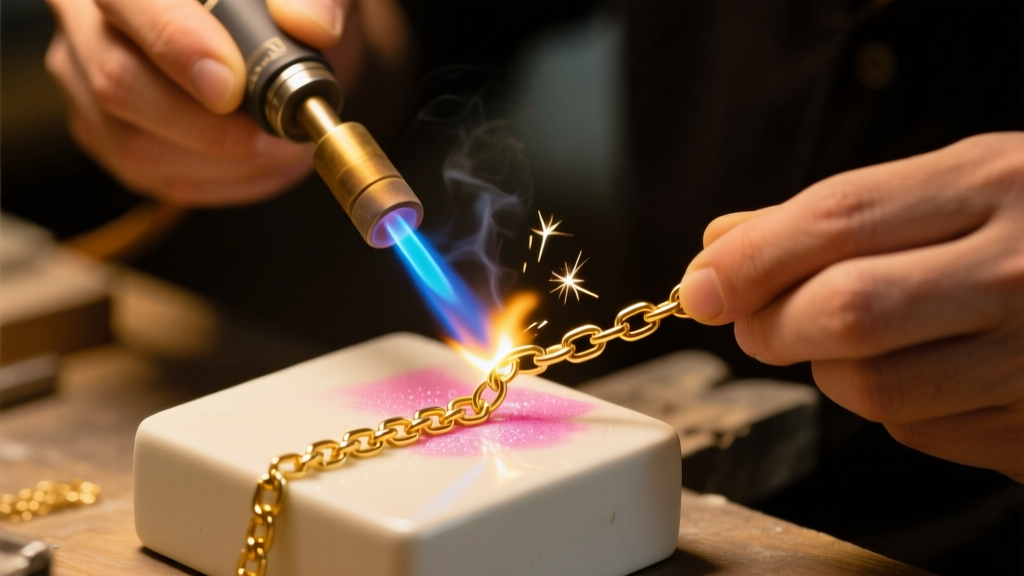
Sterling Silver & Gold Alloys: The Art of Torch Soldering
For silver and gold, traditional torch soldering remains the gold standard. The secret to a strong, invisible joint lies in the chemistry of the flux and the flow temperature of the solder. For sterling silver, jewelers often use Prip’s flux as a pre-treatment to prevent fire scale (the dark copper oxide that forms when silver is heated), followed by a standard borax-based flux for the actual solder joint.
Gold repairs require cadmium-free solders, which are categorized by flow temperature: Hard (flows at ~1,450°F), Medium (~1,350°F), and Easy (~1,250°F). If a ring requires multiple solder joints—such as sizing a band and then reattaching a head—the jeweler must use Hard solder first, followed by Medium, and finally Easy, to prevent previously melted joints from re-flowing and failing. Rio Grande Jewelry Supply emphasizes that using the correct solder grade is the difference between a joint that lasts a lifetime and one that snaps under minor tension.
Platinum & High-Karat Gold: Laser Welding Precision
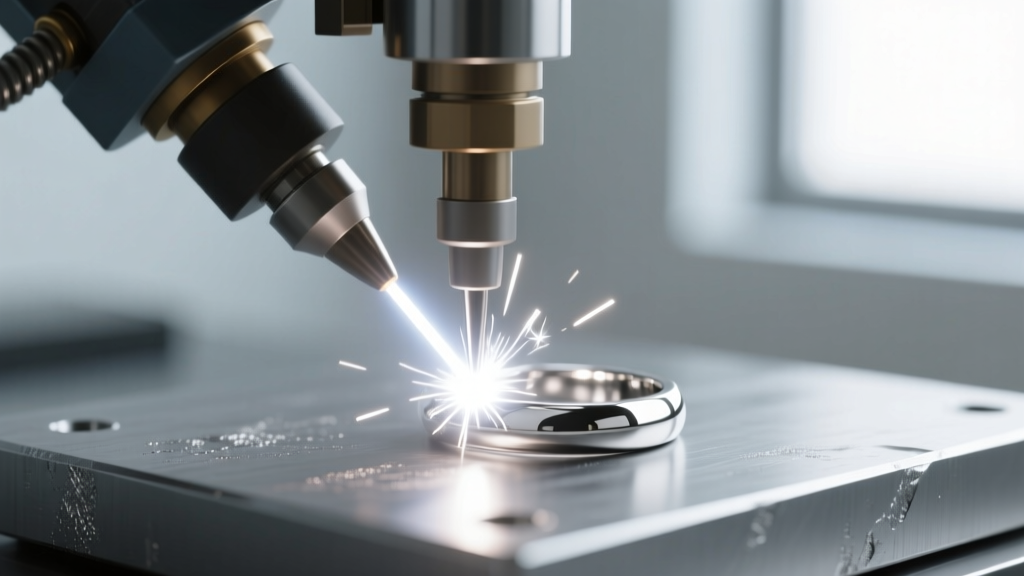
Platinum is notorious for its high melting point and its tendency to rapidly conduct heat directly into adjacent gemstones, which can cause diamonds to burn or colored stones to fracture. While master jewelers can torch-solder platinum using specialized 1750°F platinum solder and a reducing flame, the modern standard for fixing broken platinum jewelry—especially near stone settings—is laser welding.
Laser welders use concentrated pulses of light to melt metal in a microscopic zone, often supplemented by argon gas shielding to prevent oxidation. This allows a jeweler to rebuild a worn platinum prong less than a millimeter away from a heat-sensitive emerald without damaging the stone.
Titanium & Tungsten: The Un-Solderables
If you are wondering how to fix broken jewelry made of titanium or tungsten carbide, the hard truth is that traditional soldering is impossible. These metals oxidize violently at high temperatures and do not accept precious metal solders.
Titanium rings (typically Grade 2 or Grade 5 aerospace alloy) can sometimes be resized or welded using specialized TIG (Tungsten Inert Gas) welding equipment in an argon-purged chamber, but this is rare and expensive. Tungsten carbide, being a sintered ceramic-metal composite, cannot be resized or soldered at all. If a tungsten ring breaks or needs resizing, the only viable solution is a complete replacement of the band.
Soldering vs. Laser Welding: A Technical Breakdown
Choosing between a torch and a laser is a critical decision in modern jewelry restoration. While JCK Online frequently highlights the speed of laser welding, torch soldering still holds distinct advantages for certain structural repairs.
- Heat Affected Zone (HAZ): Laser welding has a microscopic HAZ, making it ideal for repairs near heat-sensitive gems (like opals, emeralds, and tanzanite) or epoxy-set stones. Torch soldering requires the entire piece to reach the solder's flow temperature, risking thermal shock to stones.
- Joint Strength: For heavy structural breaks, like a thick gold bangle or a heavy chain link, torch soldering with a high-karat hard solder often provides superior tensile strength because the solder flows deeply into the joint via capillary action. Laser welding is primarily a surface-level fusion.
- Porosity: Laser welding can sometimes trap gas bubbles if the metal isn't perfectly clean, leading to porous joints. Torch soldering, when used with the correct flux, naturally draws out impurities as the solder flows.
Real-World Repair Cost Expectations
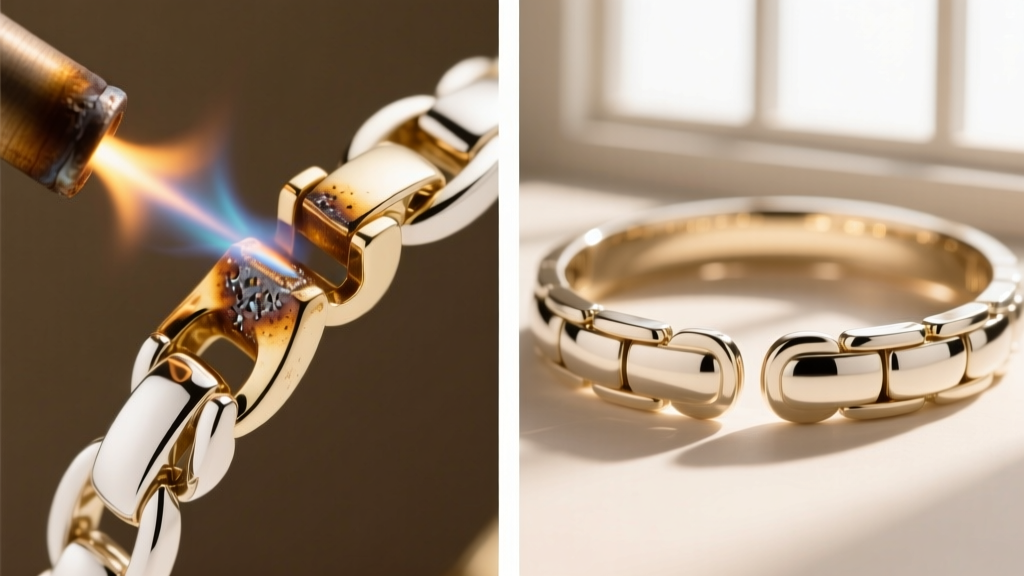
Understanding the material properties also helps explain the pricing structure of professional jewelry repair. The cost to fix broken jewelry is directly tied to the equipment, time, and expertise required for that specific metal.
| Repair Type | Sterling Silver | 14k/18k Gold | Platinum 950 |
|---|---|---|---|
| Simple Chain Solder | $35 - $55 | $60 - $95 | $120 - $180 |
| Ring Sizing (Up/Down 1) | $45 - $75 | $75 - $120 | $150 - $250 |
| Rebuilding 1 Prong | $40 (Laser) | $65 - $85 | $110 - $150 (Laser) |
| Clasp Replacement | $30 + part | $50 + part | $90 + part |
Note: Prices reflect average national rates for independent master jewelers in 2026. Mall kiosks and fast-fashion repair chains may offer lower prices but often lack the laser equipment necessary for safe platinum or high-karat repairs.
When to Seek a Master Jeweler vs. DIY
The internet is flooded with DIY tutorials on how to fix broken jewelry at home using hardware store adhesives or amateur butane torches. As a rule of thumb, DIY repairs should be strictly limited to non-structural, non-heat-based fixes, such as restringing pearls, replacing standard jump rings on base-metal costume jewelry, or using specialized two-part jeweler's epoxy for setting non-precious cabochons.
Warning: Never use cyanoacrylate (Super Glue) on precious metals or porous gemstones like turquoise or pearls. The adhesive will seep into the stone's matrix, causing permanent discoloration, and it creates a brittle barrier that prevents professional jewelers from properly cleaning and soldering the piece later without using highly toxic chemical solvents.
If your broken jewelry involves precious metals (gold, silver, platinum), structural integrity (chain links, ring shanks, clasps), or is situated within 3 millimeters of a gemstone, it requires a professional. The cost of a professional laser weld or torch solder is vastly outweighed by the risk of melting a diamond's girdle or permanently warping a platinum band with an uncontrolled hardware store torch.
Conclusion
Knowing how to fix broken jewelry starts with respecting the material. Whether it is managing the fire scale on sterling silver, selecting the correct flow temperature for 14k gold solder, or utilizing argon-shielded laser welding for platinum, the right technique ensures your jewelry survives for generations. Always consult a certified bench jeweler who can accurately identify your metal's alloy composition and apply the precise metallurgical science required for a flawless restoration.


