Pro Fix Jewelry and Watch Repair: Expert Technical Deep Dive
Master the technical side of pro fix jewelry and watch repair. Explore laser welding, movement servicing, and metallurgy with expert insights.

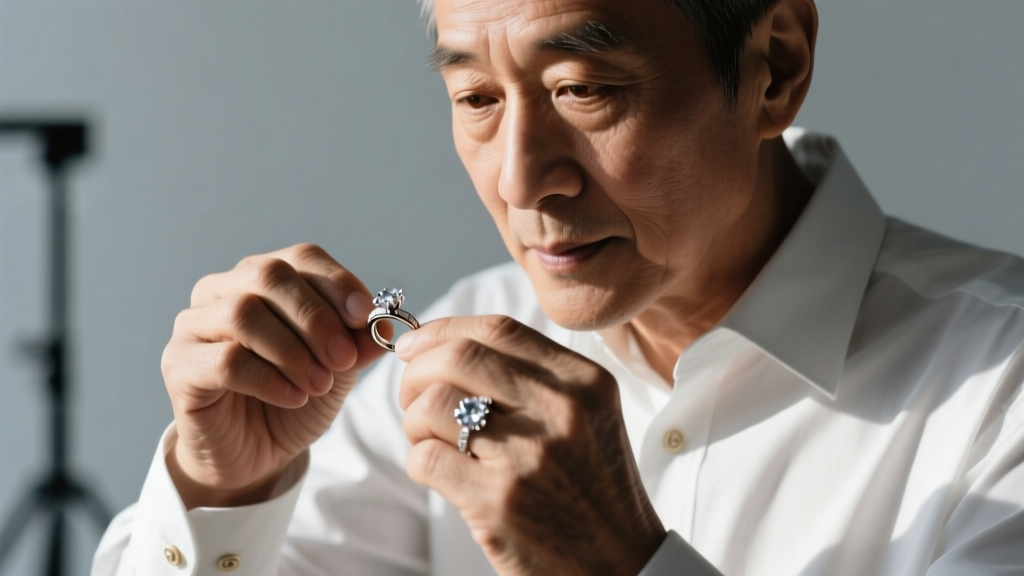
The distinction between a basic mall kiosk and a true pro fix jewelry and watch repair atelier lies in the mastery of micro-mechanics and advanced metallurgy. In 2026, the modern bench jeweler is part metallurgist, part horologist, and part diagnostic engineer. Whether dealing with a shattered pivot on a vintage Rolex or a micro-fracture in a platinum engagement ring shank, the methodology requires precision tooling and a deep understanding of material science.
This technical deep dive explores the exact parameters, material grades, and diagnostic frameworks utilized by elite repair facilities. We will dissect the thermal dynamics of laser welding, the horological tolerances of mechanical movement servicing, and the liability-aware protocols for stone setting.
Metallurgical Realities: Soldering vs. Laser Welding
Traditional torch soldering relies on capillary action and specific flow temperatures. For 14k yellow gold, a bench jeweler typically utilizes three grades of solder to accommodate multi-step repairs without melting previous joints. Hard solder flows at approximately 1450°F (788°C), Medium at 1350°F (732°C), and Easy at 1250°F (677°C). However, when repairing heat-sensitive assemblies or sizing rings with tension settings, torch work is a massive liability.
This is where Nd:YAG and fiber laser welders redefine the pro fix jewelry and watch repair standard. Laser welding fuses metal at a microscopic level using concentrated light pulses, often requiring no filler metal if the joint is perfectly flush. The localized heat-affected zone (HAZ) is so small that a jeweler can weld a ring shank millimeters away from a heat-sensitive gemstone without causing thermal shock or internal fracturing.
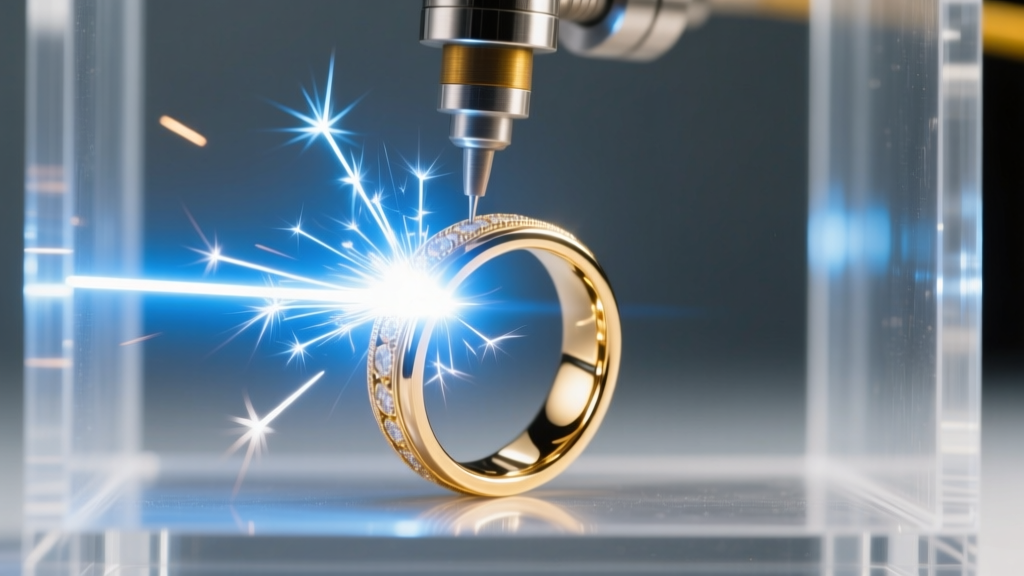
| Parameter | 14k Gold Torch Solder (Hard) | Nd:YAG Laser Weld (14k Gold) |
|---|---|---|
| Peak Temperature | ~1450°F (788°C) | Instantaneous localized melt (>1900°F) |
| Heat-Affected Zone | Large (requires flux/pickling) | Microscopic (often no flux needed) |
| Pulse Duration | Continuous (torch flame) | 3.0ms - 5.0ms adjustable |
| Shielding Gas | None (ambient oxygen causes oxidation) | Argon gas flow to prevent porosity |
Horological Triage: Servicing the ETA 2824-2 and Beyond
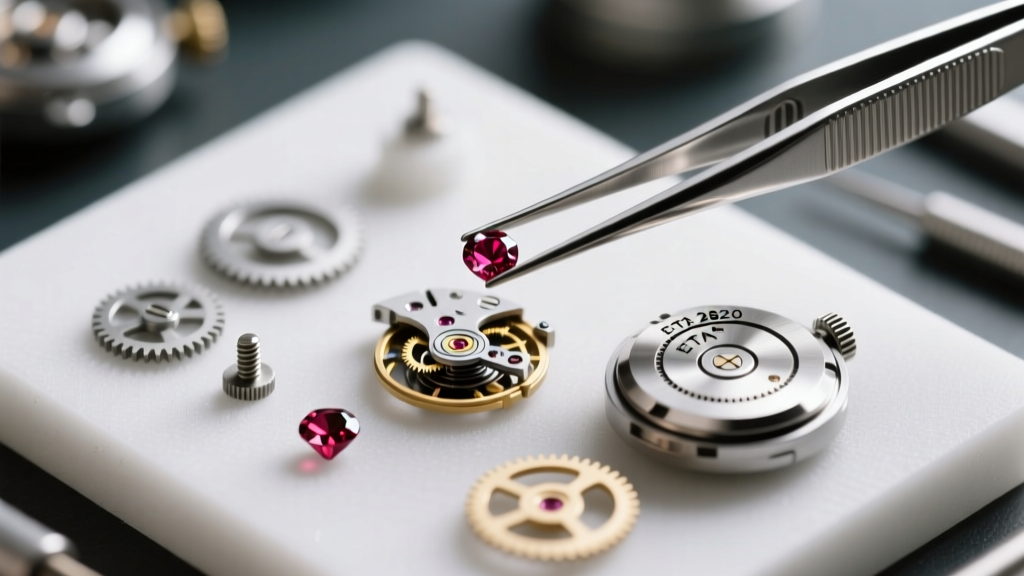
Watch repair demands an entirely different discipline. A premier pro fix jewelry and watch repair center does not simply swap batteries; they perform full overhauls on mechanical calibers like the ubiquitous ETA 2824-2 or its modern equivalent, the Sellita SW200-1. According to guidelines from the American Watchmakers-Clockmakers Institute (AWCI), a complete service involves total disassembly, ultrasonic cleaning, and precise lubrication using specific synthetic oils.
For high-speed, low-torque pivots (like the escape wheel and balance staff), a master watchmaker applies Moebius 9010. For the mainspring barrel and high-torque center wheel, heavier greases like HP1300 are required to prevent wear over the 5-year service interval.
Timing and Amplitude Diagnostics
Once reassembled, the movement is placed on a timing machine to measure three critical metrics:
- Amplitude: The degree of rotation of the balance wheel. A healthy, fully wound ETA 2824-2 should show an amplitude between 275° and 315° in horizontal positions. Anything below 250° indicates friction, poor mainspring torque, or inadequate lubrication.
- Beat Error: The difference in milliseconds between the 'tick' and the 'tock'. A pro-level service targets a beat error of 0.0ms to 0.2ms. Higher errors indicate the hairspring is not perfectly centered on the balance staff.
- Rate: The daily gain or loss in seconds. Elite facilities regulate movements to run slightly fast (+2 to +4 seconds per day) to account for the natural slowing that occurs as the mainspring unwinds.
Stone Setting and Prong Retipping at the Micro-Level
Prong wear is the leading cause of gemstone loss. In a high-end repair facility, prong retipping is performed under a stereo microscope using a laser wire feeder. Instead of melting a large bead of solder over a worn prong (which looks messy and compromises the structural integrity), the jeweler uses a 0.8mm or 1.0mm wire of matching karat gold. The laser pulses the wire directly onto the degraded prong, building up new metal layer by layer.
After retipping, the jeweler uses a hart bur to cut the precise bearing seat. The angle of the bur must perfectly match the pavilion angle of the gemstone. If the bearing is cut too shallow, the stone will rock; if cut too deep, the prong will snap when pushed over the girdle.
Thermal and Chemical Liabilities in Stone Setting
The Gemological Institute of America (GIA) heavily emphasizes the dangers of heat and ultrasonic vibrations on treated gemstones. A professional bench jeweler must identify fracture-filled diamonds and oiled emeralds before any repair begins.
'Ultrasonic cleaning can strip the cedar oil from natural emeralds, leaving them opaque and heavily fractured. Similarly, the heat from a traditional torch can melt the glass-like resin used in fracture-filled diamonds, causing irreversible clouding and structural failure.' — GIA Gemological Protocols
To mitigate this, elite shops use specialized ionic cleaners or mild, warm distilled water with a soft brush for emeralds, opals, and treated diamonds, reserving ultrasonic machines strictly for hard, untreated stones like sapphires and diamonds.
The Economics and Liability of the Pro Bench
The pricing structure for a pro fix jewelry and watch repair facility reflects the overhead of advanced equipment and specialized labor. As reported by JCK Online, industry benchmarks for 2026 show that a full mechanical chronograph service can range from $650 to $1,200, depending on the complication and the availability of OEM parts. Laser sizing for a platinum ring with micro-pavé diamonds typically starts at $150, reflecting the time required to mask the stones and use platinum-specific laser parameters.
Diagnostic Frameworks: When to Reject a Repair
Not every piece should be repaired. A crucial aspect of professional jewelry and watch repair is knowing when to walk away. Diagnostic frameworks include:
- Severe Porosity in Castings: If a ring shank snaps and the cross-section reveals a sponge-like, porous interior, soldering or laser welding will fail. The metal lacks structural density and must be recast.
- Water Resistance Testing: For dive watches, a dry pressure test (Rx test) is mandatory before any wet testing. If the crystal gasket fails the dry test, introducing the watch to a wet tester will destroy the movement. If the case tube is stripped, the repair must be rejected unless OEM replacement parts can be sourced.
- Work-Hardened Platinum: Platinum work-hardens rapidly. If a platinum shank has been resized multiple times with a torch, it becomes brittle. Attempting to round it on a mandrel will result in a catastrophic shatter.
Ultimately, the hallmark of an expert repair facility is not just the ability to fix what is broken, but the technical foresight to predict how a repair will age over the next decade. By combining metallurgical precision, horological discipline, and strict diagnostic protocols, the modern bench jeweler ensures that heirloom pieces survive for generations.


