Quick Repair Jewelry Kits: A Buyer's Guide on What to Look For
Discover what to look for in quick repair jewelry kits. Our buyer's guide covers tool grades, adhesives, and standardized components.

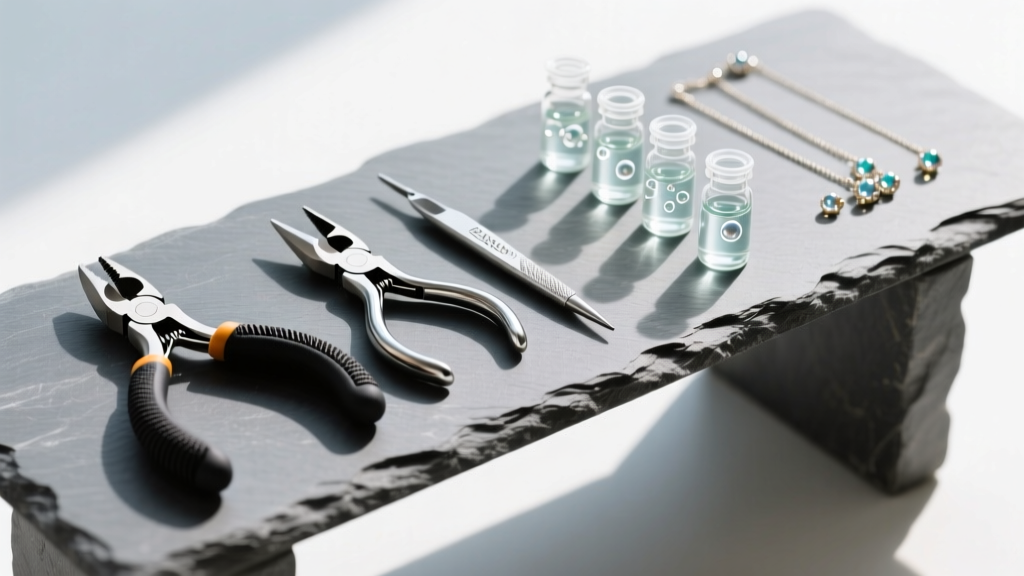
When a favorite necklace snaps or an earring post bends, the downtime can be frustrating. For jewelry enthusiasts, collectors, and everyday wearers, investing in a high-quality quick repair jewelry kit is a practical solution to minimize time off the wrist or neck. However, the market is flooded with cheap, ineffective kits that can cause irreversible damage to precious metals and delicate gemstones. This comprehensive buyer’s guide breaks down exactly what to look for when purchasing quick repair jewelry tools, adhesives, and replacement components, ensuring your at-home fixes are both durable and safe.
The Anatomy of a High-Quality Quick Repair Jewelry Kit
A professional-grade kit is defined by the precision of its hand tools. The most critical mistake buyers make is purchasing kits equipped with standard hardware store pliers, which feature serrated teeth that will permanently mar soft metals like 24k gold, sterling silver, and fine copper.
Essential Pliers and Cutters
- Smooth-Jaw Chain-Nose Pliers: Look for pliers with tapered, completely smooth inner jaws. Brands like Wubbers or Lindstrom offer ergonomic handles that reduce hand fatigue while providing the exact torque needed to open and close jump rings without slipping.
- Nylon-Jaw Pliers: Essential for straightening bent earring posts or reshaping wire without leaving tool marks. Ensure the nylon inserts are replaceable, as they will wear down over time.
- Flush Cutters with a Micro-Bevel: When cutting wire or jump rings, a standard cutter leaves a sharp, pinched edge. High-end flush cutters feature a 45-degree micro-bevel on one side, leaving one side of the cut perfectly flat. This is vital for closing jump rings with an invisible seam.
Adhesives vs. Mechanical Fixes: Choosing the Right Bond
Many commercial quick repair jewelry kits rely heavily on a single tube of generic super glue. This is a major red flag. Different materials require vastly different chemical bonds. According to gemological guidelines from the Gemological Institute of America (GIA), porous stones like pearls, opals, and turquoise can be permanently stained or degraded by the fumes and chemical composition of cyanoacrylate (super glue).
The Adhesive Breakdown
- Cyanoacrylate (CA) Glue: Best for non-porous, tight-fitting repairs like reattaching a small cubic zirconia to a metal bezel. It has high tensile strength but low shear strength and becomes brittle over time. Avoid using it on flexible chains or porous gems.
- Two-Part Epoxy (e.g., Devcon 5-Minute): The gold standard for stone setting and bonding metal to metal. Epoxy fills microscopic gaps, cures clear, and resists shock and moisture. It is the required adhesive for reattaching flat-backed stones or securing earring posts to cups.
- Flexible Jewelers Cement (e.g., E6000 or G-S Hypo Cement): Ideal for costume jewelry, flexible watchbands, and bonding porous materials. It remains slightly pliable after curing, allowing it to absorb the kinetic shock of daily wear without cracking.
Material Grades: What to Buy for Lasting Fixes
If your kit includes replacement findings—such as jump rings, clasps, and earring posts—the metallurgical grade of these components dictates the longevity of your repair. Always opt for solid metals over plated alternatives, as plating will eventually wear off, exposing base metals that can cause skin irritation and oxidize rapidly.
| Metal Grade | Best Use Case | Repair Characteristics |
|---|---|---|
| Sterling Silver (.925) | Chains, jump rings, lightweight clasps | Highly malleable; work-hardens quickly. Requires annealing if over-manipulated. |
| 14k Yellow/White Gold | Heirloom repairs, high-stress clasps | Excellent durability; requires specialized solder and a micro-torch for permanent joins. |
| Niobium / Titanium | Hypoallergenic earring posts, body jewelry | Cannot be traditionally soldered; relies on cold connections or laser welding. |
| Surgical Steel (316L) | Costume jewelry fixes, heavy chains | Extremely hard; difficult to cut with standard flush cutters without damaging the tool. |
Evaluating Quick-Fix Jewelry Designs
When buying new jewelry, adopting a "design for repair" mindset can save you hundreds of dollars in bench fees over the years. Certain manufacturing techniques make pieces inherently easier to fix at home with a basic quick repair jewelry kit.
Standardized Components to Look For
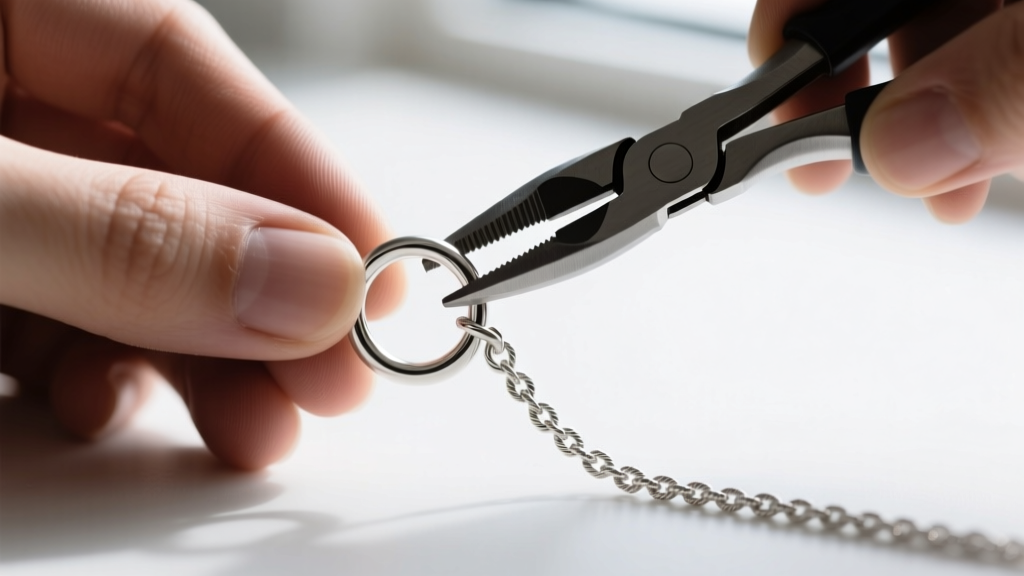
Seek out jewelers who use saw-cut jump rings rather than machine-cut ones. According to jewelry supply authority Rio Grande, saw-cut rings have perfectly flush seams that close invisibly and are vastly superior for structural integrity. Additionally, look for chains that terminate with oversized, soldered end-rings. This allows you to easily swap out a broken lobster clasp using a simple split ring or a new jump ring, rather than having to desolder and re-solder the entire chain termination.
For earrings, prioritize friction posts with a standardized 0.8mm thickness. Many cheap kits include 0.6mm posts which bend under the weight of a standard butterfly back, while 1.0mm posts may not fit standard clutch backs without aggressive filing.
Red Flags in Commercial Quick Repair Kits
Before adding a kit to your cart, scrutinize the contents list for these common pitfalls:
- "Liquid Solder" Claims: There is no such thing as liquid solder for precious metals. True soldering requires a eutectic alloy and a heat source (torch or laser) to fuse metals at a molecular level. Kits claiming to offer "liquid solder" are merely selling metallic-pigmented epoxy, which will fail under any tensile stress.
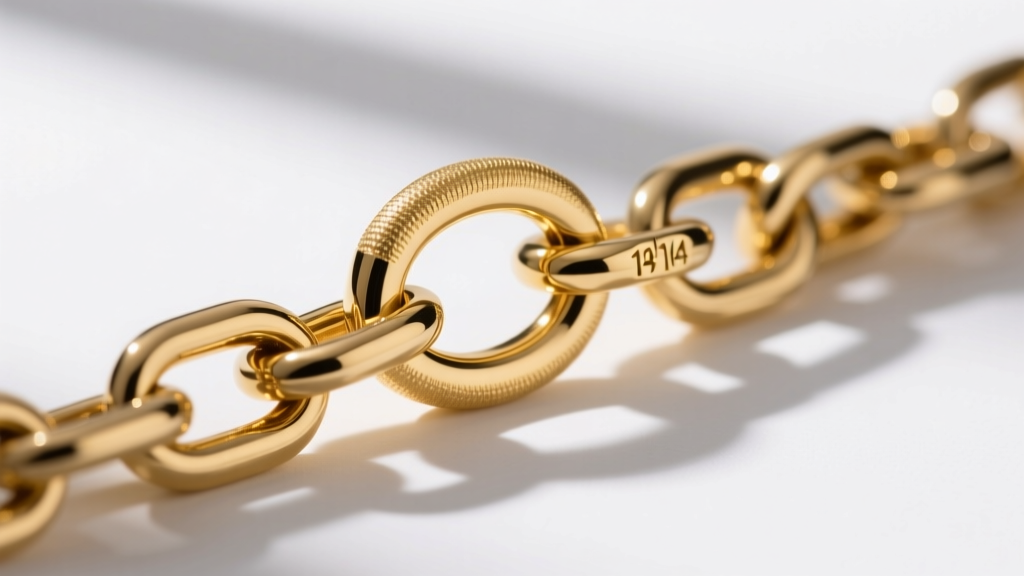
- Plated Base Metal Findings: If the replacement jump rings and clasps are not explicitly stamped or listed as solid sterling silver, gold-filled, or solid karat gold, they are likely brass or copper with a microscopic flash plating. These will tarnish green within weeks and compromise the aesthetic of fine jewelry.
- Serrated Pliers: As mentioned, any kit that includes standard hardware pliers instead of specialized jewelry pliers is designed for disposable costume crafts, not fine jewelry restoration.
Cost Breakdown: DIY Kits vs. Professional Bench Services
Building a reliable quick repair jewelry arsenal requires an upfront investment, but it pays for itself rapidly. A professional-grade DIY kit—including Lindstrom cutters, Wubbers pliers, a selection of saw-cut sterling jump rings, and Devcon epoxy—will cost between $85 and $150.
Conversely, a single trip to a professional jeweler to replace a lost earring post or solder a broken cable chain typically ranges from $35 to $85 per item. If you maintain a large collection or frequently buy vintage estate jewelry that requires minor refurbishments, a high-quality kit will achieve ROI within three to four repairs.
Final Verdict: Building Your Quick Repair Arsenal
The secret to successful at-home jewelry restoration lies in rejecting the "one-size-fits-all" mentality of cheap novelty kits. By selectively sourcing smooth-jaw tools, understanding the shear strengths of modern adhesives, and stocking up on saw-cut, solid-metal findings, you can curate a quick repair jewelry setup that rivals a professional bench. Always prioritize mechanical fixes (like properly closed jump rings) over chemical adhesives whenever possible, and remember that knowing when to escalate a repair to a certified bench jeweler—especially for laser-welding or complex stone setting—is the true mark of a knowledgeable collector.


