Mastering Solder for Jewelry: Alloys, Fluxes, and Repair Techniques
Discover the technical science behind solder for jewelry. Learn about gold and silver alloy melting points, flux selection, and expert repair techniques.

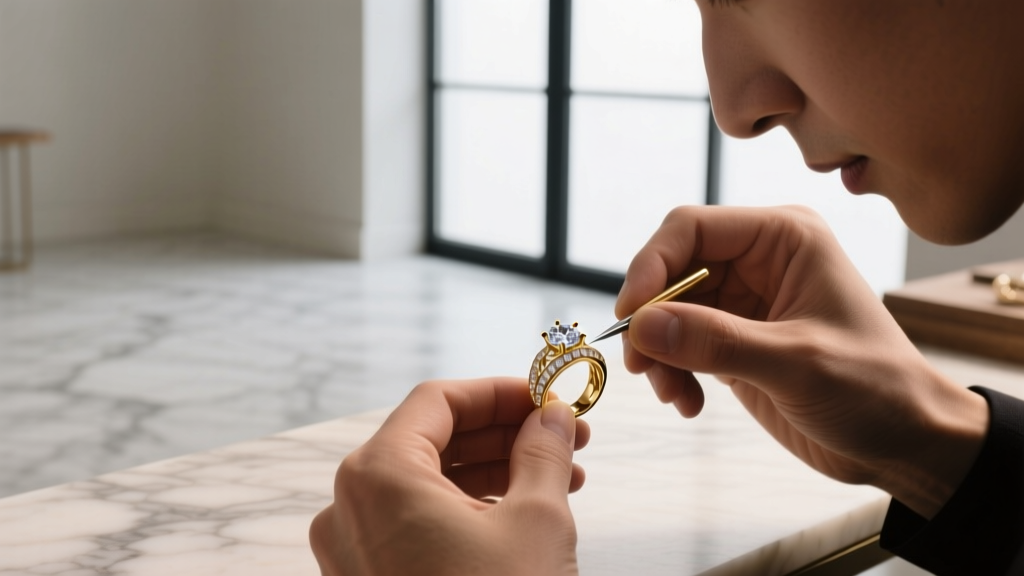
The Metallurgy of Jewelry Solder: Why Standard Welding Fails
In the realm of bench jewelry and professional restoration, understanding the precise metallurgy of solder for jewelry is what separates a master craftsman from an amateur. Unlike industrial welding, which often melts the base metals to fuse them together, jewelry soldering relies on capillary action and eutectic alloys. A eutectic alloy is a specific chemical mixture that melts and freezes at a single, distinct temperature—crucially, a temperature significantly lower than the base metal being repaired.
If a jeweler were to use pure silver to repair a sterling silver ring, the repair joint and the ring shank would reach their melting points simultaneously, resulting in a catastrophic collapse of the piece. By engineering solder with precise ratios of zinc, tin, copper, and sometimes indium, metallurgists create alloys that flow smoothly into a joint while the base metal remains completely solid. According to Rio Grande's technical resources, modern cadmium-free silver solders have largely replaced older, highly toxic cadmium-bearing alloys, utilizing tin and indium to depress the melting point without compromising the structural integrity or color of the final joint.
Silver Solder Grades: Temperature Mapping for Multi-Step Repairs
When executing complex repairs—such as rebuilding a filigree pendant or sizing a multi-stone sterling silver ring—bench jewelers must perform multiple soldering operations in sequence. This requires a graduated system of silver solder grades. Each grade has a distinct solidus (melting) and liquidus (flowing) temperature.
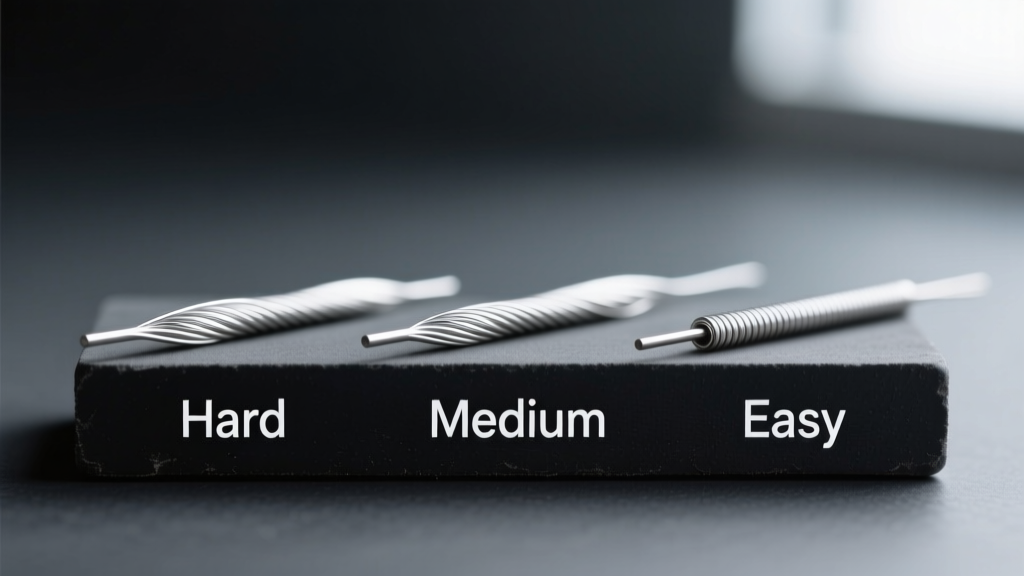
The strategic use of these grades ensures that previously soldered joints do not melt during subsequent heating cycles. A jeweler will typically use Hard solder for the primary structural joint (like a ring shank), Medium for secondary attachments (like a bezel wall), and Easy for final, delicate additions (like a jump ring or clasp).
| Solder Grade | Silver Content (Approx.) | Melt Temp (Solidus) | Flow Temp (Liquidus) | Primary Use Case |
|---|---|---|---|---|
| Hard | 75% - 80% | 1365°F (741°C) | 1425°F (774°C) | Ring shanks, primary structural seams |
| Medium | 65% - 70% | 1325°F (718°C) | 1390°F (754°C) | Bezel settings, gallery wire attachments |
| Easy | 55% - 60% | 1270°F (688°C) | 1365°F (741°C) | Jump rings, clasp replacements, findings |
| Extra Easy | 45% - 50% | 1240°F (671°C) | 1325°F (718°C) | Final delicate repairs, low-heat stones |
Note: Temperatures can vary slightly by manufacturer. Always test a small snippet on a charcoal block before applying to a client's piece.
Gold Solder Carats and Color Matching
Gold soldering introduces an entirely different layer of complexity: karat matching and color formulation. In many jurisdictions, hallmarking laws dictate that the solder used on a gold piece must be of the same karat as the piece itself. This is where plumb solder becomes essential.
A 14k plumb solder contains exactly 58.5% pure gold, matching the legal standard for 14k jewelry. Non-plumb 14k solders often contain less gold (sometimes dropping to 10k or 12k purity) to artificially lower the melting temperature. While non-plumb solder is easier to flow, it can result in visible seams that fail to pass acid testing or X-ray fluorescence (XRF) scanning. Furthermore, modern laser welding and CAD/CAM casting require exact alloy compositions to prevent micro-fractures at the repair site.
Color matching is equally critical. Yellow gold solders are alloyed with copper and silver to mimic the warm hue of the base metal, while white gold solders rely on nickel, palladium, or manganese. Rose gold repairs require solders with a higher copper content. A master bench jeweler will often keep a matrix of 14k and 18k solders in yellow, white, and rose variations to ensure the seam is virtually invisible under 10x loupe magnification.
The Chemistry of Flux: Borax vs. Fluoride-Based Compounds
Solder will not flow over oxidized metal. The moment a torch heats silver or gold, oxygen in the air binds with the copper alloys in the metal, creating a black layer of copper oxide. Flux is the chemical agent used to dissolve these oxides and protect the metal surface, allowing the solder to wet the joint via capillary action.
- Handy Flux (Potassium Fluoroborate): The industry standard for silver soldering. It actively dissolves copper oxides at around 1100°F (593°C), creating a glassy shield over the metal. It is essential for silver but can leave a stubborn glassy residue on gold that requires pickling in warm sulfuric acid or sodium bisulfate.
- Borax (Sodium Borate): A traditional, high-temperature flux preferred for gold and platinum repairs. It does not aggressively attack copper oxides like fluoride fluxes, but it provides excellent high-heat protection and is easier to clean off high-karat gold.
- Prips (Boric Acid + Denatured Alcohol): Used as a pre-flux fire-scale barrier. The piece is heated slightly and dipped into the alcohol solution, leaving a microscopic, powdery white coating of boric acid that prevents deep oxygen penetration, significantly reducing the purple-black fire scale that plagues sterling silver repairs.
Capillary Action and Joint Preparation
The most common point of failure in jewelry repair is not the torch technique, but the joint preparation. Solder for jewelry does not act like glue; it does not fill gaps. It relies entirely on capillary action—the physical tendency of a liquid to flow into narrow spaces without the assistance of, or even in opposition to, external forces like gravity.
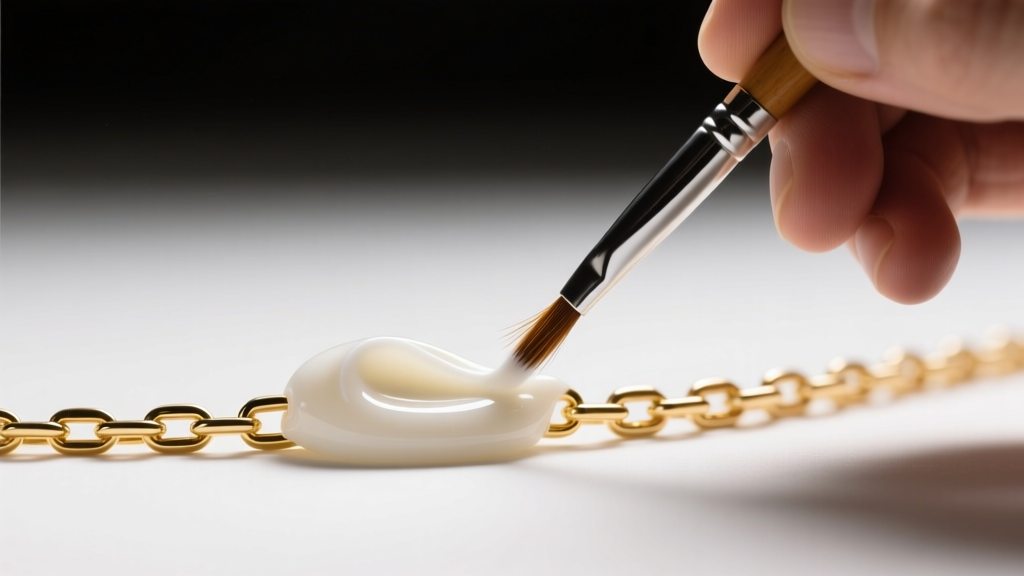
For optimal capillary draw, the clearance gap between the two metal surfaces being joined must be between 0.003 and 0.005 inches. If the joint is too tight (metal-to-metal contact with zero gap), the flux cannot enter the seam. When the torch heats the piece, the trapped flux boils, expands, and literally blows the molten solder away from the joint, resulting in a 'balled' solder failure. Conversely, if the gap is wider than 0.010 inches, the surface tension of the molten solder is insufficient to bridge the void, and the solder will simply pool on the surface rather than drawing through the seam.
'A perfect solder joint is 90% preparation and 10% heat control. If you have to use the torch to push the solder where it doesn't want to go, your joint fit is flawed.' — Traditional Bench Jeweler's Adage
Troubleshooting Common Soldering Failures
Even with a deep understanding of metallurgy and flux chemistry, bench jewelers encounter specific failure modes. Here is a technical troubleshooting framework for the most common issues:
- Solder Balls Up and Won't Flow: The metal surface is oxidized, or the flux has burned out (flux has a limited active lifespan at high heat). Solution: Quench, re-pickle the piece to strip oxides, re-flux, and use a slightly more reducing flame (more gas, less oxygen) to prevent rapid oxidation.
- Base Metal Melts Before Solder Flows: The solder grade is too close in temperature to the base metal, or the jeweler is using a torch tip that is too small, requiring prolonged heating that saturates the entire piece with heat. Solution: Switch to a larger, bushier flame to heat the entire piece evenly and quickly, or drop down one solder grade (e.g., from Hard to Medium).
- Pitted or Porous Solder Seam: Caused by overheating the solder, which vaporizes the zinc and tin components (the lowest melting point elements), leaving behind a porous, brittle sponge of copper and silver. Solution: Remove the heat the exact second the solder flashes and flows. Never 'cook' the joint after flow is achieved.
When to Trust the Professional Bench Jeweler
While understanding the technical parameters of solder for jewelry empowers consumers and hobbyists, certain repairs demand professional infrastructure. Sizing platinum rings, for instance, requires specialized platinum solder (which melts at over 1750°F / 954°C) and often a laser welder to avoid melting adjacent diamond inclusions. Similarly, repairing hollow-core gold chains or pieces set with heat-sensitive gems like opals, emeralds, or tanzanite requires advanced heat-sinking techniques and specialized low-temperature solders that are generally outside the scope of DIY repair kits. For high-value or sentimentally irreplaceable items, always seek a certified bench jeweler equipped with microscopic laser welding and precise atmospheric control.


