Antique Ballerina Jewelry Box: Collector Trends & Care
Explore the 2026 market trends, valuation matrix, and preservation techniques for the highly sought-after antique ballerina jewelry box.

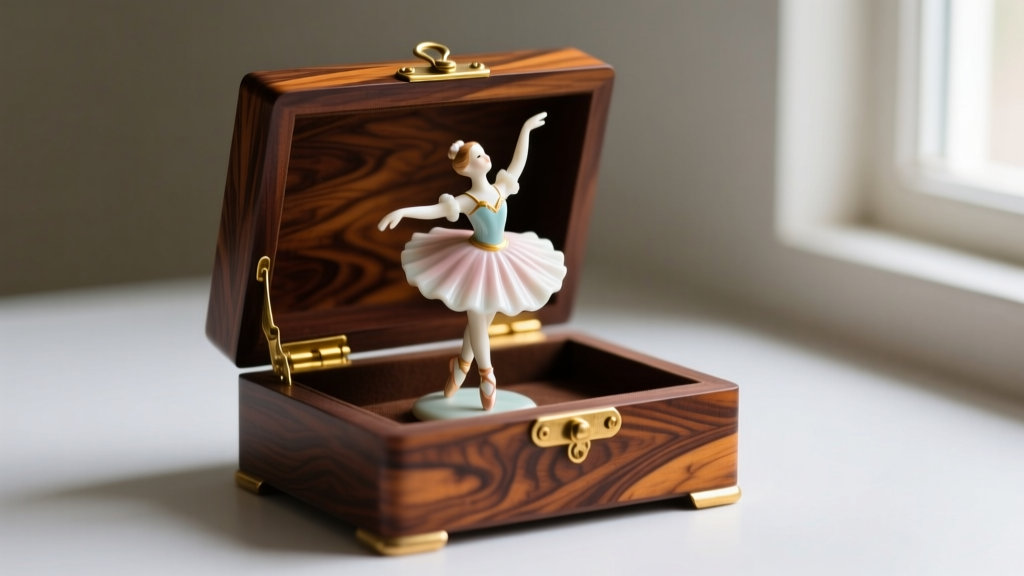
The Resurgence of Heritage Storage: Why the Antique Ballerina Jewelry Box is Trending
In the landscape of modern jewelry organization, the pendulum has swung decisively away from sterile, minimalist acrylic stacks and toward heritage maximalism. As interior design trends in 2026 embrace "Quiet Luxury" and "Dark Academia" aesthetics, the antique ballerina jewelry box has re-emerged not merely as a nostalgic relic, but as a highly coveted statement piece for serious collectors and jewelry enthusiasts alike. These intricate mechanical marvels offer a tactile, emotional connection to jewelry storage that modern mass-produced organizers simply cannot replicate.
However, integrating a vintage mechanical music box into a modern jewelry collection requires a nuanced understanding of horology, antique woodworking, and material science. Storing precious metals and gemstones in a century-old compartment presents unique challenges regarding acidity, off-gassing, and humidity control. This guide breaks down the anatomy, market valuation, and advanced preservation techniques required to maintain both the mechanical integrity of the box and the pristine condition of the jewelry housed within.
Anatomy of a Mechanical Masterpiece
To properly utilize and preserve an antique ballerina jewelry box, one must first understand its complex anatomy. The value and functionality of these pieces rely on three distinct pillars: the cabinetry, the Swiss cylinder movement, and the automaton (the ballerina herself).
The Cabinetry and Veneers
High-end antique boxes from the late 19th and early 20th centuries rarely feature solid wood construction, which is prone to warping. Instead, master cabinetmakers utilized a pine or oak core, applying painstakingly thin veneers of exotic woods. Macassar ebony, burled walnut, and Honduran rosewood were staples of the Art Deco and Victorian eras. More opulent examples feature Boulle work (brass and tortoiseshell inlay) or marquetry (geometric or floral wood inlays). The thickness of these veneers is a critical authentication metric; genuine antique veneers are often paper-thin (under 1mm) and applied with traditional hide glue, making them highly sensitive to modern liquid polishes and extreme humidity fluctuations.
The Swiss Cylinder Movement
The heartbeat of any authentic piece is the Swiss cylinder music movement. Originating primarily from the Sainte-Croix region of Switzerland, these mechanisms utilize a rotating brass cylinder studded with hundreds of tiny steel pins. As the cylinder turns, the pins pluck the teeth of a hardened steel comb, producing the melody. Premium makers like Reuge and Nicole Frères incorporated complex air-brakes (governors) to maintain a consistent tempo. Over-winding the mainspring or forcing a jammed cylinder can snap the delicate brass pins or shatter the governor fan, leading to catastrophic and expensive failures.
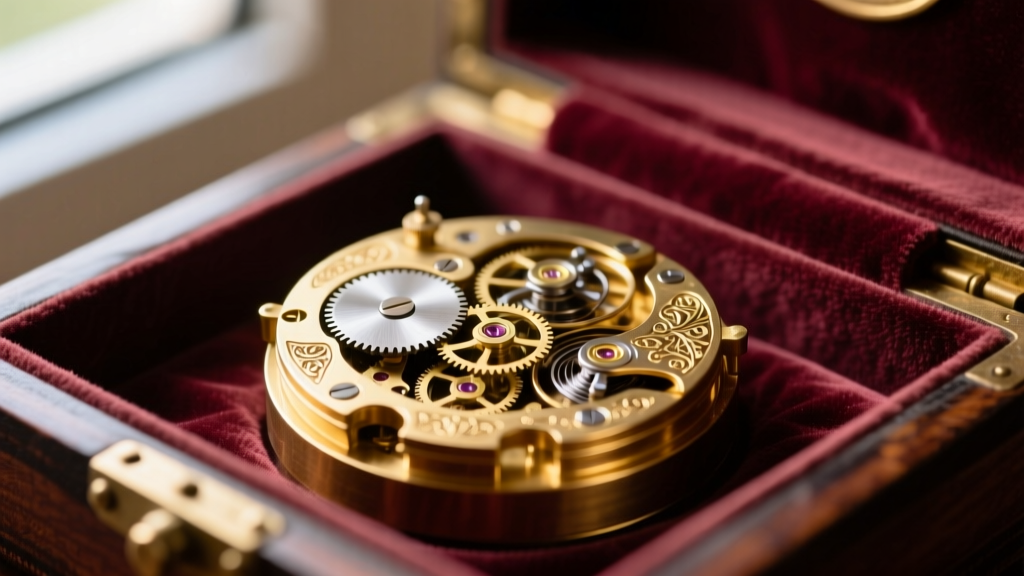
The Ballerina: Porcelain vs. Early Plastics
The figurine itself provides the most accurate dating metric. Victorian and Edwardian boxes typically feature hand-painted bisque porcelain dancers. By the 1920s and 1930s, manufacturers began utilizing early synthetics like celluloid and Bakelite. While visually striking, celluloid is highly unstable; it can suffer from "celluloid rot," a chemical breakdown that releases nitric acid, which will aggressively tarnish any silver jewelry stored in the same compartment.
2026 Market Valuation & Sourcing Matrix
The secondary market for antique music boxes has seen a steady appreciation over the last five years, driven by a younger demographic of collectors seeking functional art. According to data tracked by the Musical Box Society International (MBSI), pristine examples with original, uncracked combs and intact veneers command significant premiums.
| Era | Dominant Materials | Notable Makers | 2026 Market Value Range |
|---|---|---|---|
| Victorian (1880-1900) | Rosewood, Tortoiseshell, Boulle Inlay | Nicole Frères, Paillard | $1,500 - $4,500+ |
| Art Deco (1920-1935) | Macassar Ebony, Bakelite, Celluloid | Reuge, Thorens | $800 - $2,200 |
| Mid-Century (1950-1970) | Burled Walnut, Inlaid Marquetry | Reuge, Clair de Lune | $150 - $600 |
When sourcing, buyers must be wary of "frankenstein" boxes—mid-century mechanisms retrofitted into older, damaged cabinetry. Always inspect the screw holes on the brass movement plate; stripped or mismatched screws indicate the mechanism was swapped. Furthermore, test the winding resistance. A healthy mainspring offers smooth, consistent tension, while a slipping or grinding sensation indicates a broken spring barrel.
Advanced Preservation: Retrofitting for Modern Jewelry Storage
The most significant challenge in using an antique ballerina jewelry box for daily wear is that 19th-century storage standards are fundamentally incompatible with modern precious metals. The original silk and velvet linings, while beautiful, have likely become highly acidic over decades of use. This acidity accelerates the oxidation of sterling silver and can degrade the luster of porous gemstones like pearls and opals.
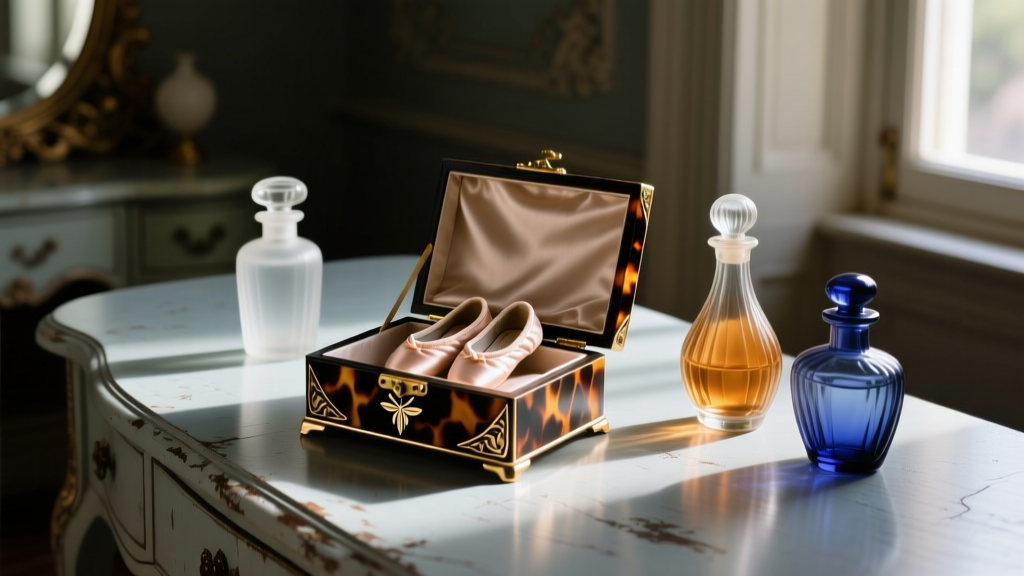
Neutralizing Acidic Linings Without Destroying History
Do not attempt to rip out the original antique silk or velvet, as this destroys the historical provenance and significantly lowers the resale value. Instead, employ a barrier method. Line the active jewelry compartments with Pacific Silvercloth or custom-cut sheets of acid-free, lignin-free archival board. For smaller ring rolls, utilize individual anti-tarnish zip bags made from treated polyethylene (never PVC, as PVC off-gasses hydrogen chloride which will corrode the brass music cylinder and degrade early plastic ballerinas). Tucking a 3M Anti-Tarnish strip beneath the original fabric lining will absorb ambient sulfur compounds without altering the visual aesthetic of the antique interior.
Humidity and Climate Control
Wood veneer and hide glue require a stable environment to prevent delamination (lifting of the wood grain). Maintain a relative humidity (RH) of 45% to 55%. If you live in an arid climate, the wood will shrink and crack; in high humidity, the veneer will blister. To protect the jewelry inside from moisture-induced tarnish while keeping the wood stable, place a small, breathable silica gel desiccant packet in the lower drawer or a hidden compartment. This localized micro-climate control protects both the mechanical steel comb from rusting and your silver jewelry from humidity-accelerated tarnishing.
Mechanical Maintenance
Never use modern aerosol lubricants like WD-40 on the music movement. These solvents attract dust and gum up the delicate brass pins. If the mechanism requires servicing, it must be disassembled and cleaned in an ultrasonic bath by a specialist horologist. When storing the box for extended periods, always let the mainspring fully unwind; storing a music box under tension weakens the spring metal over time, leading to eventual fatigue and snapping.
Final Thoughts on Heirloom Organization
The antique ballerina jewelry box represents a beautiful intersection of horological engineering, fine woodworking, and personal adornment. By understanding the specific material vulnerabilities of these pieces—from the acidity of aging textiles to the fragility of Swiss brass cylinders—collectors can safely bridge the gap between historical preservation and practical, everyday jewelry storage. In an era of disposable organization, investing in a meticulously preserved antique music box ensures that your jewelry is housed in a vessel with as much history and soul as the pieces themselves.


