Antique Leather Jewelry Box Buying Guide: What to Look For
Discover how to authenticate, evaluate, and buy an antique leather jewelry box. Learn about patina, lining materials, and hardware in our expert guide.

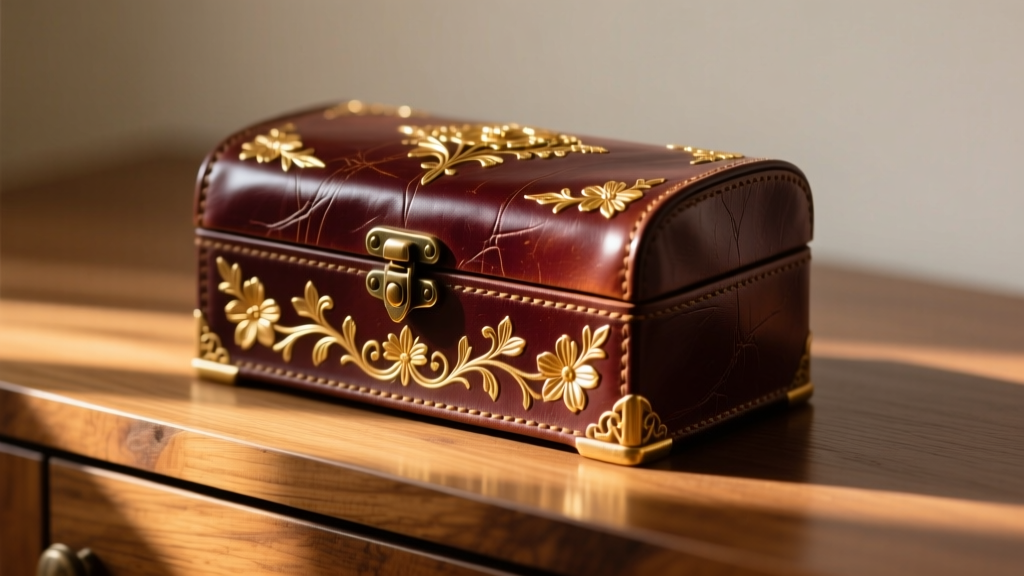
The market for antique storage has shifted dramatically as we move through 2026. Today’s serious collectors and jewelry enthusiasts are no longer looking for aggressively restored, polished-up relics. Instead, the premium is placed on museum-quality preservation, historical provenance, and structural integrity. An antique leather jewelry box is not merely a decorative vessel; it is a complex artifact of 18th and 19th-century craftsmanship, combining specialized tanning techniques, precision locksmithing, and early textile manufacturing.
Whether you are sourcing a Georgian-era calf-skin casket or a late-Victorian Morocco leather traveling box, knowing what to look for beneath the surface is critical. This buying guide cuts through the aesthetic appeal to provide a rigorous, expert-level framework for evaluating antique leather jewelry boxes.
Evaluating the Leather: Patina, Tanning, and the Threat of Red Rot
The exterior leather of an antique box tells the story of its era and its survival. In the 18th and 19th centuries, box makers primarily relied on three types of leather, each with distinct characteristics and failure modes:
- Morocco Leather: Sourced from goatskin and traditionally tanned using sumac leaves, Morocco leather is the gold standard for antique boxes. It is characterized by a distinct, hard-wearing pebble grain and exceptional durability. It takes gold-leaf tooling beautifully, which is why the most ornate Victorian boxes feature this material.
- Roan Leather: A softer, more pliable leather made from sheepskin. While it was often dyed deep reds or greens and used for both exterior coverings and interior linings, it is highly susceptible to tearing and abrasion over time.
- Calfskin: Smooth, tight-grained, and luxurious. Calfskin was frequently used for high-end Regency-era boxes. However, its smooth surface makes it incredibly prone to scratching, and finding a surviving calfskin box without deep scuffs is rare.
The Chemistry of Red Rot
The single greatest threat to 19th-century vegetable-tanned leather is red rot. During the Industrial Revolution, atmospheric sulfur dioxide from coal fires reacted with the tannins in the leather, forming sulfuric acid. This acid hydrolyzes the collagen fibers, causing the leather to degrade into a fine, rusty powder.
Expert Testing Method: To test for red rot, gently rub a clean, white cotton swab over an inconspicuous area of the leather (such as the bottom corner). If the swab picks up a reddish-brown, powdery residue, the leather is actively degrading. According to the Leather Conservation Centre, once red rot begins, it cannot be reversed; it can only be stabilized with specialized chemical consolidants like Klucel G.
When buying, always distinguish between a rich, dark patina (which is highly desirable and adds value) and the dull, chalky surface of early-stage dry rot. A healthy antique leather box should still retain a slight warmth and structural rigidity, not feel brittle or leave dust on your hands.
Inspecting the Interior: Linings, Off-Gassing, and Archival Safety
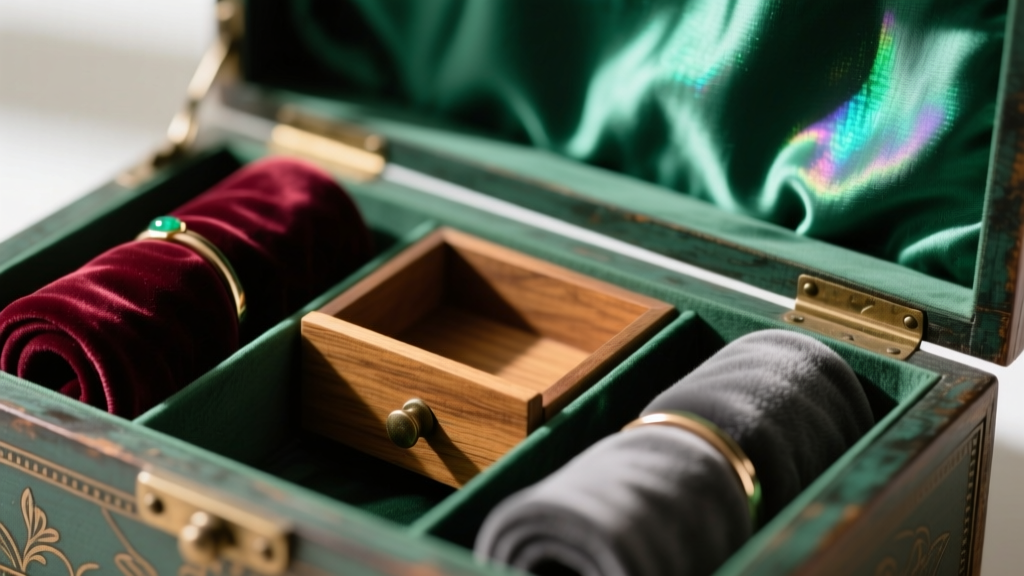
The interior of an antique jewelry box requires just as much scrutiny as the exterior. The materials used to line these boxes were chosen for their luxury, but they often pose a hidden threat to the jewelry stored within them today.
Watered Silk (Moiré) and Velvet
High-end Victorian and Edwardian boxes were typically lined with watered silk (moiré) or plush cotton velvet. Over a century later, the silk often suffers from "shattering"—a condition where the silk fibers become brittle and tear along the fold lines due to the metallic salts used in historical dyeing processes. While shattered silk diminishes the monetary value of the box, replacing it with modern synthetic fabrics destroys its historical authenticity. Collectors in 2026 prefer to see original, albeit fragile, silk that has been stabilized with archival tissue rather than a modern polyester retrofit.
The Hidden Danger of Acidic Cardboard
Beneath the beautiful silk or velvet lies the structural culprit responsible for severe jewelry tarnishing: 19th-century cardboard. The paper mills of the 1880s used highly acidic wood pulp and sulfur-based bleaching agents to create the stiff boards that form the ring rolls and compartment walls.
This acidic backing continuously off-gasses sulfur and organic acids. If you store sterling silver or low-karat gold in an untreated antique box, the off-gassing will accelerate silver sulfide tarnishing and cause gold alloys to develop a stubborn, dark film. When evaluating a box for actual daily use, ask the seller if the interior panels have been backed with modern, acid-free rag board. If they haven't, you must factor the cost of professional archival relining into your purchasing decision, or use the box strictly for display and store your jewelry elsewhere. The Victoria and Albert Museum's conservation guidelines frequently highlight the dangers of acidic historical paper products in direct contact with metals and textiles.
Hardware and Joinery: The Marks of True Antiquity
The metalwork and wooden carcase of an antique leather box are where forgeries and later reproductions are most easily exposed. True antique boxes were built around a solid wooden carcase (usually mahogany, oak, or pine) before the leather was glued and tooled over it.
Locksmithing: Bramah and Chubb
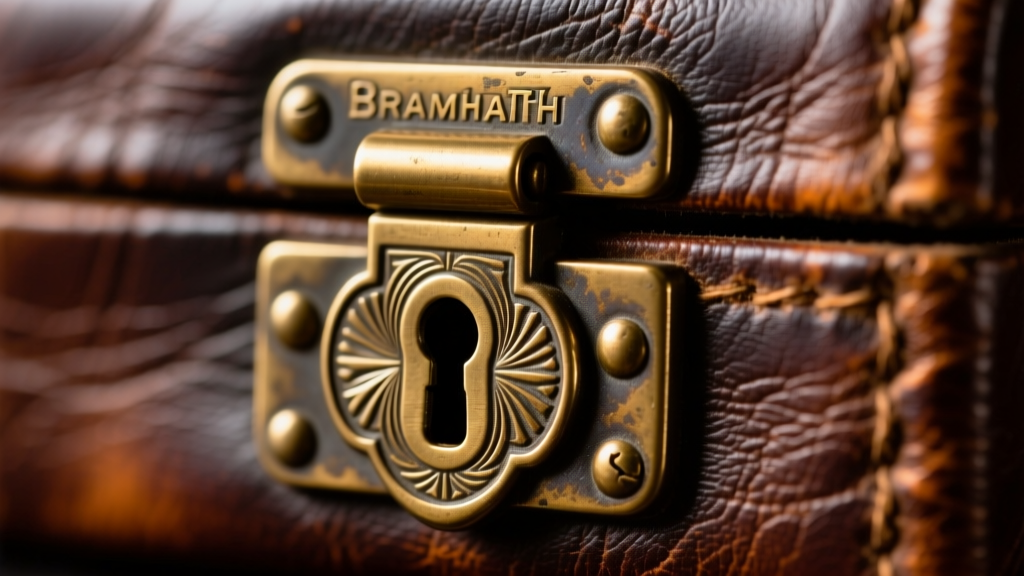
Premium antique boxes were fitted with high-security locks of their era. Look for the stamp of Bramah (patented in 1784) or Chubb (patented in 1818) on the brass escutcheon or inside the lock mechanism.
- Bramah Locks: Identified by their small, circular keyholes and complex, notched tubular keys. They were the pinnacle of security and are highly prized by collectors.
- Chubb Detector Locks: Featured a clever mechanism that would "trip" and jam if a false key or pick was inserted, alerting the owner to tampering.
Avoid boxes with generic, stamped brass locks that lack maker's marks, as these often indicate a lower-tier original build or a later 20th-century replacement.
Carcass Joinery: Hand-Cut vs. Machine Dovetails
Peel back a loose piece of leather at the corner of the box, or examine the exposed wood of the interior drawers. The joinery will immediately date the piece. Hand-cut dovetails (pre-1860s) are slightly asymmetrical, with thin pins and wider tails. Machine-cut dovetails, which are perfectly uniform and scalloped, indicate a post-Industrial Revolution manufacture (late 19th or early 20th century) and command a significantly lower price in the antique market.
Pricing and Provenance: What Should You Pay?
The valuation of an antique leather jewelry box depends heavily on its era, the quality of its materials, and the condition of its hardware. Below is a structural pricing framework based on current auction and specialist dealer trends.
| Era / Tier | Materials & Hardware | Condition Expectations | Estimated Price Range (USD) |
|---|---|---|---|
| Tier 1: Late Victorian / Edwardian (1890–1915) | Roan or basic Morocco leather, generic brass hinges, machine-cut joinery. | Good structural integrity, minor leather scuffing, original but tarnished velvet. | $150 – $450 |
| Tier 2: Mid-Victorian (1850–1885) | High-grade Morocco leather, hand-cut dovetails, Bramah or Chubb locks, gold-tooled borders. | Rich patina, intact watered silk (minor shattering acceptable), fully functional lock with original key. | $600 – $1,800 |
| Tier 3: Georgian / Regency (1790–1835) | Premium Calfskin or Morocco, tortoiseshell or brass inlay, complex secret compartments, provenance. | Museum-quality preservation, stabilized red rot, original hand-blown mirror glass in the lid. | $2,500 – $8,000+ |
Final Authentication Checklist for Buyers
Before finalizing your purchase, whether at an estate sale, an antique fair, or through an online auction house, run through this critical checklist:
- The Smell Test: A genuine antique box should smell of old wood, beeswax, and aged leather. A sharp, chemical, or distinctly "new glue" odor indicates a modern reproduction or an aggressive, value-destroying restoration.
- The Tooling Alignment: Examine the gold leaf tooling on the lid. Hand-applied tooling from the 19th century will have slight imperfections, overlapping lines, and variations in depth. Perfectly uniform, laser-sharp tooling is a hallmark of modern manufacturing.
- The Key Presence: An antique box without its original key loses up to 20% of its value. If a key is present, test it. It should engage the wards smoothly. Do not force a rusty lock, as the internal steel springs are often calcified and will snap.
- The Mirror Glass: If the box features a lid mirror, check the glass. Original 19th-century glass will have slight distortions, small bubbles, and a thinner profile than modern float glass. If the mirror has "foxing" (black or cloudy spots where the silvering has degraded), leave it alone; replacing it ruins the historical integrity.
Acquiring an antique leather jewelry box is an exercise in historical preservation. By understanding the chemistry of the materials, the mechanics of the hardware, and the nuances of 19th-century craftsmanship, you can confidently invest in a piece that will safely and beautifully house your collection for generations to come.


