The Antique Metal Jewelry Box: Value & Budget Guide
Discover how to evaluate an antique metal jewelry box. Learn to decode hallmarks, estimate restoration costs, and avoid overpaying for reproductions.

The True Cost of Antique Metal Jewelry Boxes
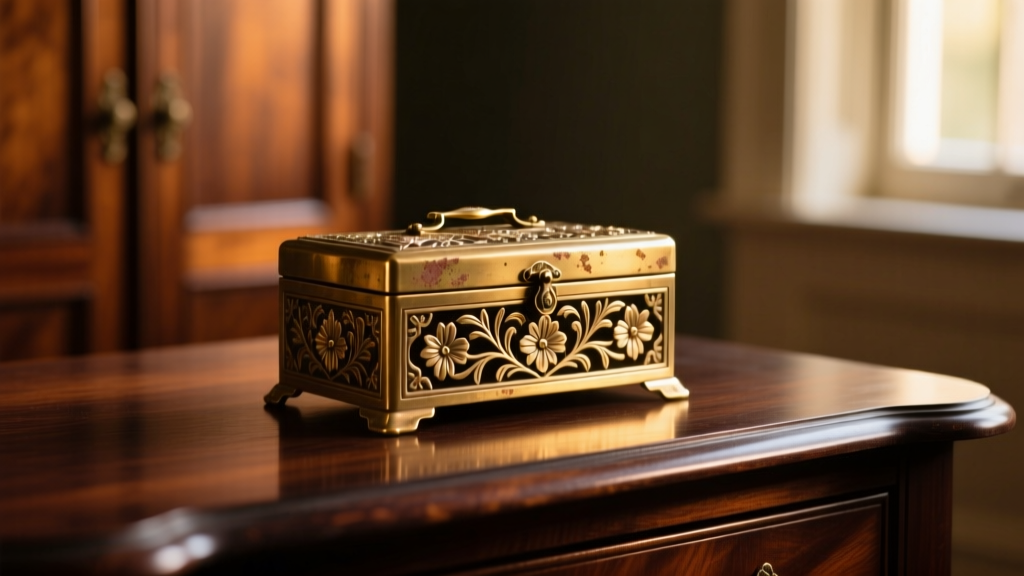
When browsing estate sales, auction houses, or online vintage marketplaces, an antique metal jewelry box often stands out as a romantic, heirloom-quality storage solution. However, the initial purchase price is rarely the final cost of ownership. Evaluating these pieces requires a keen eye for metallurgy, historical construction methods, and the hidden expenses of conservation. Whether you are looking at a Victorian-era silver-plated casket or an Art Deco brass vanity box, understanding the intersection of budget and intrinsic value is critical for any serious collector or jewelry enthusiast.
The market for antique storage is highly stratified. Entry-level pieces, typically mass-produced electroplated boxes from the early 20th century, can be found for $40 to $120. Mid-tier boxes ($150 to $450) usually feature solid brass, copper, or bronze construction with intact enamel work and original hardware. High-end investment pieces ($500 to $2,500+) include sterling silver guilloché boxes, Fabergé-style works, or pieces from renowned makers like Tiffany & Co. and Gorham. But how do you verify these tiers and ensure you aren't overpaying for a cleverly disguised reproduction?
Decoding Metal Grades and Hallmarks
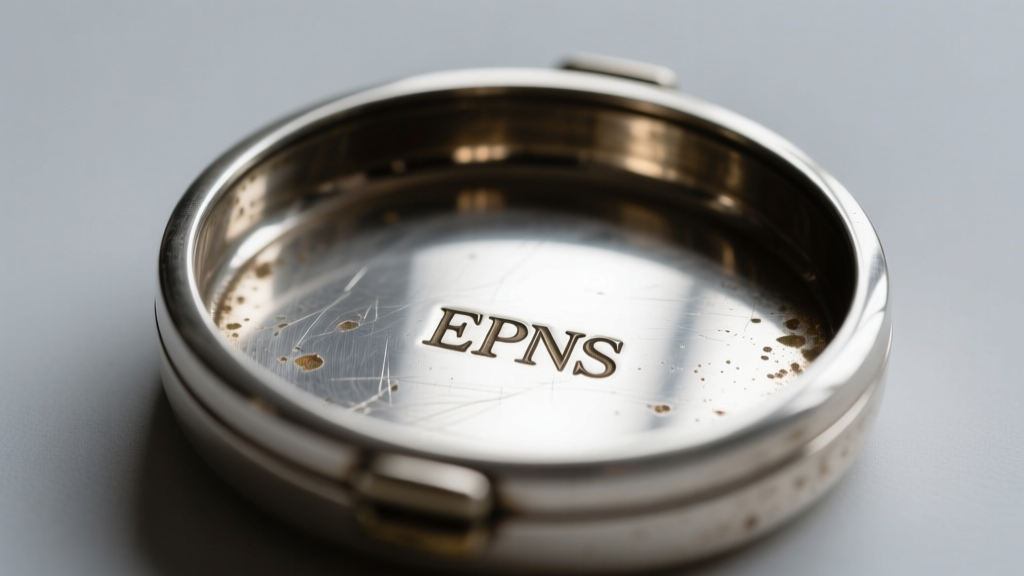
The most fundamental step in assessing value is identifying the base metal. Many buyers mistakenly assume a heavy, silver-toned antique box is solid sterling silver, only to discover it is EPNS (Electroplated Nickel Silver). According to the comprehensive databases at 925-1000, hallmarking can tell you the exact origin, maker, and metal purity of a piece.
| Metal Type | Common Hallmarks | Value Impact | Budget Consideration |
|---|---|---|---|
| Sterling Silver | 925, Lion Passant, Sterling | Highest intrinsic and collector value. | Premium pricing; requires careful polishing to preserve patina. |
| EPNS / Silver Plate | EPNS, A1, EP, Silver on Copper | Moderate to low; valued for aesthetics rather than melt weight. | Budget-friendly, but re-plating costs can exceed the item's value. |
| Solid Brass / Bronze | Rarely hallmarked; occasionally maker stamps. | Valued for craftsmanship, weight, and patina. | Excellent mid-tier budget option; highly durable. |
| Pewter / Spelter | Pewter marks, or unmarked. | Lowest; prone to pitting and structural fatigue. | Strictly decorative; avoid for heavy daily-use storage. |
If you are examining a silver-toned box, look closely at the high-friction areas like the lid's lip and the bottom feet. If you see a yellowish or coppery hue bleeding through, the silver plating has worn away. While this is common in genuine antiques, it severely limits the resale value unless the piece has significant historical provenance.
Hidden Budget Killers: Linings, Hinges, and Tarnish
An antique metal jewelry box might look pristine on the outside, but the interior can harbor severe risks to your modern jewelry collection. The most notorious hidden budget killer is the degradation of the interior lining.
The Danger of Shattered Silk and Acidic Velvet
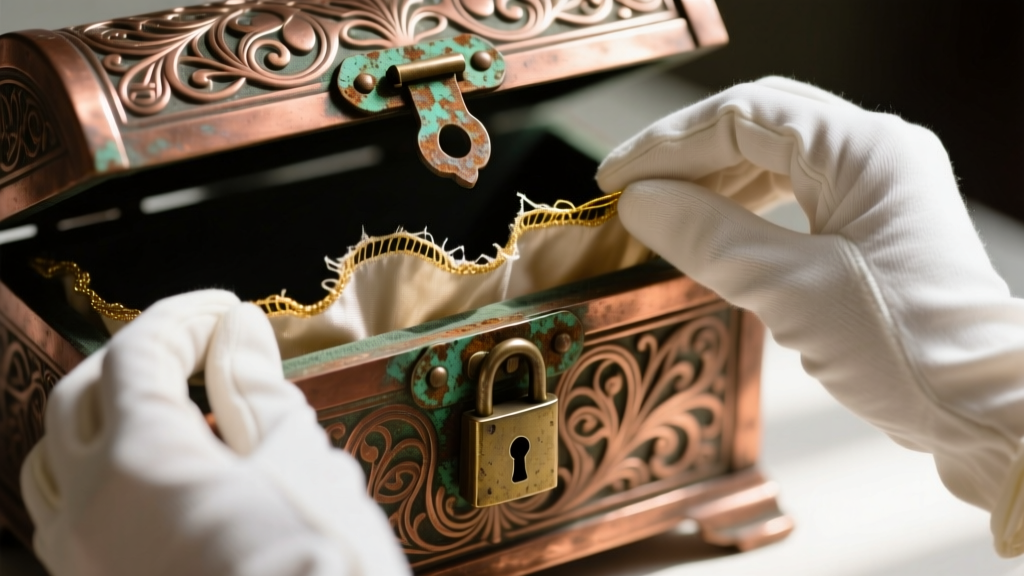
In the late 19th and early 20th centuries, manufacturers often used "weighted silk" for luxury linings. Over decades, the metallic salts used to weight the silk cause the fibers to literally disintegrate—a conservation issue known as "silk shattering." Furthermore, old velvet and felt linings can off-gas sulfur compounds and acidic vapors. If you store modern sterling silver or pearls in an unrestored antique box, these off-gassed chemicals will cause rapid, severe tarnishing and even surface etching. Re-lining a standard-sized box with archival, acid-free suede or silk typically costs between $80 and $150 when done by a professional bookbinder or conservator.
Hinge Mechanics and Soldering
Inspect the hinges meticulously. Antique boxes generally use either butt hinges (small, individual knuckles soldered to the metal) or piano hinges (a continuous strip). Butt hinges on brass or silver boxes are notoriously fragile; the solder degrades over time, leading to a detached lid. Repairing a silver solder joint requires a skilled silversmith using a laser welder or precise torch work to avoid melting the surrounding antique enamel or scorching the interior velvet. Expect to pay $60 to $120 per hinge for professional restoration.
Restoration vs. As-Is: A Financial Breakdown
When negotiating the price of an antique metal jewelry box, you must factor in the restoration matrix. A $200 box that requires $300 in repairs is a poor investment compared to a $400 box in pristine condition. Below is a realistic breakdown of common restoration costs based on current 2026 conservator rates.
- Archival Re-lining (Acid-Free Suede/Silk): $85 - $180
- Hinge Re-soldering (Silver/Brass): $60 - $150 per joint
- Lock Mechanism Repair/Key Cutting: $45 - $120
- Silver Re-plating (EPNS restoration): $200 - $450 (Often exceeds the value of the box)
- Enamel Infill (Champlevé/Guilloché repair): $300+ (Requires specialized artisan)
Expert Tip: Never attempt to clean an antique metal jewelry box with commercial silver dips or abrasive polishes. These chemicals will strip the historical patina and can permanently cloud glass inlays or dissolve the adhesive holding enamel work in place. Always use a mild, non-ammonia soap and a microfiber cloth for initial cleaning.
How to Spot Reproductions Masquerading as Antiques
The market is flooded with "antique-style" metal boxes manufactured in the 1970s or even recently overseas. Distinguishing a true antique from a vintage reproduction requires looking at the manufacturing techniques.
Cast vs. Stamped Construction
True Victorian and Edwardian metal boxes were often constructed from stamped sheet metal with applied cast ornaments, or they were heavily hand-chased. Modern reproductions are frequently made via cheap slip-casting or uniform die-casting. If the ornate floral patterns on the lid look identical to the patterns on the base, and the metal feels unusually thick and heavy with a slight grayish tint, you are likely holding a modern spelter or pewter cast, not a hand-finished antique.
Analyzing the Patina
Patina is the natural oxidation and wear pattern that develops on metal over a century of use. Genuine patina is layered, uneven, and typically darker in the recesses of engravings while remaining polished on the high-contact edges. Fakers often apply a "fake patina" using black acrylic paint or chemical sulfur baths. To test this, dip a cotton swab in a small amount of acetone or rubbing alcohol and gently rub a recessed area. If black residue comes off onto the swab, the patina is likely artificial and painted on. For deeper insights into identifying authentic period pieces, the educational resources at Lang Antiques provide excellent visual guides on historical metalworking techniques and hallmark evolution.
Final Verdict: Is It Worth Your Budget?
Purchasing an antique metal jewelry box is as much an exercise in historical preservation as it is in acquiring functional storage. If your budget is under $100, focus on solid brass or copper pieces with mechanical wear that can be easily cleaned, and plan to line the interior yourself with archival felt to protect your jewelry. If your budget extends into the $300 to $800 range, demand pristine EPNS or sterling silver pieces with intact original silk, working locks, and verified hallmarks cross-referenced with databases like Kovels. By understanding the metallurgy, the hidden costs of conservation, and the nuances of historical manufacturing, you can confidently acquire a beautiful, functional heirloom that will safely house your jewelry collection for generations to come.


