Pricing an Antique Wooden Jewelry Box: A Buyer's Guide
Learn how to evaluate an antique wooden jewelry box. Discover pricing tiers, wood identification, hardware assessment, and restoration cost realities.

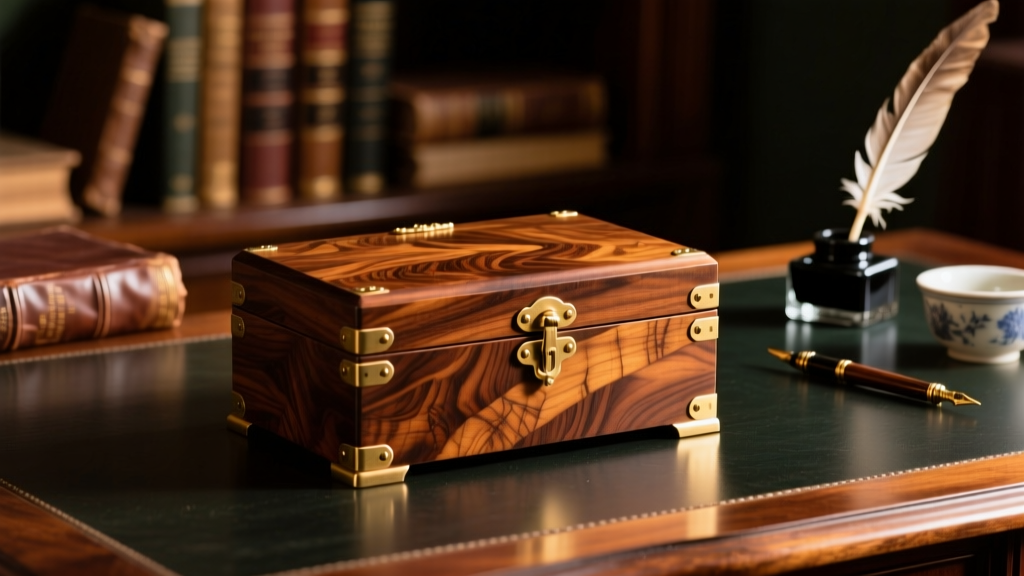
The allure of an antique wooden jewelry box lies in its history, craftsmanship, and the romantic notion of storing modern treasures in a vessel that has survived generations. However, the secondary market is flooded with misrepresented pieces, 'vintage' reproductions from the 1980s, and damaged relics requiring expensive restoration. As we navigate the 2026 antique market, buyers must look past the superficial charm and evaluate the structural integrity, material authenticity, and true market value of these pieces.
Whether you are bidding at an estate auction or browsing a curated antique shop, understanding the nuanced pricing tiers of an antique wooden jewelry box is critical. This guide breaks down the exact metrics appraisers use to determine value, from wood grain identification to the hidden costs of hardware restoration.
Wood Identification: The Foundation of Value
The species and cut of the wood dictate the baseline value of any antique storage piece. In the late 19th and early 20th centuries, cabinetmakers favored specific hardwoods for their durability and aesthetic depth. Misidentifying the wood is the most common mistake novice buyers make.
Mahogany: Cuban vs. Honduran
True Cuban mahogany (Swietenia mahagoni) was the gold standard for Victorian and Edwardian jewelry boxes. It features a tight, dense grain and a deep, reddish-brown hue that darkens beautifully with age. Due to overharvesting, Cuban mahogany was largely replaced by Honduran mahogany (Swietenia macrophylla) after the 1920s. Honduran mahogany has a wider, more porous grain and is generally lighter in weight. In today's market, a verified Cuban mahogany box commands a 30% to 50% premium over its Honduran counterpart.
Burr Walnut and Marquetry
Burr (or burl) walnut is highly prized for the swirling, chaotic grain patterns caused by growths on the walnut tree. High-end Victorian boxes often feature book-matched burr walnut veneers on the lid and sides. When assessing veneer, run your fingers lightly over the surface. Any bubbling, lifting, or cracking indicates water damage or failed animal hide glue, which will cost between $150 and $300 to professionally re-adhere and French polish.
Joinery and Hardware: Spotting Authenticity
The structural assembly and metalwork of an antique wooden jewelry box reveal its true age and the skill level of its maker. Mass-produced 'antique-style' boxes from the late 20th century often fail these critical tests.
Dovetail Joints
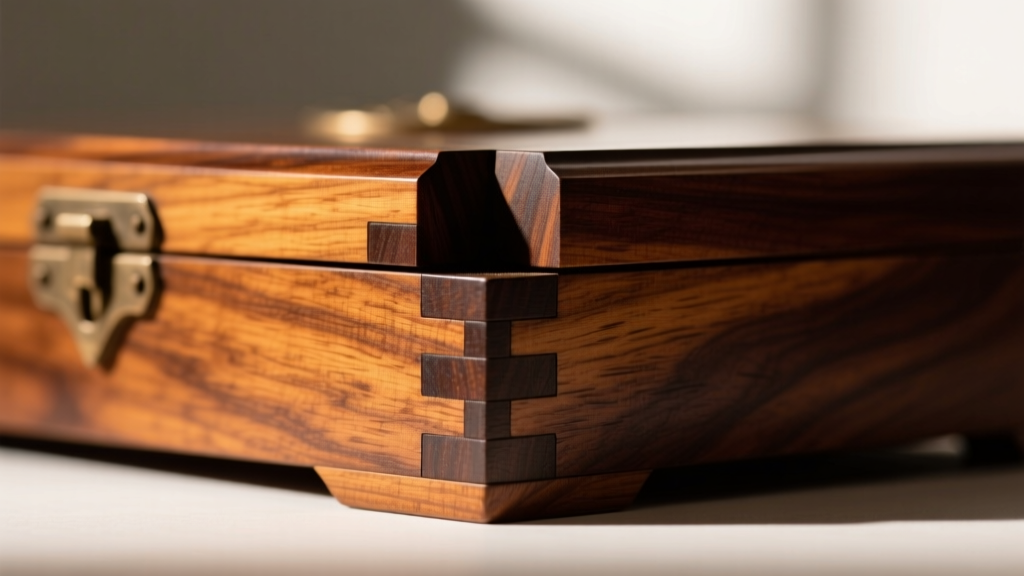
Examine the corners of the box's drawers or the main carcass. Pre-1860s boxes feature hand-cut dovetails, which are noticeably asymmetrical—the pins and tails vary in size and spacing. Post-1860s pieces may feature machine-cut dovetails, which are perfectly uniform. While machine-cut joints do not automatically disqualify a piece from being an antique, hand-cut joinery significantly elevates the value and indicates bespoke craftsmanship.
Hinges and Locks
Original hardware is paramount. Early antique boxes utilized solid brass butt hinges or piano hinges. Over time, authentic brass develops a soft, mottled patina. If the hinges are bright, uniform yellow, they have likely been replaced with modern brass-plated steel. Furthermore, inspect the lock mechanism. High-end English boxes often feature Bramah locks or Chubb detector locks. A seized or missing key can reduce the box's value by 15%, as sourcing a replacement antique key or having a locksmith custom-file one can cost upwards of $120.
2026 Pricing Matrix: What Should You Pay?
Based on recent auction results and dealer listings from authoritative sources like Kovels Antiques, the market for antique jewelry storage has stabilized, with premium pieces appreciating while damaged pieces languish. Use this matrix to assess fair market value.
| Era & Style | Primary Wood | Condition Profile | Estimated Market Value |
|---|---|---|---|
| Victorian (1880-1900) | Burr Walnut Veneer | Excellent (Original finish, intact silk lining, working lock) | $450 - $850 |
| Edwardian (1900-1910) | Solid Mahogany | Good (Minor veneer lift, tarnished but original brass, functional) | $250 - $400 |
| Art Deco (1920s-1930s) | Rosewood / Macassar | Fair (Needs re-flocking, missing key, structural soundness intact) | $120 - $220 |
| Victorian Revival (1970s-80s) | Walnut Stain on Pine | Good (Modern reproduction, machine joinery, polyurethane finish) | $35 - $75 |
The Hidden Costs of Restoration
A low purchase price on an antique wooden jewelry box is rarely a bargain if the piece requires extensive restoration. Before buying a 'fixer-upper,' factor in these specialized repair costs:
- French Polishing: Stripping damaged shellac and applying a traditional French polish (using a rub-in pad and denatured alcohol) is a labor-intensive process. Expect to pay $250 to $450 for a standard-sized box.
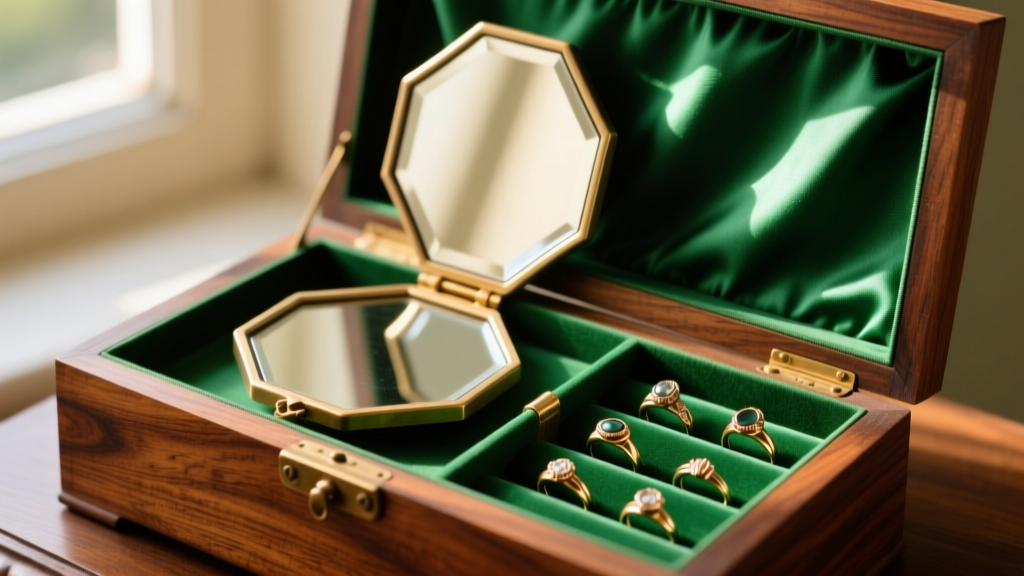
- Interior Re-Lining: Original silk or velvet linings often degrade, stain, or harbor acidic compounds that can tarnish silver jewelry. Professional re-lining with archival-grade, acid-free silk or moire fabric typically costs $150 to $300, depending on the complexity of the compartments and ring rolls.
- Structural Veneer Repair: Re-adhering lifting veneer using traditional hot hide glue and matching missing veneer chips requires a master restorer. Budget $200 to $400 for severe cases.
Evaluating the Interior: Acid and Tarnish Risks
The exterior of an antique wooden jewelry box might be flawless, but the interior can pose a direct threat to your collection. Older wooden boxes were often lined with acidic materials or treated with off-gassing adhesives. According to conservation guidelines highlighted by Antique Trader, storing sterling silver or copper-based alloys in an un-restored antique box can accelerate tarnishing due to sulfur compounds present in degrading 19th-century velvet and animal-based glues.
If you purchase an antique box with its original lining, consider using anti-tarnish strips (such as 3M Pacific Silvercloth) inside the compartments, or invest in professional re-lining with modern, chemically inert fabrics. Never store pearls or opals in an airtight antique wooden compartment, as these organic and water-bearing gemstones require ambient humidity and will crack or craze if deprived of air circulation inside a sealed, dry wooden vault.
Final Verdict: Investment or Expensive Keepsake?
An antique wooden jewelry box is a functional piece of art, but it should only be viewed as a financial investment if it meets strict criteria: verified pre-1920s origin, premium hardwoods (Cuban mahogany, Calcutta rosewood, or high-grade burr walnut), original hardware, and excellent structural integrity. For everyday jewelry storage, a well-maintained Edwardian mahogany box in the $250 to $400 range offers the best intersection of historical charm, functional durability, and fair market value. Always prioritize structural soundness over superficial cosmetic flaws, as wood can be refinished, but compromised joinery is a permanent liability.


