Choosing the Best Wood for an Engraved Jewelry Box
Discover the best woods and metals for an engraved jewelry box. Compare material properties, engraving clarity, and anti-tarnish features.

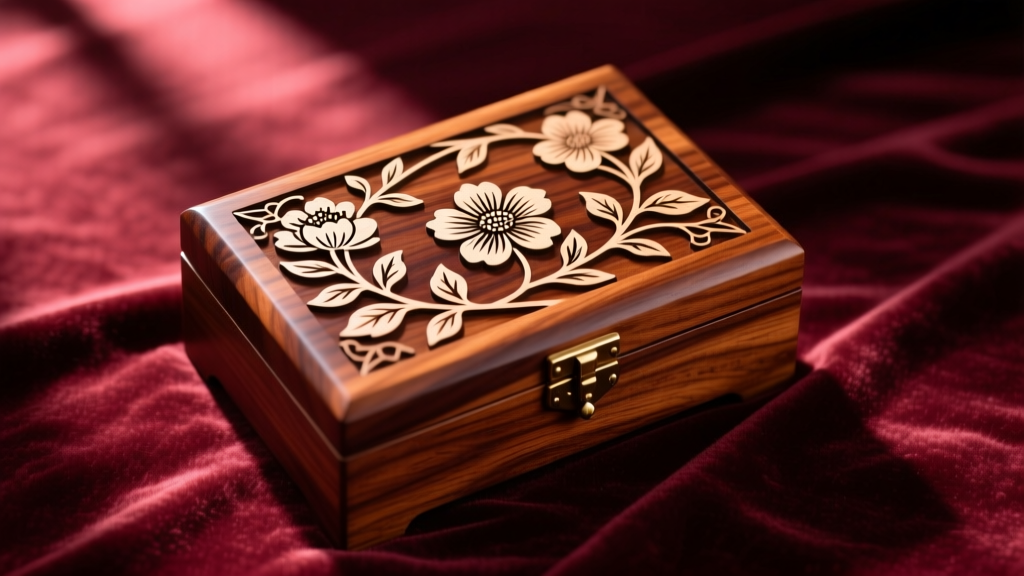
When selecting an engraved jewelry box, most buyers focus entirely on the aesthetic of the personalization—the font, the monogram, or the custom artwork. However, as any master jeweler or archivist will tell you, the substrate material dictates not only the crispness of the engraving but also the long-term safety of the precious metals and gemstones stored inside. A poorly chosen material can result in blurry etching, structural warping, or even chemical off-gassing that rapidly tarnishes sterling silver and degrades pearls.
In this comprehensive material guide, we evaluate the physical properties, Janka hardness ratings, and chemical profiles of the most popular materials used for jewelry storage. Whether you are commissioning a custom heirloom piece or shopping for a premium retail option, understanding these material science fundamentals is critical for making an informed investment.
The Science of Engraving: How Material Density Affects Detail
The clarity of an engraving is directly tied to the cellular structure and density of the material. In woodworking, density is measured by the Janka hardness scale, which calculates the force required to embed a 0.444-inch steel ball halfway into the wood. According to The Wood Database, woods with higher Janka ratings possess tighter, more uniform grain patterns.
When a CO2 laser or rotary bit interacts with tight-grained hardwoods, the energy is absorbed evenly, resulting in sharp, high-contrast edges. Conversely, softer woods with open, porous grains (like pine or basswood) tend to splinter under rotary tools and produce fuzzy, uneven burns under a laser. For an engraved jewelry box meant to hold fine jewelry, you must prioritize closed-grain hardwoods with a Janka rating of at least 900 lbf (pounds-force) to ensure the personalization remains legible and pristine for decades.
Premium Hardwoods Evaluated for Engraving
Not all hardwoods are created equal when it comes to laser calibration and rotary carving. Here is a deep dive into the top three species used by luxury box makers.
1. Black Walnut (Juglans nigra)
Black walnut is widely considered the gold standard for luxury jewelry boxes. With a Janka hardness of 1,010 lbf, it offers the perfect middle ground between workability and durability. Its natural chocolate-brown hue provides a stunning, low-contrast backdrop for deep rotary engraving, which is often filled with gold or silver leaf. For laser engraving, walnut yields a rich, dark burn that blends elegantly with the wood's natural patina. Furthermore, walnut is dimensionally stable, meaning it resists warping when exposed to the fluctuating humidity of a bedroom or dressing area.
2. Hard Maple (Acer saccharum)
Boasting a Janka hardness of 1,450 lbf, hard maple is exceptionally dense and features a remarkably tight, uniform grain. This makes it the absolute best wood for highly detailed, micro-laser engraving, such as photorealistic portraits or intricate geometric mandalas. However, its pale cream color presents a challenge: achieving a dark laser burn requires high power settings, which can lead to edge scorching if the laser's focal point is not perfectly calibrated. Maple is highly recommended for modern, minimalist jewelry boxes where high-contrast black-on-white etching is desired.
3. American Cherry (Prunus serotina)
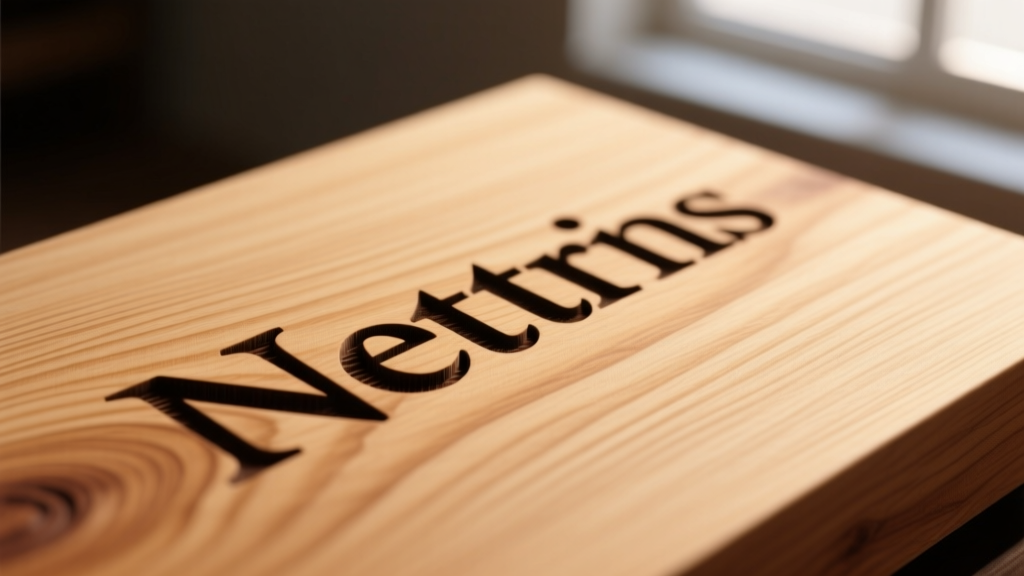
Cherry wood (950 lbf) is prized for its warm, reddish-brown tones that deepen and enrich over time when exposed to UV light. While it engraves beautifully, its photosensitivity is a double-edged sword. If an engraved cherry jewelry box is left on a sunlit vanity, the exposed wood will darken, but the laser-burned engraving will remain the same color, eventually causing the personalization to lose its contrast and fade into the background. Cherry is best suited for indoor, low-light display environments.
Alternative Materials: Metals and Synthetics
While wood dominates the market, modern jewelers are increasingly utilizing metals and high-grade acrylics for engraved jewelry boxes, particularly for travel cases and contemporary vanity displays.
- Anodized Aluminum: Lightweight and impervious to moisture, anodized aluminum is typically marked using a fiber laser or diamond drag engraver. The engraving removes the colored anodized layer, revealing the bright, raw silver-colored aluminum beneath. It is completely inert and will not off-gas, making it exceptionally safe for storing unprotected silver and gold.
- Solid Brass: Brass offers a heavy, luxurious feel and takes rotary engraving beautifully. However, raw brass oxidizes and develops a patina. If used as an exterior shell, it requires a clear lacquer coating. More importantly, brass interiors must be avoided unless heavily lined, as the copper content can react with the sulfur in the air and accelerate the tarnishing of adjacent sterling silver pieces.
- Cast Acrylic (PMMA):strong> High-quality cast acrylic can be laser-engraved to produce a striking frosted-white effect against transparent or colored backgrounds. It is chemically stable and completely immune to the acidic off-gassing that plagues cheap composite woods.
The Hidden Danger: Wood Off-Gassing and Silver Tarnish
The most critical, yet frequently overlooked, aspect of choosing an engraved jewelry box is the chemical interaction between the storage material and your precious metals. Many commercial jewelry boxes are constructed from MDF (Medium-Density Fiberboard) or oak. According to guidelines published by Conservation Wiki, oak contains high levels of tannins and acetic acid, while MDF and plywood off-gas formaldehyde and other volatile organic compounds (VOCs) from their adhesives.
"Acetic acid vapors emitted from oak and certain composite woods will rapidly corrode silver, lead, and copper alloys, even in enclosed micro-environments like a jewelry box."
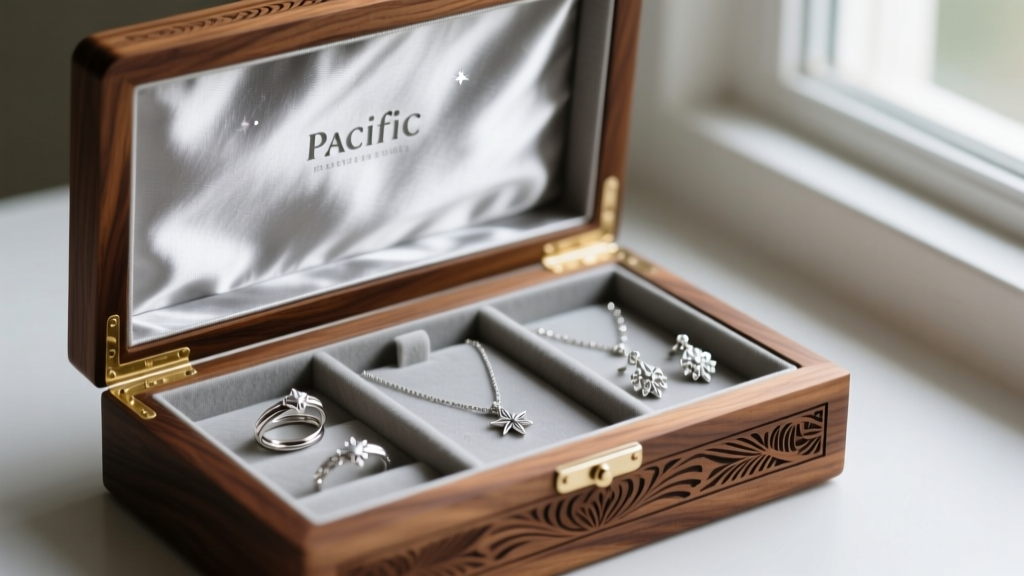
If you purchase an engraved jewelry box made from oak, walnut, or MDF, it must feature an interior sealed with an archival-quality barrier. The industry standard is Pacific Silvercloth—a specialized flannel embedded with microscopic silver particles that absorb hydrogen sulfide and other tarnishing gases before they reach your jewelry. As noted by The Silver Institute, storing silver in unlined, acidic wood environments can cause irreversible pitting and black oxidation within a matter of weeks.
Material Comparison Matrix: Hardness & Engraving Profile
Use the following data table to compare the physical and chemical properties of common jewelry box materials before making your purchase.
| Material | Janka / Mohs Scale | Best Engraving Method | Engraving Contrast | Off-Gassing Risk | Avg. Price Range |
|---|---|---|---|---|---|
| Black Walnut | 1,010 lbf (Janka) | CO2 Laser / Rotary | Medium (Dark on Dark) | Low (Requires lining) | $85 - $250 |
| Hard Maple | 1,450 lbf (Janka) | CO2 Laser | High (Black on Cream) | Low (Requires lining) | $110 - $300 |
| Oak (Red/White) | 1,290 lbf (Janka) | Rotary / Sandblasting | Medium | High (Acetic Acid) | $60 - $150 |
| Anodized Aluminum | 2.5 (Mohs) | Fiber Laser / Diamond Drag | High (Silver on Color) | None (Inert) | $45 - $120 |
| Cast Acrylic | N/A (Shore D 85) | CO2 Laser | High (Frosted White) | None (Inert) | $50 - $180 |
Maintenance Protocols for Engraved Surfaces
To preserve the integrity of your engraved jewelry box, proper maintenance is required. Dust and skin oils naturally accumulate in the microscopic grooves of laser-etched wood and metal. Never use chemical glass cleaners or ammonia-based polishes on an engraved surface, as these can strip the natural oils from hardwoods or degrade the lacquer on brass.
For wood boxes, use a soft-bristled makeup brush to gently sweep dust out of the engraved lettering. Once every six months, apply a light coat of pure mineral oil or a specialized beeswax-based wood conditioner to the exterior. Avoid applying oil directly into deep rotary engravings, as it can pool and darken the etching unevenly. For metal boxes, a simple wipe-down with a microfiber cloth and a mild solution of distilled water and dish soap is sufficient to keep the engraved lines crisp and legible.
Final Verdict: Selecting Your Substrate
The best material for an engraved jewelry box ultimately depends on your storage environment and the specific jewelry you intend to protect. For traditionalists seeking a generational heirloom piece, Black Walnut offers the best balance of engraving elegance and structural stability, provided it is lined with anti-tarnish fabric. For modern collectors storing highly sensitive pieces like pearls or untreated silver, an Anodized Aluminum or Cast Acrylic box provides a completely inert, chemically safe micro-environment while still allowing for striking, high-contrast personalization.


