Bluey Jewelry Box Trends 2026: Collector Storage & Style Guide
Explore the 2026 Bluey jewelry box trend. We analyze artisan materials, anti-tarnish linings, and storage solutions for collectors and families.

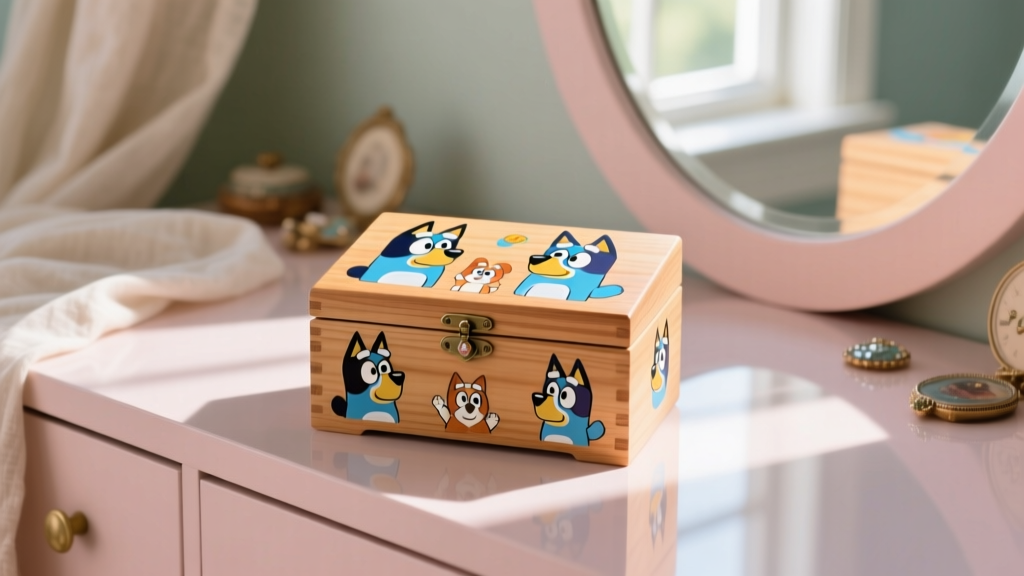
The Intersection of Nostalgia and Functional Storage
In the landscape of 2026 jewelry organization, the line between children's novelty items and serious collector storage has beautifully blurred. The surge in demand for the Bluey jewelry box is a prime example of this 'kidult' and family-centric design movement. No longer just a plastic toy with a tinny music box mechanism, today's Bluey-themed storage solutions are being crafted by independent artisans and specialized manufacturers to hold genuine heirloom pieces, sterling silver collections, and high-end show merchandise. For parents organizing family jewelry or adult collectors preserving limited-edition pieces, understanding the material grades, anti-tarnish properties, and compartmentalization of these character-themed boxes is essential for long-term preservation.
Material Anatomy: Mass-Market vs. Artisan Construction
When sourcing a Bluey jewelry box, the exterior aesthetics often mask vastly different interior realities. The market is currently split into two distinct tiers, each with specific failure modes and preservation capabilities.
Mass-Market MDF and Polyurethane
Officially licensed, mass-market boxes are typically constructed from Medium-Density Fiberboard (MDF). While MDF is stable and resists warping, it is highly susceptible to moisture damage if the polyurethane topcoat is chipped. The interior lining in these budget-friendly options is usually standard polyester velvet. While soft to the touch, standard polyester does nothing to inhibit the oxidation of silver or copper, meaning your jewelry will still tarnish if left in a humid environment.
Artisan Kiln-Dried Pine and Pacific Cloth
On the premium end, independent woodworkers on platforms like Etsy are crafting custom Bluey jewelry boxes using kiln-dried pine or birch plywood. These woods offer superior structural integrity for heavy brass hinges. More importantly, high-end artisan boxes are increasingly being lined with Pacific Silvercloth or zinc-embedded anti-tarnish flannel. These specialized fabrics actively absorb hydrogen sulfide and sulfur dioxide from the air—the primary culprits behind silver tarnish—before they can reach your jewelry.
Storage Material & Lining Comparison Chart
To help you evaluate the true protective value of a character-themed jewelry box, refer to the breakdown below based on current 2026 manufacturing standards.
| Feature | Mass-Market (Licensed Merch) | Artisan / Custom Maker | Collector / Heirloom Grade |
|---|---|---|---|
| Shell Material | MDF with printed laminate | Solid pine or birch plywood | Walnut or mahogany with hand-painted motifs |
| Interior Lining | Standard polyester velvet | Anti-tarnish treated flannel | Pacific Silvercloth or Luster-Loc™ fabric |
| Hinge Hardware | Friction stays or glued piano hinges | Screwed brass or steel piano hinges | Concealed soft-close European hinges |
| Price Range (2026) | $18 - $35 | $65 - $140 | $250 - $450+ |
Compartmentalization Challenges in Novelty Storage
The greatest challenge with any novelty or character-themed storage is that the interior layout is often an afterthought. A standard Bluey jewelry box might feature a single deep well and a basic ring roll, which is inadequate for a diverse collection. Here is how serious collectors are retrofitting these boxes for optimal organization:
- Body Jewelry and Gauges: If you collect show-inspired body jewelry, storing 14G or 12G titanium barbells in a shallow velvet tray will result in scratching. Use modular, food-grade silicone grid inserts (readily available in 2mm to 4mm thicknesses) to create custom slots that keep heavy gauge pieces from rolling and colliding.
- Delicate Chains: The deep, undivided wells common in music-box styles are notorious for tangling delicate 18-inch snake or cable chains. Utilize small, acid-free jewelry tissue paper to create individual 'envelopes' for each chain before placing them in the deep well.
- Stud Earrings: Standard ring rolls waste valuable real estate. Remove the ring roll and replace it with a custom-cut piece of high-density EVA foam, pierced with a heavy-duty needle to create a dense grid for stud earring posts.
Preservation Protocols for Painted and Resin Exteriors
While protecting the silver inside is paramount, preserving the vibrant Bluey character art on the outside requires specific environmental controls. Many artisan boxes use water-based acrylic paints sealed with a matte polycrylic topcoat. According to conservation experts, fluctuating humidity levels can cause the wood substrate to expand and contract, leading to micro-cracking in the painted surface.
To prevent this, maintain a relative humidity (RH) of 40% to 50% in the room where the box is stored. Avoid placing the jewelry box on a windowsill where direct UV exposure will not only fade the vibrant blues and oranges of the character motifs but also degrade the interior anti-tarnish linings. As noted by the experts at WOLF, UV light and heat accelerate the breakdown of both synthetic velvet fibers and the chemical compounds used in tarnish-resistant fabrics.
Silver Care and Tarnish Prevention Inside Themed Boxes
Even with an anti-tarnish lining, a Bluey jewelry box is not a vacuum-sealed vault. Every time you open the lid, you introduce new sulfur-rich ambient air. To maximize the lifespan of your interior lining and keep your silver pristine, incorporate 3M Anti-Tarnish Strips into the deep wells of the box. These strips utilize copper-based particles to absorb airborne sulfides and typically last for six months in a frequently opened box.
Furthermore, never store jewelry that has been worn directly into the box without a gentle wipe-down. As highlighted in the silver care guidelines from Jewelers Mutual, the natural oils, lotions, and acidic sweat from your skin will rapidly degrade anti-tarnish fabrics, rendering them useless within weeks. A quick polish with a microfiber cloth before storage ensures the box's lining can do its job effectively.
The Verdict: Blending Whimsy with Archival Quality
The 2026 Bluey jewelry box trend represents a maturation in how we view pop-culture merchandise. It is no longer about buying disposable plastic trinkets; it is about investing in functional, joyful storage that respects the value of the items held within. Whether you are opting for a mass-market MDF box retrofitted with silicone inserts and anti-tarnish strips, or commissioning a custom walnut keepsake box lined with Pacific Silvercloth, the key is to prioritize the interior environment just as much as the charming exterior. By understanding material grades, humidity control, and proper compartmentalization, collectors and families alike can ensure their jewelry remains as vibrant and timeless as the characters painted on the lid.


