How to Restore and Clean an Embroidered Jewelry Box
Learn how to troubleshoot snags, acidic tarnish, and moisture damage in your embroidered jewelry box with expert archival restoration techniques.

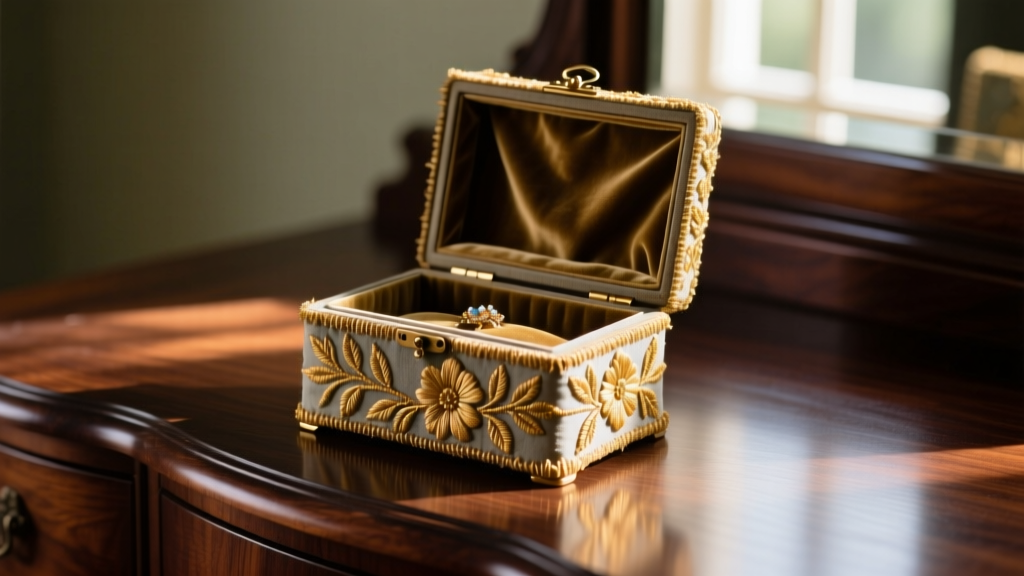
Embroidered jewelry boxes are stunning heirlooms and popular artisan crafts, but their textile construction presents unique preservation challenges. If you own a vintage jewelry box embroidered with delicate silk or metallic threads, you have likely noticed that it can inadvertently damage the very pieces it is meant to protect. From micro-abrasions caused by synthetic threads to rapid tarnishing triggered by acidic off-gassing, the structural anatomy of these boxes requires specialized troubleshooting. In this guide, we break down the exact failure modes of fabric-covered storage and provide archival-grade solutions to restore and protect your collection.
Diagnosing the 3 Hidden Hazards of Embroidered Storage
Unlike solid hardwood or injection-molded acrylic, embroidered boxes rely on a multi-layered composite structure: a rigid cardboard or MDF substrate, an adhesive layer, a backing fabric, and the decorative embroidery itself. Each layer introduces specific chemical and physical risks to fine jewelry.
Thread Snagging and Micro-Abrasions
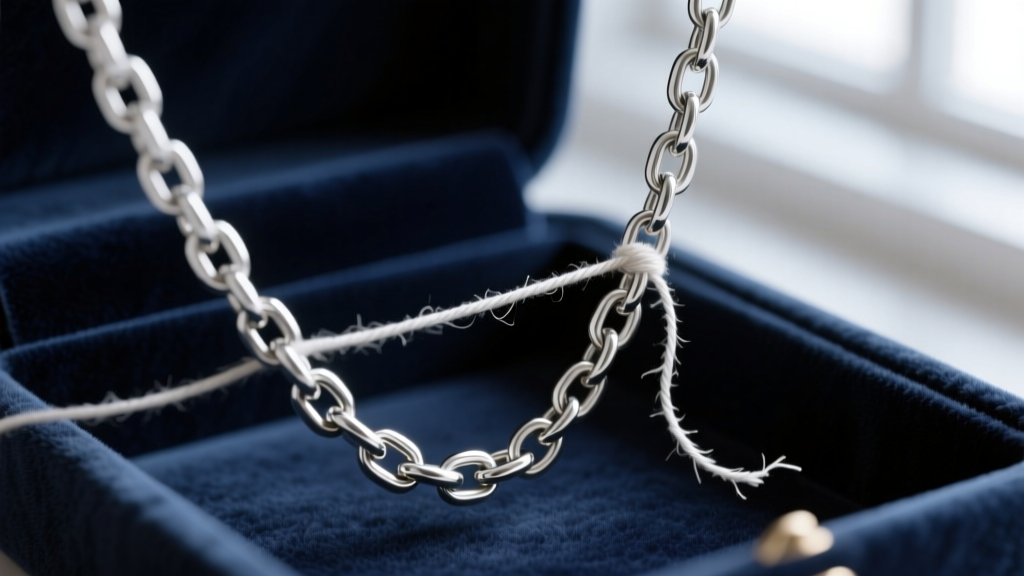
The most immediate physical threat is snagging. Artisan and mass-market boxes frequently utilize metallic threads (such as lurex or zari) and synthetic polyesters. Over time, the tension in the embroidery relaxes, or the threads fray, creating microscopic barbs. These barbs easily catch on delicate components like pavé settings, filigree work, and fine chains (particularly snake, box, and rope chains). When a piece is pulled free, it can bend prongs or permanently kink the metal.
Acidic Off-Gassing and Tarnish Acceleration
The substrate and adhesives used in standard embroidered boxes are rarely pH-neutral. Cheap polyvinyl acetate (PVA) glues and unbuffered wood-pulp cardboard release volatile organic compounds (VOCs) and acidic gases as they degrade. According to the Smithsonian Museum Conservation Institute, acidic environments dramatically accelerate the oxidation of copper alloys and the formation of silver sulfide (tarnish) on sterling silver. If your silver jewelry turns black within weeks of storage, the box's off-gassing is likely the culprit.
Moisture Trapping in Textile Layers
Fabric and the underlying cotton batting act as hygroscopic sponges, absorbing ambient humidity. When a box is closed, this trapped moisture creates a microclimate with elevated relative humidity (RH). For metals like brass, copper, and untreated silver, an RH above 65% combined with organic acids from the textiles creates a perfect storm for corrosion.
Step-by-Step Troubleshooting and Restoration Guide
Restoring an embroidered storage piece requires addressing both the physical snags and the chemical environment. Follow these professional conservation techniques to salvage your box.
Fixing Snagged Threads and Fraying Edges
Never use scissors to cut a snagged metallic or silk thread. Cutting breaks the tension loop, causing the surrounding embroidery to unravel and creating more sharp ends. Instead, use a specialized snag-repair tool (like a Snag Nab-It needle) or a fine 0.6mm crochet hook.
- For interior snags: Gently insert the hook from the underside of the fabric lining, catch the snagged loop, and pull it through to the hidden side.
- For exterior fraying: Apply a microscopic drop of archival-grade, pH-neutral PVA adhesive (such as Lineco Neutral pH Adhesive) to the frayed thread ends using a toothpick. Press flat and let cure for 24 hours.
Neutralizing Acidic Linings (The Archival Upgrade)
To stop acidic off-gassing from ruining your metals, you must create a physical barrier between the jewelry and the box's interior lining. The American Institute for Conservation recommends using unbuffered, acid-free materials for textile and metal storage.
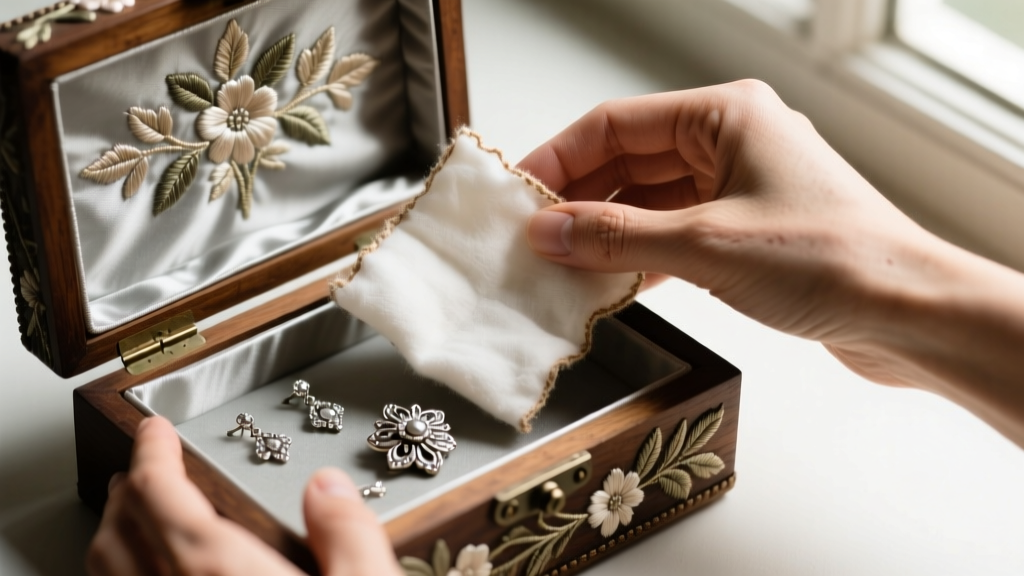
- Cut sheets of unbleached, acid-free archival tissue paper (pH 7.0-8.5) or washed, unbleached cotton muslin to fit the interior compartments.
- For severe tarnish issues, line the primary compartment with Pacific Silvercloth, a specialized flannel embedded with microscopic silver particles that intercept and absorb hydrogen sulfide gases before they reach your jewelry.
- Avoid using standard felt or wool, as these natural fibers contain active sulfur that directly causes silver tarnish.
Material Comparison: Standard vs. Archival Upgrades
Understanding the material science behind your storage helps you make informed upgrades. Below is a comparison of the materials typically found in commercial embroidered boxes versus the archival alternatives you should use for restoration.
| Component | Standard Commercial Box | Archival Restoration Upgrade | Impact on Jewelry |
|---|---|---|---|
| Substrate | Unbuffered wood-pulp cardboard / MDF | Acid-free corrugated board or stable acrylic inserts | Prevents acidic VOC off-gassing |
| Adhesive | Standard PVA or animal hide glues | Neutral-pH PVA (e.g., Lineco) or acrylic adhesives | Eliminates sulfur and acid transfer |
| Interior Lining | Synthetic velvet, polyester felt, or wool | Unbleached cotton muslin or Pacific Silvercloth | Stops sulfur-induced tarnishing |
| Embroidery Thread | Metallic lurex, raw silk, dyed polyester | (Exterior only) Sealed with micro-crystalline wax | Reduces micro-abrasions and dye transfer |
Routine Maintenance for Long-Term Preservation
Once you have repaired the snags and neutralized the acidic interior, ongoing maintenance is required to keep the embroidered exterior pristine and the interior environment stable.
Controlling the Microclimate
Textile boxes are highly susceptible to fluctuating humidity. Store your restored box in a room with a stable relative humidity (RH) between 45% and 55%. Avoid placing the box near exterior walls, HVAC vents, or in bathrooms where steam can penetrate the fabric layers. To manage internal moisture, place a small, breathable silica gel desiccant packet (indicating silica that changes color when saturated) inside the main compartment. Recharge the silica gel in a low-heat oven every three months.
Cleaning the Embroidered Exterior
Dust and skin oils degrade embroidery threads over time, making them brittle and prone to snapping.
- Dusting: Use a soft, natural-bristle makeup brush or a museum-grade soft duster to gently lift dust from the embroidered crevices. Never use a vacuum cleaner, even on a low setting, as the suction can pull loose threads and beadwork out of their settings.
- Spot Cleaning: If the fabric backing becomes soiled, do not use water or chemical upholstery cleaners. Moisture will seep into the cardboard substrate, causing warping and activating dormant mold spores. Instead, use a dry-cleaning sponge (vulcanized rubber sponge) to gently dab away surface soils without introducing liquid.
Inspecting Hardware and Hinges
The weight of heavy embroidery and the underlying batting can cause box lids to sag, putting stress on small brass or steel hinges. Inspect the hinges every six months. If you notice the lid pulling away from the base, reinforce the hinge screws with a toothpick dipped in wood glue, or upgrade to longer, corrosion-resistant stainless steel micro-screws to ensure the structural integrity of the box.
By understanding the material vulnerabilities of your storage and applying these targeted conservation techniques, you can safely preserve both the artisan beauty of the box and the priceless jewelry it holds inside.


