Jewelry Display Bust Buying Guide: 2026 Value & Budget
Assess the true value of a jewelry display bust in 2026. We compare velvet, linen, and acrylic options across budget tiers to prevent necklace tangling.

The Anatomy of a High-Value Jewelry Display Bust
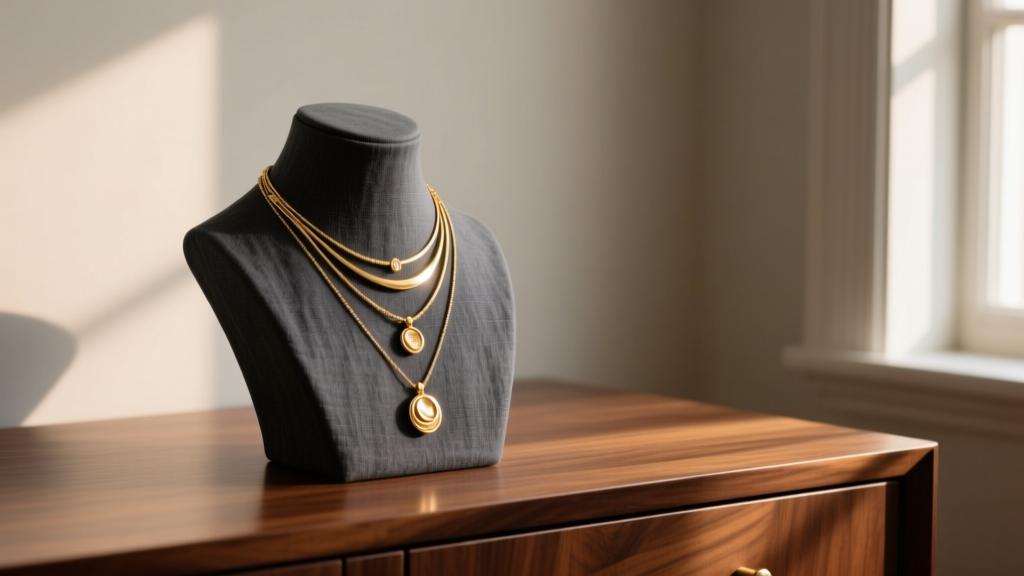
When evaluating a jewelry display bust, most buyers focus entirely on the exterior fabric. However, the true value and longevity of a bust are dictated by its internal armature and core density. In 2026, the market is saturated with visually appealing but structurally deficient displays that fail within months. To properly assess budget versus value, we must first understand what keeps the bust upright and intact.
Cheap, mass-market busts typically rely on a corrugated cardboard core wrapped in low-density polyurethane foam (approximately 0.8 lb per cubic foot). While lightweight, this core compresses over time. When burdened with a heavy statement necklace—such as a multi-strand gemstone piece weighing 200 to 300 grams—the cardboard buckles, causing the bust to develop a permanent forward slouch. Mid-tier options upgrade to Medium-Density Fiberboard (MDF) or high-density polyurethane (2.5+ lb per cubic foot), while premium archival busts utilize carved solid basswood or reinforced cast acrylic bases. The core material directly dictates the 'slump factor,' which is the primary failure mode for budget displays.
Material Breakdown: Velvet vs. Linen vs. Acrylic
The exterior wrapping of your jewelry display bust is not merely an aesthetic choice; it is a chemical interface that interacts directly with your precious metals and gemstones. Different textiles and manufacturing adhesives carry varying risks of tarnish acceleration and physical snagging.
| Material | Avg. Cost Range | Snag Risk | Tarnish Acceleration | Best Use Case |
|---|---|---|---|---|
| Crushed Velvet | $12 - $25 | High (Deep Pile) | High (Acidic Dyes) | Costume jewelry, thick chains |
| Micro-Velvet | $25 - $45 | Low (1mm Pile) | Medium | Delicate cable chains, everyday wear |
| Belgian Linen | $40 - $85 | Very Low | Low (If unbleached) | Fine jewelry, silver, pearls |
| Cast Acrylic | $50 - $120 | Zero | Zero (Inert) | Heavy statement pieces, retail displays |
Standard crushed velvet features a deep pile that can easily catch the microscopic open jump rings of delicate 0.9mm cable chains or snake chains. Furthermore, the National Park Service conservation guidelines explicitly warn against storing silver in contact with textiles treated with acidic dyes or sulfur-based vulcanization agents, which rapidly accelerate the formation of silver sulfide (tarnish). If you are displaying sterling silver or raw pearls, investing in unbleached linen or inert acrylic is not optional; it is a mandatory preservation step.
Budget Tiers: What $15, $35, and $75 Actually Get You
The Under-$20 Tier (Mass-Market MDF & Cardboard)
At this price point, you are paying for the illusion of luxury. The exterior is usually a synthetic polyester blend mimicking velvet, glued to the core using cheap, high-VOC (Volatile Organic Compound) adhesives. These adhesives off-gas sulfur compounds for the first several months, creating a localized micro-climate that will tarnish sterling silver within weeks. Additionally, the internal wire armatures used to shape the neck and shoulders are often made of untreated, low-gauge steel.
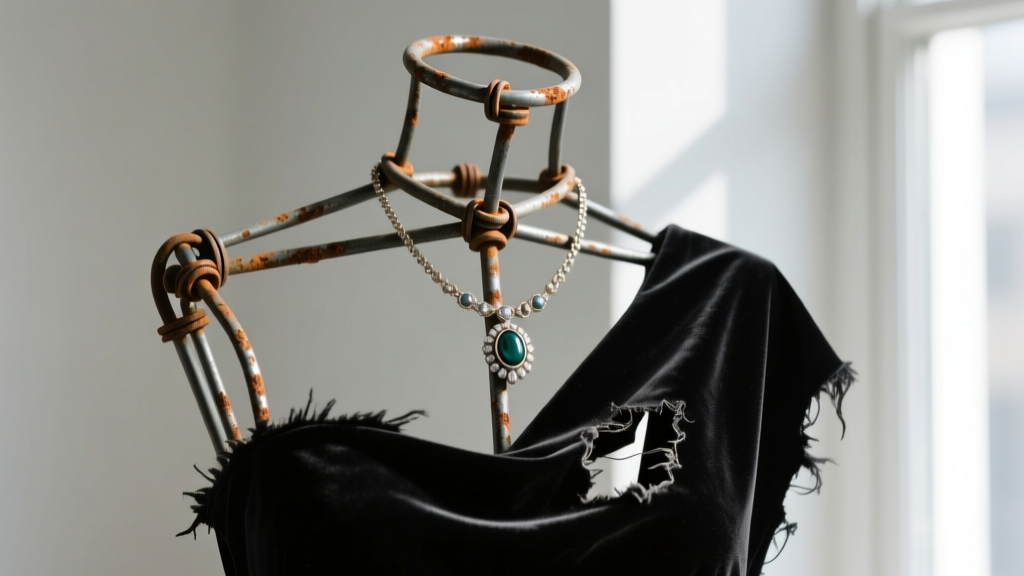
As seen in the structural failures of budget models, ambient humidity penetrates the thin fabric, causing the internal wire to rust. This rust eventually bleeds through the fabric, ruining both the bust and any jewelry resting against it. The under-$20 tier is only a viable value proposition if you are strictly displaying non-tarnishing, heavy stainless steel or titanium fashion jewelry.
The $30-$45 Tier (Boutique Linen & Upgraded Cores)
This is the sweet spot for the majority of personal jewelry collectors. In the $30 to $45 range, manufacturers transition to MDF or molded high-density foam cores. The exterior wrapping shifts to micro-velvet or linen blends. Crucially, reputable brands in this tier begin using acid-free PVA (Polyvinyl Acetate) adhesives to bind the fabric to the core, significantly reducing the risk of chemical off-gassing. The base is usually weighted with a hidden metal plate, preventing the bust from tipping forward when draped with a 150-gram pendant necklace. This tier offers the highest return on investment for everyday wearers who need to keep their daily rotation tangle-free and visually accessible.
The $60+ Tier (Archival-Grade & Cast Acrylics)
Entering the premium tier, you encounter true archival-grade materials and modern minimalist designs. Solid basswood cores wrapped in 100% pure, unbleached Belgian linen offer museum-level preservation for antique gold and natural pearls. Alternatively, this tier features cast acrylic (PMMA) busts. Unlike cheap extruded acrylic, cast acrylic is highly resistant to micro-scratches from metal clasps and does not yellow under UV exposure from sunlight. Cast acrylic provides a completely inert surface, meaning it will never react with copper, silver, or gold alloys.
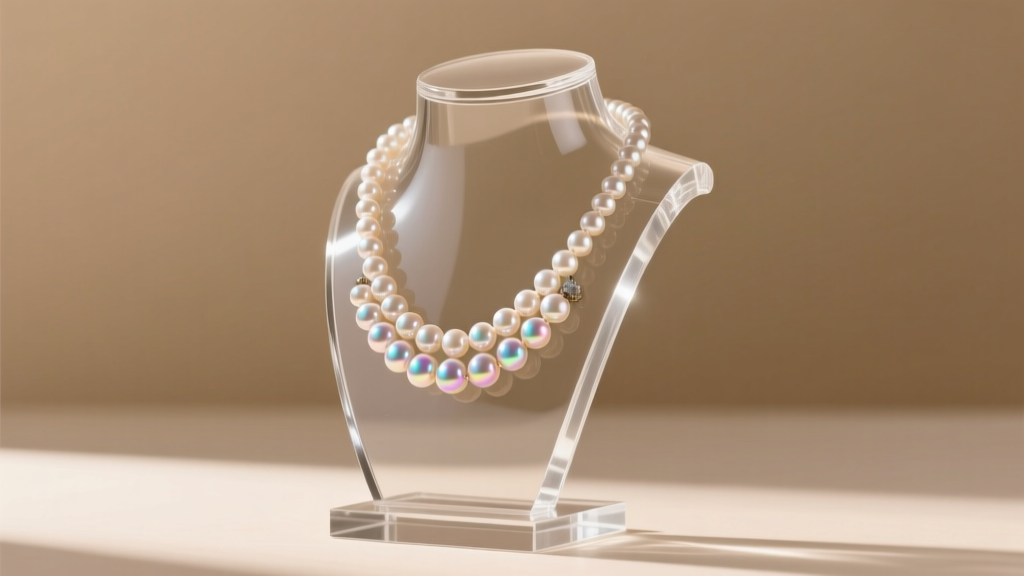
Acrylic busts in this tier are often machined from a single block, eliminating the need for internal wires or glues entirely. The structural rigidity of a 12mm thick cast acrylic base ensures that even the heaviest multi-strand pearl or gemstone necklaces are supported without any forward bowing or structural fatigue over time.
Hidden Costs: Tarnish, Slumping, and Neckline Stretching
When calculating the ROI of a jewelry display bust, you must factor in the hidden costs of jewelry damage caused by poor ergonomic design. A poorly designed bust often features an exaggerated backward pitch (angled at 15 degrees or more). While this might look dramatic on a retail shelf, it causes heavy pendants to constantly slide downward, placing immense lateral stress on the chain's weakest link—usually the soldered jump ring near the clasp.
Expert Insight: According to Wolf 1834 jewelry care protocols, storing heavy chains on an improperly angled surface can lead to metal fatigue and permanent stretching of the chain links. The optimal pitch for a jewelry display bust is a subtle 5 to 8 degrees, which allows gravity to keep the chain seated against the neckline without inducing downward drag.
Furthermore, 'slumping'—the gradual compression of the bust's foam core—creates uneven surfaces. When a bust slumps, necklaces slide into the crevices, leading to severe tangling. Untangling a delicate 18k gold box chain that has been crushed into a slumping foam crevice often results in bent links that require professional laser soldering to repair, a service that can easily cost $75 to $150. In this context, spending an extra $25 upfront on a high-density core bust is a highly cost-effective insurance policy.
Final Verdict: Maximizing Your Display ROI
The value of a jewelry display bust in 2026 is not determined by its initial price tag, but by its material inertness and structural longevity. If your collection consists primarily of fashion jewelry, stainless steel, or thick, durable chains, the $15 to $20 MDF and velvet tier will suffice, provided you keep them in a climate-controlled room to prevent internal wire rust.
However, if you are storing fine jewelry, sterling silver, or delicate gold chains, the $30 to $45 tier featuring high-density foam cores, micro-velvet, and acid-free adhesives represents the ultimate budget-to-value sweet spot. For serious collectors, antique dealers, or those storing heavy statement pieces, the $60+ investment in solid wood linen busts or cast acrylic is mandatory to prevent metal fatigue, chemical tarnishing, and physical snagging. By matching the bust's material properties to your specific metal types and chain gauges, you transform a simple storage accessory into a vital preservation tool.


