Jewelry Box Legs: A Technical Guide to Stability & Wood Movement
Explore the engineering of jewelry box legs. Learn how material, joinery, and height impact stability, moisture protection, and long-term wood movement.

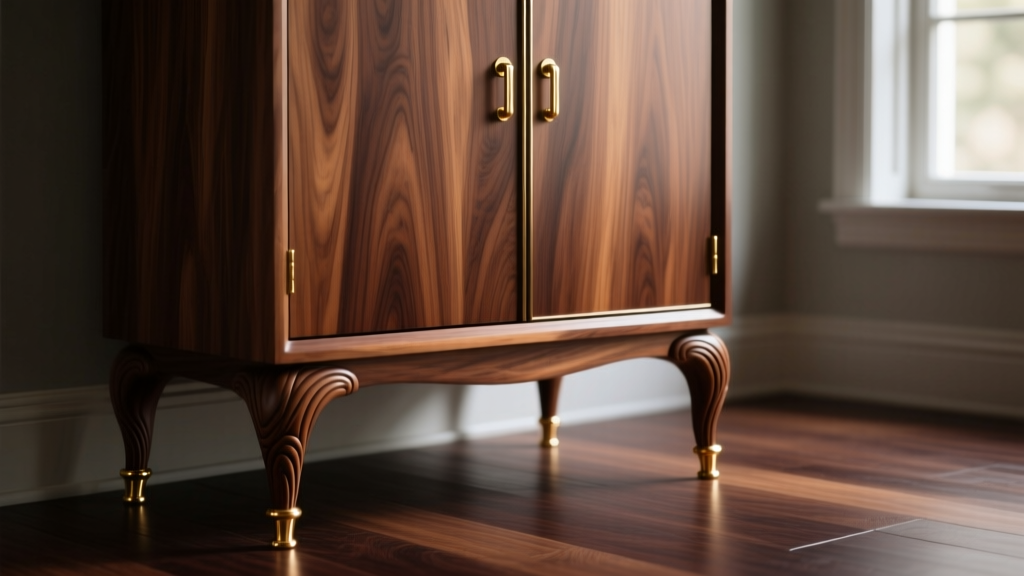
When collectors and horology enthusiasts invest in fine jewelry storage, the focus inevitably lands on interior linings, anti-tarnish compartments, and locking mechanisms. However, the structural foundation of any premium armoire or heavy chest relies entirely on an often-overlooked component: the jewelry box legs. From a structural engineering perspective, the legs of a jewelry armoire are not merely decorative appendages; they are critical load-bearing pillars that dictate the case's resistance to racking forces, its long-term wood movement integrity, and its ability to mitigate micro-climate moisture buildup.
A fully loaded solid mahogany jewelry chest can easily exceed 80 pounds. When drawers are extended, the center of gravity shifts dramatically, placing immense shear stress on the lower joints. In this expert deep dive, we examine the material science, physics, and biomechanics that separate heirloom-quality jewelry box bases from mass-market failures.
The Physics of Load Distribution and Racking Forces
To understand why jewelry box legs fail, we must first analyze the physics of a loaded chest. When a heavy drawer filled with silver bangles and gold chains is pulled open 12 inches, it creates a fulcrum effect. This generates a "racking force"—a lateral stress that attempts to twist the rectangular frame of the box into a parallelogram.
If the jewelry box legs are attached using simple butt joints reinforced only with glue and standard wood screws, this racking force will eventually snap the glue lines. Heirloom-quality armoires resist this through advanced joinery. The gold standard is the blind mortise and tenon joint. By sinking a 3/8-inch tenon deep into a precisely routed mortise within the leg, the joint resists lateral shear forces exponentially better than dowel or pocket-hole alternatives.
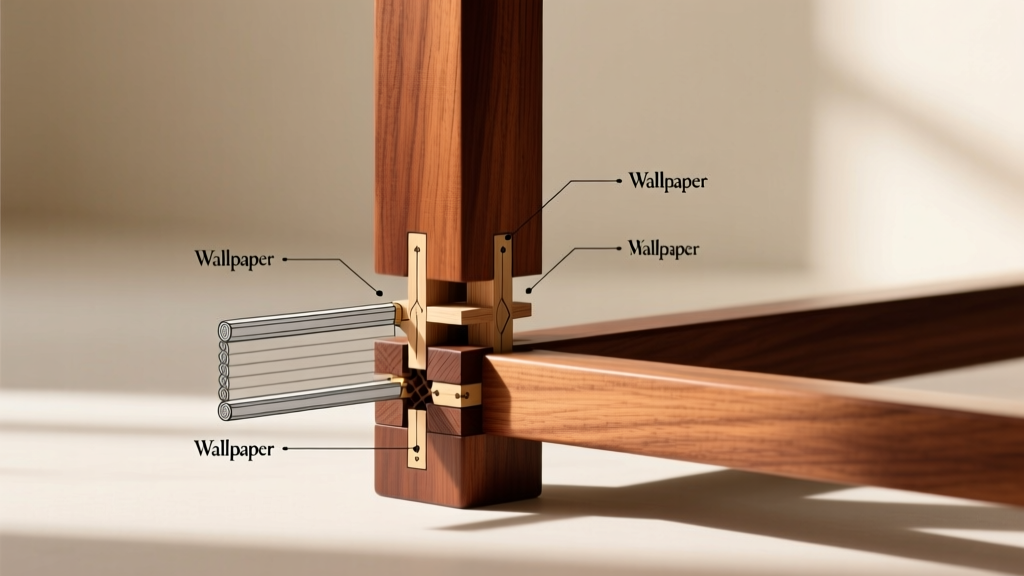
Furthermore, premium manufacturers incorporate a lower "apron" or "skirt"—a horizontal piece of wood connecting the legs just below the main carcass. This apron acts as a lateral brace, effectively neutralizing the racking force before it can compromise the leg-to-case connection.
Material Science: Hardwoods, Metals, and Polymers
The material chosen for jewelry box legs dictates both the aesthetic profile and the structural lifespan. We evaluate the most common materials based on their mechanical properties and suitability for fine furniture.
| Material | Janka Hardness / Yield Strength | Pros & Cons for Jewelry Storage |
|---|---|---|
| Hard Maple | 1,450 lbf (Janka) | Exceptional shear strength; holds intricate turned details. Prone to blotching if stained poorly. |
| Black Walnut | 1,010 lbf (Janka) | Superior dimensional stability; resists warping. Softer than maple, requiring care on hard floors. |
| Solid Brass | ~30,000 psi (Yield) | Allows for ultra-slim, modern profiles. Will not creep under load. Requires periodic polishing. |
| Zamak (Zinc Alloy) | ~22,000 psi (Yield) | Cheap to cast; often plated to look like brass. Highly susceptible to "creep" (deformation under constant load). |
| Acrylic/Lucite | 10,000 psi (Tensile) | Modern, invisible aesthetic. Scratches easily and can shatter under sharp impact or point-loads. |
A critical warning for buyers: avoid jewelry boxes featuring Zamak (zinc alloy) legs if the chest is heavy. According to metallurgical standards, zinc alloys are prone to "creep"—a slow, permanent deformation that occurs when the material is subjected to constant mechanical stress at room temperature. Over five to ten years, Zamak legs will slowly bow outward under the weight of a loaded jewelry armoire.
Wood Movement and Cross-Grain Catastrophes
One of the most common reasons high-end jewelry chests self-destruct is the failure to account for wood movement. Wood is hygroscopic; it absorbs and releases ambient moisture, expanding and contracting primarily across the grain (tangentially and radially), rather than along the grain (longitudinally). The U.S. Forest Products Laboratory's Wood Handbook details how a 24-inch wide mahogany panel can expand or contract by up to 1/4 inch across its width depending on seasonal humidity shifts.
If a manufacturer rigidly glues wide wooden jewelry box legs or a solid wood baseboard directly across the side grain of the main carcass, the seasonal expansion will literally tear the box apart. Expert cabinetmakers solve this by using figure-8 fasteners or routing elongated slots for screws where the leg aprons meet the wide side panels. This allows the main body of the jewelry box to "breathe" and move independently of the leg structure, preventing catastrophic splitting.
Moisture Mitigation and Boundary Layer Disruption
Elevating a jewelry chest is not just an ergonomic choice; it is a vital anti-tarnish strategy. Tarnishing of silver and copper alloys is accelerated by trapped humidity and sulfur compounds. When a heavy wooden box sits flush against a floor or a carpet, it traps a "boundary layer" of stagnant, humid air beneath it.
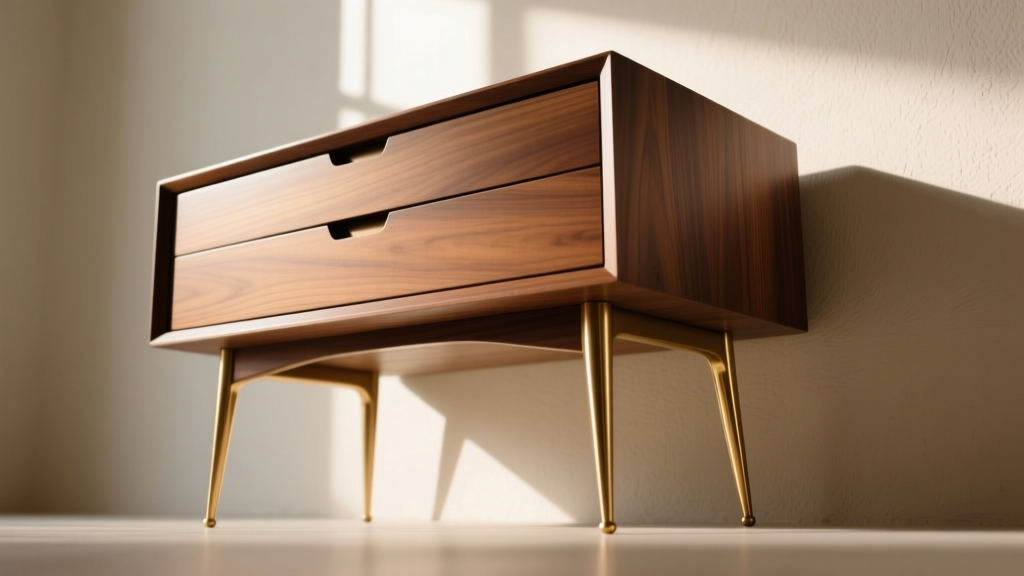
By utilizing jewelry box legs that elevate the case a minimum of 3 to 5 inches, you allow natural convective air currents to sweep beneath the armoire. This continuous micro-airflow disrupts the stagnant boundary layer, keeping the underside of the box dry and preventing the bottom drawer's contents from experiencing accelerated oxidation. Furthermore, elevation protects the bottom panel of the box from absorbing ambient moisture from mopped hard floors or damp carpets, which can cause the bottom plywood or solid wood panel to delaminate or cup.
Ergonomics: Calculating the Ideal Height Ratio
From a biomechanical standpoint, the height of jewelry box legs on a freestanding armoire should be calibrated to the user. The standard kitchen or vanity counter height is 36 inches. If a jewelry armoire is placed in a bedroom, the top drawer should ideally sit between 34 and 38 inches from the floor to prevent repetitive lumbar flexion (bending over) when retrieving daily-wear pieces.
- Tall Armoires (48+ inches): Require minimal leg height (2-3 inches) primarily for floor clearance and vacuuming.
- Mid-Century Chests (24-30 inches): Benefit from 6 to 8-inch tapered legs to raise the primary drawers to waist level.
- Dresser-Top Boxes: Should feature low-profile bun feet or brass glides (under 1 inch) to prevent the center of gravity from becoming dangerously high.
Troubleshooting Common Failure Modes
Even well-engineered jewelry box legs can develop issues over decades of use. Here is how to diagnose and rectify the most common structural anomalies:
1. The "Drawer-Open" Wobble
If your armoire rocks diagonally when a drawer is open, the issue is rarely the floor; it is the case falling out of "square." Check the diagonal measurements from the top-left corner to the bottom-right corner, and compare it to the opposite diagonal. If they differ by more than 1/16th of an inch, the mortise and tenon joints have loosened. Fix: Use a ratcheting band clamp to gently pull the case back into square, then inject hide glue into the leg joints using a syringe.
2. Finish Degradation and Floor Scratching
Wooden legs finished with standard lacquer can wear down to bare wood, eventually scratching hardwood floors. Fix: Sand the bottom 1/4 inch of the legs and apply a self-leveling polyurethane dip, or adhere 1/8-inch thick ultra-high-molecular-weight (UHMW) polyethylene pads. Avoid standard felt pads, which trap grit and act like sandpaper on oak floors.
3. Stripped Metal Threads in Brass Legs
Brass legs that screw into threaded inserts often strip over time due to brass's relative softness. Fix: Drill out the worn hole and install a steel Helicoil insert, which provides permanent, hardened steel threads for the brass leg bolt.
Conclusion
The base of a jewelry armoire is the unsung hero of horological and gemological storage. By prioritizing blind mortise joinery, selecting materials resistant to creep, accommodating natural wood movement, and ensuring proper airflow, collectors can guarantee their storage solutions remain as timeless as the heirlooms they protect. For further reading on wood stability and furniture engineering, the Wood Magazine guide on dimensional changes remains an essential resource for understanding how environmental shifts impact wooden cases over time.


