Precision Woodworking: Expert Plans for Making a Jewelry Box
Master fine woodworking with our expert plans for making a jewelry box. Learn about anti-tarnish linings, precision joinery, and hardware selection.

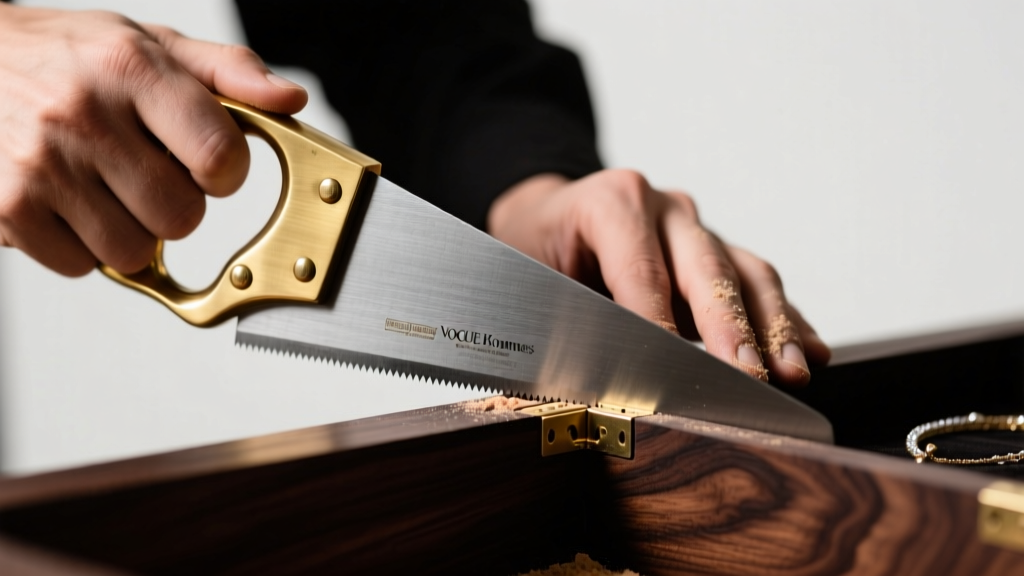
The Anatomy of a Heirloom Jewelry Box
Designing and building a fine jewelry box is a rite of passage for many woodworkers, but transitioning from a basic keepsake box to a true heirloom piece requires a deep understanding of material science, precision engineering, and horological-level hardware integration. When evaluating plans for making a jewelry box, most amateur blueprints fail to account for the specific environmental and chemical needs of fine jewelry. A successful design must mitigate wood movement, prevent off-gassing that damages precious metals, and incorporate specialized anti-tarnish microclimates.
The ideal carcase dimensions for a versatile tabletop jewelry box range from 12 to 16 inches in width, 9 to 11 inches in depth, and 4 to 6 inches in height. These proportions provide a stable footprint while allowing for the integration of sliding trays and vertical ring dividers. However, the true mark of an expert build lies beneath the surface: the internal joinery tolerances, the moisture content of the selected timber, and the chemical compatibility of the interior finishes.
Material Science: Selecting the Right Timber
The choice of wood dictates both the structural longevity and the aesthetic gravity of the piece. For the primary carcase, you need a species with high dimensional stability and a tight grain structure that accepts fine inlay work.
- Black Walnut (Juglans nigra): With a Janka hardness of 1,010 lbf and a specific gravity of 0.51, walnut is exceptionally stable. Its rich, dark heartwood provides a striking contrast against lighter interior dividers made of maple or holly.
- Quartersawn White Oak: The radial grain pattern (ray fleck) is visually stunning, but more importantly, quartersawn lumber exhibits roughly half the tangential shrinkage of flat-sawn wood, virtually eliminating the risk of the lid warping and binding the hinges.
- Hard Maple (Acer saccharum): At 1,450 lbf Janka, maple is incredibly durable, making it ideal for the high-wear internal dividers and sliding tray runners.
Critical Expert Warning: Never use aromatic cedar (Juniperus virginiana) for the interior lining or structural components of a jewelry box. While traditionally used in hope chests to repel moths, the volatile organic compounds (VOCs) and natural oils in cedar will chemically react with silver, accelerating tarnish, and can permanently degrade the nacre of natural pearls and the polish of soft gemstones like turquoise.
Decoding the Blueprint: Precision Joinery
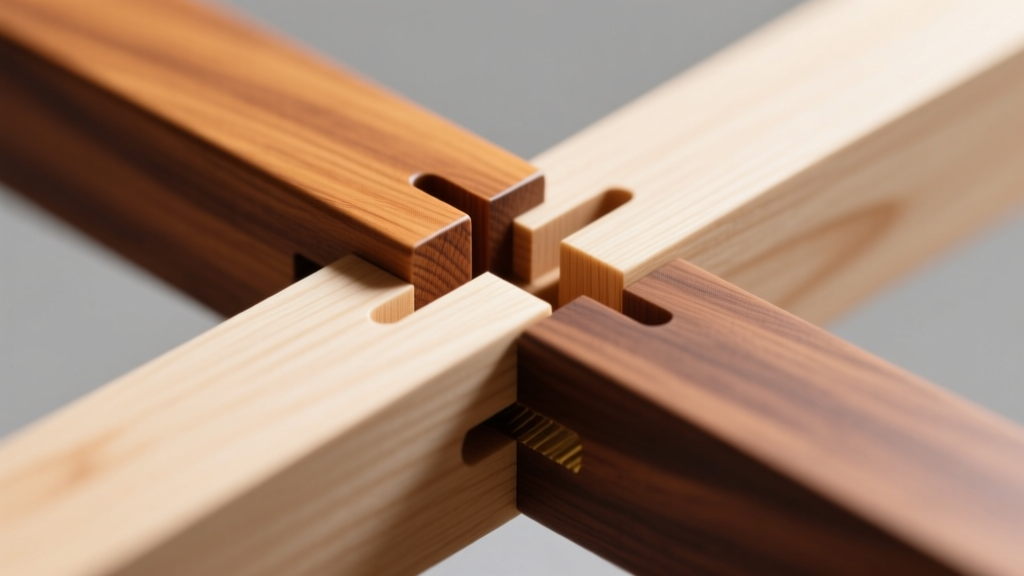
The best plans for making a jewelry box will explicitly detail the joinery methods used to secure the carcase and internal web frames. Because jewelry boxes are relatively small, the wood movement is minimal, but the joints must be immaculate to prevent visible glue lines and structural failure over decades.
| Joinery Method | Best Application | Strength & Aesthetics | Required Tolerance |
|---|---|---|---|
| Half-Blind Dovetails | Main Carcase Corners | Exceptional mechanical lock; hides end grain from the front face. | +/- 0.002 inches |
| Sliding Dovetails | Internal Web Frames & Dividers | Resists vertical shear; allows for hidden structural support. | +/- 0.005 inches |
| Mitered Splines | Lid Frames & Base Moldings | Continuous grain wrap; moderate strength reliant on glue surface. | +/- 0.001 inches |
For the internal web frames that support sliding trays, use sliding dovetails cut into the carcase sides. According to master woodworking guidelines featured in Fine Woodworking, cutting the female socket with a router and the male tail on a table saw ensures a friction-fit that requires minimal clamping and zero metal fasteners, preserving the integrity of the thin carcase walls.
Anti-Tarnish Integration: The Hidden Linings
Silver tarnish is not a dirt issue; it is a chemical reaction between silver and hydrogen sulfide (H2S) in the ambient air, forming silver sulfide. A standard felt lining will not stop this process. Expert plans for making a jewelry box must incorporate active and passive anti-tarnish technologies.
Passive Protection: Pacific Silvercloth
Instead of standard velvet, line the interior compartments with Pacific Silvercloth. This specialized cotton flannel is embedded with microscopic silver particles. These embedded particles act as a sacrificial anode, intercepting and reacting with H2S gases before they can reach your actual jewelry. It requires no chemical treatments and remains effective for decades in a sealed environment.
Active Protection: 3M Anti-Tarnish Strips
For enclosed compartments or deep ring drawers, integrate hidden slots for 3M Anti-Tarnish strips. These strips utilize copper-based particles to absorb corrosive gases. They must be replaced every 6 to 12 months, so your design must allow for easy access to these strips without dismantling the velvet lining.
Hardware Selection: Hinges and Lid Stays
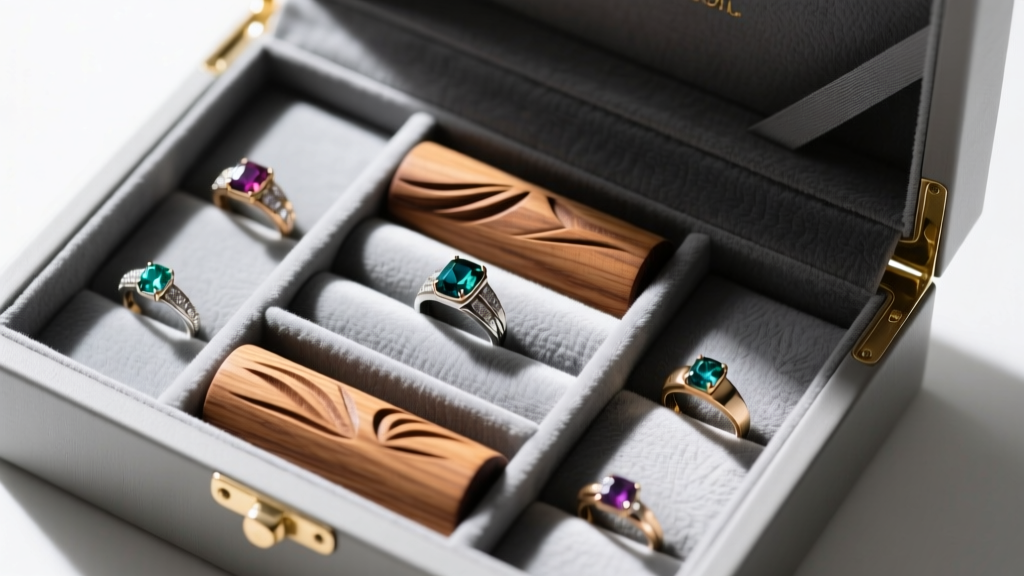
Hardware is where amateur builds inevitably fail. Standard steel or plated brass hinges will corrode, bind, and eventually strip their screw holes due to the repetitive torque of opening a heavy wooden lid. Furthermore, cheap hinges lack the built-in lid stays required to prevent the lid from slamming shut and damaging the jewelry inside.
The undisputed industry standard for fine jewelry boxes is the solid brass quadrant hinge, specifically those manufactured by Brusso. These hinges are cast from solid brass, precision-machined, and feature an integrated 95-degree stop mechanism. When installing quadrant hinges, the mortising process is unforgiving. You must route a precise recess into both the lid and the carcase so that the hinge leaf sits perfectly flush. A gap of even 1/64th of an inch will cause the lid to bind or sit unevenly. Always use the exact steel screws provided by the manufacturer; substituting with standard wood screws will result in stripped heads and misaligned leaves.
Finishing: Avoiding Off-Gassing Disasters
The exterior finish protects the wood, but the interior finish requires careful consideration. Many standard polyurethanes and lacquers continue to off-gas VOCs for months after curing. In the confined, dark space of a jewelry box, these trapped gases can cause severe discoloration to pearls, amber, and soft metals.
For the exterior, a hand-rubbed shellac or a wiping varnish (like Arm-R-Seal) provides a deep, chatoyant finish that is easily repairable. For the interior, leave the bare wood unfinished if it is lined with Silvercloth, or use a pure, food-grade mineral oil or beeswax polish that cures completely inert. As noted by the finishing experts at WOOD Magazine, allowing the interior to remain unfinished also helps the wood act as a natural humidity buffer, preventing rapid moisture fluctuations that can crack organic gems like ivory or tortoiseshell.
Sourcing and Adapting Woodworking Plans
When you begin your build, do not blindly follow a set of plans without first verifying the hardware dimensions and lining thickness. Many free blueprints assume a standard 1/8th-inch felt lining, which will alter the internal clearances and cause sliding trays to jam. Always mock up the internal tray system using cheap MDF or plywood before cutting into your expensive walnut or maple. By combining precise joinery, chemically inert materials, and horological-grade hardware, your custom jewelry box will not only store precious items safely but will become a cherished heirloom in its own right.
"A true heirloom jewelry box is defined not just by the beauty of its exterior wood grain, but by the invisible engineering that protects the treasures inside from time, tarnish, and decay."


